
The most striking pair of Antique cufflinks for men isn’t always the best choice for its wearer. A beautiful face may catch the eye, but fit, construction, and fastening determine whether cufflinks feel comfortable and practical to wear. It’s natural to notice the period or gemstone first, especially when antique and vintage labels are used inconsistently. The details behind the design matter just as much.
This guide explains how to compare major design periods, assess materials and craftsmanship, and review condition before choosing. You’ll also learn what to check in fastening mechanisms, hallmarks, and fit, so you can weigh historical appeal against everyday use. Whether you’re choosing a meaningful gift or adding to a personal collection, start with the cufflinks themselves: how they’re made, how they sit, and what their age has left visible.
Key Takeaways
- Antique and vintage are commonly used labels, but age conventions can differ between sellers and markets.
- Use Victorian, Edwardian, and Art Deco design details as clues to a pair’s character, not conclusive proof of its age.
- Compare metal, decorative materials, fastening, and visible condition. Appearance alone doesn’t establish composition or age.
- Choose Antique cufflinks for men by considering intended use, shirt compatibility, design, construction, and available documentation.
- Inspect both cufflinks and their fastenings in available images to better judge fit, condition, and wearability.
Antique Cufflinks for Men: What Makes a Pair Antique and Wearable?
Antique cufflinks are shirt fasteners valued for their age, materials, design, and workmanship. In common use, “antique” often refers to an object around a century old or more, but sellers and markets don’t apply one universal cutoff. Treat the label as a starting point, not proof of a date. For Antique cufflinks for men, wearability matters alongside historical interest: the pair should be complete, secure, and suited to the wearer’s shirts and occasions.
Age is only one part of the assessment. Look at how each cufflink is made, including its face, connecting element, and fastening. Check whether the two pieces appear to match and whether visible wear affects their stability or appearance. Marks and accompanying documentation may add useful context, but a style associated with a particular period doesn’t establish a precise date by itself. The history of cufflinks offers helpful context on how their forms and fastenings have changed over time.
A practical definition combines history with function: antique cufflinks are older shirt fasteners whose period character and craftsmanship remain visible, and whose condition allows them to be worn as intended. Assess the pair as both a historical object and a working accessory before choosing.
- Completeness: Both cufflinks should form a wearable pair.
- Construction: The connecting parts and moving fastenings should appear intact.
- Condition: Surface wear can be consistent with age, but damage may affect use.
How do antique and vintage cufflinks differ?
“Vintage” generally describes an older piece that isn’t considered antique, while “antique” commonly signals greater age. These are broad conventions, not uniformly applied classifications. One seller may use the labels differently from another, so the word alone can’t establish when a pair was made. Compare construction and design details with available records or provenance. Together, these clues offer a more considered view of the pair’s history.
Which shirt cuffs are designed for cufflinks?
Cufflinks pass through aligned buttonholes in a shirt cuff and hold its edges together. French, or double, cuffs fold back on themselves and are a familiar formal pairing, but some single cuffs are also made for cufflinks. A standard button cuff may not have the paired openings cufflinks need. Check the shirt’s cuff design before choosing a pair. Cuff thickness, fit, and occasion also affect comfort and practicality.
Victorian, Edwardian, and Art Deco Cufflinks: Read the Design Clues
Period style can help explain a pair’s character, but it’s most useful as one part of a broader assessment. Consider how the motif, surface finish, materials, and overall shape work together. Flowing engraved patterns, delicate enamel details, and sharply defined geometric faces may suggest different design influences. Look for several clues that make sense together rather than relying on one decorative feature.
Engraved gold, guilloché enamel, onyx, and diamond accents appear in cufflinks associated with different styles and periods. These examples illustrate the range, but they aren’t a checklist for dating every pair. The Victoria and Albert Museum’s overview of the history of jewellery design and materials offers context on how techniques and tastes changed across eras.
What design details are associated with Victorian and Edwardian cufflinks?
Victorian examples may feature engraved ornament, symbolic motifs, or richly worked surfaces. Edwardian designs can look lighter or more restrained, with fine detailing and possible enamel or gemstone accents. Neither period follows a single template. Compare the decoration with the form and workmanship. Crisp, coherent detailing and construction that supports the design make a stronger case than a motif considered alone.
How can Art Deco cufflinks be recognized?
Art Deco cufflinks often favor geometric forms, balanced symmetry, strong contrasts, and a streamlined presentation. Onyx, enamel, and diamonds are examples of materials seen in this style, not requirements. Notice how the face is organized: repeated lines, stepped shapes, or contrasting sections can create a distinctly modern effect. For broader period context, explore this guide to Art Deco jewelry.
A style clue alone cannot authenticate a cufflink’s age. Designs can be revived, adapted, or combined across periods, so visual resemblance isn’t proof of date. Check whether details on both cufflinks are consistent, then compare each face with its reverse and fastening. The construction should support the period impression rather than contradict it.
- Motif: Is the ornament consistent with the overall design?
- Surface: Does engraving, enamel, or another finish appear integrated into the piece?
- Material: Does the material complement the motif and form?
- Construction: Do the reverse and fastening seem coherent with the visible face?
Reading these details together can help distinguish a convincing period character from a design inspired by the past. The same attention to materials and workmanship can guide exploration of Heirloom Jewelers’ estate and vintage fine jewelry.
Compare Antique Cufflinks by Material, Fastening, and Condition
A useful comparison looks beyond the front of the cufflink. Metal, decorative material, fastening, and condition each affect its appearance and suitability for wear. Use the questions in this table to guide your assessment, rather than making assumptions about every pair. A gold-colored surface, for example, doesn’t establish that a piece is gold or reveal when it was made.
| Metal | Decorative material | Fastening | Visible condition | Intended use |
|---|---|---|---|---|
| Gold: look for reliable composition details, not color alone. | Enamel: check for chips, cracks, or areas of loss. | Swivel or toggle: inspect the moving bar and connecting post. | Surface marks may be cosmetic; dents or fractures need closer attention. | Choose a profile and finish that suit the shirt and occasion. |
| Platinum: confirm the metal claim through item details or marks. | Mother-of-pearl: look for cracks, lifting, or uneven edges. | Other mechanisms may be present; assess the pair in hand or in clear images. | Check both faces for signs of repair or mismatched wear. | Consider comfort and whether the pair feels appropriate for frequent wear. |
| Silver: distinguish a documented metal claim from a silver-like appearance. | Gemstones: inspect settings for visible looseness or missing stones. | Confirm the fastening holds securely and moves as intended. | Look for bent parts, loose settings, or damage near the connection. | For occasional use, appearance may lead; regular wear calls for careful condition review. |
These categories aren’t a ranking. Gold, platinum, and silver each have distinct appearances and material characteristics, while the best choice depends on the individual pair and wearer. Don’t infer composition or age from color or shine alone. Look for supporting details such as clear hallmarks, descriptions, or documentation, and consider the overall workmanship. The American Gem Society offers guidance on evaluating antique jewelry, including materials and condition.
How do metals and decorative materials affect the choice?
Decorative surfaces influence both a cufflink’s appearance and the attention it may need. Enamel can bring color and fine detail; mother-of-pearl has a distinctive sheen; gemstones add color and introduce settings that merit inspection. These materials don’t prove age or quality. Base your decision on the individual item’s documented materials and visible workmanship, not an assumption based on appearance.
Which fastening and condition details deserve attention?
Some cufflinks use a swivel or toggle-style bar, but mechanisms vary. Check whether moving parts sit securely and whether the fastening appears able to pass through the intended cuff and hold in place. Compare the two cufflinks for matching design and construction. Photographs may not show a loose setting, subtle bend, or old repair clearly, so treat unclear areas as unknown rather than assuming they’re sound. Cosmetic wear differs from damage that could compromise secure fastening or safe use.
A careful inspection helps balance appearance with practical wear. Heirloom Jewelers’ estate and vintage fine jewelry reflects an appreciation for materials, condition, and craftsmanship.
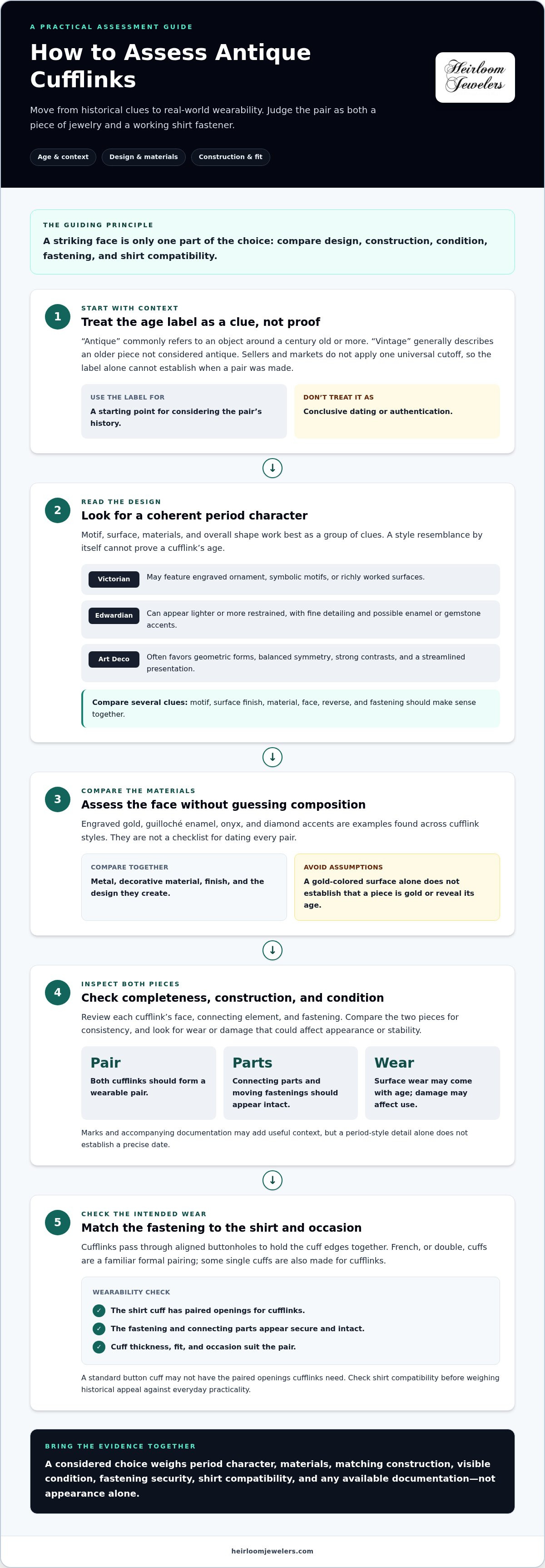
How to Evaluate Antique Cufflinks Before You Choose
Choosing Antique cufflinks for men calls for a practical review as well as an appreciation of design. A consistent process helps you compare a pair with its intended wearer, the shirts it will accompany, and the available evidence about its history. Work through these five steps before deciding:
- Define the intended use. Decide whether the cufflinks are for occasional formal wear, regular use, or collecting. Intended use affects how closely you’ll weigh condition and comfort.
- Check shirt compatibility. Confirm that the wearer has cuffs with buttonholes designed for cufflinks. Consider the cuff’s thickness and whether the pair’s shape and fastening can sit comfortably.
- Assess the design. Match the scale, motif, and finish to the wearer’s usual clothing and personal taste. A subtle pair may suit formal occasions, while a more expressive design can make a deliberate statement.
- Review construction. Examine both cufflinks, not just their visible faces. Look closely at the posts, connecting parts, and fastening mechanisms for apparent looseness, damage, or mismatched details.
- Read the documentation. Compare stated materials, dimensions, and condition, along with any disclosed repairs, against the photographs. Treat dates, maker names, and provenance as evidence to consider, not proof on their own.
Clear photographs can show overall form, visible marks, and some surface wear, but they can’t establish every detail. An image may not reveal a loose setting, concealed repair, or how smoothly a mechanism moves. Review all available views, including the reverse and fastening, and note what remains difficult to judge. Hallmarks and provenance can support further research, but neither is conclusive in isolation. For context on how collectors approach historic jewelry, see this guide to antique rings.
What should an antique cufflink description tell you?
A useful description states the claimed materials, dimensions, visible condition, and any known repairs. Period attribution and maker identification should be supported by details such as marks, construction, or documented history. Photographs help you compare the description with the object, but they can’t independently confirm composition, exact age, or the condition of moving parts. Note gaps rather than filling them with assumptions.
How can you match a pair to its wearer or occasion?
Think about the wearer’s usual shirt styles, preferred scale, and comfort with noticeable accessories. A restrained design may suit a formal setting, while a stronger motif can reflect a more individual style. For a gift, known preferences and compatible shirts are more reliable guides than novelty alone. A thoughtful match feels personal and remains practical to wear.
Careful selection starts with the evidence and ends with personal meaning. Explore Heirloom Jewelers’ estate and vintage fine jewelry to discover distinctive pre-owned pieces shaped by history and craftsmanship.
Choosing Antique Cufflinks as Part of a Lasting Jewelry Collection
A considered pair earns its place through more than age. Fit, condition, materials, and personal meaning all matter. Cufflinks might complement a particular wardrobe, recall a family story, or appeal through the skill visible in their construction. Those reasons can make a piece rewarding to own, but they don’t make every old object rare or well made. Evaluate each pair on its own merits, and let its history inform your choice rather than determine it.
What makes a piece meaningful beyond its age?
Workmanship offers one source of interest: engraving, careful setting, or a well-resolved design can reveal attention to detail. Materials matter for their appearance and character, while reliable documentation may connect a piece to a particular maker, owner, or period. Personal resonance is different again. A design that reflects the wearer’s taste may feel significant even without a recorded history. Collecting becomes more thoughtful when you consider these qualities separately.
Age alone doesn’t guarantee rarity, quality, or future value. A piece can be old and still show extensive wear, altered construction, or little documentation. A collector may also value a modest design because it’s comfortable to wear or connected to a meaningful occasion. For a wider view of how history and provenance shape a collection, explore this guide to heritage jewelry.
For Antique cufflinks for men, a lasting choice balances practical use with the qualities that make the pair distinctive. Consider whether the fastening suits the wearer’s shirts, whether the condition is appropriate for the intended use, and whether the materials and design feel right. A clear understanding of what is known and what remains uncertain keeps appreciation grounded in the individual piece.
Explore estate and vintage fine jewelry
Heirloom Jewelers is a specialist retailer of curated, authenticated estate and vintage fine jewelry, with a focus on distinctive pre-owned pieces and craftsmanship. Its broader collection includes vintage platinum rings and estate gemstone jewelry. These categories offer different ways to appreciate materials, design, and the histories that accompany jewelry across generations.
If you’re building a collection, consider what you value most: a period detail, a particular gemstone, a well-made form, or a connection to the past. That perspective can guide choices across different kinds of jewelry without requiring every piece to share the same style or story. Explore Heirloom Jewelers and discover curated estate and vintage fine jewelry with character and history.
Let Character Guide Your Next Choice
A thoughtful jewelry choice can become part of a personal ritual, worn for milestones or kept as a reminder of someone who mattered. As you consider Antique cufflinks for men, focus on what will make the pair meaningful to its wearer, not simply what makes it old. A clear sense of personal style and intended use can guide the decision long after the first impression.
That same appreciation for history and craftsmanship can shape a broader collection. Heirloom Jewelers specializes in curated, authenticated estate and vintage fine jewelry, including distinctive pre-owned pieces such as vintage platinum jewelry and estate gemstone jewelry. Each piece offers its own design story and a tangible connection to the past.
Explore a collection chosen with care and let the details spark your next discovery. Explore Heirloom Jewelers’ curated estate and vintage fine jewelry. May your next choice feel personal, considered, and a pleasure to wear or pass along.
Frequently Asked Questions
Is every pair described as antique genuinely antique?
No, a seller’s label alone doesn’t prove a cufflink’s age. “Antique” and “vintage” may be used differently, and older designs can be copied or echoed in later pieces. Consider the construction, materials, maker’s marks, condition, and any supporting history together. A hallmark or period-style motif can offer a useful clue, but neither establishes authenticity on its own. Look for consistency between the description and the physical details.
Can men wear antique cufflinks every day?
Some pairs may suit regular wear, while others are better kept for occasional use. A secure mechanism and sound construction matter more for frequent wear than a delicate setting or fragile decoration. Consider the wearer’s routine, too. Someone who rarely wears shirts with cufflink holes may get little use from even a comfortable pair. Assess each pair individually, and take extra care if a setting appears loose or a moving part feels unstable.
How can you tell whether cufflinks are gold or gold-plated?
Appearance alone can’t reliably distinguish solid gold from gold plate. Look for clear material descriptions and relevant hallmarks, but remember that a mark may be worn, altered, or misread. A hallmark can help indicate metal fineness or origin, yet it doesn’t establish the cufflinks’ complete history. For a significant purchase, review any supporting documentation and consider an appropriate professional assessment rather than relying on color or a single stamp.
What should I look for in antique cufflink condition?
Check both cufflinks for matching details, surface wear, damage, and signs of repair. Look closely at the fastening and at any enamel, stones, or other decoration. A pair may look even from the front while one reverse has a bent component. Photographs can reveal some surface issues, but not every flaw. Compare the item description with the images, and consider whether visible damage could affect function.
Are antique cufflinks suitable as a gift?
Yes, antique cufflinks can make a thoughtful gift if the recipient wears compatible shirts and enjoys distinctive accessories. Consider their usual clothing, preferred scale, materials, and taste in motifs. If you’re unsure, a restrained design may be easier to pair with different outfits than a highly specific motif. For Antique cufflinks for men, a clear condition description and a fastening suited to the recipient’s shirts can make the choice more personal and practical.
What do hallmarks on antique cufflinks mean?
Hallmarks may provide clues about metal content, maker, or place and period of manufacture, depending on the mark and its context. Their meaning isn’t always straightforward. A worn stamp can be hard to read, and marks may have been altered or misinterpreted. Compare a hallmark with the cufflinks’ construction and other available records. Treat it as one piece of evidence, not proof of the pair’s full provenance or authenticity.