
Most people assume that the most delicate jewelry is also the most fragile, but Edwardian engagement rings prove the opposite is true. This era marked a revolutionary shift where jewelers first mastered platinum, allowing them to create lace-like designs that are remarkably strong despite their ethereal appearance. If you've found yourself confused by the subtle differences between Edwardian and Art Deco styles, you aren't alone. It's easy to feel uncertain when trying to distinguish a genuine antique from a modern, mass-produced reproduction.
You deserve to feel confident in both the history and the durability of your jewelry. In this expert guide, you'll discover the specific design markers and craftsmanship techniques that defined the early 20th century. We will examine the significance of Old European cut diamonds and the meticulous hand-fabricated milgrain that characterizes high-quality platinum work. This preview of the Belle Époque era will help you identify an authentic piece of history that offers a unique narrative for your own story. By understanding these heritage techniques, you can find a ring that balances timeless elegance with a steady, enduring strength.
Key Takeaways
- Learn how the transition from the Victorian era to the Belle Époque inspired a new aesthetic of lightness and high-society elegance.
- Understand how the mastery of platinum enabled the intricate, lace-like filigree that characterizes genuine Edwardian engagement rings.
- Discover how to identify authentic hand-fabricated metalwork and distinguish it from modern, cast reproductions.
- Explore the unique beauty of Old European cut diamonds and why their warmer glow differs from modern brilliant cuts.
- Recognize the historical value of choosing a pre-owned heritage piece as a sustainable and enduring investment.
Defining the Edwardian Era: Jewelry of the Belle Époque (1901–1915)
The Edwardian era began with the coronation of King Edward VII in 1901. It represented a sharp departure from the Victorian period. While previous decades were often characterized by heavy, dark mourning jewelry and sentimental gothic themes, the new century brought a sense of lightness and optimism. This period is often called the Belle Époque, or "Beautiful Era." It was a time of high-society elegance and refined luxury that prioritized grace over bulk.
Authentic Edwardian engagement rings were designed to reflect this newfound social atmosphere. Artisans moved away from the yellow gold and silver-topped settings of the past. Their primary goal was to create jewelry that complemented the ethereal fashion of the time, specifically the white silk and intricate lace favored by the elite. The result was a collection of pieces that felt as delicate as the fabrics they accompanied.
The Influence of the Garland Style
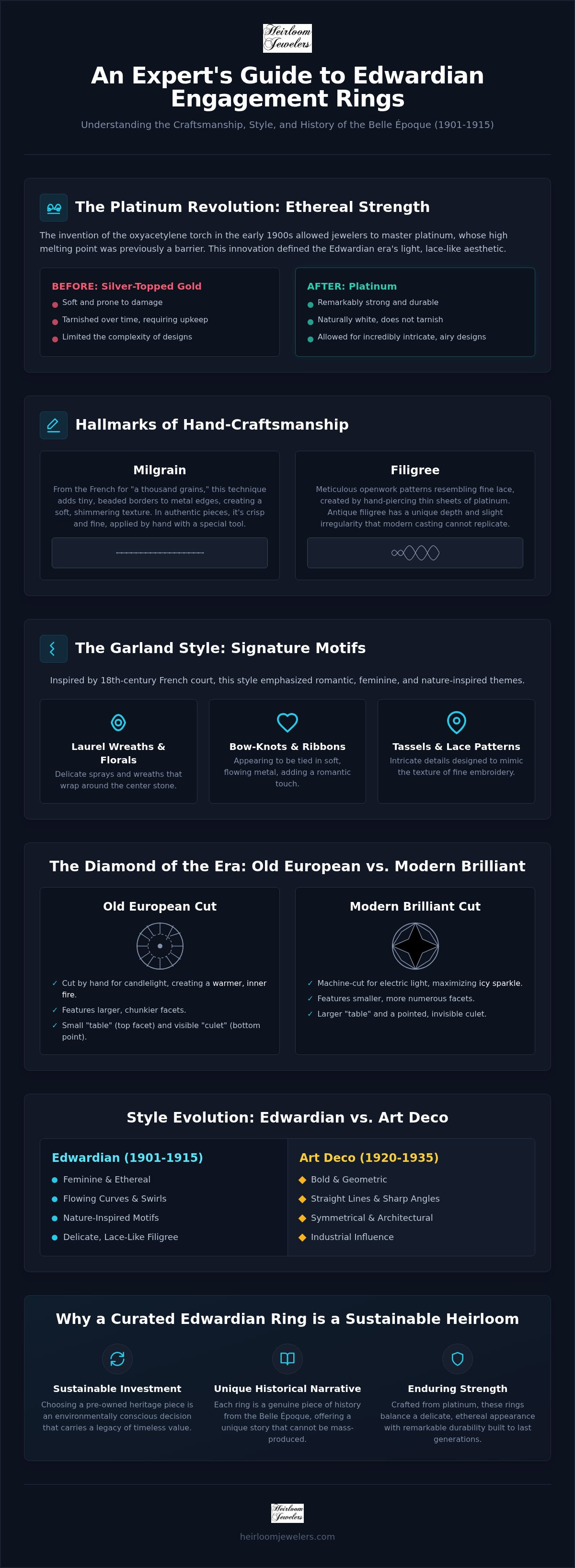
The aesthetic of this period was heavily influenced by the "Garland style." This look drew inspiration from the 18th-century French court of Louis XVI. Jewelers utilized motifs that felt romantic and feminine, moving away from the rigid structures of earlier times. When Defining the Edwardian Era, it's essential to recognize this focus on delicate, airy structures that prioritized the brilliance of the stone over the weight of the setting.
Common symbols found in this style include:
- Laurel wreaths and floral sprays that wrap around the center stone.
- Bow-knots and ribbons that appear to be tied in soft metal.
- Tassels and lace-like patterns that mimic fine embroidery.
A key technical achievement was the visual "disappearance" of metal. By utilizing platinum, artisans could use very little material to hold gemstones securely. This made diamonds appear as if they were floating on the skin. It created a look of unparalleled sophistication that remains highly sought after by collectors of Edwardian engagement rings today.
Key Dates and the Transition to Art Deco
While the reign of King Edward VII ended in 1910, the artistic era continued until the outbreak of World War I in 1914. The war shifted global priorities, and the exuberant luxury of the Belle Époque faded as resources were diverted. In late-Edwardian pieces, you can spot a shift toward more structured, geometric forms. The soft curves of the Garland style began to straighten, signaling the approaching Art Deco movement. The Edwardian era represents the peak of feminine, airy jewelry design before the bold lines of Art Deco became the new standard.
The Platinum Revolution: Ethereal Strength and Lace-Like Metalwork
The introduction of the oxyacetylene torch in the early 1900s fundamentally changed jewelry engineering. Before this innovation, jewelers struggled to harness platinum due to its incredibly high melting point. They often relied on silver-topped gold to achieve a white metal appearance. Silver was soft and prone to tarnishing, which limited the complexity of the designs. Platinum offered a superior alternative. It provided an ethereal strength that allowed artisans to use significantly less metal without compromising the security of the gemstones. This shift is a defining characteristic of authentic Edwardian engagement rings.
Milgrain and Filigree: The Edwardian Signature
Milgrain, which translates to "a thousand grains," became a hallmark of the era. This technique involves creating tiny, beaded borders along the edges of the metal. It adds a delicate, shimmering texture that softens the appearance of the setting. When Evaluating Gemstones and Settings, look for the precision of these beads. In true antique pieces, milgrain was applied by hand using a specialized knurling tool. This results in a fine, crisp finish that modern cast imitations often fail to replicate.
Filigree work from this period was equally meticulous. Artisans hand-pierced thin sheets of platinum to create openwork patterns resembling fine lace. Unlike later die-struck or mass-produced versions, hand-crafted filigree has a unique depth and slight irregularity that signals its heritage. The inherent durability of platinum ensured these delicate threads remained intact for over a century. This combination of visual lightness and physical resilience is what makes these pieces so remarkable.
Mixed Metals: Gold and Platinum Pairings
The transition to all-platinum jewelry was not instantaneous. Many early pieces from the Belle Époque feature a mixed metal construction. It's common to find rings with a platinum top resting on an 18K yellow gold undercarriage. This combination allowed the diamonds to be set in white metal to enhance their brilliance while maintaining the traditional use of gold for the band. Eventually, as techniques improved, solid platinum settings became the standard for high-end commissions.
Understanding these material nuances helps you appreciate the longevity of these artifacts. If you own a piece with these characteristics, following a guide on Caring for 18K White Gold and Precious Gemstones will help preserve the integrity of the mixed metals. At Heirloom Jewelers, we prioritize these authenticated details to ensure every piece in our collection represents the pinnacle of historical craftsmanship. You can explore our current selection of vintage platinum engagement rings to see these techniques in person.
Antique vs. Reproduction: Identifying Authentic Edwardian Artistry
Distinguishing authentic Edwardian engagement rings from modern reproductions requires a disciplined eye. Many retailers use "Edwardian" as a broad descriptor for any piece with lace-like details. However, a true antique possesses a unique historical narrative that a modern cast cannot replicate. When studying Authentic Edwardian Artistry, you'll notice a level of precision and soul that defines the period. This craftsmanship is the result of labor-intensive hand-fabrication rather than automated manufacturing.
A primary indicator of authenticity is the presence of period-correct hallmarks. When evaluating Edwardian engagement rings, look for stamps like "PLAT" or "900 PLAT" for platinum, or "18K" for gold. These marks should show slight wear consistent with the age of the piece. If a 100-year-old ring looks brand new without any signs of patina or microscopic abrasions, it's often a red flag. Using a jeweler's loupe allows you to see the hand-saw marks within the filigree. These tiny vertical lines are the signatures of a master artisan who manually cut the design from a solid sheet of metal.
The Problem with "Vintage-Inspired" Modern Jewelry
Modern "vintage-inspired" jewelry is typically created through a casting process. Molten metal is poured into a mold, which often results in rounded, softer edges. This lacks the crispness of true Edwardian hand-piercing. An estate piece carries a sense of history and weight that mass-produced replicas lack. At Heirloom Jewelers, we exclusively curate authenticated vintage pieces. We avoid modern copies to ensure our clients receive a genuine artifact with a verified provenance.
Authenticating the Gemstone Setting
It's also vital to examine how the gemstone sits within its setting. Sometimes, a modern diamond is "upgraded" into an original antique mounting. You should check the prongs and bezel for signs of tampering or excessive metal work that doesn't match the rest of the ring. Original settings should feel cohesive in both style and material wear. For a deeper look into these nuances, you can read our A Definitive Buying Guide to Vintage Engagement Rings. This resource provides further clarity on maintaining authenticity during your search.
Evaluating Gemstones and Settings in Edwardian Engagement Rings
The beauty of Edwardian engagement rings lies in how they interact with light. Unlike modern jewelry designed for harsh fluorescent or LED environments, these pieces were crafted to glow under the soft flicker of candlelight and the warm hum of early incandescent bulbs. This lighting environment dictated the specific diamond cuts and setting styles of the Belle Époque. You'll find that these rings often prioritize a deep, romantic fire over the sharp brilliance seen in contemporary designs.
Setting styles during this period were as functional as they were decorative. Bezel settings, where the metal completely surrounds the stone's perimeter, provided exceptional security and a smooth profile that wouldn't snag on fine lace. As platinum allowed for stronger, thinner metalwork, artisans also began using delicate prongs. These minimal settings allowed more light to enter the stone from the sides, enhancing its natural depth without adding unnecessary bulk to the design.
The Charm of the Old European Cut
The Old European cut is the definitive diamond of the era. It's characterized by a high crown, a small table, and a distinctive open culet at the bottom. Because these stones were hand-cut, each one possesses a unique personality. They feature larger facets that produce broad, colorful flashes of light known as "fire." This creates a warmer, more soulful appearance than the standardized modern round brilliant cut.
These diamonds were optimized for the era's social settings. Under low light, the high crown and large facets catch reflections that a modern stone might miss. If you are interested in learning more about the technical nuances of these historic cuts, our guide to Antique Diamond Earrings provides a detailed comparison of artisanal techniques. This understanding helps you appreciate why an antique diamond feels so different on the hand.
Colored Gemstone Accents in Edwardian Design
While diamonds were the primary focus, colored gemstones played a significant supporting role. Sapphires and pearls were particularly popular, often influenced by the jewelry choices of Queen Alexandra. Rubies were also used to add a vibrant contrast to the cool white of platinum. A key technique from this period is the "calibre cut." These are small gemstones custom-shaped to fit perfectly into the curved channels of a filigree setting.
When selecting a ring with accents, it's important to consider gemstone hardness. Sapphires and rubies are excellent choices for daily wear due to their durability. Pearls, while beautiful and historically accurate, require more careful handling. At Heirloom Jewelers, we ensure every accent stone is securely set and period-appropriate. You can explore our authenticated vintage platinum engagement rings to find a piece that features these historic cuts and craftsmanship.
Why a Curated Edwardian Ring is the Ultimate Sustainable Heirloom
Choosing an engagement ring is a deeply personal decision that balances aesthetics with values. While the visual appeal of the Belle Époque is undeniable, the decision to invest in Edwardian engagement rings often stems from a desire for sustainability and historical integrity. These pieces are not just jewelry; they are preserved artifacts that offer a unique alternative to modern, mass-produced options. By selecting a pre-owned heritage piece, you're participating in a cycle of "recycled luxury" that respects both the past and the future.
The investment value of an authenticated antique is another compelling factor. Unlike modern retail jewelry, which often depreciates the moment it leaves the showroom, genuine Edwardian pieces tend to hold or even increase in value over time. This is due to their inherent scarcity. The craftsmanship required to produce hand-fabricated platinum filigree is a lost art that can't be easily replicated by modern machines. Owning one of these rings means possessing a one-of-a-kind artifact with a verified provenance and a narrative that spans over a century. For those looking to build a broader portfolio of high-end assets, you can also explore Direct sales revenue from luxury timepieces as another avenue for preserving capital through timeless craftsmanship.
The environmental impact of jewelry is a growing concern for many couples. Opting for estate jewelry is the most sustainable choice available because it requires no new mining. Modern diamond and metal extraction can be resource-intensive and disruptive to local ecosystems. When you choose a ring from the early 20th century, you're giving new life to existing materials. This approach eliminates the need for additional mining impact while celebrating the enduring quality of historical materials. Every Edwardian ring is a one-of-a-kind artifact that carries a legacy of ethical stewardship.
Starting Your Journey with Heirloom Jewelers
Finding the perfect antique requires a steady and knowledgeable guide. At Heirloom Jewelers, our curation process is methodical and rigorous. We ensure only the finest examples of the period make it into our collection, focusing on structural integrity and artisanal excellence. You can learn more about our standards in our guide to the timeless artistry of antique rings. We prioritize transparency, providing you with the historical context needed to make an informed decision.
When you purchase a high-value vintage platinum ring, you should expect a high level of professional service and expertise. We function as a bridge between history and the present, helping you navigate the complexities of the secondary market with confidence. We invite you to explore our current collection of authenticated Edwardian treasures. Each piece has been carefully selected to ensure it meets our standards for quality and heritage, offering you a unique historical narrative for your own story.
Selecting Your Piece of the Belle Époque
Edwardian engagement rings represent a rare intersection of industrial innovation and high-society elegance. You've explored how the mastery of platinum allowed for lace-like filigree that remains structurally sound over a century later. These pieces offer more than just aesthetic appeal; they provide a sustainable connection to a refined past through hand-cut Old European diamonds. Every authenticated ring carries a narrative that modern reproductions simply cannot replicate.
At Heirloom Jewelers, we act as a bridge between these historical artifacts and your personal story. We are specialists in rare platinum settings and Old European cut diamonds, maintaining a legacy of integrity in the vintage fine jewelry market. Our expertly authenticated estate jewelry ensures that your choice is both a beautiful heirloom and a responsible investment in heritage. We invite you to View Our Curated Collection of Authentic Edwardian Engagement Rings to find your own one-of-a-kind treasure. We look forward to helping you discover a piece that reflects your unique journey.
Frequently Asked Questions
How can I tell if a ring is truly Edwardian or just Edwardian-style?
Look for hand-fabricated details versus casting marks. Genuine pieces often show slight wear and have specific hallmarks like "PLAT" or "900 PLAT". Under a loupe, hand-pierced filigree has crisp, slightly irregular edges that modern molds can't replicate. Authentic Edwardian engagement rings also feature period-correct diamond cuts, such as the Old European cut, rather than modern brilliant cuts found in mass-produced "vintage-style" reproductions.
Are Edwardian engagement rings durable enough for everyday wear?
Yes, these rings are remarkably durable due to the inherent strength of platinum. While the metalwork looks as delicate as lace, platinum is a dense and resilient material that holds gemstones more securely than gold. You should still treat any antique piece with respect. We suggest regular inspections of the prongs and bezel settings to ensure the historical metalwork remains in excellent condition for decades of daily enjoyment.
What is the most common metal used in Edwardian engagement rings?
Platinum is the definitive metal of the Edwardian era. It was favored for its strength and its ability to remain white without tarnishing. Many earlier pieces utilize a mixed metal approach, featuring a platinum top set onto an 18K yellow gold band. This allowed the diamonds to be showcased in a bright white setting while maintaining the traditional feel of gold underneath. 18K white gold didn't see wide use until the late 1910s.
Which diamond cuts are most common in Edwardian jewelry?
The Old European cut and the Old Mine cut are the most prevalent in this era. These stones were hand-faceted to maximize fire and warmth under candlelight. You'll often see a high crown, a small table, and a visible culet at the base of the stone. These artisanal cuts give Edwardian engagement rings a soulful, romantic glow that differs significantly from the sharp, clinical brilliance of modern machine-cut diamonds.
Can Edwardian rings be resized without damaging the filigree?
Most Edwardian rings can be resized, but the process requires a specialist who understands antique construction. If the ring has a plain sizing bar at the back of the shank, the process is straightforward. If the filigree or engraving extends around the entire band, resizing becomes more complex. It's vital to work with a jeweler who can match the original metal and hand-apply any necessary milgrain to ensure the repair is invisible.
Why are Edwardian rings often more expensive than modern rings of the same carat weight?
The value is driven by rarity, historical significance, and labor-intensive craftsmanship. Unlike modern rings that are cast in large quantities, these pieces were hand-fabricated by master artisans. You're paying for a one-of-a-kind artifact that can't be replaced. Additionally, authenticated estate pieces often hold their value better than new retail jewelry because they're no longer in production and represent a finite supply of historical artistry.
What are the most popular motifs found in Edwardian engagement rings?
The Garland style dominates the aesthetic of this period. You'll frequently find motifs inspired by nature and 18th-century French court life, such as laurel wreaths, floral sprays, and bow-knots. Other common elements include ribbons, tassels, and intricate lace patterns. These feminine, airy designs were intended to complement the fine fabrics of the Belle Époque fashion, creating a look that feels both regal and exceptionally light.