
A platinum stamp alone doesn’t make a piece Edwardian or make it the right choice. Edwardian platinum jewelry is prized for the skill behind its delicate, lace-like forms, not simply its age or metal.
It’s understandable to look for clear signs of authenticity while weighing the appeal of fine filigree and millegrain against concerns about everyday wear. Pieces from the Edwardian period, generally dated 1901 to 1915, can share a pale, diamond-set look with later jewelry, while white gold can be mistaken for platinum at a glance. Considering design, construction, and condition together gives you a fuller basis for evaluating a piece.
This guide explains the period’s defining details and what to examine before buying, from metal and setting to signs of wear and practical comfort. You’ll also learn how to compare an antique piece with your style and priorities, so you can weigh its craftsmanship as thoughtfully as its history. For those drawn to heritage and enduring design, authenticated estate jewelry offers a considered way to appreciate the work of earlier makers.
Key Takeaways
- Read design details as clues, not rules: filigree, millegrain, and openwork can help identify Edwardian workmanship, but no single feature proves a piece’s age.
- Compare the delicate forms of Edwardian platinum jewelry with Art Deco’s stronger geometry, and distinguish both from the metal’s appearance alone.
- Assess construction, condition, fit, and supporting documentation before deciding whether an antique piece suits your needs.
- Treat hallmarks as useful context rather than conclusive proof, since their interpretation varies by country.
- Balance historic character and individual craftsmanship with the care and condition considerations that come with pre-owned jewelry.
What Makes Edwardian Platinum Jewelry Distinctive?
Edwardian platinum jewelry is fine jewelry associated with the early twentieth century, often recognized for delicate, intricate designs made in platinum. Its identity rests on two clues: the period’s aesthetic and the material used to realize it. Neither settles the question alone. A pale metal may be white gold, while platinum appears in designs from periods beyond the Edwardian era.
The Edwardian period offers a design context shaped by changing fashions and the culture of the time. Platinum’s naturally white appearance complemented diamonds and pearls, while its use allowed jewelers to create fine settings and airy details. The result can feel light and intricate, but platinum isn’t automatically a better choice for every wearer. Design, construction, condition, and care all deserve attention.
Compared with later platinum designs, Edwardian jewelry often favors delicate ornament over the stronger geometry associated with Art Deco.
When Was the Edwardian Period in Jewelry?
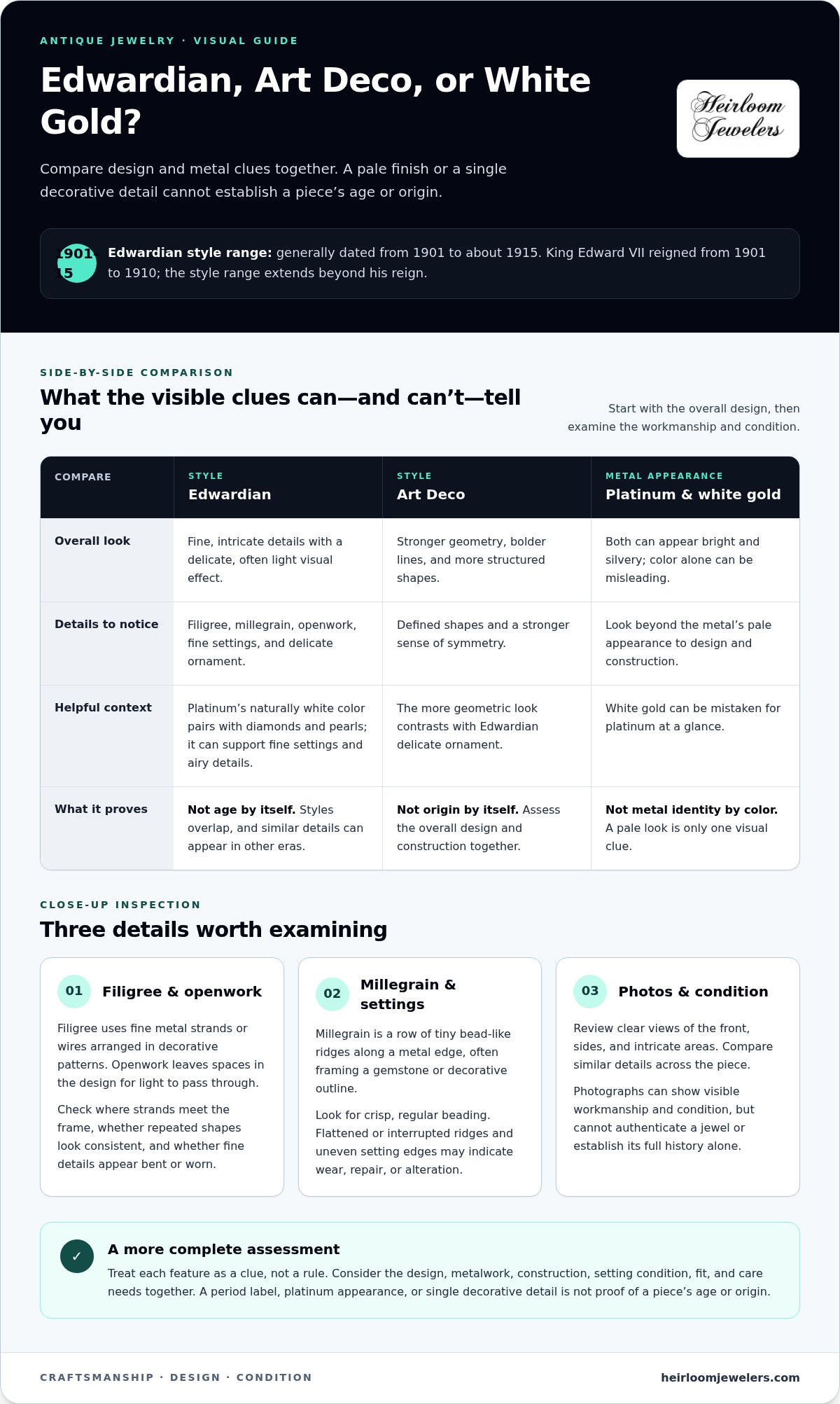
King Edward VII reigned from 1901 to 1910, and the broader jewelry style is generally dated from 1901 to about 1915. These dates describe different things: the reign marks the historical period, while the style range allows for fashions to emerge and continue beyond it. The Edwardian era provides useful historical context, but jewelry periods don’t begin and end neatly. Styles overlap, and makers didn’t all change their designs at once.
A period label is a starting point, not proof of an individual piece’s age or origin. Consider its design and construction together.
Why Was Platinum Suited to Edwardian Design?
Platinum’s naturally white color pairs harmoniously with diamonds and pearls, supporting the refined, pale appearance associated with many Edwardian jewels. The metal also enabled makers to form fine settings and delicate details that give a piece an open, lace-like quality. These qualities help explain platinum’s prominence in the period’s intricate work, but they don’t mean every Edwardian piece is platinum or that every platinum piece is Edwardian.
Look beyond the metal. The quality of the construction, the condition of settings and details, and the care a piece may need all affect its suitability. Weigh an antique’s age and workmanship alongside how you plan to wear and maintain it.
Edwardian Platinum Jewelry Details: Filigree, Millegrain, and Fine Settings
Look closely at how the metal is worked, not just at a piece’s overall silhouette. Filigree, millegrain, and openwork are details often associated with Edwardian platinum jewelry, but none is required for a piece to belong to the period. Similar techniques and motifs appear in other eras, so assess several clues together.
The delicate appearance of many Edwardian designs was supported by advances in platinum fabrication. For historical context, Lang Antiques’ overview of Edwardian Jewelry (1901-1915) discusses the period’s characteristic light, intricate work and the techniques behind it.
How to Recognize Filigree and Openwork
Filigree uses fine strands or wires of metal arranged into decorative patterns, sometimes with small curls or loops. Openwork describes spaces left between parts of a design, allowing light through rather than filling the area with solid metal. In close-up photographs, examine where strands meet the frame, whether repeated shapes look consistent, and whether wear has bent or worn down fine details.
These features can indicate careful workmanship, but they don’t prove age or origin. Patterns may be repeated by hand or vary slightly, and a single decorative clue can’t establish when or where a jewel was made.
What Millegrain and Fine Settings Can Reveal
Millegrain is a row of tiny bead-like ridges applied along a metal edge, often framing a gemstone, a setting, or a decorative outline. Zoomed-in photographs can show whether the beading is crisp and regularly finished, or worn, flattened, and interrupted. Check how the stones sit within their settings, too. Uneven edges or differences between similar sections may point to wear, repair, or alteration.
Photographs are helpful, but they have limits. Look for clear views of the front, sides, and intricate areas, then compare details across the piece. A close-up can reveal visible craftsmanship and condition, but it cannot authenticate a jewel or establish its full history by itself. Those judgments require more than appearance alone.
Use the details as a set of clues: the metalwork, setting, overall design, and signs of change should make sense together. To explore authenticated pre-owned pieces, view curated estate jewelry and consider each item’s workmanship, provenance, and condition.
Edwardian Platinum Compared with Art Deco and White Gold
Edwardian platinum jewelry can be difficult to identify by color alone. Platinum and white gold can both appear bright and silvery, while design details offer clues to a piece’s period and character. Compare the overall form, the metalwork, and the condition rather than relying on one visual feature.
| Comparison | Typical cues | May suit shoppers who prefer |
|---|---|---|
| Edwardian design | Often fine, intricate details and a delicate appearance. | Ornate workmanship and a softer, lighter visual effect. |
| Art Deco design | Often stronger geometry, bolder lines, and more structured shapes. | A graphic, defined look with a stronger sense of symmetry. |
| Platinum and white gold | Both can look white, but they are different metals with different compositions. | Either, depending on the documented material, piece condition, and personal preference. |
Edwardian or Art Deco: Which Design Language Fits You?
Edwardian pieces often favor delicate, intricate detailing, while Art Deco designs are commonly associated with stronger geometry. These are broad tendencies, not strict rules. Individual pieces vary, and styles can overlap, so consider the whole design rather than assigning a period from a single motif. For a closer look at the later style, see Art Deco Jewelry: The Definitive Guide to Jazz Age Elegance in 2026.
In brief, Edwardian design often emphasizes fine ornament, while Art Deco more often foregrounds geometry. Neither description fits every piece.
Platinum or White Gold: What Should Buyers Compare?
Color isn’t conclusive: white gold is a gold alloy, while platinum is a distinct metal. White gold may have a rhodium surface finish, but the details depend on the individual piece. Review documentation describing the metal, then examine the jewelry itself. Check for visible wear, thinning or damage around settings, and signs that stones or details have been altered.
Neither metal makes condition or care irrelevant. Maintenance needs vary with a piece’s construction and history, so avoid assumptions based on the metal name alone. A well-documented description and close inspection offer a more useful basis for comparison than broad claims about value or longevity.
How to Evaluate an Edwardian Platinum Piece Before Buying
Evaluate the whole piece, not just its period label or a single hallmark. A measured inspection can help you understand its workmanship, condition, and suitability for the way you intend to wear it.
A Practical Condition and Craftsmanship Checklist
Work through these checks in order:
- 1. Design: Consider whether the overall form and decorative details make sense together. Treat period style as a clue, not proof of age.
- 2. Construction: Examine how settings, decorative elements, and joins are formed. Look for loose-looking stones, uneven joins, or details that seem inconsistent with the rest of the piece.
- 3. Condition: Check for missing details, visible repairs, thinning, bent elements, and uneven wear. Pay particular attention to settings and delicate edges, where damage may affect security or appearance.
- 4. Fit and wear: For a ring, consider its fit and setting profile. Think about whether raised details or fine ornament suit your daily activities and how often you plan to wear it.
- 5. Documentation: Review the written description for the stated materials, condition, and any known alterations. Hallmark interpretation varies by country, and marks can provide context, but shouldn’t be treated as conclusive proof of a piece’s age or authenticity.
Clear photographs from several angles are useful. Look for views of the front, sides, setting, and edges. Images can reveal visible repairs or wear, but they can’t always show how secure a setting is or establish a piece’s complete history.
Match the Piece to Your Intended Wear
Delicate details can make an antique ring distinctive, but they also call for considered care. Assess the setting’s profile, the condition of fine elements, and whether the ring is comfortable for your hand and routine. Don’t assume an antique is maintenance-free; appropriate handling and care depend on its construction and present condition.
For broader context, The Timeless Artistry of Antique Rings: A Collector’s Educational Guide explores what gives historic rings their character. If you’re weighing a ring for regular wear, A Definitive Buying Guide to Vintage Engagement Rings offers another useful perspective on fit and selection.
A careful review of these details helps you weigh historic workmanship against practical considerations. Explore curated vintage and estate jewelry to consider pre-owned pieces chosen for their distinctive character.
Choosing Edwardian Platinum Jewelry Through a Curated Estate Collection
Choosing Edwardian platinum jewelry means weighing its distinctive workmanship and historical character against the practical realities of owning an older piece. Fine details can give a jewel individuality, but they also make condition and appropriate care important parts of the decision. The right choice isn’t simply the piece with the most elaborate design. It’s one whose appearance, documented history, condition, and intended use align with your priorities.
When a Curated Vintage Piece May Be the Right Choice
Estate jewelry can appeal to those who value historic design and the individuality of one-of-a-kind pieces. Rather than choosing a look alone, consider what draws you to a particular jewel: its metalwork, setting, gemstone arrangement, or overall proportions. Then balance that appeal with the piece’s condition and the care it may require.
Each pre-owned jewel has its own style, condition, and documented history. Curation can help focus attention on distinctive pieces, while authentication offers context for considering what you’re buying. Neither removes the need to assess the individual item. A beautiful detail may be central to its appeal, but the setting and construction still need to suit how you expect to wear it.
Explore Authenticated Estate and Vintage Jewelry
Heirloom Jewelers specializes in authenticated, curated pre-owned fine jewelry, including vintage platinum engagement rings. This collection is relevant to shoppers drawn to platinum and historic craftsmanship, though not every vintage platinum ring is Edwardian. The age, design, materials, condition, and documentation of each piece are individual considerations.
Use the criteria in this guide to narrow your preferences. You might favor fine ornament, a particular setting profile, or a jewel whose condition better suits regular wear. A curated estate collection offers a considered way to explore pre-owned pieces with distinctive character, while leaving room to weigh practical care alongside historical appeal.
Explore Heirloom Jewelers’ estate and vintage collection to compare pre-owned pieces by their workmanship, details, and condition.
Choose a Piece for Its Craftsmanship and Character
The appeal of Edwardian platinum jewelry lies in more than its age or metal. Look at the workmanship, consider how period details fit your taste, and assess condition, documentation, and wearability together. Filigree or a platinum appearance can offer useful clues, but no single detail establishes a piece’s history.
Authenticated estate jewelry offers a considered way to appreciate historic craftsmanship. Heirloom Jewelers specializes in curated, pre-owned fine jewelry, including vintage platinum engagement rings. Each piece has its own character, and thoughtful selection means weighing that appeal alongside its condition and care needs.
Explore Heirloom Jewelers’ curated estate and vintage jewelry to discover pre-owned pieces selected for their distinction rather than mass-produced appeal. Compare the details and condition, then choose a jewel that suits your style and the way you plan to wear it.
Frequently Asked Questions
What years are considered Edwardian for jewelry?
Edwardian jewelry is generally dated from 1901 to about 1915. King Edward VII’s reign lasted from 1901 to 1910, while the broader style period extends beyond those dates as fashions developed and overlapped. These ranges are useful context, not a precise dating tool for an individual jewel. A period label alone can’t establish when a piece was made or confirm its authenticity.
What are the most recognizable features of Edwardian platinum jewelry?
Edwardian platinum jewelry is often recognized by fine, intricate work and a light, delicate appearance. Filigree, openwork, millegrain beading, fine settings, and a white-on-white combination of platinum with diamonds or pearls are useful design clues. These details aren’t required in every piece, and they can appear in other periods, too. Consider the overall design and construction together rather than relying on a single motif.
How can you tell if Edwardian jewelry is platinum?
A hallmark or stamp may offer a clue, but markings vary by country and some antique pieces may be unmarked. Stamps such as “PLAT” or “PT” can indicate platinum, but aren’t conclusive proof of a piece’s metal or age. Color alone isn’t enough either, since white gold can look similar. Compare available documentation with the piece’s construction and other evidence before drawing a conclusion.
Is Edwardian platinum jewelry suitable for everyday wear?
It can be, but suitability depends on the individual piece’s condition, setting, and design, as well as how you plan to wear it. Delicate details or a raised setting may call for more care during daily activities. Examine the settings for visible wear or damage, consider comfort and fit, and factor in appropriate care. Antique jewelry shouldn’t be assumed to be maintenance-free simply because it’s made of platinum.
How does Edwardian platinum jewelry differ from Art Deco jewelry?
Edwardian designs often emphasize fine ornament and delicate detailing, while Art Deco jewelry is commonly associated with stronger geometry, bold lines, and structured forms. These are broad stylistic tendencies, not strict rules. Periods and techniques can overlap, so a single shape or motif can’t reliably date a piece. Compare the overall composition and workmanship, and consider documented history alongside visual style.
Is platinum better than white gold for antique jewelry?
Neither metal is automatically better. Platinum and white gold can both appear silvery, but they are different materials with different compositions. For an antique piece, compare its documented metal details with its visible condition, setting security, and signs of wear or alteration. The right choice depends on the individual jewel, your preferences, and how you intend to wear it, not just the metal name.
Can Edwardian platinum jewelry be resized or repaired?
Some pieces can be resized or repaired, but the feasibility depends on their construction, condition, and previous alterations. Fine details, intricate settings, and worn areas may affect what work is appropriate and how it could change the piece. Before considering an alteration, review the jewelry’s structure and documented history. A careful assessment of the piece can help determine suitable options while accounting for its design, age, and workmanship.