
A coral brooch’s age alone doesn’t define its appeal. Estate coral brooches are valued for their style, coral color, provenance, craftsmanship, and condition, with each detail shaping the piece’s character and collectibility. The setting and quality of the carving also help distinguish one brooch from another.
A vivid color or intricate design may catch the eye first, but careful evaluation goes beyond appearance. Wear, repairs, and the way the coral is mounted all affect how a piece is understood and appreciated.
This guide explains how antique and vintage styles differ, what coral color can reveal, and why a brooch’s history and workmanship matter. You’ll also learn what to examine when assessing condition, how to care for coral, and which qualities may make a brooch especially compelling to collectors.
Key Takeaways
- Compare the brooch’s form, setting and decorative details to understand how antique and vintage styles differ.
- Assess coral color alongside carving and overall design; color alone doesn’t determine a piece’s appeal or collectibility.
- Look for signs of provenance and skilled workmanship that give a brooch historical and aesthetic interest.
- Examine the coral and setting for wear or damage, since condition shapes how the piece can be appreciated and cared for.
- Recognize the distinctive motifs and craftsmanship associated with Victorian coral brooches when considering a piece’s period character.
Antique and vintage coral brooch styles
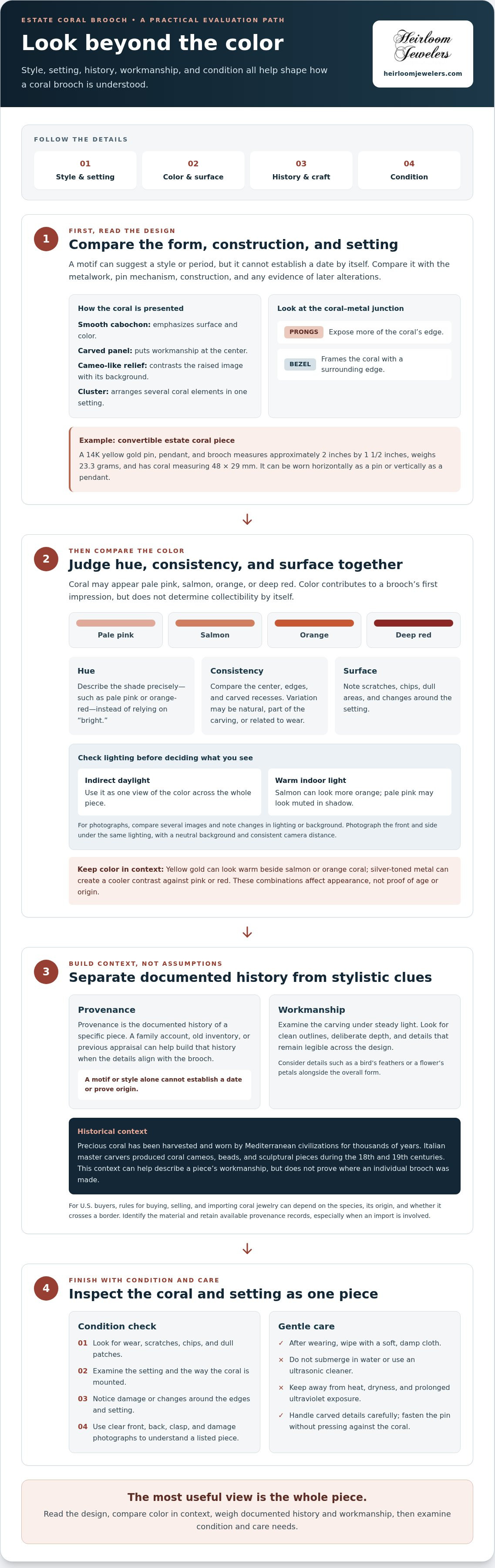
Coral brooches range from small, simply mounted pins to sculptural pieces with carved details. Their shape, setting, and construction offer useful clues about style and possible age. A motif may suggest a period, but it cannot establish a date by itself. Compare the design with the metalwork, pin mechanism, and any evidence of later alterations.
One practical example is an estate coral pin, pendant, and brooch in 14K yellow gold. It measures approximately 2 inches by 1 1/2 inches and weighs 23.3 grams. Its coral measures 48 x 29 mm. The piece can be worn horizontally as a pin or vertically as a pendant. That convertible format shows how a brooch can combine ornament with more than one way to wear it.
To assess an estate coral brooch’s design and setting, examine its motif, metalwork, fastening, and construction together. A carved subject, such as a bird among flowers, helps describe its style, while the clasp and setting provide additional clues. Treat these features as evidence to compare, not as a date on their own.
Coral styles also vary in how the material is presented. A smooth cabochon emphasizes the coral’s surface and color, while a carved panel makes the workmanship central. Cameo-like relief creates contrast between the raised image and its background. Cluster designs arrange several coral elements in a single setting. Look closely at the junction between coral and metal: prongs expose more of the coral’s edge, while a surrounding bezel frames it.
For U.S. buyers, rules for buying, selling, and importing coral jewelry can depend on the species, its origin, and whether it crosses a border. Identify the material and retain any available provenance records, especially when an import is involved.
In the United States, these pieces appear in estate-jewelry inventories and vintage jewelry listings. Compare the brooch’s dimensions, setting, design, and condition in each description. Clear photographs of the front, back, clasp, and any damage help you understand the piece before purchase.
Care for a coral brooch gently: after wearing it, wipe it with a soft, damp cloth. Don’t submerge it in water or use an ultrasonic cleaner. Keep coral away from heat, dryness, and prolonged ultraviolet exposure, which can affect the material. Handle carved details carefully, and fasten the pin without pressing against the coral.
Coral colors and collectibility
Color shapes a coral brooch’s first impression, but it doesn’t determine collectibility by itself. Coral may appear pale pink, salmon, orange, or deep red. Compare the color across the whole piece rather than judging one bright area. Consistent color can look quite different from visible variation, which may be natural, part of the carving, or related to wear. Consider color alongside design, workmanship, and condition before forming an overall view.
Start with the lighting. View the brooch in indirect daylight, then compare it under warm indoor light. Salmon can look more orange beneath a lamp, while pale pink may appear muted in shadow. If you’re considering a piece from photographs, compare several images and note changes in background or lighting. A single close-up can make one section seem brighter than the rest.
Next, look at saturation and surface character. Deep color may give a carved motif strong visual definition, while a softer shade can make a delicate design feel quieter. Neither effect automatically signals higher quality. Check for even transitions, visible scratches, chips, and areas that look dull beside brighter sections. For example, a red brooch with crisp carving and a sound setting may present better than a more vivid piece with damaged edges.
Color also interacts with the setting. Yellow gold can create a warm appearance beside salmon or orange coral. Silver-toned metal may provide a cooler contrast against pink or red. These combinations affect how a brooch looks when worn, but don’t establish its age or origin. Compare the coral and metal together, then consider whether the setting frames the material or distracts from it.
Use this simple comparison when reviewing two pieces:
- Hue: Describe the shade precisely, such as pale pink or orange-red, rather than relying on “bright.”
- Consistency: Compare color across the center, edges, and carved recesses.
- Condition: Note chips, scratches, dull patches, and changes around the setting.
For a useful record, photograph each brooch from the front and side under the same lighting. Include a neutral background and keep the camera distance consistent. Then compare color, carving, and condition without letting one image exaggerate the contrast. A written description such as “salmon coral with darker recessed details” gives a clearer basis for comparing estate coral brooches than a general label like “rare red.”
Coral provenance and craftsmanship
Precious coral has been harvested and worn by Mediterranean civilizations for thousands of years. This long history gives coral jewelry a broad cultural context, but it doesn’t establish where an individual brooch was made. Provenance is the documented history of a specific piece. A family account, old inventory, or previous appraisal can help build that history when its details align with the brooch itself.
Italian master carvers produced coral cameos, beads, and sculptural pieces during the 18th and 19th centuries. These forms show how varied coral work could be: a cameo emphasizes a raised image, while beads rely on shaping and surface consistency. Sculptural work gives the material a more dimensional form. Such historical context can help describe a brooch’s workmanship, but style alone cannot prove Italian origin.
Examine the carving under steady light. Look for clean outlines, deliberate depth, and details that remain legible across the design. Consider a bird’s feathers or a flower’s petals alongside the overall form. Uneven cuts may reflect the design or later wear, so inspect several areas before drawing conclusions. A magnifying lens can help reveal tool marks and small chips without forceful handling.
The setting offers another useful line of evidence. In one estate coral pin and pendant, the coral is prong set. Prongs hold the material at separate points, leaving portions of its edge visible. Check whether each prong sits securely and appears consistent with the rest of the mount. Look for bent metal, gaps, or replacement components. A setting may have been altered over time, so assess its construction alongside the carving rather than treating it as a standalone date.
When assessing craftsmanship, consider these features together:
- Carving: Check whether lines and raised details look intentional and coherent.
- Setting: Inspect the prongs or surrounding metal for stability and visible alteration.
- Provenance: Compare written history with the brooch’s design and construction.
- Wear: Distinguish surface wear from chips or damage affecting the carved design.
A practical record makes future comparisons clearer. Photograph the front, back, clasp, and setting, then note distinctive motifs and any accompanying paperwork. Keep descriptions factual: “carved floral panel in a prong setting” is more useful than an unsupported claim about maker or origin. For estate coral brooches, provenance and workmanship strengthen a description when visible details and a coherent history support them.
Coral quality and condition
Assess coral quality by considering color, carving, surface, and setting together. A fine, deep red carved coral design depicting a bird and flowers offers a clear example. Its visual character depends on the carving’s depth and the condition of its raised details. Check the whole design, not just the most vivid area. A small chip can interrupt a petal or feather, while surface wear may soften crisp edges.
To identify genuine coral in an antique brooch, don’t rely on color alone. Examine its internal structure and material characteristics, since appearance by itself can’t establish what the material is. A gemological assessment considers those features alongside the setting and visible condition.
Use indirect light to inspect the coral from the front and side. Look for scratches, chips, cracks, and dull patches, especially along exposed edges and carved recesses. Then turn the brooch over and examine the mount. Loose prongs, gaps, or bent metal can affect how securely the coral is held. Close inspection helps distinguish damage to the coral from wear on the setting.
Condition matters because coral is sensitive to heat, dryness, and prolonged UV exposure. Keep a brooch away from direct heat and strong, extended sunlight. After wearing it, gently wipe the surface with a soft, damp cloth. Don’t submerge it in water or clean it with an ultrasonic cleaner. These care steps help avoid exposing the material to conditions that can harm it.
Separate visible flaws from features that belong to the design. Carved recesses, for example, may appear darker than raised surfaces, and that contrast isn’t automatically damage. Compare similar areas across the carving, then note any isolated change in texture or color. Record the location of a chip or scratch rather than describing the entire piece as worn. Specific observations make condition easier to communicate and compare.
- Inspect the coral: Note chips, cracks, scratches, and changes in surface appearance.
- Check the setting: Look for movement, bent prongs, or gaps around the material.
- Describe the carving: Identify details that remain crisp and areas softened by wear.
- Protect the piece: Avoid heat, dryness, prolonged UV exposure, immersion, and ultrasonic cleaning.
A careful record should include the brooch’s front, back, and setting, plus clear notes on visible wear. For a carved piece, describe which details remain distinct and where damage appears. This gives collectors a more useful account of quality than a broad label such as “excellent condition.”
Victorian coral brooches
A Victorian attribution should rest on several design clues, not coral color alone. Examine the brooch’s overall form, decoration, metalwork, and fastening as a whole. A carved floral design, for example, describes the subject but doesn’t prove its period. Compare all the details for consistency. A later replacement clasp or altered mount can complicate an otherwise period-looking design.
Separate the age of the coral carving from the age of its setting. Italian master carvers made coral cameos, beads, and sculptural pieces during the 18th and 19th centuries. That history offers useful context, but it doesn’t make every carved coral brooch Victorian or Italian. A Victorian attribution requires evidence from the piece’s construction and design, considered together.
Begin with the back. Inspect the pin stem, hinge, clasp, and any visible repairs. Check whether the fastener appears compatible with the mount, and look for solder or replacement parts. Then examine the front for repeated decorative details and coherent workmanship. If a floral carving appears finely finished but its setting looks substantially altered, record those observations separately.
Consider the design as a whole, not as a checklist of supposed period symbols. A bird and flowers, for instance, can be described accurately without assigning a maker or date. Note whether the carving is raised, incised, or sculptural. Compare its depth and finish with the surrounding mount. These observations help distinguish a Victorian-style appearance from a securely established period attribution.
Use a simple assessment sequence when reviewing a possible Victorian piece:
- Describe the form: Record whether it is a pin, brooch, or convertible design.
- Study the decoration: Note carved subjects, repeated motifs, and workmanship.
- Inspect the reverse: Examine the hinge, clasp, pin, and visible repairs.
- Compare the evidence: Look for agreement between the design and construction.
Photograph both sides and capture close views of the clasp and mount. Record observable features before using a period label. For example, “carved floral coral with a replacement clasp” is more precise than simply “Victorian.” This distinction matters to collectors because a period style and a documented period object are not the same claim. Assess Victorian examples of estate coral brooches through their combined design, workmanship, and construction, not one striking feature.
For a wider view of estate jewelry, explore the estate jewelry selection and compare how material, setting, and craftsmanship shape each piece.
Heirloom Jewelers: Lugano Emerald & Diamond Necklace 18K White Gold
Heirloom Jewelers offers the Lugano Emerald & Diamond Necklace 18K White Gold as an example of estate jewelry with distinctive materials and a considered setting. While assessing coral brooches, you may also be exploring vintage and estate pieces with other gemstones or historic diamond cuts. The Vintage White Gold Old European Cut Diamond Stud Earrings and Estate Peridot & Quartz Dangle Earrings 14K Yellow Gold offer different examples of how gemstone, metal, and design shape a piece’s character.
Use the same careful eye across each category: consider the materials, craftsmanship, design, and visible condition. These offerings provide a way to explore estate and vintage jewelry beyond coral brooches. For questions about Heirloom Jewelers’ jewelry, contact the store or visit heirloomjewelers.com.
Choose a Piece That Holds Your Interest
A lasting collection reflects the details its owner values, whether that is a particular carving, a distinctive setting, or a design with personal meaning. Let your observations guide the next step. Keep notes about the features you admire, the condition you consider acceptable, and the history you hope to understand. This gives your search for Estate coral brooches a clear direction without reducing the choice to color or age alone.
Heirloom Jewelers offers other estate and vintage pieces to explore, including the Lugano Emerald & Diamond Necklace 18K White Gold, Vintage White Gold Old European Cut Diamond Stud Earrings, and Vintage Platinum 0.5 Carat Diamond Engagement Ring. Each offers a different way to appreciate the relationship between materials, workmanship, and design.
If you’re ready to continue exploring fine estate jewelry, contact Heirloom Jewelers. Take your time, follow the details that matter to you, and choose with confidence.
Frequently Asked Questions
What styles and types of coral are used in estate brooches?
Estate brooches use coral in carved, polished, and naturally shaped forms. Carved cameos present a raised image, while beads create a more repetitive, rounded design. Some brooches feature coral branches or irregular pieces that preserve a more organic outline. Descriptions such as “angel skin” refer to pale pink coral, while “oxblood” describes a deep red tone. Seek precise material descriptions rather than relying on color labels alone.
Which factors affect the value of an antique coral brooch?
An antique coral brooch’s value reflects the combined effect of its design, workmanship, coral quality, metal setting, condition, and documented history. A distinctive carving can attract interest, but damage or unstable construction may affect desirability. Precious-metal content also matters, though it doesn’t replace the importance of the coral and craftsmanship. Compare pieces with similar designs and construction, and consider whether records support the stated age or origin.
How can you verify the authenticity and provenance of a coral brooch?
Use material examination and supporting records together: appearance alone can’t establish coral authenticity or a brooch’s history. Review any prior appraisal, receipt, family record, or estate inventory, and compare its description with the piece’s visible construction. A qualified gemologist can assess the material, while an antique jewelry specialist can evaluate period features. Keep copies of documents and photographs with the brooch’s notes to preserve its record.
What should you check for damage or repairs before buying a vintage coral brooch?
Inspect the coral, mount, and fastening separately before deciding. Use a loupe to look for hairline cracks, filled chips, glue residue, or color differences that may indicate a repair. Check whether the pin closes securely and whether the setting shifts when handled gently. Ask for close photographs of the back and edges if viewing remotely. Record any disclosed repairs and compare them with the visible condition before purchase.
Where can you buy estate coral brooches in the United States?
In the United States, estate coral brooches appear in estate-jewelry inventories and vintage jewelry listings. Compare descriptions, dimensions, setting, design, condition, and clear photographs before purchasing.