
Where can you find estate jewelry for sale and feel confident about what you’re choosing? A striking design may catch your eye, but its era alone won’t tell you whether the metal, gemstones, condition, or scale suit your needs. The details of the individual piece matter most.
It’s natural to want a distinctive jewel with character while feeling unsure how to compare antique, vintage, and other pre-owned pieces. A useful listing should help you understand what’s being offered. You’ll also want to know which marks, gemstone details, and signs of wear deserve a closer look.
This guide will help you browse with greater confidence. You’ll learn how to assess a piece beyond its appearance, compare details that influence its appeal, and consider how its design fits your style and occasion. Heirloom Jewelers’ curated selection of authenticated estate and vintage fine jewelry includes examples in platinum, 18K white gold, and 14K yellow gold, with diamonds and colored gemstones. As you explore, focus on what the listing confirms, not simply the era attached to the piece.
Key Takeaways
- Age labels such as antique and vintage can vary, so look for clear descriptions rather than relying on a label alone.
- When comparing estate jewelry for sale, review the listed materials and gemstone details, then note any questions the description leaves unanswered.
- Compare stated condition, craftsmanship, and dimensions where provided to judge whether a piece suits your intended wear.
- Use your preferences for metal, gemstone, and design to narrow your choices. Assess each piece on its own merits rather than assuming it’s a bargain or investment.
- Explore Heirloom Jewelers’ curated, authenticated estate and vintage fine jewelry, including an emerald and diamond necklace and old European cut diamond earrings.
Explore Estate Jewelry for Sale by Type, Era, and Character
Browsing estate jewelry for sale is easier when you separate three ideas: ownership history, age, and design. “Estate” generally describes previously owned fine jewelry. It doesn’t, by itself, tell you when a piece was made or whether it belongs to a particular design period. Keeping those distinctions in mind helps you compare pieces without relying on a label to tell the whole story.
What does estate jewelry mean?
Estate jewelry has been owned before. The term describes a piece’s ownership history, not a guaranteed age or style. “Antique” and “vintage” refer to age or period, but their definitions can vary between sellers and contexts. Don’t assume a piece is antique or vintage based on appearance alone. Look for a listing that explains the basis for its dating, and treat an unsupported era as uncertain.
Jewelry also reflects the materials, techniques, and customs of its time. A broad overview of the history of jewellery can provide useful context, but it can’t establish when an individual piece was made. For that, rely on item-specific information rather than a general resemblance to a historical style.
Which estate jewelry styles can shoppers browse?
Start with form and intended use. Rings, earrings, and necklaces are practical browsing categories. You can also focus on gemstone jewelry or a particular metal. These are useful ways to organize your search, not a promise that every category or style will be available from a particular seller.
- Rings: Consider the design, setting, and any listed details that help you understand the piece.
- Earrings: Compare the overall form, metal, gemstones, and fastening details when provided.
- Necklaces: Look at how the materials and design work together, along with any stated dimensions or other details.
For a specific example of colored gemstones paired with diamonds, see the Lugano emerald and diamond necklace guide. The necklace is described as 18K white gold, with emeralds and diamonds. It shows why details about materials and gemstones can tell you more than an era label alone.
As you browse, compare what the description actually confirms: design, metal, gemstones, and any stated dating or history. A distinctive piece doesn’t need a famous period label to be worth considering. Clear details let you judge whether its character and materials suit your preferences.
How to Assess Estate Jewelry Materials, Gemstones, and Marks
Use a consistent sequence when comparing estate jewelry for sale: read the description, identify the stated materials, review the gemstone details, then note what remains unclear. This keeps a striking design from overshadowing practical information. A concise listing may not answer every question, so separate confirmed details from assumptions.
How to read gold, platinum, and gemstone descriptions
Gold karat marks describe the proportion of gold in an alloy. For example, 14K and 18K refer to different gold purities; they don’t tell you the full composition of every other metal in the piece. Check the listing for the stated karat and color, and don’t infer a purity or testing result that isn’t provided. Platinum is a different precious metal, not a gold karat grade, so check that the description identifies it specifically.
Gemstone names should also be item-specific. Heirloom Jewelers’ documented examples include emerald and diamond jewelry, as well as pieces described with peridot and quartz. Those names are useful starting points, but they don’t tell you every characteristic of a particular stone. Check what the individual listing says about its gemstones and note anything it doesn’t explain.
What can hallmarks and signatures tell you?
A hallmark may offer a clue to metal fineness, while a maker’s signature or other mark may help identify who made a piece or where it originated. Interpretation depends on the mark and supporting information. A stamp alone doesn’t prove a piece’s full history, authenticity, or precise age. If a mark is unclear, consult a qualified professional before drawing conclusions. Similar authentication principles apply to other estate categories like fine timepieces—readers evaluating pre-owned luxury watches can learn more about Affordable Swiss Watches Inc. and their guide to inspecting genuine markers.
For additional context on how design can relate to period, the Gemological Institute of America’s overview of historic jewelry eras can help you recognize broad stylistic references. Treat resemblance as context, not proof of a specific date. For related reading on period rings, see this collector’s guide to antique rings.
Estate jewelry is previously owned fine jewelry; its materials and history should be judged from the details documented for the individual piece. Before deciding, write down questions about metal marks, gemstone descriptions, or the basis for a stated date. You can also browse Heirloom Jewelers’ curated estate and vintage jewelry with those questions in mind.
Compare Estate Jewelry by Condition, Craftsmanship, and Wearability
Two pieces with similar designs can differ in condition, construction, and how they feel to wear. Compare listing details side by side instead of relying on an appealing photograph or a broad description. For estate jewelry for sale, look for stated condition, visible details, materials, and dimensions when provided. A pre-owned piece may show wear, and its condition should be assessed individually. Don’t assume it has been restored, serviced, or kept flawless unless the listing says so.
Which condition details should you look for?
Read the condition notes for mention of wear, repairs, missing components, or other disclosed changes. If close-up images are available, examine the setting, joins, clasps, and other visible features. Photos can help you form questions, but they may not show every detail clearly. If a material or condition point is unclear, ask for clarification rather than treating silence as confirmation.
Will the piece suit your intended use?
Wearability depends on your preferences and the details available. Consider the piece’s dimensions, fastening, setting profile, and any information about comfort. A design chosen for occasional wear may suit different priorities than one you hope to wear often. Neither use makes a piece inherently suitable or unsuitable; the goal is to understand its features before deciding. Don’t assume a ring can be resized or a piece repaired or altered unless that option is confirmed for the specific item.
Use a simple comparison to keep observations separate from unanswered questions:
| Listing detail | What it tells you | Follow-up question |
|---|---|---|
| Condition notes | Disclosed wear, repairs, or missing components | Are there other condition details not described? |
| Close-up images | Visible features of the setting, clasp, or construction | Can an unclear area be described more fully? |
| Materials and gemstones | What the listing identifies about the piece | Are any material details unconfirmed? |
| Dimensions and fastening | Information that may help you consider fit and use | Are measurements or fastening details available? |
A hallmark or photograph alone cannot establish every aspect of a piece’s history. Treat each source of information as one part of your assessment. Clear descriptions, useful images, and answers to specific questions together give you a more grounded basis for comparing craftsmanship and deciding whether a piece fits your life.
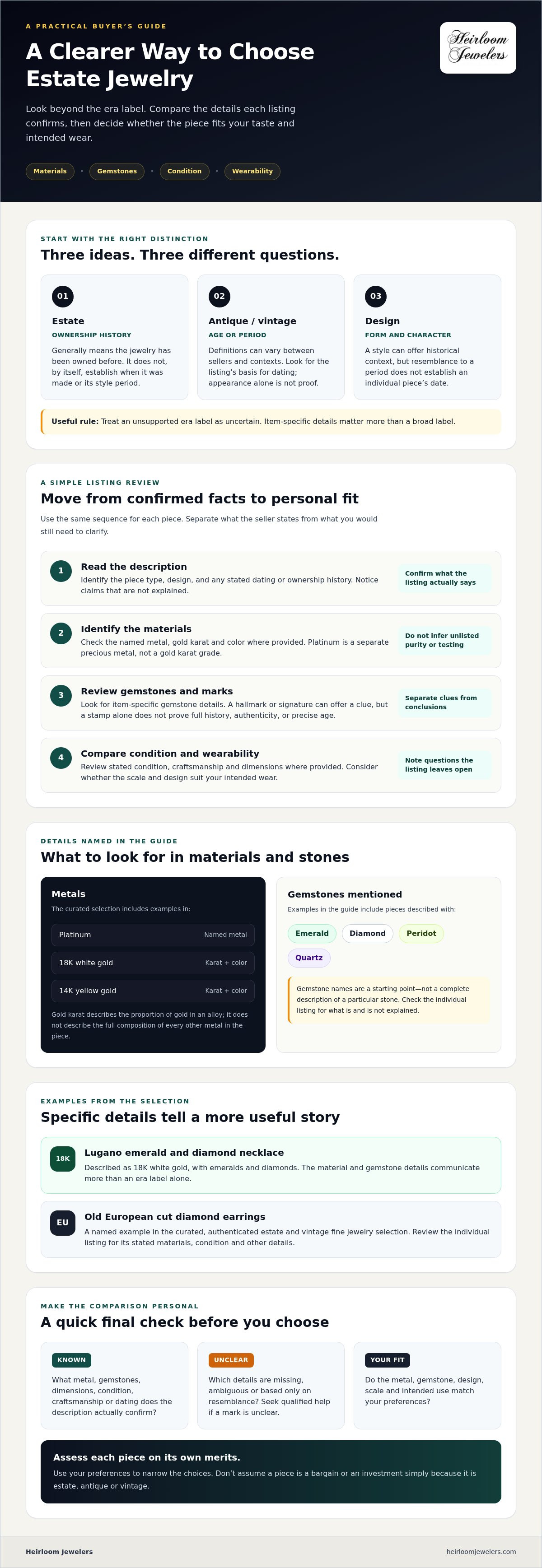
Choose Estate Jewelry That Fits Your Style and Priorities
A thoughtful search starts with your priorities, not a trend or era label. Decide whether you’re looking for a ring, earrings, or a necklace, and consider the occasion and how often you expect to wear it. Then compare materials, gemstones, design, and the listing information available. This gives you a clear basis for choosing without expecting one piece to meet every preference.
How to narrow your search without overlooking a good fit
Use filters to find promising options, then read each description closely. Compare listed dimensions and gemstone details instead of relying on broad terms such as “classic” or “statement.” A preference checklist can help:
- Use: everyday wear, a special occasion, or a meaningful gift.
- Metal: a preference such as platinum, 18K white gold, or 14K yellow gold.
- Gemstone: diamonds, emeralds, peridot, quartz, or another stone named in the listing.
- Design: the shape, scale, and details you’re drawn to.
- Information: whether the listing gives enough detail to compare the piece with your priorities.
For example, an emerald and diamond necklace in 18K white gold offers a different combination of color, stones, and metal from peridot and quartz earrings in 14K yellow gold. These examples illustrate how materials shape a piece’s character. Check the individual listing for its specific details and availability.
When should you ask for more information?
Pause if a detail matters to your decision but isn’t clear. You might ask about an unlisted measurement, an unclear mark, or a condition note that needs explanation. If documentation is mentioned, ask what the seller can confirm about it. Don’t assume a particular policy, service, or item availability unless it’s explicitly stated.
Estate jewelry isn’t automatically less expensive than other jewelry, and it shouldn’t be treated as a guaranteed financial investment. Consider what the piece offers in design, materials, and documented details, then decide whether it suits your budget and purpose. If you’re considering an engagement ring, the vintage engagement ring buying guide offers related context for comparing period, style, and authenticity.
Ready to compare pieces against your preferences? Explore Heirloom Jewelers’ curated estate and vintage jewelry and review the details that matter to you.
Shop Heirloom Jewelers Estate Jewelry with Clear Next Steps
Finding a piece worth keeping starts with understanding what the listing confirms. Heirloom Jewelers focuses on curated, authenticated estate and vintage fine jewelry. Its selection includes distinctive examples across different metals and gemstones, giving you specific details to compare as you consider estate jewelry for sale.
What makes Heirloom Jewelers’ selection distinctive?
The focus is on pre-owned fine jewelry with individual character, rather than a broad assortment of new mass-produced pieces. Confirmed examples include the Lugano emerald and diamond necklace in 18K white gold, vintage white gold old European cut diamond stud earrings, and a vintage platinum diamond engagement ring. Each offers a different combination of material, gemstone, and form. Check its current listing for the details that apply to that particular piece.
What to review before choosing a piece
Before deciding, review the current product description and availability. Look for the stated metal, gemstone details, condition, and measurements. Compare those facts with your preferences and intended use. If a detail you need is missing or unclear, ask the retailer an item-specific question rather than filling the gap with an assumption.
- Materials: Confirm which metal the listing identifies and note any stated purity.
- Gemstones: Check the named stones and any additional information provided about them.
- Condition: Read the item’s condition notes; don’t assume restoration, service history, or flawless condition if the description is silent.
- Measurements: Use listed dimensions to consider scale and fit, where available.
- Availability: Verify that the piece is currently available before making plans around it.
A curated selection and authentication offer useful context, but they don’t replace reviewing the details of an individual item. Ask about what matters to your decision, such as an unclear measurement or condition note. Policies and services can differ, so rely on what the current listing or retailer explicitly confirms rather than assuming unstated terms.
There’s no need to rush the choice. Browse the Heirloom Jewelers collection, compare descriptions, and take time to identify the piece whose materials, design, and documented details feel right for you.
Choose a Piece with Confidence
The strongest choice isn’t defined by an era label alone. Look at the individual piece: its documented materials and gemstones, stated condition, and details that suit how you plan to wear it. For estate jewelry for sale, clear descriptions help you compare thoughtfully and identify questions to resolve before deciding.
Heirloom Jewelers specializes in curated, authenticated estate and vintage fine jewelry. Its selection includes pieces featuring diamonds, emeralds, peridot, and quartz. Review each item’s current description and availability, and consider whether its character and details align with your preferences.
When you’re ready to continue browsing, explore the curated estate and vintage jewelry selection. Take your time, ask about details that matter to you, and choose a piece that fits your style and occasion.
Frequently Asked Questions
Is estate jewelry the same as antique or vintage jewelry?
No. “Estate” refers broadly to prior ownership, while “antique” and “vintage” describe age or period. Definitions of those age labels can vary, so the words alone don’t establish when a piece was made. Look for item-specific information that supports a stated date or period. A design may resemble an earlier style, but appearance alone doesn’t confirm its age or history.
How can I tell if estate jewelry is authentic?
Review the listing for clear, item-specific descriptions of the metal, gemstones, marks, and any history the seller can confirm. Hallmarks and signatures can offer clues, but a mark or photograph alone doesn’t establish every aspect of a piece’s authenticity or provenance. Ask about unclear details, and consider an independent qualified professional if you need further assessment. Heirloom Jewelers specializes in curated, authenticated estate and vintage fine jewelry.
Is estate jewelry always less expensive than new jewelry?
No. Estate jewelry isn’t automatically less expensive, and prior ownership alone doesn’t determine a piece’s price. Materials, gemstones, craftsmanship, condition, and other item-specific details can all matter. Compare the actual pieces and their descriptions rather than assuming a pre-owned item is a bargain. Choose based on personal appeal and intended use, not on an expectation that jewelry will produce financial returns.
What should I check before buying estate jewelry online?
Can estate jewelry be worn every day?
Some estate jewelry may suit regular wear, but suitability depends on the individual piece, its condition, design, and your routine. Consider the setting, fastening, dimensions, and any condition notes in the listing. Ask about details that affect your decision if they aren’t clear. Avoid assuming that a piece has been restored or is appropriate for daily wear without supporting information. Let your intended use guide the choice.
What kinds of estate jewelry are available for sale?
Estate jewelry can include rings, earrings, necklaces, and pieces featuring different gemstones and precious metals. Heirloom Jewelers’ confirmed examples include a Lugano emerald and diamond necklace, old European cut diamond stud earrings, a vintage platinum diamond engagement ring, and peridot and quartz dangle earrings in 14K yellow gold. The selection can change, so review current listings for specific details and availability.