
What if the most appealing half-carat ring isn’t the one with the largest-looking diamond? A half carat vintage diamond ring can look quite different depending on its cut, proportions, and setting. Carat weight is a useful starting point, but it doesn’t tell the whole story.
When vintage listings vary in how they describe a diamond’s quality, age, and condition, comparing them can be challenging. Look beyond the carat figure to assess whether the stone feels balanced in its setting and whether the ring’s details suit your preferences.
This guide explains how carat weight relates to visual size, and how cut, design, and setting influence a ring’s character. You’ll also learn what to ask about wear, repairs, hallmarks, grading reports, and provenance before making a decision. With a careful review of proportion, condition, and documentation, you can compare vintage rings with greater confidence and choose based on more than a number in a listing.
Key Takeaways
- Carat weight measures a diamond’s weight, not its visible diameter. Compare documented measurements and how the stone sits in its setting.
- A half carat vintage diamond ring can reflect many periods and design choices, so look beyond the word “vintage” to the piece’s specific details.
- Review descriptions and photographs for the stone, metal, setting, and condition. Ask about wear or repairs that aren’t clear.
- Grading reports, appraisals, and seller descriptions serve different purposes. Check that each document refers to the ring being considered.
- Rank your priorities, such as visual presence, historical character, condition, and documentation, before comparing individual rings.
What Makes a Half Carat Vintage Diamond Ring Distinctive?
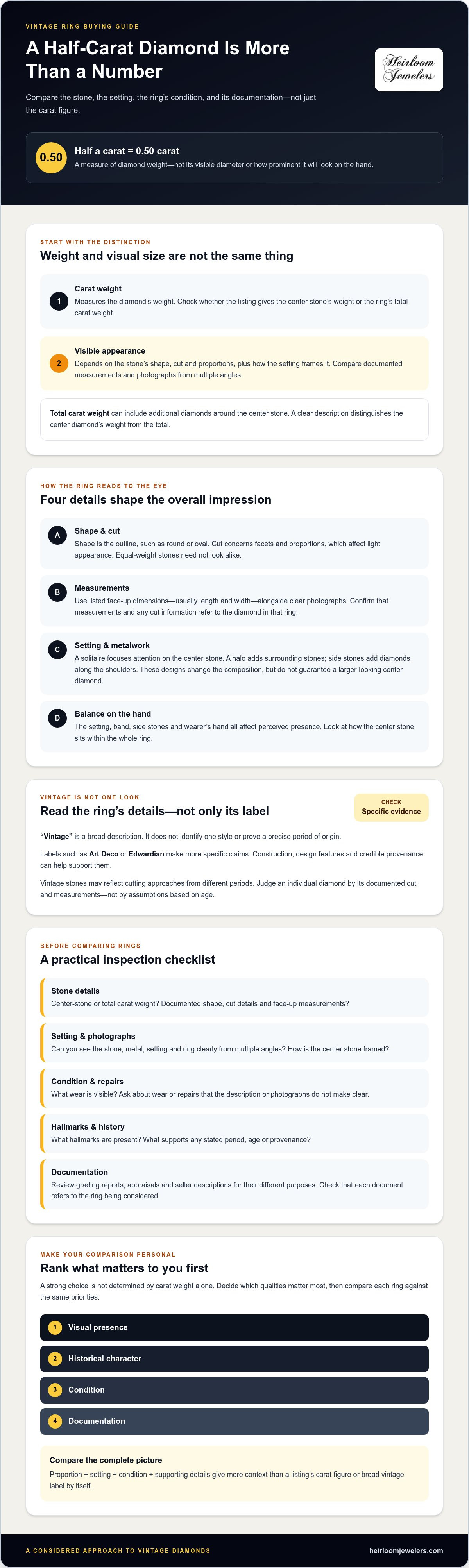
A half-carat diamond weighs 0.50 carat. That figure describes the stone’s weight, not its visible diameter or how prominent it will look on the hand. A half carat vintage diamond ring pairs that measured weight with an older or pre-owned ring, whose design, setting, and condition all contribute to its appeal.
In brief: diamond weight measures mass, visual size describes how the stone appears face-up, and vintage refers to a ring’s age or history rather than one particular style.
Check whether a listing gives the center diamond’s carat weight or the ring’s total carat weight. Total carat weight includes multiple diamonds, such as smaller stones set alongside the center stone. A ring with a 0.50-carat center diamond may therefore have a higher total carat weight if it includes additional diamonds. A clear description should distinguish the two figures.
Does a half-carat diamond look small in a vintage setting?
There’s no universal answer. Perceived size depends on the diamond’s proportions and cut, the setting’s design, and the wearer’s hand. Side stones, engraved details, or a broader band can change the ring’s visual balance, but they don’t guarantee that the center diamond will look larger. Compare the ring’s measurements with photographs from multiple angles, and consider how the setting frames the stone.
Cut also shapes a diamond’s appearance. Vintage stones may reflect cutting approaches from different periods, so their outlines and light return can differ from those of modern cuts. For background on the evolution of diamond cuts, consider how changing techniques influenced a stone’s proportions and visual character. For a specific ring, rely on its documented cut and measurements rather than assumptions based on age.
What does vintage mean when describing a diamond ring?
“Vintage” is a broad description, not a precise period attribution or a single design language. It may describe an older piece or a pre-owned ring, while labels such as Art Deco or Edwardian make more specific claims about design and history. Details such as construction, design features, and credible provenance can help support those claims. A seller’s use of a period name alone doesn’t establish when a ring was made.
Heirloom Jewelers specializes in curated estate and vintage fine jewelry, including a listed Vintage Platinum 0.5 Carat Diamond Engagement Ring. Verify its specific cut, measurements, condition, and history before drawing conclusions about its appearance or period. Assess the ring itself, not just the carat figure or a broad style label.
How Diamond Cut, Shape, and Setting Change the Ring's Appearance
Carat weight, shape, and cut describe different things. Weight measures the diamond; shape refers to its outline, such as round or oval; cut concerns how its facets and proportions affect its appearance. Read a cut grade, if provided, according to the grading system and stone type. Don’t assume that two diamonds of equal weight will look alike.
Face-up measurements can help you compare stones with similar carat weights. Review the listed dimensions, usually length and width, alongside clear photographs. If a listing provides a cut grade or measurements, check the supporting documentation and confirm that it refers to the diamond in that ring. Shape comparisons are meaningful only when the individual stones’ details are known.
How do cut and proportions affect a half-carat diamond?
Cut influences how a diamond handles light and how its facets appear from above. Shape is separate: a round stone and an oval stone can have different outlines even at the same weight. Vintage cuts may also have distinctive facet patterns; GIA's guide to old mine cut diamonds offers background on one historically recognized cut. Use measurements and documentation to assess a particular stone, rather than relying on assumptions based on its label.
Which vintage settings complement a half-carat center stone?
A solitaire focuses attention on the center diamond. A halo adds a border of surrounding stones, while side-stone settings place additional diamonds along the shoulders. These designs change the ring’s composition and distribution of detail, but they don’t guarantee that the center stone will appear larger. Look closely at the metalwork, prongs or bezel, and how the setting frames the diamond.
| Feature | What to inspect | Possible visual effect |
|---|---|---|
| Shape and cut | Documented shape, cut information, and face-up measurements | Affects the outline, facet pattern, and light appearance |
| Prongs or bezel | How the center stone is held and framed | Can leave more of the stone’s outline visible or create a defined border |
| Shoulders and side stones | Band width, detailing, and presence of additional diamonds | Changes the balance between the center and the rest of the ring |
| Halo | Surrounding stones and their spacing | Adds a distinct border and more visual detail |
For a half carat vintage diamond ring, compare the full setting as well as the center stone. Heirloom Jewelers curates estate and vintage fine jewelry, including a listed Vintage Platinum 0.5 Carat Diamond Engagement Ring. Confirm the ring’s specific cut and setting details before drawing comparisons. You can review the retailer’s curated vintage jewelry as one point of reference, while checking each ring’s own description and documentation.
What to Check Before Buying a Half Carat Vintage Diamond Ring
A careful review can help you distinguish documented facts from details that need clarification. For a half carat vintage diamond ring, assess the entire piece: the diamond, setting, metal, condition, and any records that support the seller’s claims.
How can you assess condition from a listing?
Start with the photographs. Look for clear views of the center stone, the setting from several angles, the band or shank, and any hallmark areas. Check whether the images show wear, unevenness, or details the written description doesn’t address. If an important area is hidden or unclear, request a closer image or ask the seller to describe it.
Ask specifically whether the prongs, band, or setting have damage, repairs, or notable wear. Find out whether the ring has been resized, whether any stones have been replaced, and whether other alterations are known. If important questions remain unanswered, consider an independent assessment by a qualified jewelry professional before buying, if feasible.
Which documents and seller details should you request?
Ask which documents accompany the ring and what each one supports. A diamond grading report describes a particular stone’s assessed characteristics; an appraisal provides an opinion of value for its stated purpose; a seller description records the seller’s claims about the item. These documents aren’t interchangeable, and none should be assumed to establish every detail of a ring’s history.
Confirm that any report identifies the diamond being sold. Compare the stated metal, diamond weight, and measurements against the listing, and ask whether the weight refers to the center stone or the total carat weight of multiple stones. Review written return terms and condition disclosures before completing a purchase.
Before buying vintage jewelry, verify the stone’s stated weight and measurements, inspect the setting and condition, clarify repairs or alterations, and match available documents to the specific piece.
Use this ordered checklist to keep your review focused:
- 1. Read the listing. Note the stated metal, center-stone weight, total carat weight if applicable, measurements, and any claims about age or period.
- 2. Examine the photographs. Check the diamond, setting, band, and hallmarks. Ask for views of details that are obscured or missing.
- 3. Ask about the ring’s history and condition. Clarify known repairs, resizing, replaced stones, wear, and other alterations.
- 4. Match the documentation. Check that reports or appraisals refer to the ring or diamond in the listing, and understand what each document does and doesn’t establish.
- 5. Review the written terms. Read condition disclosures and return policies so you understand the seller’s stated terms before deciding.
How to Decide Whether a Half-Carat Vintage Ring Fits Your Priorities
The right ring depends on what matters most to you, not carat weight alone. Before comparing listings, rank your priorities: visual presence, historical character, metal, condition, comfort, and documentation. Separating preferences from verifiable details helps you judge each ring on its own merits.
Is half a carat the right choice for your priorities?
What should you consider for everyday wear?
Think about how the ring sits on your hand and whether its setting suits your routine. Note the setting height, how securely the center stone appears to be held, and the condition of the band. Comfort is personal, so consider how the ring feels during ordinary tasks. For questions about care or suitability, ask a qualified jeweler to assess the specific ring and its condition. An antique ring collector’s guide can also provide broader context on historic construction and design.
Keep a short comparison checklist for each listing:
- Preference: Does the ring’s visual balance and historical character appeal to you?
- Fit: Do the measurements, setting height, and band feel suit your hand and routine?
- Condition: Are wear, repairs, and any known alterations clearly described?
- Evidence: Do the available documents support the stated details about the diamond and metal?
- Trade-offs: Are you comfortable choosing a simpler setting or a more detailed design?
A half carat vintage diamond ring may suit you if its documented characteristics and overall design meet your priorities. Heirloom Jewelers curates estate and vintage fine jewelry, including a listed Vintage Platinum 0.5 Carat Diamond Engagement Ring. Confirm the specific ring’s details and current availability before drawing conclusions. Explore Heirloom Jewelers’ estate and vintage jewelry as you compare individual pieces.
Finding a Half Carat Vintage Diamond Ring with Clear, Trustworthy Details
A measured approach makes it easier to compare a half carat vintage diamond ring against your priorities. First decide what matters most, whether that’s the stone’s appearance, the ring’s character, its metal, or its condition. Then review the listing, ask about anything unclear, and decide only when the available details give you a sound basis for comparison.
- Identify your priorities. Know which design features and practical considerations matter most to you.
- Review the item details. Compare the stated materials, diamond information, photographs, and condition description.
- Ask focused questions. Request clarification about missing or uncertain details before proceeding.
- Make your decision. Consider the answers alongside the written disclosures and purchase policies.
What can a curated vintage jewelry retailer help clarify?
A specialist retailer’s item-specific description can give you a starting point for understanding a ring’s stated materials, design, and disclosed condition. Heirloom Jewelers specializes in curated estate and vintage fine jewelry. Its focus on pre-owned pieces can be useful as you compare rings, but it doesn’t replace reviewing an individual item’s details. Check what information and documentation are provided, and ask what each supports rather than assuming a particular authentication or grading process.
Heirloom Jewelers lists a Vintage Platinum 0.5 Carat Diamond Engagement Ring as an example of this category. Confirm its current availability and specific characteristics before relying on them.
What are the next steps when a ring interests you?
Confirm that the ring is currently available, then request any missing details about its diamond, measurements, metal, condition, or known alterations. Ask for clarification if a description uses broad terms without explaining what they refer to. Before proceeding, read the condition disclosures and written purchase policies carefully. Clear answers let you compare the piece on its documented merits, without relying on assumptions based on carat weight or age alone.
Take the time you need to weigh the details against your priorities. If you’re ready to browse, Explore Heirloom Jewelers' vintage jewelry and review each piece’s information before deciding.
Choose with Care and Confidence
A half carat vintage diamond ring is best judged as a complete piece, not by carat weight alone. The diamond’s proportions and setting affect its appearance, while the ring’s condition and supporting details help you understand what you’re considering. Compare documented measurements and photographs, ask about repairs or alterations, and make sure any reports or descriptions refer to the specific ring.
Your priorities matter, too. Decide how you balance visual presence, historical character, comfort, and documentation before comparing options. That gives you a clearer basis for choosing a ring that suits your taste and practical needs.
Heirloom Jewelers specializes in authenticated estate and vintage fine jewelry and lists a Vintage Platinum 0.5 Carat Diamond Engagement Ring. Confirm current availability and review its specific details before drawing conclusions. To browse the retailer’s curated selection, explore Heirloom Jewelers' curated vintage jewelry.
Take your time, ask clear questions, and base your decision on the details that matter to you. The right choice is one you can appreciate with confidence.
Frequently Asked Questions
Does a half-carat diamond look small in a vintage engagement ring?
Not necessarily. Carat weight describes a diamond’s weight, not its visible diameter or prominence on the hand. Shape, cut proportions, setting, and surrounding details all influence the overall impression. A balanced design may suit the center stone without changing its weight. Compare the ring’s stated measurements with clear photographs from different angles. If a listing doesn’t provide useful dimensions, ask the seller whether they’re available before comparing the ring with other options.
What does a half-carat diamond weigh?
A half-carat diamond weighs 0.50 carat. If that figure is stated as the center-stone weight, it refers to the main diamond, not the full ring. A ring with additional diamonds may also be described by total carat weight, which combines the weights of multiple stones. Check the listing’s wording and ask the seller to clarify what the stated weight covers if it isn’t clear.
How can I tell if a vintage diamond ring is authentic?
Review the item-specific description, available documentation, photographs, and disclosures about condition or alterations. Ask what evidence supports claims about the diamond, metal, and age. An old-fashioned appearance alone doesn’t prove that a ring belongs to a particular historical period. If important details remain uncertain, consider seeking an independent assessment from a qualified jewelry professional before buying. Treat seller descriptions as claims to verify, not as a substitute for supporting information.
Are vintage diamond rings suitable for everyday wear?
Suitability depends on the individual ring’s construction, condition, setting, and your routine. Ask whether the band or setting shows wear, whether repairs have been made, and whether any stones are loose or have been replaced. A qualified jeweler can assess the specific piece and discuss care suited to its condition. Don’t assume that a ring’s age alone makes it either unsuitable or appropriate for regular wear.
What should I check before buying a half-carat vintage diamond ring?
Confirm whether the stated carat weight refers to the center stone or all the diamonds together. Review the metal description, measurements, photographs, condition disclosures, and available documents. Ask about repairs, resizing, replaced stones, and known alterations. Check that any report refers to the ring or diamond in the listing, and read the seller’s written policies before deciding. These steps help you assess the specific piece rather than relying on a broad style label.
Is platinum a good choice for a vintage diamond engagement ring?
Platinum may suit buyers who prefer the metal’s appearance and feel, but the right choice depends on the particular ring and your priorities. Confirm that the seller identifies the metal as platinum, then ask about the ring’s condition, construction, and any known repairs. Metal alone doesn’t establish a ring’s age, authenticity, or suitability for your needs. If those details are uncertain, consider having the piece assessed by a qualified professional.
How do I compare two half-carat vintage diamond rings?
Compare each ring’s measurements, diamond shape and documented cut details, setting, metal, condition, available records, and photographs. Check that both listings use carat weight in the same way, especially if one ring has multiple stones. Then consider which design and condition best fit your preferences and intended wear. Ask each seller to clarify missing or inconsistent details so you can make a fair comparison based on the specific rings.