
An ethical purchase depends on more than a gemstone’s origin. Pre-owned sustainable jewelry gives an existing piece another life without requiring new resources to produce it. Responsible sourcing, fair labor, recycled materials, and clear information about a piece’s history can also inform an ethical choice.
It’s reasonable to want jewelry that feels beautiful and meaningful while considering how it was made and what a purchase supports. This guide explains the environmental value of pre-owned jewelry, what to look for when shopping online, and how to assess sustainability and ethics. You’ll learn why materials and condition matter, how sourcing and labor information can help, and how a well-made vintage or estate jewel can carry its history into everyday wear.
Key Takeaways
- Assess metal markings, gemstone details, condition, and listing photos together to judge whether a piece matches its description.
- Choosing an existing jewel can avoid demand for newly mined materials, while recycled metals offer another way to reduce reliance on new mining.
- Construction, visible wear, and care all help you evaluate whether a pre-owned piece may suit long-term wear.
- Look beyond a brand’s claims: sourcing, labor practices, materials, and packaging all contribute to its ethical profile.
- Explore estate and vintage designs, including Heirloom Jewelers’ emerald and diamond necklace, diamond earrings, engagement ring, and gemstone earrings.
Is pre-owned jewelry worth buying?
Often, yes. A well-made pre-owned piece can retain material value and continue to be used. Its suitability depends on condition, verified materials, workmanship, and how clearly the listing describes them. For buyers seeking sustainable jewelry, pre-owned pieces are one way to keep existing materials in circulation.
Inspecting Materials, Stones, and Listing Photos
Assessing materials, stones, and listing photos means checking whether the written description matches visible details. Metal, gemstones, and condition affect both appearance and care. Compare the description with the photos, looking for metal marks, stone settings, clasps, and visible wear. If images obscure details, look for clear views from several angles. For vintage earrings, check whether the stones and fittings appear consistent. Close-ups can reveal chipped edges, loose settings, or repairs that distant images hide.
Sustainable Suppliers and Jewelry Materials
When assessing a seller’s sustainability claims, look for specific information about sourcing, labor practices, materials, and packaging. These details help distinguish substantiated practices from appealing but vague language. Ethical jewelry may use recycled metals, responsibly sourced materials, conflict-free gemstones, or lab-grown diamonds. Fairtrade, Fairmined, and Responsible Jewellery Council certifications can provide context. Packaging matters, too: recycled or biodegradable paper and less plastic reflect considered choices. Information about wages, safe working conditions, and workers’ rights adds useful context.
Reusing Existing Jewelry Materials
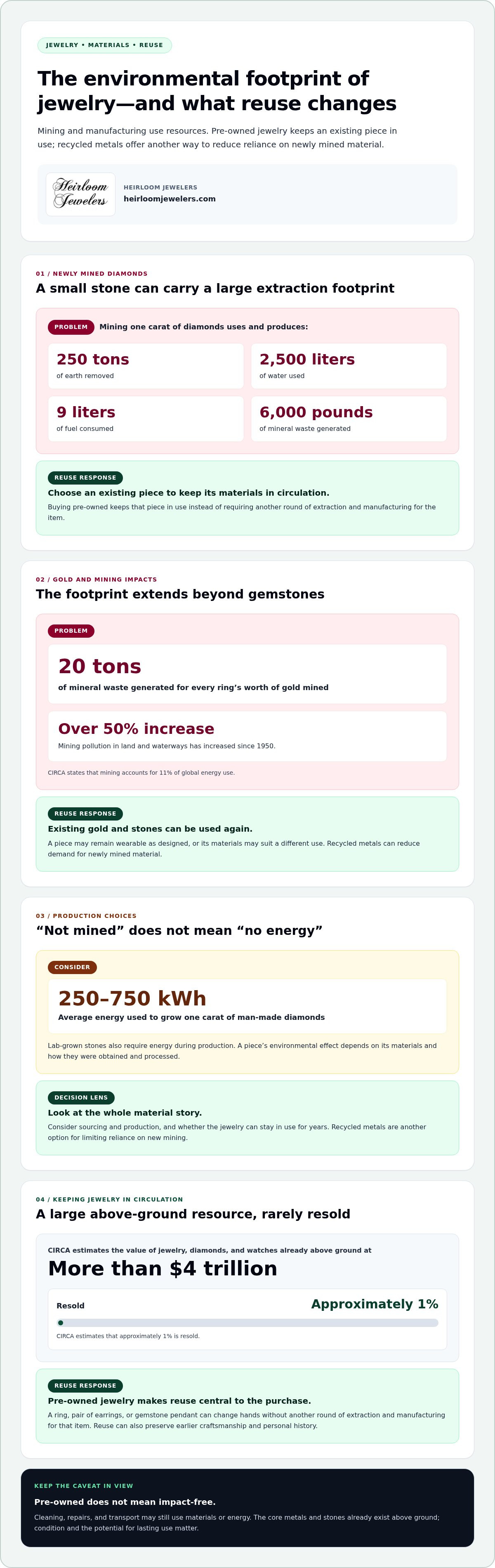
Reusing existing jewelry materials gives metals and stones another purpose instead of treating them as disposable. This can preserve craftsmanship and reduce demand for newly mined material. An inherited gemstone, for example, may suit a different setting while retaining its personal history. Existing gold can also be valued for its material, not just its original design. CIRCA estimates that more than $4 trillion worth of jewelry, diamonds, and watches is above ground; CIRCA states that approximately 1% is resold. Those figures point to scope for keeping pieces in circulation. Sustainable jewelry in pre-owned form makes reuse central to the purchase.
Finding and Caring for Local Pre-Owned Jewelry
Estate jewelry specialists, vintage jewelry shops, antique fairs, and auction houses offer ways to explore pieces in person. Comparing a gemstone and its setting in clear light can help you assess workmanship and condition. For routine care, use a soft cloth and choose cleaning methods suited to the stones and setting. Repairs may secure a setting or replace a clasp; whether a piece can be resized depends on its band construction and material. Describe the work needed before proceeding. A pre-owned piece of sustainable jewelry may suit buyers who value reuse and lasting wear.
Environmental impacts of mining and manufacturing
A piece’s environmental impact begins before it reaches a display case. Mining, refining, and manufacturing all contribute to the resources required for new jewelry.
Environmental Effects of Jewelry Production
Jewelry production affects the environment through extraction, processing, and the energy needed to transform materials. Understanding these stages helps you compare newly made pieces with existing ones. Mining one carat of diamonds removes 250 tons of earth and uses 2,500 liters of water. It also consumes 9 liters of fuel and generates 6,000 pounds of mineral waste. These figures illustrate the material demands behind stones that appear small in a finished setting.
Gold extraction has its own waste burden: mining generates 20 tons of mineral waste for every ring’s worth of gold. Mining pollution in land and waterways has increased over 50% since 1950. According to CIRCA, mining accounts for 11% of global energy use. Refining and forming metals adds further processing, while manufacturing requires energy to shape, finish, and assemble each component.
Lab-grown stones also require energy during production. Man-made diamonds use an average of 250-750 kWh per carat during growth. The environmental effect therefore depends on a piece’s materials and how those materials were obtained and processed. Recycled metals can reduce demand for newly mined material, while sourcing and production choices influence the impact of new jewelry.
Impacts of Buying Pre-Owned
Buying pre-owned keeps an existing piece in use instead of requiring new resources to produce it. A ring, pair of earrings, or gemstone pendant can change hands without another round of extraction and manufacturing for that item.
Reuse doesn’t eliminate every environmental impact. A pre-owned piece may need cleaning, repair, or transport, and these activities use materials or energy. Its core metals and stones, however, already exist above ground. Choosing a durable vintage piece can preserve earlier craftsmanship and reduce demand for newly produced jewelry.
Reusing a piece or its materials can extend that benefit. A setting may remain wearable as designed, or its metal and stones may suit a different use. Recycled metals provide another way to limit reliance on new mining. Consider the whole item: its condition, materials, and whether it can remain in use for years. For a closer look at estate jewelry examples, explore pieces made with existing precious metals and stones.
Is it safe to buy pre-owned jewelry online?
When buying online, look for a clear listing, an accurate description of the item’s condition, and written purchase terms. Durability matters too: sound construction can help keep a pre-owned piece in use for years.
Durability of Older Jewelry
Durability describes how well a piece’s materials and construction withstand wear over time. Age alone doesn’t determine whether jewelry is suitable for regular use. A piece worn for decades that remains in good condition offers visible evidence of how it has held up. Review the setting, clasp, and joints in the listing, and note any wear the seller describes.
Older construction can differ from newer retail jewelry. Even a couple of decades ago, jewelry construction standards had changed, with older pieces often featuring more solid gold, sterling silver, and hand-finishing. These traits can support longevity, but condition and workmanship still matter. A solid gold chain remains solid gold whether it was bought in 1995 or last week; its age doesn’t change the material.
Fine jewelry can last for decades with care, but durability depends on the design and condition of the particular piece. Diamonds secured in a well-maintained setting have different wear considerations from delicate links or fine prongs. Review close-up images for bent components, worn clasps, and loose stones. Look for written descriptions of repairs or visible damage to understand the piece’s condition.
Returns, Warranties, and Certifications
Return policies, warranties, and certifications offer different forms of reassurance. They matter when shopping online because you can’t handle the piece before purchase. Read the written return terms, including the return window, condition requirements, and who covers shipping. Review any warranty’s scope, exclusions, and duration. For example, a warranty covering workmanship doesn’t necessarily cover accidental damage or ordinary wear.
For diamond or gemstone jewelry, distinguish an item-specific grading report from an ethical sourcing certification. Fairtrade, Fairmined, and Responsible Jewellery Council certifications relate to ethical sourcing or industry practices; they don’t by themselves establish a particular stone’s identity or condition. Match any report to the listing details, including the stone and piece it describes.
Before buying, compare the seller’s description with the written return and warranty terms. A useful listing identifies the metal, stones, condition, and any known repairs. Keep the order details and seller correspondence together so you can refer to the item description and agreed terms if questions arise after delivery.
Pre-owned luxury jewelry brands
A luxury name can help identify a maker, design, or period, but it doesn’t prove a piece’s ethical history. When considering pre-owned jewelry, assess the individual item separately from the brand’s sourcing and manufacturing practices. A signed bracelet or pendant may show distinctive craftsmanship, but its value and sustainability also depend on its materials, condition, and how the original maker operated.
A brand’s sustainability practices involve more than a claim about recycled metals. Look for information about gemstone sourcing, labor conditions, manufacturing, and packaging. Fair labor includes fair wages, safe working conditions, and respect for workers’ rights. Clear explanations of these practices offer more useful context than broad claims such as “conscious” or “friendly” without supporting detail.
To assess transparency, trace a brand’s claims to specific practices. Read its sourcing and manufacturing information, then compare it with the materials named for the piece. A gold bracelet, for example, raises different sourcing questions from a gemstone pendant. For a new design, look for information about recycled metals and gemstone sourcing. For a pre-owned item, distinguish the original brand’s practices from the environmental value of buying an existing piece.
- Look for Fairtrade, Fairmined, or Responsible Jewellery Council certifications when assessing ethical practices.
- Review whether the brand discusses labor conditions and sourcing, not only design or materials.
- Check whether packaging uses recycled or biodegradable materials.
Certifications and disclosures offer context, not a complete assessment of every vintage piece. A certification may address a brand or supply-chain practice, while an older jewel’s precise sourcing history is a separate question. Compare the scope of each claim with the item you’re considering. This helps prevent a brand’s general commitment from being mistaken for proof about a particular stone or setting.
Material choices also shape a brand’s sustainability profile. Recycled metals can reduce demand for newly mined resources. Conflict-free gemstones come from regions that don’t finance armed conflict or exploit workers. Lab-grown diamonds avoid mining, but producing them requires energy. A brand’s explanation of sourcing and production helps you weigh these factors against the existing materials in a pre-owned piece.
Some brands work directly with fair-trade organizations or artisan communities. Such partnerships can provide direct income, support traditional craftsmanship, and contribute to economic development. Look for specific descriptions of these relationships rather than relying on polished imagery. Whether you’re considering a modern design with grown diamonds or a vintage jewel, assess the evidence behind each sustainability claim and the practices it describes.
Ethical and sustainable jewelry criteria
An ethical jewelry purchase considers people, materials, and environmental impact together. For fine jewelry, assess precious metals and stones, the labor involved in production, and the information the seller shares. Buying sustainable jewelry pre-owned can also keep an existing piece in use. No single label covers every factor, so compare material origins, workmanship, and the claims related to each item.
Start with the materials. Recycled metals can reduce demand for newly mined resources, while responsibly sourced metals provide information about their origins. For gemstones, look for clear sourcing details and information about conflict-free status. The term describes stones sourced from regions that don’t finance armed conflict or exploit workers. A claim about one stone doesn’t automatically apply to every material in the piece.
Production methods matter, too. Man-made diamonds require energy to grow, averaging the equivalent of a household’s typical 8-30 days of energy use. That comparison shows why “lab-grown” alone doesn’t settle a purchase’s environmental footprint. Consider energy alongside the stone’s origin, the metals used, and whether an existing piece could meet the same need without new production.
Use these criteria to compare a brand’s stated practices:
- Labor: Look for fair wages, safe working conditions, and respect for workers’ rights.
- Certifications: Fairtrade, Fairmined, and Responsible Jewellery Council certifications can inform your assessment.
- Packaging: Check whether the brand uses recycled or biodegradable packaging.
- Community relationships: Look for partnerships with fair trade organizations or artisan communities.
Each detail answers a different question. Labor information concerns working conditions, packaging affects material use, and a certification applies within its stated scope. Partnerships with artisans can provide direct income, support traditional craftsmanship, and contribute to economic development. Read the explanation of each practice rather than treating one certification as a complete ethical scorecard.
For a pre-owned purchase, distinguish the item’s present-day value from the original maker’s practices. Reusing an existing jewel avoids new production for that item, but doesn’t reveal the original stone’s sourcing or labor history. A sustainable jewelry pre-owned choice weighs the value of continued use against the available information about material origins.
Before deciding, compare the item’s material details with the seller’s broader sustainability statements. Look for specific information about metals, stones, labor, and packaging, and note which claims apply to the individual jewel. This can help you choose a piece that reflects your priorities and feels right to wear.
Heirloom Jewelers: Lugano Emerald & Diamond Necklace 18K White Gold
Heirloom Jewelers’ Lugano Emerald & Diamond Necklace 18K White Gold offers a pre-owned choice for readers drawn to fine gemstones and precious metals. Its emerald, diamonds, and 18K white gold setting give the piece a distinct material character. Exploring estate jewelry can help you compare existing pieces with the criteria covered above, including materials, condition, and the appeal of keeping jewelry in circulation.
Other options include Vintage White Gold Old European Cut Diamond Stud Earrings, a Vintage Platinum 0.5 Carat Diamond Engagement Ring, and Estate Peridot & Quartz Dangle Earrings 14K Yellow Gold. Each offers a different combination of metal, gemstone, and design history to consider.
Contact Heirloom Jewelers to explore these estate and vintage pieces.
Choose a Piece That Feels Right for What Comes Next
Choose jewelry that suits your life, not only your ideals. Consider whether you’ll wear it often, treasure it for its history, or pass it along. That intention can guide a thoughtful decision about sustainable jewelry and whether a pre-owned piece fits your values and style.
Let the details guide you. A design you’ll wear and care for can stay part of your life rather than sit forgotten. Take time to compare pieces, reflect on what matters most, and choose carefully. A meaningful jewel need not be new to feel entirely your own.
Heirloom Jewelers offers estate and vintage jewelry for those drawn to enduring materials and distinctive design. Contact Heirloom Jewelers to explore the collection and consider which piece may become part of your story.
A considered choice can honor craftsmanship while giving a beautiful object a future. Take the next step at your own pace and choose a piece you’ll be glad to wear.
Frequently Asked Questions
What Makes Jewelry Ethical?
Ethical jewelry takes into account how materials are sourced and how workers are treated. Look for clear descriptions of labor standards, gemstone origins, and metal sourcing. For example, a seller who distinguishes recycled gold from newly mined gold offers more useful detail than one grouping both under a broad sustainability claim. Certifications can add context, but their scope matters. Read what each covers and whether it applies to the brand, supply chain, or individual item.
Why Consider Sustainable Jewelry?
Sustainable jewelry can align a personal purchase with values around resource use and responsible production. It also encourages choosing pieces to wear and care for over time rather than replace quickly. Consider how often a design will suit your wardrobe and whether its materials meet your priorities. A thoughtful choice may become part of a collection you keep, wear, and pass along instead of an item with brief appeal.
How does selling your unworn jewels reduce environmental pollution?
Selling unworn jewelry keeps existing materials in circulation and gives another buyer the chance to use them. If the purchase replaces newly produced jewelry, it can reduce demand for the extraction and processing needed to make a new item. Selling also offers a practical alternative to letting a piece sit unused. Clear details about its materials, condition, and repairs help the next owner decide whether it suits their needs.
Is secondhand jewelry good quality?
Secondhand jewelry can be well made, but its quality depends on the specific piece’s materials, construction, and condition. Examine a bracelet’s links and clasp, or check an earring’s setting and backing for wear. A polished surface alone doesn’t establish sound construction. Descriptions of repairs and close-up views of joints, settings, and closures help you assess how the piece has been maintained and whether it suits your intended use.
What is pre-owned jewelry and how is it more sustainable than buying new?
Pre-owned jewelry is jewelry that someone else owned before, including estate and vintage pieces. Its metal and stones have already been extracted and formed, so buying that item avoids new production for the same purchase. An existing gold pendant, for example, offers precious metal and a finished design without requiring a newly made pendant. Its sustainability also depends on continued use, care, and whether it replaces demand for a new item.
How much environmental impact can buying pre-owned jewelry save?
The impact avoided depends on what new production the purchase replaces and which materials a new equivalent would require. A gold ring and a gemstone pendant involve different extraction and manufacturing processes. Shipping, repairs, and useful life also shape the overall footprint. Buying an existing item keeps its materials in use; choosing a durable design and wearing it regularly extends that value beyond the purchase.
How do prices for pre-owned jewelry compare with new jewelry?
Pre-owned jewelry may cost less than a comparable new piece, but the difference depends on its maker, materials, condition, rarity, and market demand. A signed vintage design and an unsigned gold piece aren’t directly comparable just because both are secondhand. Gemstone quality, craftsmanship, and documented history can also affect value. Compare specific features and condition with similar pieces rather than assuming every pre-owned jewel offers the same price advantage.
How can I verify the authenticity and condition of pre-owned jewelry?
Compare the listing’s material and maker claims with visible details and supporting records. Look for metal hallmarks, consistent design features, and documentation identifying the specific stone or piece. Study close-up images of settings, clasps, joints, and areas showing wear. Match paperwork to the item description, not just to a similar model. Keep the listing and purchase records together so you can refer to the seller’s original details later.