
A family heirloom’s deepest value often goes beyond its materials. The sentimental value of family heirloom jewelry comes from the history it carries, the stories shared about it, and the personal details that connect it to those who wore it. Wearing a piece, even in everyday life, can make it part of a family’s story.
It’s natural to feel that a familiar ring, necklace, or pair of earrings means more than its appearance alone. Its significance may come from who owned it, when it was given, or the memories tied to a particular occasion. Those details help explain why an heirloom can matter across generations.
This article explores how a piece’s history, family stories, personal details, and continued wear can deepen its meaning. You’ll also learn how recording its provenance and sharing its story can help future generations understand not just what the jewelry is, but why it matters.
Key Takeaways
- Record who owned a piece, how it came into the family, and the memories attached to it so its history can travel with it.
- Share the stories behind an heirloom during family milestones to help younger generations understand why it matters.
- Wearing a keepsake can make its meaning part of everyday life, not just a memory brought out for special occasions.
- Personal details and thoughtful changes can help a piece feel meaningful to a new wearer while preserving its connection to the past.
Provenance and documenting a piece’s history
Provenance records a piece’s ownership and known history, giving family memories context. A clear record can help preserve that connection when the jewelry passes to another generation.
Tracing Ancestral Connections
An heirloom connects its wearer to earlier generations through ownership, occasions, and family traditions. A ring worn at a grandmother’s wedding, for example, may represent both her personal story and a shared family milestone. Identifying who wore a piece and how it entered the family gives relatives a more specific connection than its appearance alone. Even when dates or names are uncertain, recording what the family remembers helps keep the story intact.
Recording an Heirloom’s History
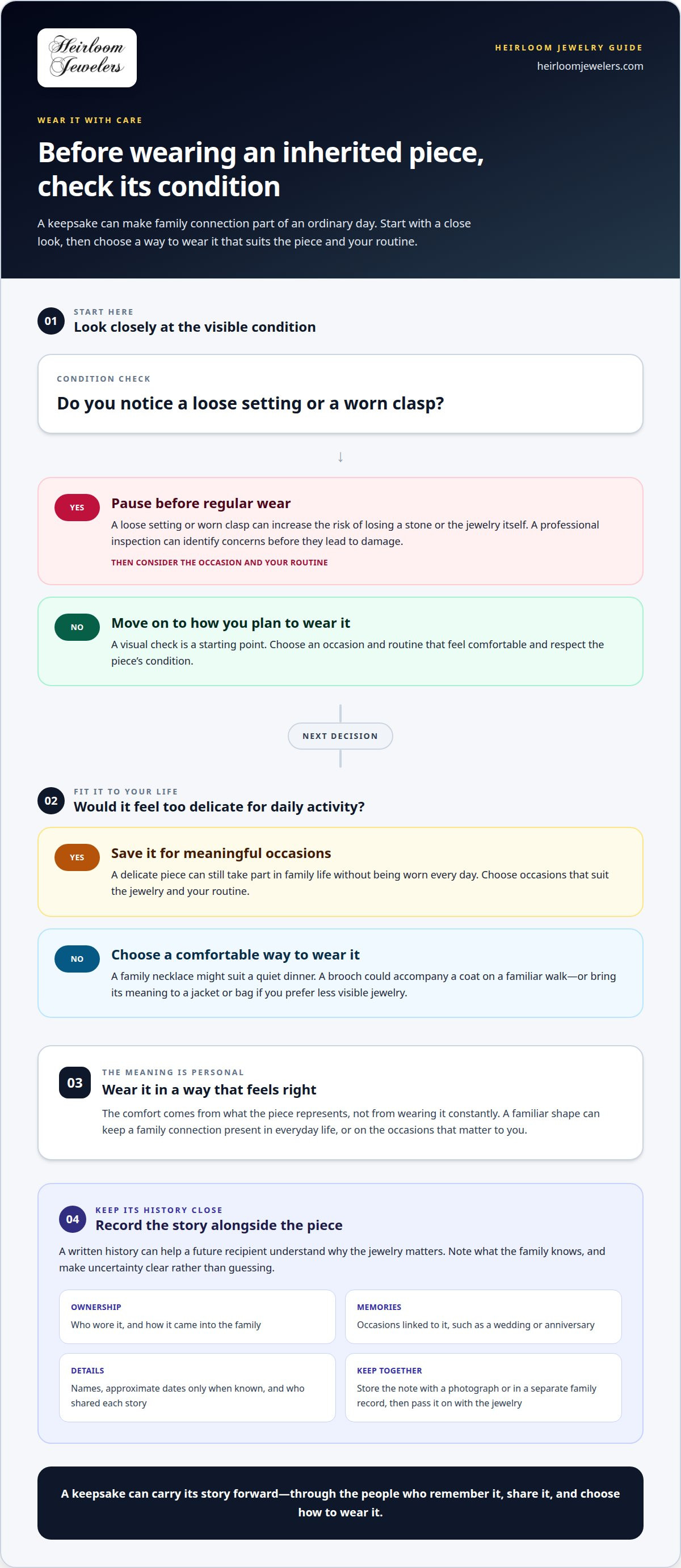
A written history pairs identifying details with the memories attached to a piece. Record the known owner, how the jewelry was acquired, and occasions linked to it, such as a wedding or anniversary. Add names, approximate dates only when known, and who shared each story. Keep the note with a photograph or in a separate family record, then pass it on with the jewelry. That context helps a future recipient understand why the piece matters.
Sentimental meaning and fair market value are different. Sentimental value reflects personal memories and family connections; fair market value is a monetary assessment based on the jewelry itself and the relevant market. A family story can make a piece precious to its owners without changing its assessed market value.
In the United States, estate and inheritance tax treatment depends on applicable federal and state rules and how an estate is handled. A jewelry inventory and documented valuation can help clarify what the estate includes, while family stories record emotional significance rather than determine tax treatment.
A professional appraisal fee depends on the appraiser’s fee basis, the number and complexity of the pieces, and the work required for the report. The appraisal’s scope and purpose shape the fee, so no single amount applies to every jewelry appraisal in the United States.
To insure inherited jewelry, keep an inventory with photographs and an appraisal, then provide those records to the insurer for coverage review. The insurer’s policy terms determine how the item is covered. Update the documentation if ownership or the piece’s condition changes.
Be extra cautious with heirloom jewelry made before 1978 because it may contain lead, according to the U.S. Environmental Protection Agency.
Sharing family stories across generations
Passing jewelry between generations can give family traditions a visible place in daily life. The occasion, giver, and meaning associated with a piece help each recipient understand why it matters. The sentimental value of family heirloom jewelry can grow as relatives connect it with their own memories and those of earlier wearers.
Designs That Span Generations
Classic designs can appeal across generations because their significance need not depend on current fashion. A family might choose a traditional engagement ring to honor its heritage while welcoming a new wearer. A familiar silhouette offers a shared point of recognition, even when each person has a different style. The sentimental value of family heirloom jewelry comes not only from its design, but also from the stories relatives attach to it over time.
Family traditions often link a particular piece to a meaningful occasion. One family, for example, may pass jewelry to the firstborn daughter on her 18th birthday. Others may give an heirloom at a wedding or anniversary. Explaining why the recipient was chosen helps make the handoff personal. It also gives younger relatives a clearer sense of the values or relationships the tradition honors.
Continuity and Family Legacy
An heirloom represents continuity as each generation adds memories while keeping its connection to earlier owners. A family ring worn at successive weddings, for instance, can become associated with several couples and celebrations. Its meaning can change with each new chapter without erasing its earlier significance. Sharing those memories helps relatives understand how one object can represent a living family legacy.
When passing a piece along, name the previous wearer and explain the tradition behind your choice. Invite relatives to contribute a memory or detail that adds context. A younger recipient may ask about an occasion older family members remember firsthand. Those conversations keep the tradition active rather than treating the jewelry as an object with an untold past.
Choosing a classic engagement-ring design can connect generations through style while honoring family heritage. Family heirloom jewelry is often passed down and given for occasions such as weddings or anniversaries. A family heirloom ring can be resized, polished, or reset to suit a new wearer while retaining its history and sentimental meaning.
Comfort from wearing a keepsake
Wearing an inherited piece can make family connection part of an ordinary day. A necklace once worn by a relative may feel especially present when its familiar shape rests against your collar. If you prefer less visible jewelry, a small brooch can bring the same association to a jacket or bag. The comfort comes from what the piece represents, not from wearing it constantly.
Choose occasions that suit the jewelry and your routine. A family necklace might be worn for a quiet dinner, while a brooch could accompany a coat on a familiar walk. If a piece feels too delicate for daily activity, saving it for meaningful occasions still lets it participate in family life. The key is to wear it in a way that feels comfortable and respects its condition.
Before wearing a passed-down piece, look closely at its visible condition. A loose setting or worn clasp can make regular wear riskier, since a stone or the jewelry itself could be lost. A professional inspection can identify concerns before they lead to damage. This is particularly relevant for a necklace that moves with you or a ring worn throughout the day.
Care depends on a piece’s materials and construction. A soft cloth and gentle cleaning solution are often sufficient for gold and silver, but some gemstones can crack under pressure. Cleaning needs vary by gemstone, so avoid harsh chemicals and abrasive materials on delicate heirlooms. A gemstone ring, for example, may need different care from a plain gold chain.
Wearing an heirloom can give its next chapter personal meaning. You might choose a family piece for a milestone, then remember that occasion whenever you wear it again. If it feels unsuitable for frequent wear, displaying it safely or wearing it on selected days can preserve its presence without forcing a routine. Either choice keeps the connection personal while respecting the jewelry’s condition.
Family heirloom jewelry is often made from precious metals such as gold or silver, so careful handling is worth considering when choosing when and how to wear each piece.
What gives family heirloom jewelry sentimental value?
Sentimental value comes from the relationship between a piece and the people, memories, and occasions attached to it. A ring may recall a relative who wore it, while a necklace may represent a wedding gift or family milestone. The jewelry’s materials and craftsmanship matter, but personal meaning grows through the connection a family gives it. Two similar pieces can therefore carry very different significance.
Ownership adds another layer of meaning. Knowing who wore a piece and how it was passed down gives its present wearer a place in the family’s history. A brooch from an aunt, for example, may bring to mind her distinctive style and the occasions when she wore it. A remembered detail can make the object feel specific to that relationship, rather than simply old or valuable.
Meaning can also grow as a piece becomes part of a new chapter. Wearing a grandmother’s ring at a wedding may connect that day with her own marriage. A family member who receives the jewelry for an anniversary may associate it with that celebration. The piece then holds memories from more than one owner, deepening its emotional importance over time.
Personal touches can help a keepsake feel relevant to its next wearer. An engraving or small design adjustment can reflect the recipient’s story while maintaining a connection to the piece’s past. An inscription might mark a meaningful date or initials. Such details don't replace the jewelry’s earlier associations; they give the family another reason to remember it.
Consider what matters most about a particular piece: its former wearer, the occasion it marked, its craftsmanship, or a personal detail. Naming that source of meaning helps explain why the jewelry is treasured, even when its fair market value tells a different story. To explore estate jewelry with distinctive materials and craftsmanship, browse heirloom jewelry.
Heirloom Jewelers
Heirloom Jewelers offers a curated selection of authenticated estate and vintage fine jewelry for those drawn to pieces with history and distinctive craftsmanship. The collection includes gemstone jewelry, vintage diamond earrings, and platinum engagement rings. Explore the collection to find a piece that feels meaningful today and may become part of your family’s story.
Consider the design, materials, and personal associations that matter to you. A piece chosen for its craftsmanship or character can mean more than its appearance, especially as it becomes connected to shared occasions and memories.
If you’re exploring estate and vintage jewelry, contact Heirloom Jewelers to continue the conversation.
Give the next chapter room to grow
A family keepsake can become part of a new story without losing its connection to the past. Its next wearer may bring a different perspective, choose a new occasion to wear it, or simply keep it close as a reminder of someone they love. There’s no single right way to carry that meaning forward. The sentimental value of family heirloom jewelry can deepen as each person finds a personal connection to it.
Consider what you’d like a future recipient to understand about your piece. A few carefully chosen words about why it matters can make the handoff more personal and help the next generation make the story their own. The legacy isn’t fixed; it grows through the care and meaning each wearer brings.
If you’re considering a piece with lasting character for your own family story, contact Heirloom Jewelers. The next chapter can begin with a choice that feels meaningful to you.
Frequently Asked Questions
How can you research the history and provenance of inherited jewelry?
Research inherited jewelry by gathering family records and examining identifying details on the piece. Look through old photographs, letters, receipts, or estate papers for dates and names, then ask relatives what they remember. Note any maker’s marks or metal stamps, as they may offer clues for further research. Keep firsthand memories separate from documented evidence so future relatives can tell which details are supported and which remain family recollections.