
What if the most harmonious vintage fine jewelry sets aren’t made of matching pieces? A cohesive look often comes from shared details, such as metal color, gemstone choices, or design period, rather than identical patterns. But search results can blur fine jewelry with vintage costume pieces, and listings don’t always make materials or condition easy to assess.
You can choose pieces that feel connected without looking overly uniform, while still checking what you’re buying. This guide explains how fine jewelry differs from costume jewelry and how to bring separate vintage pieces together through complementary design cues. It also outlines what to review before you buy, including metal marks, gemstone information, visible wear, and available provenance or authentication records. Use these checks to compare pieces on both style and substance, and build a set that feels considered rather than forced.
Key Takeaways
- Vintage fine jewelry sets can be assembled from complementary pieces; shared design details matter more than exact matches.
- Learn how precious metals, genuine gemstones, and individual verification distinguish fine jewelry from vintage costume pieces.
- Use era, silhouette, setting, ornament, and scale as clues when bringing separate pieces together, not as proof they were originally a set.
- Before buying, check item descriptions, materials, condition, included pieces, and the context of any hallmarks or maker’s marks.
- Start with the occasion and an anchor piece, then narrow your search by metal, gemstone palette, and scale.
What Makes Vintage Fine Jewelry Sets Different from Costume Jewelry?
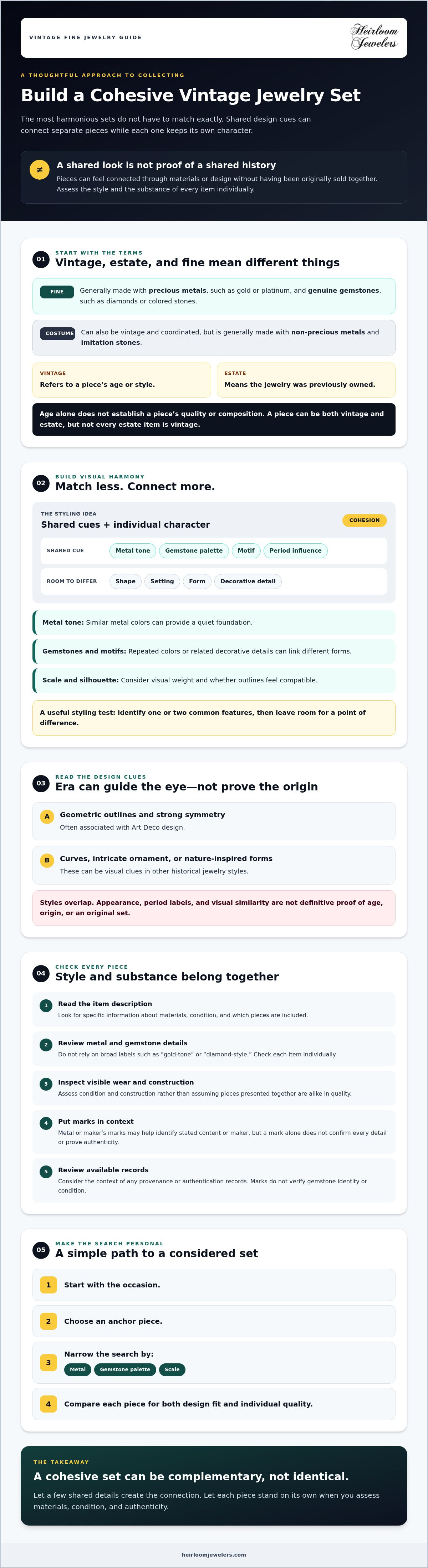
A vintage fine jewelry set may be a matched group or separate pieces selected for complementary materials and design. “Fine” generally refers to jewelry made with precious metals, such as gold or platinum, and genuine gemstones, such as diamonds or colored stones. Costume jewelry can also be vintage and carefully coordinated, but it is generally made with non-precious metals and imitation stones. Age alone doesn’t establish the quality or composition of either type.
The terms describe different things. Vintage refers to a piece’s age or style, while estate means the jewelry was previously owned. A piece can be both vintage and estate jewelry, but not every estate item is vintage. Understanding the history of jewellery can provide context for how materials and techniques have varied across periods. Still, assess each item on its own merits.
What counts as fine jewelry in a vintage set?
Gold and platinum are precious metals often used in fine jewelry. Diamonds and colored gemstones may be center stones or decorative accents. Look for specific information about the metal and stones rather than relying on broad labels such as “gold-tone” or “diamond-style.”
Metal marks can help identify a piece’s stated metal content or maker, but a mark alone doesn’t confirm every detail or prove authenticity. Marks may be difficult to read, and they don’t verify the identity or condition of gemstones. Check the materials and construction of every item individually, including pieces presented together as a set.
Does a vintage set need matching pieces?
No. A matched set may share identical motifs, settings, or repeated details for a formal, unified appearance. A complementary pairing can feel more relaxed: the pieces might differ in shape while sharing a metal color, gemstone palette, period influence, or decorative motif.
For example, white gold and diamonds can provide a visual connection between a necklace and earrings, even if their designs aren’t identical. Visual harmony doesn’t show that the pieces were originally sold together. Treat “matching” as a description of appearance unless documentation supports a shared history. Vintage fine jewelry sets can be coordinated without uniformity, provided each piece independently meets your expectations for materials, condition, and authenticity.
How Vintage Fine Jewelry Sets Reflect Different Eras and Design Details
A piece’s period can offer useful design context, but it can’t establish that separate items were made as a set. Two pieces may share an era’s visual language without sharing an origin. Compare the details of each item, then decide whether they relate naturally.
Which design details can make separate pieces feel cohesive?
Start with a few visible connections rather than trying to match everything. Similar metal tones can provide a quiet foundation. Repeated gemstone colors can link different forms, while related settings or decorative motifs can echo each other without being identical.
Scale matters, too. A large pendant may dominate delicate earrings, while pieces with similar visual weight can feel more balanced. Consider silhouette as well: a softly rounded brooch might pair comfortably with curved earrings, while crisp geometric lines can connect a ring and pendant. Shared design cues create cohesion, even when the pieces differ in form.
A useful test is to identify one or two common features and one point of difference. For instance, pieces may share a gemstone color but vary in setting, or have related outlines while using different stones. This leaves room for character. For readers drawn to geometric period design, this guide to Art Deco jewelry offers further context.
How should era influence a vintage jewelry pairing?
Period labels can help describe a piece’s design language, but styles overlap, and appearance alone isn’t enough to date an item. Geometric outlines and strong symmetry are often associated with Art Deco design; other historical jewelry may feature softer curves, intricate ornament, or nature-inspired forms. These are visual clues, not definitive proof of age or origin.
Compare construction and ornament as well as overall shape. The way a stone is set, the balance of decorative detail, and the scale of a piece can help you judge whether two items feel compatible. A ring with historic craftsmanship may sit comfortably beside a pendant with related detailing, even if the pair wasn’t originally sold together. Explore this collector’s guide to antique rings for more on ring craftsmanship and historic styles.
Once you have a few design cues in mind, browse curated estate and vintage fine jewelry as individual pieces to consider together. A cohesive pairing should feel considered, not forced.
Matching or Complementary Vintage Fine Jewelry: Which Approach Works Better?
Neither approach is right for every occasion. A matched set offers a deliberately unified look, while combining separate pieces gives you more freedom to express personal taste. Choose based on how formal you want the finished look to feel and how much flexibility you want.
| Approach | Look | Flexibility | What to verify |
|---|---|---|---|
| Matched set | Consistent motifs, proportions, and materials create a formal, coordinated appearance. | Less variation between pieces, but an easy starting point for a unified look. | Confirm which pieces are included, and check the materials and condition of each one. |
| Complementary combination | Related details create cohesion while allowing each piece to retain its own character. | More freedom to choose pieces individually and adjust the look. | Assess each piece separately, including its materials, condition, and description. |
When is a matched vintage set the right choice?
Choose a matched set if you value consistency. Repeated motifs, similar proportions, and the same materials can give earrings, a necklace, or other pieces a composed, formal appearance. Read the listing carefully to see whether the seller presents the items as one set or simply shows them together. Confirm what’s included, then review the stated materials and condition of each item. A set label doesn’t replace item-by-item checks.
When should you combine separate vintage pieces?
Separate pieces are a natural fit if you enjoy personal styling or prefer discovering jewelry one item at a time. Compare metal tone, gemstone color, scale, and design vocabulary. A shared detail, such as a similar outline or repeated stone color, can connect pieces even when their designs differ. Keep proportions in mind, too: a large, ornate piece may draw attention away from smaller, delicate companions.
For example, diamond earrings can serve as one element in a wider combination. This guide to antique diamond earrings offers context as you consider their visual character alongside other pieces. Vintage fine jewelry sets can be assembled this way, but a coordinated appearance alone doesn’t establish a shared maker, date, or original ownership. Verify each piece’s description, materials, and condition on its own. To consider individual estate and vintage pieces, explore Heirloom Jewelers’ jewelry inventory.
What to Check Before Buying a Vintage Fine Jewelry Set
A polished description or clear photograph is a starting point, not a substitute for item-level details. Use this checklist to understand what’s offered and what needs clarification before you buy.
- Review each item description. Look for the stated metal, gemstone identity, measurements or other identifying details, and any available documentation. Note whether the seller distinguishes confirmed facts from estimates.
- Verify the materials. Check what the listing says about metal fineness and gemstones. Ask whether stones have been treated, if that information is available, and what has or hasn’t been independently verified.
- Assess condition. Review photographs and descriptions for visible wear, repairs, missing stones, and the condition of clasps or other closures. Ask for clarification if an area is difficult to see.
- Clarify what’s included. Confirm the exact pieces in the purchase and whether the seller represents them as an original matched set or as separate items shown together.
How can you assess metal, gemstones, and hallmarks?
Look for clear statements about metal fineness and gemstone identity, along with supporting documentation when available. Hallmarks and maker’s marks are evidence to interpret, not automatic proof of authenticity or every claim in a listing. Marks can be worn, absent, altered, or difficult to read, and their meaning may require specialist interpretation. Ask the seller what has been verified, how it was assessed, and what remains uncertain. A careful description should distinguish documented details from assumptions.
How should you review condition and set contents?
Study every piece separately, not just the group photograph. Zoom in on settings, stone surfaces, links, clasps, and areas where wear or repairs may be visible. Ask whether repairs or gemstone treatments are known, and request relevant documentation if it’s referenced in the listing. If the description doesn’t make clear whether a necklace, earrings, or other pieces are included, get that clarified before purchase.
Every piece in a set deserves its own material and condition review. This applies whether the items are presented as a matched group or selected to complement one another. Vintage fine jewelry sets can look cohesive while containing pieces with different histories or condition concerns, so assess each item on its own terms.
For a considered starting point, explore curated estate and vintage jewelry and review the details provided for each individual piece.
Finding Vintage Fine Jewelry Pieces for a Cohesive, Personal Set
A personal set can take shape one piece at a time. Begin with how and where you expect to wear it, then choose an anchor piece to set the direction. That might be a necklace for an occasion where it will be the focal point, or earrings if you want to begin with a smaller, more defined detail.
How do you start building a vintage jewelry set?
Once you have an anchor, identify two or three cues to guide your next choice. You might look for a compatible metal tone, a related gemstone color, and a similar scale. You could also connect pieces through a repeated motif or shared design vocabulary. Setting those preferences before browsing makes it easier to compare individual listings without requiring exact matches.
Keep the styling decision separate from the purchase assessment. A ring or pair of earrings may complement your anchor beautifully, but that doesn’t confirm its materials, condition, or history. Review the description and available details for each item individually, and clarify anything that affects your decision.
What can Heirloom Jewelers help shoppers discover?
Heirloom Jewelers offers curated estate and vintage fine jewelry as individual pieces, not as a confirmed ready-made set. Inventory examples include an 18K white gold emerald and diamond necklace and vintage white gold old European cut diamond stud earrings. Check current availability and listing details before planning a pairing around them.
If a necklace is your starting point, the Lugano emerald and diamond necklace guide offers a closer look at one individual estate piece. Consider its documented details as you think about possible complementary jewelry, without assuming another item is part of the same set.
Vintage fine jewelry sets can feel personal when you begin with a clear occasion, select an anchor, and let a few design cues guide your choices. Browse Heirloom Jewelers’ vintage fine jewelry and review each listing’s specific details. If something remains unclear, ask about that individual piece before deciding whether it belongs in your collection.
Build a Vintage Jewelry Look with Confidence
Vintage fine jewelry sets don’t need identical designs to feel cohesive. Shared metal tones, gemstone colors, motifs, or proportions can bring separate pieces together while preserving each one’s character. Start with the occasion and an anchor piece, then use a few compatible design cues to guide your choices.
Keep the style decision distinct from the buying assessment. Vintage describes age or style, not material quality, so review each piece’s materials, condition, and available documentation on its own. Marks can offer useful clues, but consider them alongside the full description and other supporting details.
Heirloom Jewelers specializes in authenticated, curated estate and vintage fine jewelry. Individual inventory examples include an 18K white gold Lugano emerald and diamond necklace and old European cut diamond stud earrings. Check current availability and each listing’s details as you consider possible pairings. Explore Heirloom Jewelers’ curated vintage fine jewelry to find individual pieces that suit your taste. A thoughtful set can be personal, balanced, and entirely your own.
Frequently Asked Questions
What is considered a vintage fine jewelry set?
A vintage fine jewelry set is a group of vintage pieces worn together, either as an originally matched set or as separate items chosen for complementary design. Fine jewelry generally uses precious metals, such as gold or platinum, and genuine gemstones. The word “vintage” describes age or style, not material quality, so review the metal, stones, condition, and available documentation for every piece.
Do vintage jewelry pieces need to match to be worn as a set?
No. Pieces can look coordinated without sharing identical designs. Similar metal tones, gemstone colors, proportions, or decorative motifs can connect a necklace with earrings or a ring. Exact matches tend to create a more formal, unified look; complementary pieces allow greater variety. Treat coordination as a styling choice, not proof that the items were originally sold together.
How can I tell whether vintage jewelry is fine jewelry or costume jewelry?
Check the listing for specific information about metal and gemstone materials. Fine jewelry generally uses precious metals and genuine gemstones, while costume jewelry is commonly made with non-precious materials or imitation stones. Hallmarks and maker’s marks can offer useful evidence, but they don’t confirm every claim by themselves. Ask what has been verified, and consider each piece’s construction, condition, and supporting documentation.
Can I combine vintage jewelry from different eras?
Yes. Pieces from different periods can work together if they share a few visual cues, such as a similar metal tone, gemstone palette, scale, or motif. Start with an anchor piece, then look for details that relate without requiring identical designs. Era labels can help describe style, but appearance alone can’t establish a piece’s date or prove that separate items share a history.
What should I check before buying a vintage fine jewelry set?
Review the description and stated materials for each item, then examine photographs for wear, repairs, missing stones, or issues with clasps and settings. Ask whether gemstone treatments or relevant documentation are disclosed. Confirm exactly which pieces are included and whether the seller represents them as a matched set or as separate items. Vintage fine jewelry sets still need piece-by-piece checks of materials and condition.
Are estate jewelry and vintage jewelry the same thing?
No. “Estate” generally means a piece was previously owned, while “vintage” refers to age or style. A piece may be both estate and vintage, but the terms aren’t interchangeable. Estate jewelry can include items from different periods, including pieces that aren’t considered vintage. Check the listing for specific information about ownership history and age rather than assuming one term establishes the other.
Can separate vintage fine jewelry pieces be sold as a set?
Yes. A seller may present separate pieces together as a coordinated group, but that doesn’t establish they were originally designed or sold as a set. Check whether the listing describes them as matched or simply paired, and confirm exactly what’s included. Review the materials, condition, and available documentation for every item independently, even if the pieces share a cohesive look.