
A deliberate pairing of gold and silver can give a piece balance and contrast. But uneven color may also come from wear, plating loss, or a later repair. Vintage mixed metal jewelry can be striking, yet photographs and brief descriptions don’t always show how a piece was made or what condition it’s in. Before choosing one, look beyond its appearance.
Consider the design alongside the evidence. Intentional contrast, consistent construction, metal marks, and signs of wear can help you assess a piece, though no single detail tells the whole story. An absent mark, for example, doesn’t automatically establish a piece’s age or value.
This guide explains what mixed-metal design means in a vintage context and how to assess materials, construction, age, condition, and wearability. You’ll also find practical questions to ask about hallmarks, repairs, and item-specific details before buying estate or vintage jewelry, so you can compare pieces with greater confidence.
Key Takeaways
- Vintage mixed metal jewelry combines different metal colors or types by design. “Vintage” describes age, not a specific period unless evidence supports it.
- Assess a piece in sequence: read its description, inspect marks and construction, review its condition and documentation, then ask focused questions.
- Hallmarks can offer clues about metal content or origin, but they aren’t conclusive proof on their own.
- Compare mixed-metal and single-metal designs by contrast, construction, condition, and how each fits your personal style.
- Before deciding, confirm the stated materials, ask about wear and repairs, and check that the care guidance suits the piece’s metals, gemstones, and finish.
Vintage Mixed Metal Jewelry: Defining the Contrast
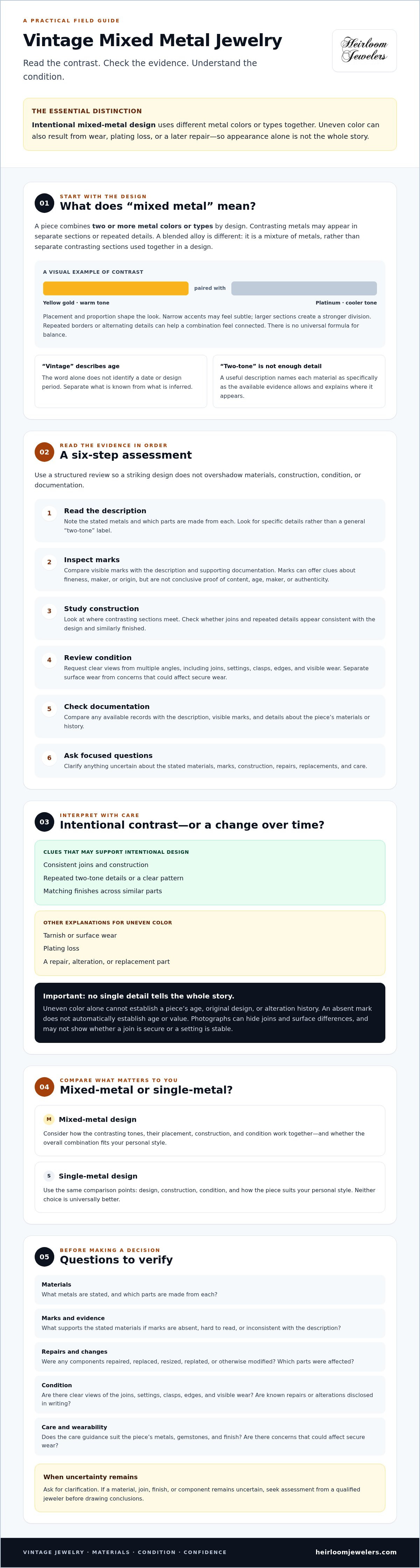
Vintage mixed metal jewelry intentionally combines two or more metal colors or types in one piece. The contrast may appear in separate sections, such as a band and setting made from different metals, or in repeated details that alternate between tones. These are examples, not rules for how every mixed-metal piece should look.
“Vintage” describes an older piece, but the word alone doesn’t identify its date or design period. A useful description separates what’s known about the piece from what’s inferred, and names the materials as specifically as the available evidence allows.
Combining metals in a design is different from combining them to create an alloy. An alloy is a mixture of metals that may affect a material’s properties without creating visible sections of contrasting color. For a basic explanation of what metal alloys are, consider the difference between a blended material and separate metals used together in a piece.
Which metal combinations create a balanced vintage look?
Warm and cool tones can create contrast without pointing to a particular era. For example, a design might set yellow gold against a cooler-toned metal such as platinum. Whether the pairing feels balanced depends on its execution, not on a universal formula.
Look at placement and proportion. A narrow contrasting accent may feel subtle, while larger sections create a stronger division between tones. Repeated elements, such as matching borders or alternating links, can make the combination look intentional and connected. Consider the whole piece, including its setting, surface finish, and gemstones, rather than judging each metal separately.
How can you tell intentional contrast from wear or repair?
Start with the design. Consistent joins, repeated two-tone details, and a clear pattern across the piece may support the idea that the contrast was planned. Compare similar parts: do they have the same finish and construction, or does one component look noticeably different?
Uneven color alone can’t establish a piece’s age, original design, or alteration history. Tarnish, plating loss, wear, and replacement parts can all change how metals appear, while photographs may hide joins or surface differences. Ask whether the materials, repairs, and replacements are disclosed. If a join, finish, or component remains uncertain, have a qualified jeweler assess it before drawing conclusions. A careful description and direct answers can clarify what the visual evidence cannot.
How to Assess the Metals, Craftsmanship, and Condition of Vintage Mixed Metal Jewelry
A structured review helps distinguish a well-described vintage piece from one whose materials or history remain unclear. Assess the listing in order: read the description, inspect marks, study construction, review condition, check available documentation, then ask the seller specific questions. This helps keep a striking design from overshadowing practical details.
What should you check on metal marks and construction?
Start with the seller’s stated metals and any close-up photographs of marks. A hallmark may indicate metal fineness, maker, or place of origin, but marking practices vary by location and period. Compare each visible mark with the listing and any supporting documentation. A mark is evidence to consider, not independent verification of a piece’s metal content, age, maker, or authenticity.
Next, look at where the contrasting sections meet. Do the joins appear consistent with the design? Do repeated details show similar finishing? A description that names each metal and explains which parts are made from it is more useful than a general “two-tone” label. If marks are absent, hard to read, or inconsistent with the description, ask what evidence supports the stated materials. For more grounding in jewelry assessment standards, consult the Gemological Institute of America’s educational resources. If material identification remains uncertain, seek qualified professional review.
Which condition details matter before buying?
Request clear photographs from multiple angles, including close views of joins, settings, clasps, edges, and visible wear. Images may reveal uneven finishes or a component that differs from the rest, but they can’t always show whether a join is secure or a setting is stable. Ask the seller to disclose known repairs or alterations in writing.
Ask specifically about the piece’s history. Were any components replaced, repaired, resized, replated, or otherwise modified? Which parts were affected? Then distinguish surface wear from issues that could affect secure wear. A small cosmetic mark may matter less than a loose setting, damaged clasp, or compromised join. If photographs leave you uncertain about structural condition, have a qualified jeweler assess the piece before purchase.
Keep the answers with the listing details and documentation. Clear, item-specific information makes it easier to compare vintage mixed metal jewelry without treating a hallmark or attractive photograph as the final word. For context on estate and vintage pieces, review Heirloom Jewelers’ vintage jewelry information, and confirm the materials, condition, and availability of any particular item directly.
Vintage Mixed Metal Jewelry vs. Single-Metal and Contemporary Designs
Comparing designs is less about finding a winner than knowing what matters to you. A mixed-metal piece offers contrast within one design, while a single-metal piece keeps its material tone consistent. Vintage refers to an older piece and its place in the secondary market; contemporary describes a current design. Neither label guarantees quality.
| Consideration | Mixed-metal design | Single-metal design |
|---|---|---|
| Visual contrast | Uses different metal tones to create definition or repeated accents. | Creates a more uniform appearance through one dominant metal tone. |
| Construction | Inspect how the distinct metals meet and whether their placement looks deliberate. | Check the overall finish and how components are joined, even when they appear to match. |
| Condition checks | Look closely for uneven wear, repairs, or differences between contrasting sections. | Check for wear and repairs too; a consistent color doesn’t rule out alteration. |
| Styling flexibility | Can echo different metal tones in other jewelry, depending on proportion and personal taste. | Pairs naturally with similar tones, though it can also stand on its own among varied pieces. |
Age alone does not establish a piece’s craftsmanship, condition, or value. Vintage pieces may carry individual history and construction details that reflect their time, but each must be assessed on its own evidence. Contemporary designs may have clearer specifications for materials or dimensions, though the amount of detail varies by seller. For either category, examine the description and available documentation instead of relying on the label alone.
When might mixed metals suit your existing jewelry?
Compare a piece with the jewelry you wear most, including rings, necklaces, and the metal tone of a frequently worn watch. Repeating one of its tones elsewhere can help a contrasting design feel connected to your other accessories. Matching isn’t a rule, though. Consider the scale of each piece and whether you prefer a subtle accent or a more visible contrast.
What trade-offs distinguish vintage from contemporary pieces?
Vintage jewelry may appeal to someone drawn to older design or a piece with a distinct history. Its condition, materials, and documentation need individual review. Contemporary jewelry may come with more readily stated specifications, but that doesn’t make it inherently better made. Choose based on the details you can verify, how the piece feels to wear, and which design suits your preferences.
How to Choose Vintage Mixed Metal Jewelry for Wear, Care, and Confidence
A beautiful contrast matters, but so does how a piece fits your life. Before choosing vintage mixed metal jewelry, rank your priorities: appearance, intended wear, comfort, condition, and documentation. A piece for occasional wear may suit different needs than one you plan to wear frequently. Consider its weight, fit, clasp or fastening, and whether its construction seems appropriate for how you intend to wear it.
Use this checklist to compare listings or guide a conversation with the seller:
- Materials: Which metals and gemstones are confirmed, and what supports the description?
- History and condition: Are known repairs, replaced components, resizing, replating, or visible wear disclosed? Is any provenance available?
- Practical details: Is the piece comfortable for its intended use, and what are the return terms?
- Care: Is there guidance specific to the piece’s materials, gemstones, finish, and construction?
What questions should you ask before purchasing?
Ask the seller to identify each confirmed material and explain the basis for those descriptions, such as visible marks or supporting documentation. Ask what is known about repairs, replaced parts, wear, and provenance. If an answer is unclear, request written clarification before deciding.
Confirm the return terms and care guidance before purchase, too. Policies differ, so don’t assume a return option or a particular level of documentation. Clear answers help you judge whether the piece meets your priorities and whether any remaining uncertainty is acceptable.
How should you wear and care for a mixed-metal vintage piece?
Care depends on the actual metals, gemstones, finishes, and construction. A method suited to one material may not be appropriate for another, so don’t apply one cleaning routine to every mixed-metal piece. Ask for advice tailored to the specific item, especially if its materials or surface treatment aren’t clear.
Handle the piece gently and store it separately to limit contact with other jewelry. Don’t attempt cleaning if you’re unsure how its components may respond. If a setting feels loose or you notice a structural concern, pause wear and ask a qualified jeweler to assess it.
For information about selected estate and vintage jewelry, see Heirloom Jewelers’ current inventory. Confirm the details and availability of any item that interests you.
Buying Vintage Mixed Metal Jewelry: What to Verify
Before deciding, review the details in a consistent order. First, confirm which metals and other materials are stated. Then review the piece’s condition, read disclosures about repairs or alterations, and compare its design with your preferences and intended use. Decide once you understand what is known and what remains uncertain.
Item-specific descriptions matter because terms such as “vintage” or “two-tone” don’t explain a piece’s exact materials, construction, or history. Look for clear photographs and precise wording. If the description leaves questions, ask for direct answers and consider whether the available evidence is sufficient for you to proceed.
How can you evaluate a vintage jewelry seller?
Look for descriptions that identify the stated materials and explain what supports claims about age, marks, or provenance. Clear photographs should help you examine the piece, while known repairs, replacement components, and condition concerns should be disclosed or clarified. Claims that can’t be verified should be described as uncertain, not presented as established fact.
Ask questions specific to the item. What is known about its condition and alterations? Is documentation available? What are the purchase terms, and what support is provided if questions arise? Review the answers alongside the listing. A seller’s willingness to address reasonable questions can help you judge how much confidence to place in the description, but it doesn’t replace your own review of the evidence.
When is a curated estate-jewelry retailer a good fit?
A specialist estate retailer may suit shoppers who want to consider vintage fine jewelry within a focused selection rather than sort through broad listings alone. Heirloom Jewelers offers curated, authenticated estate and vintage fine jewelry. That focus can help when comparing pieces, but item-level details still matter. Review each piece’s description and available information to assess its materials, condition, marks, age, and provenance.
Keep the final check simple: confirm the materials, review condition, check disclosures, compare the design, then decide. Vintage mixed metal jewelry is a considered purchase when its visual appeal is supported by clear information about the individual piece.
View Heirloom Jewelers’ current vintage jewelry and review the details of any piece that interests you.
Choose a Vintage Piece with Confidence
Judge vintage mixed metal jewelry by more than its contrast. Look for signs that the different metals belong to an intentional design, then review the construction, condition, and item-specific documentation. Marks and photographs can offer useful clues, while clear descriptions and direct answers help put those details in context.
Let your intended wear and personal style guide the final choice. Consider comfort, how the piece works with jewelry you already wear, and whether its care needs suit you. Age alone doesn’t establish craftsmanship or value, so weigh the evidence for each piece rather than relying on a vintage label.
Heirloom Jewelers specializes in curated, authenticated estate and vintage fine jewelry, including pieces in precious metals, diamonds, and gemstones. Review current listings for item-specific materials, condition, and availability. Explore Heirloom Jewelers’ curated vintage jewelry and find a piece whose details and design suit your priorities.
Frequently Asked Questions
What is vintage mixed metal jewelry?
Vintage mixed metal jewelry is an older piece intentionally designed to combine different metal colors or types. The phrase describes a design and age category, not a guaranteed period, maker, or level of quality. To understand a specific piece, review its description, visible marks, and supporting documentation. If its materials or construction remain unclear, a qualified professional can assess it.
Is vintage mixed metal jewelry real gold and silver?
Not necessarily. Mixed-metal pieces may combine precious or non-precious metals, and the term alone doesn’t identify their composition. Check the item description, photographs of any marks, and available documentation. Marks can provide useful clues, but they aren’t conclusive proof of the piece’s materials. If the seller’s claims remain uncertain, ask a qualified jeweler to assess the item before buying.
Can you wear mixed metal jewelry with other metals?
Yes. Personal style is the best guide, and there’s no strict rule that all your jewelry must match. Repeating one of a piece’s metal tones elsewhere, such as in a ring or watch, can help create a cohesive look. You can also let one mixed-metal piece stand on its own. Consider the scale, color balance, and how it works with the clothes and jewelry you wear most.
How do you tell whether mixed metal jewelry is vintage?
Appearance alone can’t reliably establish a piece’s age. Review the seller’s description, marks, construction, and any available provenance or documentation. Design details may offer clues, but they don’t prove a particular date or period. If age is important to your decision, ask what evidence supports the description. For additional confidence, seek specialist review rather than relying on style alone.
Does mixed metal jewelry tarnish or need special care?
Care depends on the actual metals, gemstones, finishes, and construction, not simply the piece’s colors. Follow care instructions specific to the item rather than applying one cleaning method to every design. Gentle handling and separate storage can help limit contact with other jewelry. Before cleaning an unfamiliar vintage piece, especially one with delicate settings, repairs, or uncertain materials, consult a qualified jeweler.
What should I ask before buying vintage mixed metal jewelry?
Ask which materials are confirmed and what supports those descriptions. Find out whether components have been replaced or repaired, what condition issues are known, and what evidence supports claims about age or provenance. Review clear photographs, care guidance, and purchase terms, too. Specific answers about the individual piece are more useful than broad assurances about vintage jewelry as a category.
Is vintage mixed metal jewelry a good investment?
There’s no reliable promise that a particular piece will appreciate or retain its resale value. Its value may depend on materials, craftsmanship, condition, provenance, desirability, and the market when it’s sold. Choose a piece because you appreciate its design and are comfortable with the available evidence. If you need an informed valuation for insurance or another specific purpose, consult a qualified appraiser.