
A pear cut’s pointed tip gives a pendant a distinctive direction and profile. Vintage pear cut pendants pair this teardrop outline, rounded at one end and tapered at the other, with design details shaped by period and craftsmanship. The cut defines the silhouette; the setting adds character.
If you’re drawn to the silhouette, the setting and surrounding details matter just as much as the gemstone. A simple mounting can keep attention on the pear shape, while accent stones or decorative metalwork add another layer of detail. This guide explains how to recognize the cut, what vintage styling can look like, and how settings influence a pendant’s overall appearance. You’ll have a clearer sense of the features to notice when comparing pieces, from the way the stone is oriented to the balance between its center gem and the surrounding design.
Key Takeaways
- Recognize the pear cut by its rounded end and tapered point, then notice how its orientation shapes the pendant’s profile.
- Compare the gemstone with its setting and accent details to understand whether the design feels restrained or more decorative.
- Look closely at the craftsmanship and condition of a vintage pendant, including how the setting frames and supports its central stone.
- Explore a related gemstone-and-diamond design in the Lugano Emerald & Diamond Necklace 18K White Gold.
Vintage Pear cut pendants
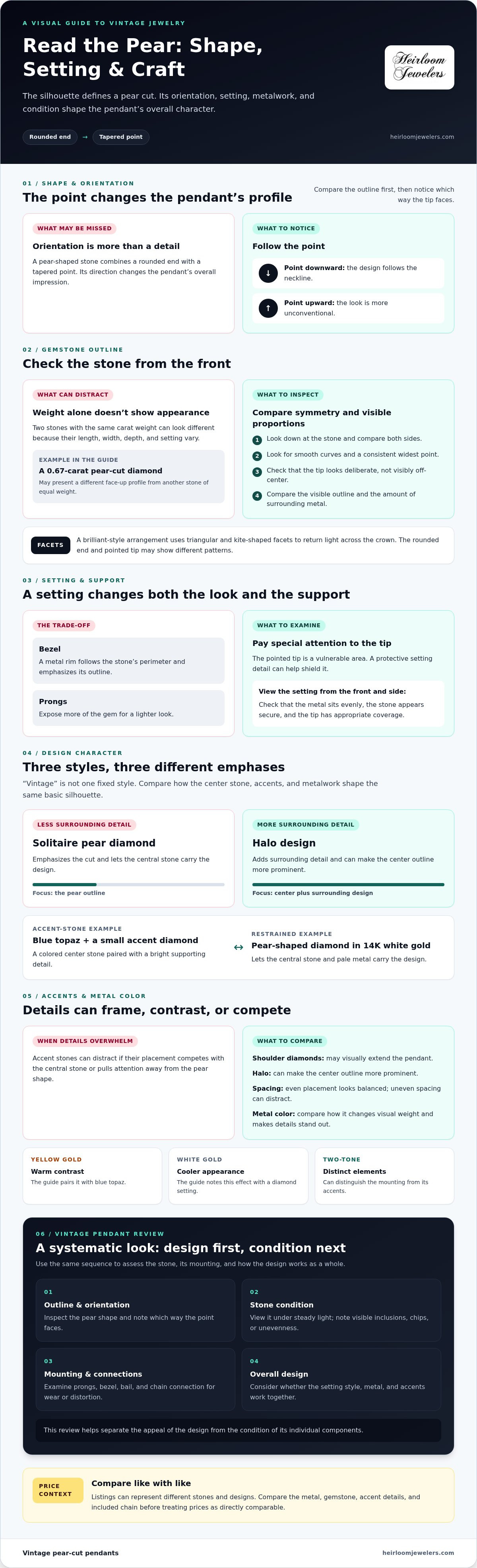
A pear-shaped gemstone has a rounded end and a tapered point, combining features of oval and marquise outlines. Its direction changes the pendant’s overall impression: with the point facing downward, the design follows the neckline; with the point facing upward, it looks more unconventional. The silhouette defines the cut, while the stone, setting, metalwork, and signs of age together shape a pendant’s vintage character.
Facet pattern influences how a pear-cut gem handles light. A brilliant-style arrangement uses triangular and kite-shaped facets to return light across the crown. The rounded end and pointed tip may show different patterns, so examine symmetry by looking down at the stone and comparing both sides. A balanced outline has smooth curves and a consistent widest point. The tip should appear deliberate, not visibly off-center.
Carat weight alone doesn’t describe a pear-shaped stone’s appearance. Two gems with the same weight can look different because their length, width, depth, and setting vary. A 0.67-carat pear-cut diamond, for example, may present a different face-up profile from another stone of equal weight. Compare the visible outline rather than relying only on weight. The pendant’s proportions also depend on how much metal surrounds the gem.
Settings affect both appearance and support. A bezel follows the stone’s perimeter with a metal rim, emphasizing its outline. Prongs expose more of the gem for a lighter look. At the pointed tip, a protective setting detail can help shield a vulnerable area. Examine the setting from the front and side: check that the metal sits evenly, the stone appears secure, and the tip has appropriate coverage.
Vintage design details vary widely, so “vintage” doesn’t describe one fixed style. A 14K gold pendant with blue topaz and a small accent diamond combines a colored center stone with a bright supporting detail. A pear-shaped diamond pendant in 14K white gold takes a more restrained approach, letting the central stone and pale metal carry the design. These examples show how gemstone choice and metal color can change the same basic silhouette.
Accent stones can frame the center, add contrast, or draw the eye toward the pear’s point. Small diamonds along the shoulders may visually extend the pendant, while a halo can make the center outline more prominent. Check the spacing between accent stones and the center gem. Even placement creates a balanced look; uneven spacing can distract from the pear shape. Notice whether decorative details complement or compete with the central stone.
Metal color affects a pendant’s balance with its gemstone. Yellow gold offers warm contrast with blue topaz, while white gold gives a diamond setting a cooler appearance. A two-tone design can distinguish the mounting from its accents. Compare yellow-gold and white-gold pear-shaped pendants: even with similar gemstone outlines, the metal changes the visual weight and how the details stand out.
Assess an older pendant systematically. First, inspect the pear outline and its orientation. Next, view the stone under steady light and note visible inclusions, chips, or unevenness. Then examine the prongs, bezel, bail, and chain connection for wear or distortion. Finally, consider whether the setting’s style, metal, and accents work together. This review helps you distinguish the appeal of the design from the condition of its individual components.
Compare three styles: a solitaire pear diamond, a pear-shaped blue topaz with one accent diamond, and a halo design. Look at their outlines, settings, and metal colors side by side. The solitaire emphasizes the cut; the accent-stone design adds contrast; the halo brings more surrounding detail. This comparison helps clarify which features suit your taste without treating carat weight or age as the only measure of character.
Price comparisons can add context, but listings represent different stones and designs.
Compare the metal, gemstone, accent details, and included chain before treating prices as directly comparable.
Heirloom Jewelers: Lugano Emerald & Diamond Necklace 18K White Gold
The Lugano Emerald & Diamond Necklace 18K White Gold offers a distinct point of comparison for readers drawn to vintage gemstone pendants. Its named combination of emeralds, diamonds, and white gold provides another way to consider how gemstone color and precious metal shape a piece’s character. It is a natural next step when you’re exploring estate jewelry beyond the pear-cut silhouette.
Heirloom Jewelers also offers vintage diamond earrings, a platinum engagement ring, and estate peridot and quartz earrings. These pieces bring different stones, forms, and metals into view, helping you refine the details you value in fine jewelry. Contact Heirloom Jewelers to explore the Lugano necklace and related estate pieces.
Choose a Piece That Reflects Your Eye
The right vintage pendant is a personal choice, shaped by the details you return to: the gemstone’s outline, the setting’s character, and the way the piece feels as a whole. Let those preferences guide your search. Knowing what you value can help you recognize a design that belongs in your collection.
Vintage pear-cut pendants are one expression of estate jewelry’s varied craftsmanship. Heirloom Jewelers also offers the Vintage White Gold Old European Cut Diamond Stud Earrings and the Vintage Platinum 0.5 Carat Diamond Engagement Ring. These pieces provide other ways to appreciate the character of historic cuts, precious metals, and enduring design.
Explore the collection at your own pace, and let your interest in a particular detail lead the way. Contact Heirloom Jewelers for help as you consider your next piece. A thoughtful choice can become a lasting part of your personal story.