
The most meaningful first step may be to leave inherited jewelry unchanged until you understand what you have. What to do after inheriting estate jewelry depends on each piece’s condition, potential value, and place in your family’s story. You can keep it, seek an assessment, sell it, or explore having it redesigned.
It’s natural to wonder whether diamonds from an inherited piece can become part of a new ring. They can often be reset, but a jeweler should inspect the stones before recommending removal or resetting. Keeping the original design is also a valid choice, especially when its details carry family history.
This guide explains when an appraisal may help, how selling differs from redesign, and how to weigh financial value against sentimental attachment. It also considers the emotions an inheritance can bring, so you can make a thoughtful decision without rushing to alter or part with a piece.
Key Takeaways
- Identify a piece’s materials, condition, and potential significance before deciding whether to sell, alter, or keep it.
- Choose an appraisal or evaluation that fits your purpose, since insurance replacement value and resale value answer different questions.
- Weigh market factors alongside personal meaning, and consider keeping a piece or resetting its stones rather than parting with it.
- Make room for family perspectives before changing or selling jewelry with shared memories attached.
1. Should You Get Inherited Jewelry Appraised Before Selling It?
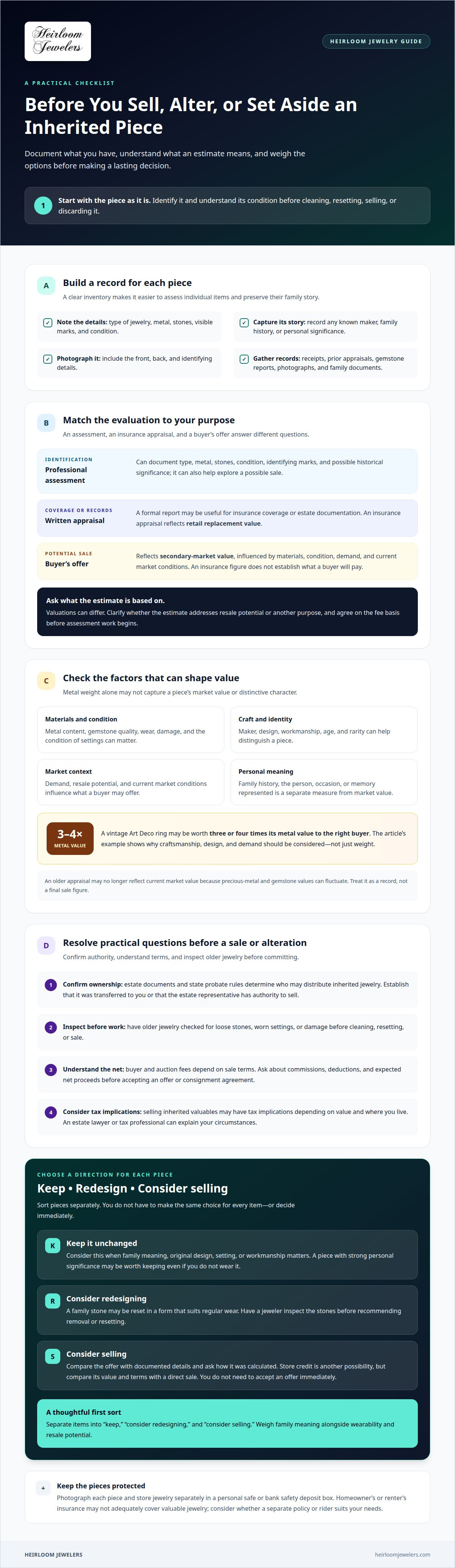
Before selling, altering, or discarding inherited jewelry, identify each piece. A professional assessment can document its type, metal, stones, condition, identifying marks, and possible historical significance. For example, a ring’s gemstone, setting, maker, and wear can all affect how it is assessed. Gather receipts, prior appraisals, gemstone reports, photographs, and family records before the review.
An assessment and a written appraisal serve different purposes. An assessment can help identify a piece and explore a possible sale. A formal report may be useful for insurance coverage or estate documentation. Older jewelry should also be inspected for loose stones, worn settings, or damage before cleaning, resetting, or sale.
Insurance appraisals and resale offers aren’t interchangeable. An insurance appraisal reflects retail replacement value. A buyer’s offer reflects secondary-market value, which depends on materials, condition, demand, and current market conditions. An insurance figure therefore doesn’t establish what a buyer will pay.
State probate rules and estate documents determine who may distribute inherited jewelry. Before selling, establish that the piece was transferred to you or that the estate representative has authority to sell it. Resolve ownership questions through the estate process before making a sale.
When arranging an appraisal, provide the appraiser with the jewelry and any available records, then clarify whether you need an assessment or a written report. The cost depends on the scope, documentation, and purpose of the work. Agree on the fee basis before the assessment begins.
Buyer and auction fees depend on the sale terms. Before accepting an offer or consignment agreement, ask for a clear explanation of commissions, deductions, and expected net proceeds.
For protection, photograph each piece and store jewelry separately in a personal safe or bank safety deposit box. Homeowner’s or renter’s insurance may not adequately cover valuable jewelry, so consider whether a separate policy or rider suits your needs.
2. Is it better to sell inherited jewelry or redesign it?
The right choice depends on what you want from each piece. Selling can turn jewelry you won’t wear into funds, while redesign may let you carry a family stone forward in a form that suits you. For those considering a custom setting, bespoke ateliers such as Trimooni illustrate how heirloom gemstones can be reimagined through handcrafted fine jewelry. Keeping a piece unchanged is another thoughtful option, especially when its original setting or workmanship matters to your family.
If you consider selling, compare the offer with the piece’s documented details and the factors behind its value. A jeweler’s assessment should address the stones, materials, condition, craftsmanship, and market demand. Ask how the offer is calculated and what affects the amount you would receive. A clear explanation helps you decide, and you don’t need to accept an offer immediately.
You don’t have to sell every item. Keep pieces with the strongest personal meaning, and consider whether a stone could be reset for regular wear. Some sellers also consider store credit instead of cash. That option can make sense if you want a different piece, but compare its value and terms with a direct sale first. For example, you might keep a pendant with family significance and sell a piece you’re unlikely to wear.
Selling inherited valuables may have tax implications, depending on their value and where you live. An estate lawyer or tax professional can explain how those considerations apply to your circumstances. Don’t assume sale proceeds are treated the same way everywhere.
Before you decide, separate your pieces into three groups: keep, consider redesigning, and consider selling. This simple sorting step makes it easier to weigh family meaning against wearability and resale potential. If you’re exploring the character and craftsmanship of pre-owned pieces, browse estate jewelry for considered examples.
3. Balancing financial and sentimental value
An inherited piece has both market value and family history. Keep those measures separate while deciding what to do. A valuation considers metal content, gemstone quality, maker, age, condition, rarity, demand, craftsmanship, and resale potential. Sentimental value comes from the person, occasion, or memory the jewelry represents.
Start an inventory by creating a separate record for each piece. Note its type, visible marks, stones, condition, and any known family story. Photograph the front, back, and identifying details, then keep the images with receipts, appraisals, and family photographs. This makes it easier to discuss individual pieces and preserve their history.
Metal weight alone can miss important value. An antique piece in good condition may be worth more as estate jewelry than its basic scrap value. A vintage Art Deco ring may be worth three or four times its metal value to the right buyer. Maker, design, workmanship, and demand can all shape its market value.
Signed or distinctive jewelry also deserves careful consideration. A maker’s mark or unusual design can help identify a piece and distinguish it from ordinary jewelry. Age alone does not establish value, and condition matters. Don’t treat a family heirloom as scrap before its craftsmanship, stones, and identifying features have been assessed.
Valuations can differ. The contrast shows why the basis of an estimate matters. Ask what factors shaped the valuation and whether it reflects resale potential or another purpose.
An older appraisal may no longer reflect current market value because precious-metal and gemstone values can fluctuate. Use it as a record, not a final sale figure. Then weigh the findings against your priorities: keep a piece with personal meaning, consider a redesign, or sell jewelry you don’t wish to retain.
4. Emotional considerations when inheriting jewelry
An inherited diamond can carry a memory that matters more than its market value. A brooch worn at family gatherings or pearls received for a 25th anniversary can represent a person, occasion, and shared history. Before deciding its future, identify the story attached to each piece, not only its stones or settings.
Give yourself time to consider the decision. You don’t need to wear every inherited piece, and keeping one does not mean keeping the entire collection. A simple first step is to set aside jewelry with a strong personal connection, then revisit the rest when the immediate emotions feel less pressing. This separates remembrance from the pressure to make one decision for everything.
Family members can attach different meanings to the same piece. A diamond brooch might remind one person of a relative’s celebrations and another of an old photograph. Talk with close family before selling or altering shared keepsakes. Listening to their stories can clarify which pieces matter to others and help prevent an avoidable misunderstanding.
Redesign changes a piece’s appearance, even when its stones remain. Before resetting a diamond, ask a jeweler to inspect it for damage and assess whether removal and resetting suit the stone. Consider preserving the original setting or photographing its details. That record keeps part of the piece’s history visible after a change.
Choose an approach that honors both the person and your own life. You might wear a ring as it is, keep a brooch for its family story, or reset stones into a piece you’ll use. If you’re considering a different heirloom to wear, explore estate jewelry for examples of vintage craftsmanship.
Heirloom Jewelers: Estate Peridot & Quartz Dangle Earrings 14K Yellow Gold
Heirloom Jewelers offers the Estate Peridot & Quartz Dangle Earrings 14K Yellow Gold as one example of estate jewelry with distinctive gemstones and a precious-metal setting. If you’re considering what to wear or keep after an inheritance, comparing a piece’s materials and character with estate jewelry can help clarify your preferences. A similar category doesn’t need to replace a family heirloom; it can simply offer a point of reference.
The collection also includes a Lugano Emerald & Diamond Necklace 18K White Gold, Vintage White Gold Old European Cut Diamond Stud Earrings, and a Vintage Platinum 0.5 Carat Diamond Engagement Ring. These pieces offer examples of different settings, gemstones, and vintage styles as you consider what suits your taste.
For a closer look at estate jewelry options, contact Heirloom Jewelers.
Give Your Decision the Time It Deserves
Deciding what to do after inheriting estate jewelry doesn’t mean choosing the future of every piece at once. Start with the decision that feels clearest, and leave more complicated choices open while you consider what each item means to you. A thoughtful choice can honor family history while reflecting how you want to live with the jewelry now.
Your perspective may change as you learn more about the pieces or hear family stories. Leave room for that possibility. A decision made with care is more likely to feel like your own, whether you preserve a piece as it is or choose another direction.
If you’d like to explore estate jewelry as you consider your next step, connect with Heirloom Jewelers. A conversation can help you look at the options with a clear sense of what matters to you. Take the time you need, and choose a path that feels considered and personal.
Frequently Asked Questions
Can diamonds from inherited jewelry be put into a new ring?
A jeweler can assess whether an inherited diamond suits a new ring setting. The stone’s shape, dimensions, condition, and intended setting guide that decision. Bring any original setting or matching stones together, and describe how the ring will be worn. This helps the design account for the diamond’s proportions while keeping the original mounting available as part of the piece’s family history.
How do I find out if inherited jewelry is valuable?
Look for identifying marks, maker signatures, and records that connect a piece to its history. An old photograph may help identify a design or confirm how a piece was worn. A professional assessment can help distinguish an unsigned family piece from a signed or historically notable one. Keep conclusions specific to the individual item rather than assuming similar-looking jewelry has equal value.
Is it better to sell inherited jewelry or redesign it?
Choose based on what you want the piece to do for you. If wearing it matters but its current form doesn’t suit you, explore redesign while preserving original components that carry meaning. If you don’t want to wear or keep it, selling may be a better fit. Consider each item separately, since a collection can include pieces with very different personal importance.
Not Sure What You Inherited?
Pause before separating pieces or discarding small components. A loose stone, clasp, or matching earring may belong with another item. Photograph each piece as found, note visible marks, and record what relatives remember about it. These details can help establish its identity and family context. Keep related items together until you understand how they fit.
Quick Answer: What Should You Do With Inherited Jewelry?
If you’re deciding what to do after inheriting estate jewelry, first account for each piece and store it safely. Then consider every item on its own. A piece might suit continued wear, preservation, redesign, or sale. You don’t need to make one choice for the entire collection. Let your priorities and each item’s details guide the next step.
Should You Get Inherited Jewelry Appraised Before Selling It?
A formal written appraisal isn’t necessary for every sale. If you’re still identifying pieces, an assessment may provide useful information without a full report. A written appraisal may be appropriate when you need documentation for insurance or estate matters. Before arranging either, clarify the purpose: the kind of assessment you need depends on whether you’re documenting the piece or exploring a sale.