
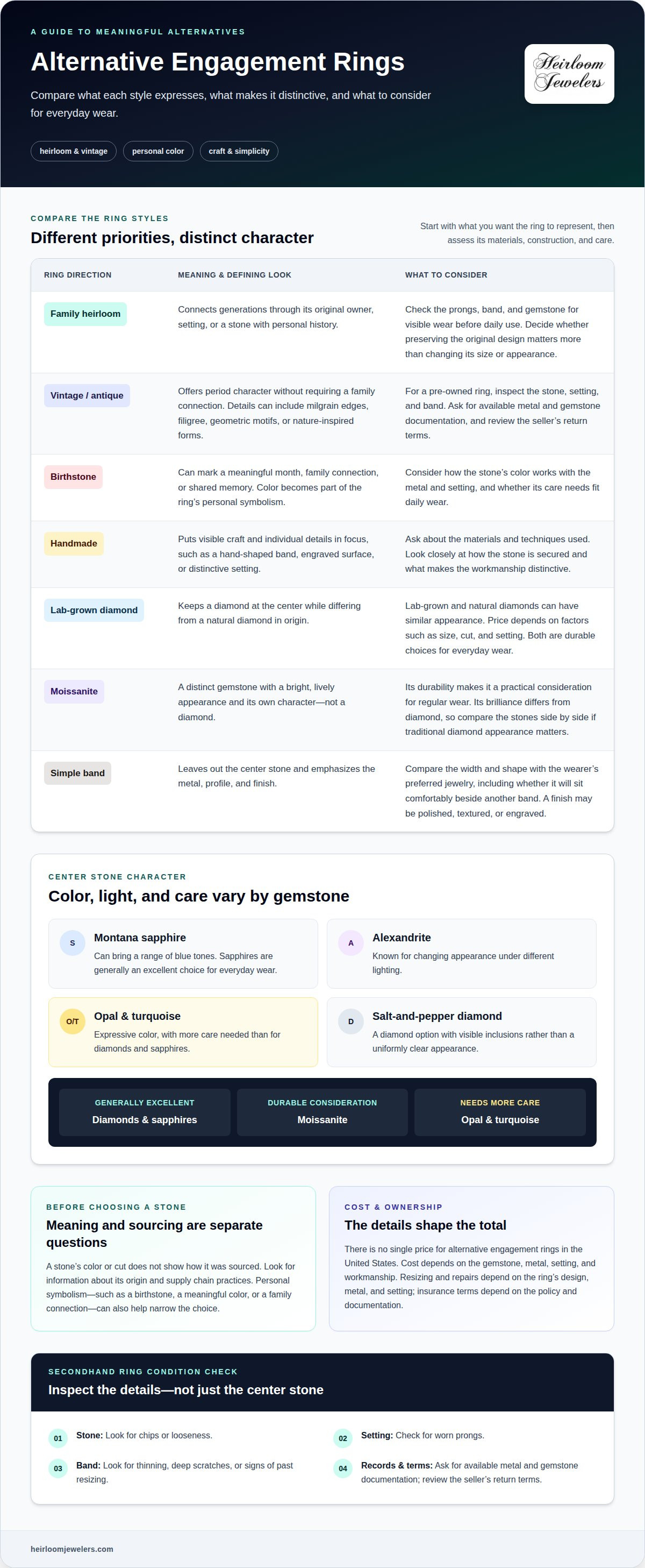
The most meaningful engagement ring may not be new or diamond. Alternatives to new diamond engagement rings include heirloom and vintage pieces, birthstone or handmade designs, lab-grown diamonds, and simple bands. Each offers a distinct look and a different way to make the choice personal. For everyday wear, durability matters: diamonds and sapphires are generally excellent choices, while opal and turquoise need more care.
Choosing a ring is about more than its center stone. You may value family history, a particular color, thoughtful craftsmanship, or a quieter design. This guide compares the options and explains how gemstones, settings, and materials affect everyday wear. You’ll learn what distinguishes each style, what makes it appealing, and which considerations can help you find a ring that feels right for its wearer.
Key Takeaways
- Compare heirloom, vintage, birthstone, lab-grown, handmade, and simple-band designs by the meaning and style you want the ring to express.
- Consider a stone’s sourcing and personal significance alongside its appearance when choosing a meaningful alternative.
- For a family ring, vintage piece, or antique style, look at its history and the details that make it distinctive.
- Match the gemstone, setting, and materials to everyday habits; some stones need more care than diamonds and sapphires.
What are alternative engagement rings?
Alternatives to new diamond engagement rings include vintage designs, simple bands, and rings featuring gemstones such as Montana sapphire, alexandrite, opal, or turquoise. The right choice depends on the meaning, appearance, and everyday use you want the ring to reflect.
Ethical Sourcing and Personal Symbolism
Ethical sourcing is separate from a stone’s color or cut. Look for information about a gemstone’s origin and supply chain practices; a polished appearance alone does not show how a stone was sourced. Personal symbolism can help narrow the choice, too. A birthstone, a color associated with a shared memory, or a family connection can make a ring feel individual without relying on a conventional diamond.
Non-Diamond Stone Options
Non-diamond center stones offer distinct color and character. Montana sapphires can bring a range of blue tones, while alexandrite is known for changing appearance under different lighting. Opal and turquoise offer expressive color but need more care than diamonds and sapphires. Salt-and-pepper diamonds are another option for someone who wants a diamond with visible inclusions rather than a uniformly clear appearance.
Moissanite Benefits and Drawbacks
Moissanite is a distinct gemstone, not a diamond. Its bright, lively appearance appeals to people who want a diamond-like look with its own character, and its durability makes it a practical consideration for a ring worn regularly. The trade-off is visual: moissanite’s brilliance differs from diamond, so it may not suit someone seeking a traditional diamond appearance. Compare the stones side by side to judge their light and overall presence.
Alternative Ring Costs
There is no single price for alternative engagement rings in the United States. The total depends on the gemstone, metal, setting, and workmanship; a simple band and a ring with a distinctive center stone involve different materials and construction. Resizing and repairs depend on the ring’s design, metal, and setting, while insurance terms depend on the policy and the ring’s documentation. Review these details as part of the purchase decision, especially for an heirloom or a delicate gemstone setting.
Family heirlooms, vintage rings, and antique styles
A family ring can carry a story, while a vintage design offers period character without a personal family connection. Construction and condition help distinguish between the two.
Heirloom and Antique Ring Styles
A family heirloom may connect generations through its original owner, setting, or a stone with personal history. Before wearing one daily, examine the prongs, band, and gemstone for visible wear. Vintage and antique styles offer distinctive details, from milgrain edges and filigree to geometric motifs. Nature-inspired rings may feature leaf shapes or floral forms, while vintage-inspired designs reinterpret older details in newer pieces.
Finding Pre-Owned and Estate Rings
In the United States, pre-owned engagement rings are available through estate jewelry retailers, vintage jewelers, and auction houses. A specialist retailer can present estate pieces with details about their materials and design. Explore an estate ring selection to see how pre-owned jewelry can offer period character and individual workmanship.
Before buying a secondhand ring, inspect the center stone for chips or looseness and the setting for worn prongs. Look closely at the band for thinning, deep scratches, or signs of past resizing. Ask for any available documentation describing the metal and gemstone, and review the seller’s return terms. These details clarify the ring’s condition and what ownership may involve.
Style can guide your search, too. A nature-inspired ring might use leaves, vines, or flower-shaped details; an antique-style piece may emphasize filigree or milgrain. Compare the profile, setting, and decorative work, not just the center stone. For a family ring, consider whether preserving its original design matters more than changing its size or appearance. That choice can shape how the piece is worn and passed on.
Birthstone, handmade, lab-grown, and simple-band rings
Birthstone rings, handmade designs, lab-grown diamonds, and plain bands offer distinct ways to personalize an engagement ring. Decide whether color, a maker’s work, diamond origin, or a minimal silhouette matters most before comparing specific pieces.
A birthstone can mark a meaningful month, family connection, or shared memory. For example, a ring with a partner’s birthstone makes the center stone personal rather than traditional. Consider how the stone’s color works with the metal and setting, then whether its care needs suit daily wear. The month gives you a starting point, not the whole decision.
Handmade rings appeal to people who value visible craft and individual details. Examine the design closely: a hand-shaped band, engraved surface, or distinctive setting can become the defining feature. Ask what materials and techniques went into the piece, and look at how the stone is secured. These details help distinguish workmanship from style alone.
Lab-grown and natural diamonds are both diamonds, but their origins differ. Their appearance can be similar, while price depends on factors such as size, cut, and setting. Both are durable choices for everyday wear, and diamond specialists such as Ribacoff Diamonds provide guidance on how the 4 Cs influence stone quality and value.
A simple band leaves out the center stone, emphasizing the metal, profile, and finish. A polished gold band creates a different impression from a textured or engraved one. Compare the ring’s width and shape with the wearer’s preferred jewelry, including whether it will sit comfortably beside another band. The clean silhouette can also keep attention on the metal’s finish.
These styles suit different priorities. A birthstone can carry personal meaning, handmade details highlight craft, and a lab-grown diamond keeps a diamond at the center. A plain band offers a restrained design. Compare these priorities before considering the specific ring’s setting, materials, and daily care.
Gemstone durability and everyday wear
Everyday durability depends on the gemstone, setting, and materials, not the stone alone. Diamonds and sapphires are generally excellent choices for engagement rings worn daily. Opal and turquoise center stones need more care. Consider the wearer’s routines alongside the stone’s appearance. A ring exposed to frequent knocks may need a different setting from one worn occasionally.
The setting affects how much protection a gemstone receives. Prongs hold a stone in place but leave parts of it exposed. A bezel setting surrounds the stone’s edge, creating a different profile and level of coverage. Compare these designs with the chosen gemstone and the wearer’s daily activities. The band’s material and construction matter, too, because durability depends on those details as well.
Regular visual checks can help you spot changes before they become more serious. Look for a loose stone, bent prongs, or a damaged-looking band. If you wear an opal or turquoise ring daily, take extra care to avoid knocks and rough handling. A diamond or sapphire still needs attention, even though both are strong everyday choices.
For a birthstone or colored-stone ring, identify the exact gemstone before deciding how to care for it. Alexandrite and Montana sapphire differ from opal and turquoise, so a general rule for colored stones may not suit each one. Match the setting to the stone, then consider how often the ring will be worn. This comparison helps balance color, symbolism, protection, and maintenance in one practical choice.
Heirloom Jewelers: Vintage Platinum 0.5 Carat Diamond Engagement Ring
The Vintage Platinum 0.5 Carat Diamond Engagement Ring offers a pre-owned choice for someone drawn to vintage character and a traditional diamond center stone. Its platinum setting and named carat weight give you specific details to consider alongside the ring’s design and personal significance.
It may suit your search if you value an existing piece over a newly manufactured design. Heirloom Jewelers also offers estate and vintage jewelry, including the Vintage White Gold Old European Cut Diamond Stud Earrings and Estate Peridot & Quartz Dangle Earrings 14K Yellow Gold. These pieces show how different eras, metals, and gemstones create distinct expressions of personal style.
If a vintage engagement ring fits what you’re looking for, contact Heirloom Jewelers to discuss the ring.
Choose a Ring That Feels Meaningful for Years to Come
The right ring is not simply a departure from convention. It reflects the wearer’s taste, daily life, and the meaning they want to carry forward. If you’re considering alternatives to new diamond engagement rings, use those priorities to narrow the field. A clear preference for history, color, or a restrained silhouette can guide your choice more effectively than trends.
Heirloom Jewelers offers pieces with distinct materials and character, including the Lugano Emerald & Diamond Necklace 18K White Gold, Vintage White Gold Old European Cut Diamond Stud Earrings, and Vintage Platinum 0.5 Carat Diamond Engagement Ring. These examples offer a point of reference for appreciating vintage details and fine jewelry with an established history.
Contact Heirloom Jewelers to discuss a vintage engagement ring that suits your priorities. Take the next step with a thoughtful sense of what matters most, and choose a ring you’ll be glad to wear.
Frequently Asked Questions
What Can You Use Instead of an Engagement Ring?
You can mark an engagement with a simple band, a necklace, another meaningful piece of jewelry, or no jewelry at all. The choice can reflect personal style, comfort, or a shared tradition rather than a particular ring design. For example, someone who works with their hands may prefer a pendant worn on a chain. Agreeing on the meaning together matters more than following a convention.
What are the best alternatives to a new diamond engagement ring?
The best choice depends on what you want the ring to represent. A family piece can carry personal history, while a birthstone can connect to a meaningful date or person. A plain band suits someone who prefers a quiet design; a lab-grown diamond keeps a diamond as the center stone. Start by choosing your priority, then compare styles that fit it.
How do sapphire, ruby, and other gemstone engagement rings compare for durability and cost?
Sapphires are generally excellent choices for everyday wear, while opal and turquoise need more care than diamonds and sapphires. Ruby and other gemstones require consideration of their specific properties and setting; avoid treating every colored stone alike. Cost varies with the gemstone, setting, metal, and workmanship. Compare those factors together rather than judging value by color or stone size alone.
Are vintage and antique engagement rings more affordable than new rings?
Not automatically. A ring’s cost can reflect its gemstone, metal, condition, design, and workmanship, whether it is vintage or new. An antique piece with distinctive craftsmanship may be valued differently from a simpler pre-owned ring. Compare the specific ring’s condition and materials with its asking price. Vintage describes age and style, but does not by itself determine affordability.
Are recycled gold and ethically sourced gemstones available for engagement rings?
Recycled gold and ethically sourced gemstones are options to consider when choosing an engagement ring. They involve separate questions: recycled gold concerns the metal’s material history, while gemstone sourcing concerns the stone’s origin and supply chain. Look for clear documentation about each component. A claim about one material does not establish the origin of another, so assess the metal and stone separately.
How do I choose a durable gemstone and setting for everyday wear?
Choose the gemstone and setting together, then consider how the ring will be worn. Diamonds and sapphires are generally excellent for everyday engagement rings; opal and turquoise need more care. A protective setting can reduce a stone’s exposure, while the band’s material and construction also affect durability. Consider regular activities and the likelihood of knocks before settling on a design.