
What if a necklace’s age is the least revealing clue to its quality? Antique pearl necklaces carry history, but age alone can’t tell you whether the pearls are natural or cultured, how well the strand was made, or whether it’s suited to regular wear. In 2026, jewelry is commonly considered antique at 100 years old or older, yet authenticity and condition deserve just as much attention.
It’s understandable to feel unsure when an older piece has unfamiliar construction or delicate-looking pearls. Natural and cultured pearls can appear similar, while luster, surface condition, matching, and the clasp offer important clues. An original silk thread may also need more care than newer stringing.
This guide explains how age, pearl type, craftsmanship, and condition shape an antique pearl necklace, so you can assess one with greater confidence. You’ll learn what distinguishes natural from cultured pearls, what to look for in a strand and its clasp, and how to judge whether a piece suits your intended use. With a clearer eye for its materials and construction, you can appreciate its historical character while making a considered choice.
Key Takeaways
- Distinguish antique age from estate ownership and vintage style; age conventions can vary, so interpret descriptions carefully.
- Compare natural and cultured pearls, freshwater and saltwater origins, and strand construction without treating origin alone as a measure of quality.
- Antique pearl necklaces aren’t automatically too fragile to wear; assess the pearls, stringing, clasp, and overall condition against how often you plan to wear the piece.
- Separate documented provenance from visual clues and seller descriptions when evaluating a necklace.
- Protect pearls with gentle handling, separate storage, and care that limits exposure to cosmetics, chemicals, and prolonged moisture.
What Makes an Antique Pearl Necklace Distinctive?
An antique pearl necklace is generally a pearl necklace made at least a century ago, though the exact cutoff can vary by market and context. In 2026, the common 100-year convention points to pieces made in or before 1926. That age label is a starting point, not proof of authenticity or quality. Design, materials, construction, and evidence supporting the necklace’s history all matter.
An antique pearl necklace brings together pearls and craftsmanship from an earlier period, with evidence of its age supporting the description. A sound assessment considers whether the necklace’s details work together. For background on how pearls form and how natural and cultured pearls differ, see Pearl.
Antique, vintage, and estate: what do the terms mean?
Antique usually refers to an object at least 100 years old. This is a widely used convention, but terminology can vary across sellers and markets, so a description should explain the basis for its dating where possible. A necklace’s appearance alone doesn’t establish its age.
Vintage generally describes an older piece that doesn’t meet the antique threshold, though there isn’t one universal cutoff for the term. Estate refers to previously owned jewelry, not a specific age. An estate necklace may be antique, vintage, or relatively recent. These terms describe different things: antique and vintage suggest age, while estate points to ownership history.
For a careful assessment, distinguish documented evidence from interpretation. A dated receipt, family record, or other provenance can help establish a history. A seller’s description and visible features may offer useful clues, but they aren’t the same as documentation.
How historical periods shaped pearl necklace design
Historical periods provide context for a necklace’s silhouette, setting, metalwork, and ornament. They can help explain why a piece looks the way it does, but styles overlap, and jewelry can be altered or reassembled. Treat a period attribution as a conclusion supported by several details, not a date inferred from one decorative feature.
- Georgian: Pearl jewelry may feature intricate handwork, closed-back settings, or small seed pearls. These details are clues, not a definitive date.
- Victorian: Necklaces may reflect ornate metalwork or sentimental decoration, with designs changing across the long period.
- Edwardian: Delicate, airy designs and fine metalwork can suggest the period’s light, intricate aesthetic.
- Art Deco: Geometric forms, symmetry, and crisp arrangements may contrast with more flowing designs.
Examine the whole necklace: the pearl arrangement, clasp, setting, and workmanship should make sense together. Repairs or replaced components may affect how confidently a piece can be dated. Antique pearl necklaces are distinctive not simply because they have endured, but because their materials and construction preserve a sense of the period in which they were made.
Pearl Types and Necklace Construction: What Should You Compare?
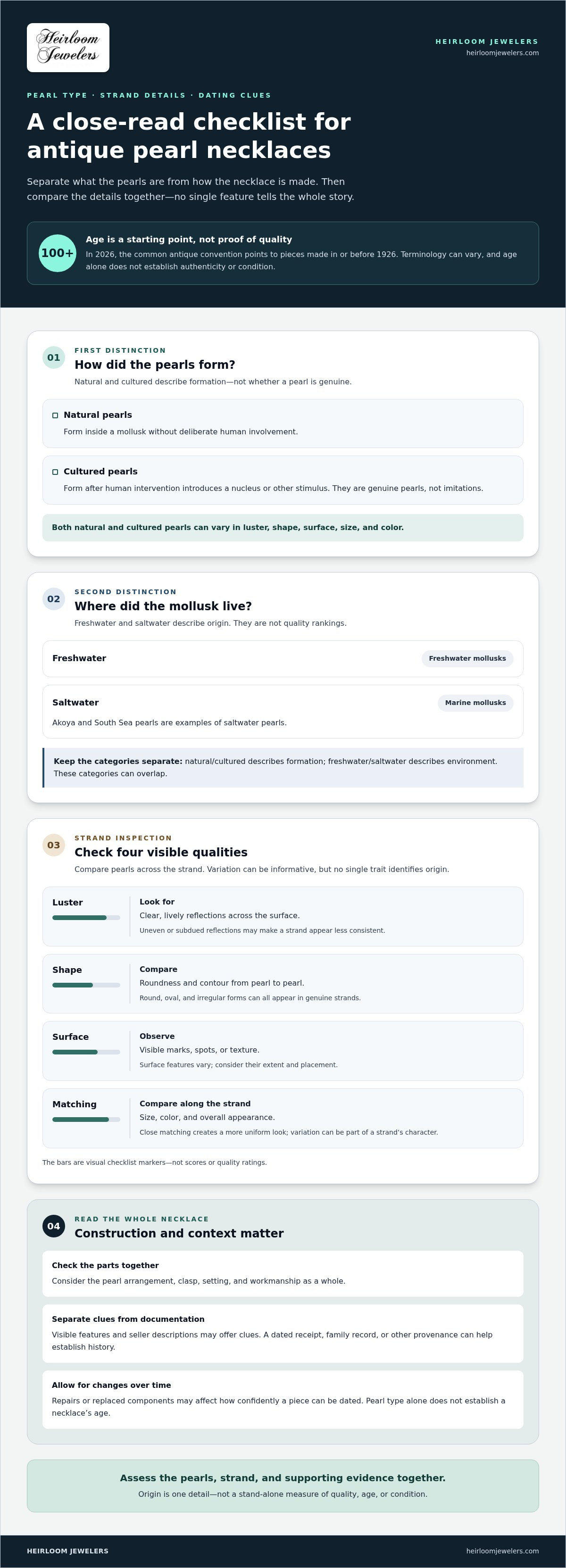
Start by separating two questions: what kind of pearls are present, and how has the necklace been assembled? Natural and cultured describe how pearls formed. Freshwater and saltwater describe where the mollusk lived. These categories can overlap, and none alone tells you a strand’s quality or age.
Natural, cultured, freshwater, and saltwater pearls
Natural pearls form inside a mollusk without deliberate human involvement. Cultured pearls form after human intervention introduces a nucleus or other stimulus, but they are genuine pearls, not imitations. Both categories vary in luster, shape, surface, size, and color. The GIA Pearl Quality Factors offer a useful framework for considering these qualities together.
Freshwater pearls grow in freshwater mollusks, while saltwater pearls form in marine mollusks. Akoya and South Sea pearls are examples of saltwater pearls. Freshwater or saltwater origin is not a quality ranking: examine the individual pearls and the strand as a whole rather than assuming one origin is superior.
Use this comparison to guide a close visual review. Individual pearls vary, so the table describes features to assess rather than rules that identify a pearl’s origin.
| Feature | What to examine | What variation can tell you |
|---|---|---|
| Luster | Look for clear, lively reflections across the surface. | Uneven or subdued reflections may make a strand appear less consistent. |
| Shape | Compare roundness and contour from pearl to pearl. | Round, oval, and irregular forms can all appear in genuine strands. |
| Surface | Observe visible marks, spots, or texture. | Natural surface features vary; assess their extent and placement. |
| Matching | Compare size, color, and appearance along the strand. | Close matching creates a more uniform look; variation can be part of a strand’s character. |
Pearl type alone does not establish a necklace’s age; construction, supporting evidence, and the condition of its components matter too.
Strands, clasps, and the details of construction
Strand length affects how a necklace sits and how it can be worn. Check that the pearls are arranged evenly and that transitions in size or color look intentional. Knots between pearls can limit contact and help keep them separated if the strand breaks. Look closely at the thread and knots for looseness or uneven spacing.
A clasp contributes to the necklace’s appearance and function. Its metal, workmanship, and design may offer clues about construction, but a clasp by itself cannot prove a date: it may have been replaced. Note whether the clasp, stringing, and pearls appear consistent, and distinguish visible signs from claims about originality. Repairs and later alterations are part of a necklace’s history, not details to overlook.
Careful comparison of materials and workmanship is also useful when exploring curated estate and vintage jewelry, where each piece has its own character and details to consider.
Are Antique Pearl Necklaces Too Fragile to Wear?
No. Age alone doesn’t determine whether a necklace is wearable. An older strand in sound condition may suit occasional or regular wear, while a newer piece with weakened thread or damaged pearls may need attention first. Pearls are organic gems, so their surfaces and stringing benefit from thoughtful handling. The right choice depends on the individual necklace, how it’s constructed, and how you intend to wear it.
Consider both its present condition and your routine. A necklace reserved for special occasions faces different demands from one worn often. Neither use is automatically unsuitable, but frequent wear makes secure stringing, a dependable clasp, and a comfortable fit especially important. Antique pearl necklaces deserve care based on their actual condition, not assumptions about age.
How to assess a necklace’s visible condition
Begin with the pearls. In good light, look for changes in luster, visible surface wear, chipped or flattened areas, and marked differences in color or appearance from one pearl to the next. Some variation can be part of a strand’s character; damage or an abrupt change may deserve closer attention.
Then examine the necklace as a whole. Does the strand lie evenly, or does it twist, sag, or show gaps between pearls? Check the thread for looseness and the clasp for damage or a secure closure. Avoid pulling or flexing a strand to test it. If any component looks unstable, pause before wearing it.
Photographs can reveal useful clues, especially close views of the clasp, thread, and individual pearls. But lighting, focus, and camera angles can hide fine surface details or make luster difficult to judge. Images offer a first look, not a substitute for examining the piece directly.
When an antique necklace may suit regular wear
Wearability is a practical judgment. Consider whether the strand fits comfortably, stays in place, and feels secure for the activities you have planned. A well-maintained necklace may suit more frequent use; one with worn stringing or delicate components may be better kept for occasional wear until its condition is clear.
Think about your daily routine, too. Frequent movement, clothing that catches, or situations where the necklace may be knocked can add stress to a strand. Choosing to wear a piece selectively doesn’t diminish its value. It’s a way to enjoy its history while accounting for its construction and present state.
Loose pearls, a clasp that won’t stay closed, visible damage, or thread that appears frayed are reasons to set the necklace aside until its condition is clear. There’s no universal rule for every antique strand. A careful review lets you make a considered choice about when and how to wear it.
How to Evaluate an Antique Pearl Necklace Before Choosing One
A thoughtful evaluation brings the necklace’s description, history, construction, and condition into one picture. Don’t let an attractive period label or a single detail decide the question. For antique pearl necklaces, compare what is documented with what you can observe, then consider whether the piece suits your intended wear. This measured approach helps separate a compelling story from evidence you can actually assess.
Questions to ask of the piece and its history
Start with the written description. Note what it states about the pearls, metal, estimated age, prior ownership, and any repairs or alterations. A period attribution is a claim, not proof by itself. Provenance means supporting records or a traceable ownership history; visible design features and a seller’s description may offer clues, but they’re not equivalent to documentation. Clear descriptions and detailed images make it easier to compare pieces and spot gaps in the available information. For broader context on how history and ownership shape heirloom pieces, explore this guide to heritage jewelry.
A practical checklist for comparing necklaces
Review each piece in the same order. That makes differences easier to see and reduces the chance of overlooking an important detail.
- Confirm the description. Record the stated pearl type, materials, age attribution, and any known history. Separate documented information from estimates and visual interpretation.
- Compare the pearls. Look at luster, surface, shape, size, color, and how consistently the pearls are matched. Consider whether visible variation suits your preference.
- Review the strand. Check its length and fit, the spacing and arrangement of pearls, and the condition of the thread or knots. Notice signs of repairs or components that may have been replaced.
- Examine the clasp and workmanship. Consider the clasp’s material, design, and function alongside the strand and pearls. A clasp can provide a clue, but it can’t establish a necklace’s age on its own.
- Judge condition against intended use. Look for surface damage, uneven wear, loose components, or a clasp that doesn’t close securely. Decide whether the necklace suits an occasional event or the frequency of wear you have in mind.
Take the elements together. A period-style clasp may look persuasive, but if the strand shows later alterations, that context matters. Likewise, a visible repair isn’t automatically a flaw in the necklace’s history, though it should be understood when judging condition and suitability. Good images help with comparison, but they may not show every detail clearly.
Craftsmanship can also be appreciated across categories of antique jewelry. The same close attention to period details applies to antique rings. To explore distinctive, authenticated pieces selected for their history and workmanship, browse Heirloom Jewelers’ curated estate and vintage jewelry.
Caring for Antique Pearls and Exploring Estate Jewelry
Thoughtful care helps preserve a pearl necklace’s appearance and original character. Pearls have an organic surface that can be affected by chemicals, cosmetics, and prolonged moisture. A few gentle habits can reduce unnecessary exposure and help you enjoy a piece with greater confidence. Antique pearl necklaces don’t need complicated routines, but they do benefit from care suited to their materials and construction.
Everyday care and storage for pearl necklaces
Apply cosmetics, hairspray, and fragrance before putting on pearls. Let these products settle, then fasten the necklace carefully. Make pearls the last piece of jewelry you put on and the first you take off. This simple order limits their contact with products that may dull or affect the surface.
After wearing the necklace, wipe it gently with a clean, soft cloth. Avoid chemical cleaners and prolonged moisture exposure. Don’t soak the strand or scrub the pearls; careful, light handling is better. If the necklace has loose components or visibly worn stringing, avoid putting it under extra strain and pause wear until its condition is clear.
Store the necklace separately from harder gemstones and metal jewelry. A soft pouch or separate compartment can help prevent pearls from rubbing against pieces that may scratch them. Keep the strand laid or arranged without sharp bends, and avoid storing it where it may be compressed or caught. These habits help protect both the pearls and the construction that holds them together.
From pearl appreciation to estate jewelry discovery
Care is part of understanding a necklace, not separate from its history. The pearls, strand, clasp, and any repairs all contribute to how the piece looks and how it can be enjoyed. When considering estate jewelry more broadly, the same attention to materials, workmanship, condition, and documented history can help you make a considered choice. Authentication and thoughtful curation provide useful context for appreciating a pre-owned piece without relying on appearance alone.
Heirloom Jewelers specializes in authenticated, curated estate and vintage fine jewelry, with distinctive pre-owned pieces selected for their character and craftsmanship. Exploring estate jewelry offers a chance to appreciate how different materials and designs carry their own histories. Explore curated estate and vintage jewelry to discover pieces chosen with heritage and workmanship in mind.
Let Your Next Heirloom Find Its Own Meaning
Choosing a piece of historic jewelry can be more than a search for a particular material or period. It can be a chance to find a design that feels at home in your life and meaningful enough to keep wearing, caring for, and passing along. Antique pearl necklaces offer one expression of that connection, but the right heirloom is ultimately the one whose character speaks to you.
As you continue exploring, stay open to distinctive details you may not have set out to find. A carefully chosen estate piece can bring craftsmanship and personal style together in a way that feels grounded in history and entirely your own. Heirloom Jewelers’ curated estate and vintage selection offers a considered place to continue that discovery.
Explore Heirloom Jewelers’ curated estate and vintage jewelry, and take the next step toward finding a piece you’ll be glad to make part of your story.
Frequently Asked Questions
What qualifies as an antique pearl necklace?
The term generally describes a pearl necklace made in an earlier historical period, but there isn’t one age threshold used by every seller or market. Antique pearl necklaces should be considered through their materials, construction, design, and documented history, not age claims alone. “Estate” refers to prior ownership, while “vintage” often describes an older style that doesn’t meet a seller’s antique definition. Treat a period attribution as something to assess.
Are antique pearl necklaces made with real pearls?
Many are made with genuine pearls, but the strand may include natural pearls, cultured pearls, or replacement pearls added later. A necklace’s age doesn’t reveal how its pearls formed, and an altered piece may contain components from different times. Review the description for which pearls have been identified and whether that identification applies to the whole strand. If only some components are original, that distinction can affect how you understand the piece.
How can you tell if pearls are natural or cultured?
Appearance alone can’t reliably establish whether a pearl is natural or cultured. Both are genuine pearls, and qualities such as shape or surface variation can overlap. Identification may require gemological examination and testing. For a necklace with a natural-pearl attribution, review what evidence supports the claim and whether it applies to every pearl or a representative sample. A description without that context leaves important questions unanswered.
Can you wear an antique pearl necklace every day?
Possibly, but suitability depends on the necklace’s condition, construction, fit, and the demands of your routine. For example, a strand worn during a busy day may encounter more movement and contact than one reserved for a quiet occasion. Check that it rests comfortably and that its components appear secure. If you notice loose pearls, damaged thread, or a clasp that won’t stay fastened, set it aside until its condition is clear.
How should you store an antique pearl necklace?
Keep the necklace in a clean, soft-lined space where it won’t rub against other jewelry or be compressed. Avoid placing it beside pieces with harder gemstones or exposed metal edges. A dedicated pouch or separate compartment can help protect it between wears. Don’t store it while damp, and avoid prolonged exposure to heat or chemicals. If the strand seems unusually delicate, handle it gently and avoid placing strain on it.
What should you look for when buying an antique pearl necklace?
Look for a description that distinguishes documented history from an estimated age or style attribution. Clear images should show the clasp, strand, and individual pearls, not only the necklace as a whole. Compare whether the stated pearl type and materials are consistent across the description and images, and note any disclosed repairs or replacements. Finally, consider whether the length and condition suit your intended use. One visual clue can’t establish authenticity by itself.
Are cultured pearls considered real pearls?
Yes. Cultured pearls are genuine pearls formed with human assistance, while natural pearls form without that intervention. “Cultured” describes how a pearl began, not whether it’s imitation. In an older necklace, the strand may also have been repaired or partly restrung, so the age of the necklace and the origin of each pearl aren’t necessarily the same. Read the identification carefully to understand whether it describes the full strand or selected pearls.
How do you care for pearls without damaging them?
Put pearls on after applying cosmetics and fragrance, then wipe them gently with a soft cloth after wearing. Avoid abrasive polishing and household cleaning products, including harsh solutions that may harm their surface. Don’t use steam or ultrasonic cleaners on a pearl strand. Let the necklace dry before storing it, and keep it separate from harder jewelry. If you see damage or loose components, avoid home repairs and pause wear until the necklace’s condition is clear.