
Most modern jewelry is designed for a fleeting season, but authentic heritage jewelry is crafted to endure for centuries. You might find yourself captivated by the soft glow of a vintage Old European cut diamond yet hesitate because the market is cluttered with "vintage-style" replicas. It's difficult to find pieces with documented provenance in a sea of mass-produced goods. We believe that collecting should be a steady, respectful process of discovery rather than a high-pressure transaction.
This guide provides the clarity you need to distinguish between "antique" and "estate" labels while identifying the defining characteristics of specific historical eras. You'll learn how to evaluate the investment potential of these pieces, including the impact of the 2026 federal capital gains tax rate of 28% on collectibles. We'll also discuss the importance of USPAP-compliant appraisals and how current import tariffs affect the secondary market. By the end, you'll have the confidence to find authenticated treasures that bridge the gap between historical craftsmanship and modern value.
Key Takeaways
- Distinguish between antique, vintage, and estate labels to build a focused and historically accurate collection.
- Understand why heritage jewelry requires a higher standard of curation, emphasizing historical significance over mere pre-owned status.
- Recognize the hallmarks of era-specific artistry, such as the intricate filigree and technical mastery of Edwardian and Art Deco platinum settings.
- Learn how to verify authentication through proper hallmark identification and the professional assessment of gemstone settings in 18K white gold.
- Discover the benefits of working with a specialist curator to avoid mass-produced goods and secure pieces with documented provenance.
Defining Heritage Jewelry: More Than Just Pre-Owned
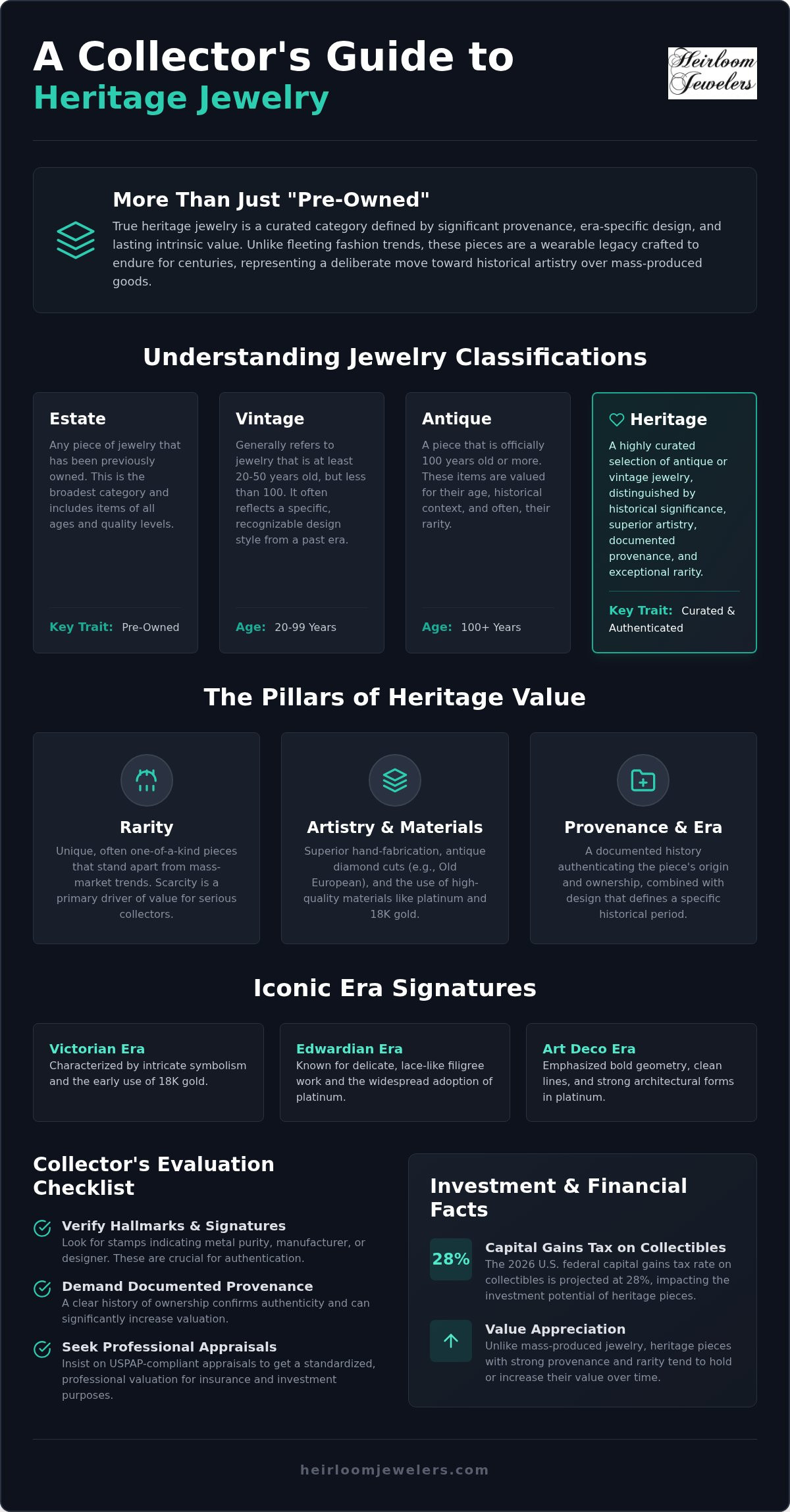
The term "estate" is a broad category, but heritage jewelry occupies a much narrower and more prestigious space. While any pre-owned piece can be labeled as estate, heritage items are defined by significant provenance, era-specific design, and lasting intrinsic value. Jewelry has remained among the oldest types of archaeological artefacts, serving as a testament to human artistry across millennia. In the modern market, choosing heritage over mass-produced retail is a deliberate move toward items that carry a story. These pieces aren't just accessories; they're a wearable legacy that transcends temporary fashion trends.
A higher standard of curation distinguishes these collections from general resale. We focus on authenticated pieces that represent the pinnacle of their respective eras. This includes specialized items like a Vintage Platinum 0.5 Carat Diamond Engagement Ring or a Lugano Emerald & Diamond Necklace in 18K White Gold. These selections aren't chosen simply because they're old. They're selected for their historical integrity and the technical mastery of their construction. This approach ensures that every item in a collection possesses a level of character that modern manufacturing cannot replicate.
The Distinction Between Fashion and Heritage
True heritage pieces are defined by the quality of their materials. Fashion jewelry often relies on plated metals and synthetic stones, which lose value over time. Heritage items utilize substantial materials like 18K white gold or platinum. This material integrity ensures the piece remains a viable investment. Rarity also plays a vital role. You won't find these designs in a modern showroom. Each discovery, such as a pair of Vintage White Gold Old European Cut Diamond Stud Earrings, is essentially one-of-a-kind. The secondary market values this scarcity, making these pieces highly sought after by serious collectors who value individuality over mass-market trends.
Why Provenance Matters in the Heritage Market
Provenance is the documented history of an item's ownership and origin. It acts as a bridge between the past and the present, providing a clear trail that confirms authenticity. In the high-end vintage sector, a well-documented history can significantly increase a piece's valuation. It transforms an object into a historical record. We prioritize authentication to protect the integrity of your collection. Heritage jewelry is a marriage of historical artistry and documented origin. This focus on documentation ensures you aren't purchasing a "vintage-style" replica, but a genuine piece of history that retains its value through the decades.
The Pillars of Heritage Value: Rarity, Era, and Artistry
Authentic heritage jewelry derives its value from three distinct pillars: rarity, historical era, and superior artistry. Unlike modern mass-produced items, these pieces represent specific moments in design history where craftsmanship was paramount. The technical mastery required for a Vintage Platinum 0.5 Carat Diamond Engagement Ring involves hand-fabrication techniques that are rarely seen today. Collectors look for these specific markers of quality to ensure they're investing in a piece of lasting significance. Each item serves as a window into the aesthetic priorities of the past.
Iconic Eras and Their Aesthetic Signatures
The transition from the Victorian and Edwardian periods to the Art Deco era marked a significant shift in jewelry design. Victorian pieces often featured intricate symbolism and the early use of 18K white gold. In contrast, art deco jewelry emphasized bold geometry and the widespread adoption of platinum. This era saw the rise of the solitaire ring with diamonds, focusing on clean lines and architectural strength. Understanding these nuances helps collectors identify authentic pieces from their preferred decade.
Designer signatures also play a critical role in valuation. A piece like the Lugano Emerald & Diamond Necklace in 18K White Gold carries the prestige of a recognized house, which naturally increases collector demand. These signatures serve as a hallmark of excellence and a guarantee of the material quality used during that period. They provide a level of security that unbranded estate pieces often lack.
The Art of the Antique Cut
The diamonds found in heritage pieces possess a unique character often missing in modern stones. Many collectors specifically seek out Old European and Mine cuts for their distinct fire and personality. These stones were hand-faceted before the advent of modern computer-aided machinery. As noted in GIA's guide to buying estate jewelry, these antique cuts interact with light in a soft, romantic way that modern brilliant cuts don't replicate.
Vintage White Gold Old European Cut Diamond Stud Earrings are a prime example of this artistry. The facets are larger and deeper, creating a play of light that feels organic and storied. This hand-finished quality is a hallmark of true heritage jewelry. It is this depth of character that makes these pieces so desirable for those who appreciate the intersection of history and fine jewelry. If you're looking to begin your collection, you can view our curated selection of these authenticated pieces.
Distinguishing Heritage Jewelry from Antique and Estate Pieces
Terminology is the foundation of any serious collection. While casual buyers often use these terms interchangeably, a specialist understands the specific timeline that defines a piece. "Estate" simply refers to any item that has been previously owned. This could include a high-value Vintage Platinum 0.5 Carat Diamond Engagement Ring or a mass-produced piece from a contemporary retail chain. In contrast, heritage jewelry represents a curated selection of estate finds that possess significant historical and artistic merit. It isn't just pre-owned; it's a piece of history worth preserving.
Price points in this market vary based on rarity and demand. It's a common misconception that estate jewelry is always more affordable than new retail. While some pre-owned items offer value, rare heritage pieces often appreciate over time. Collectors frequently seek expert advice on shopping for diamond jewelry to navigate these valuations. A piece with documented provenance and exceptional craftsmanship, like a Lugano Emerald & Diamond Necklace in 18K White Gold, will command a premium that reflects its status as a collectible. You're paying for artistry and history that cannot be replicated by modern machines.
The Lifecycle of an Heirloom
The transition between categories is defined by time. A piece is generally considered "vintage" once it reaches the 20-year mark, but it doesn't become "antique" until it has survived for a full century. This distinction is vital when exploring antique rings, as the construction methods of the 19th century differ vastly from those of the mid-20th century. Using "heritage" as a descriptor signals that the item has been vetted for both its age and its enduring quality. It marks the difference between a simple second-hand purchase and a meaningful acquisition.
Sustainability and the Ethical Collector
Choosing pre-owned fine jewelry is a responsible alternative to purchasing new mass-market goods. By selecting vintage wedding bands or estate necklaces, collectors reduce the environmental demand for new mining and industrial manufacturing. This "recycled luxury" movement prioritizes the preservation of existing beauty over the creation of disposable fashion. Heritage jewelry represents the ultimate form of sustainable luxury. It allows you to build a collection that respects the planet while honoring the artistry of the past. Each acquisition breathes new life into a storied object, ensuring its survival for another generation.
How to Evaluate Heritage Jewelry for Your Collection
Evaluating heritage jewelry requires a disciplined eye and an appreciation for historical techniques. When you examine a piece, start with the hallmarks. These small stamps on 18K white gold or platinum provide essential data about the metal purity and the maker's identity. A clear mark from a prestigious house, such as those found on a Lugano Emerald & Diamond Necklace, acts as a primary indicator of value. You should also look for signs of hand-tooling rather than the uniform lines found in modern casting. These subtle markers of craftsmanship are what define a true collector's item.
Authentication is particularly critical for high-value gemstone pieces. For example, a Vintage Platinum 0.5 Carat Diamond Engagement Ring should be assessed not just for its aesthetic appeal but for its structural integrity. We look at the "wearability" of the piece to ensure it can withstand daily life while maintaining its historical character. This balance of form and function is what separates a museum piece from a wearable investment. Each piece must be verified to ensure it hasn't been compromised by poor-quality modern repairs.
The Checklist for Authentic Vintage Finds
A thorough inspection focuses on the areas most prone to wear over decades. Check the prongs and shanks of an heirloom ring for thinning or cracks. Intricate filigree work should be crisp, without signs of sloppy repairs or lead solder. Era-appropriate metalwork, such as the milgrain edges common in Edwardian pieces, should feel consistent and intentional. If the metalwork looks too perfect or lacks the slight variations of hand-finishing, it may be a modern replica.
Third-party certifications also play a vital role in estate gemstone jewelry. While a curator's expertise is foundational, a lab report provides an objective baseline for gemstone quality and origin. This transparency is essential when you're building a serious collection. It ensures that the piece you're acquiring is exactly what it's claimed to be. These reports are especially important for identifying heat treatments or other enhancements that can affect long-term value.
Investing in Rare Gemstone Pairings
Collectors are increasingly drawn to unique gemstone combinations that fall outside the traditional "big three." Estate Peridot & Quartz Dangle Earrings in 14K Yellow Gold offer a distinctive aesthetic that feels both historical and fresh. These pairings often represent a specific design era's color palette, adding a layer of narrative to your collection. They offer a way to diversify a portfolio beyond standard diamonds and sapphires.
Specific origins can also command significant premiums in the market. Lugano emeralds are prized for their specific saturation and clarity, making them a cornerstone for many high-end portfolios. This focus on material rarity, combined with historical artistry, defines the best of the heritage jewelry market. If you're looking for guidance on choosing your next piece, you can read our guide to vintage wedding bands as a starting point. We invite you to explore our authenticated collection of fine estate pieces today.
Finding Your Legacy at Heirloom Jewelers
Choosing a piece of history requires a partner who values integrity over a quick sale. At Heirloom Jewelers, our focus remains exclusively on authenticated heritage jewelry that has stood the test of time. We deliberately avoid the modern trend of mass-produced retail and custom-manufactured goods. Those items may mimic the look of the past, but they lack the intrinsic rarity and historical weight of a true vintage find. True legacy isn't something that can be manufactured in a factory today; it is something that is discovered and preserved.
We view our role as more than just merchants. We are curators and enthusiasts who act as a bridge between the craftsmanship of the past and the collectors of the present. When you acquire a piece from our collection, such as a Lugano Emerald & Diamond Necklace in 18K White Gold, you aren't simply making a purchase. You are accepting a stewardship of history. This perspective ensures that every item we offer is worthy of being passed down through your own family for generations to come.
A Curated Approach to Fine Jewelry
Our selection process is methodical and disciplined. We prioritize materials that offer enduring value, specifically focusing on 18K white gold and platinum for their superior longevity. This commitment to quality is evident in our estate peridot and diamond collections, where we look for stones with exceptional saturation and clarity. For instance, our Estate Peridot & Quartz Dangle Earrings in 14K Yellow Gold are chosen for their era-specific charm and material integrity. We look for pieces that tell a story through their unique gemstone pairings and architectural settings.
Preserving the artistry of the past also means protecting rare stone cuts. We specialize in Old European cut diamonds, ensuring that their unique hand-faceted character is never compromised by modern alterations. This dedication to historical accuracy allows us to maintain a collection that feels consistent and authoritative. Whether it's a pair of Vintage White Gold Old European Cut Diamond Stud Earrings or a delicate Art Deco ring, each piece is vetted for its technical mastery and condition. We don't believe in cutting corners when it comes to authentication.
The Heirloom Jewelers Experience
We understand that building a collection can feel like a significant responsibility. Our national boutique offers a professional and welcoming atmosphere where you can explore these treasures at your own pace. We assist collectors in identifying specific pieces from the Edwardian, Victorian, or Art Deco eras that align with their personal aesthetic and investment goals. Our expertise serves as your guide, providing the transparency and confidence needed to build a meaningful portfolio. It's about finding the right fit for your style and your future.
Every interaction is handled with the quiet confidence that comes from deep industry knowledge. We invite you to experience a more respectful way to acquire fine jewelry. Explore our curated collection of heritage jewelry and find the piece that will become your next wearable legacy.
Building a Collection That Endures
Building a collection of fine jewelry is a journey into the heart of history. You've learned that true value lies in the intersection of material quality, documented provenance, and era-specific artistry. Identifying the hallmarks on 18K white gold or the unique fire of an Old European cut diamond is just the beginning of your stewardship. It's about recognizing the difference between a temporary trend and a lasting legacy. Every piece you select carries the weight of the past into the future.
Heirloom Jewelers maintains a national reputation for historical integrity and expert authentication. We specialize in rare Lugano emeralds and the technical mastery of platinum settings from the early 20th century. By avoiding mass-produced goods, we ensure that every piece in our care remains a worthy investment for the discerning collector. We invite you to discover our authenticated collection of rare heritage jewelry and find a piece that speaks to your own story. Your next discovery is waiting to be cherished for another lifetime.
Frequently Asked Questions
What is the difference between heritage and estate jewelry?
Estate is a broad term for any jewelry that has been previously owned, regardless of its age or quality. In contrast, heritage jewelry refers to a curated subset of estate pieces that possess significant historical provenance and superior craftsmanship. While a modern mass-produced ring can be sold as estate, heritage pieces must represent a specific design era and carry lasting intrinsic value.
Is heritage jewelry a good financial investment for 2026?
Historical fine jewelry remains a stable asset class because its value is tied to both rarity and material integrity. For the 2026 tax year, collectors should note that the federal long-term capital gains tax rate for collectibles is a maximum of 28%. Authenticated pieces often retain value better than new retail items, as they are no longer in production and represent a finite market supply.
How do I know if a piece of vintage jewelry is authentic?
Authentication requires a methodical examination of hallmarks, metal purity, and construction techniques. We verify that the stamps on 18K gold or platinum are era-appropriate and look for signs of hand-tooling rather than modern machine casting. A genuine piece will also show honest wear patterns consistent with its age, distinguishing it from a contemporary replica designed to look old.
Why is platinum preferred over white gold in many heritage rings?
Platinum is prized in heritage collections for its exceptional density and its ability to hold intricate filigree details without breaking. Unlike white gold, platinum is naturally white and doesn't require rhodium plating to maintain its luster over decades. This strength allowed Edwardian and Art Deco jewelers to create delicate, lace-like settings that remain structurally sound today, making it the preferred metal for high-end archival pieces.
Can heritage engagement rings be resized without losing value?
Most heritage jewelry can be resized by a specialist without compromising its historical integrity or market value. It's important to use traditional methods that respect the original shank and any existing hallmarks. A professional jeweler can adjust the size while ensuring the gallery and gemstone settings remain secure, preserving the piece for the next generation of stewardship.
What should I look for when buying old European cut diamond earrings?
Focus on the unique hand-faceted character of the stones, which typically feature a smaller table and a higher crown than modern brilliant cuts. You should look for a large culet at the bottom of the diamond, which creates the "inner glow" characteristic of antique stones. It's essential to ensure the diamonds are well-matched in their proportions and light performance, as each hand-cut stone is unique.
Does heritage jewelry come with a certificate of authenticity?
Authenticated pieces should be accompanied by a professional appraisal or a lab report from a recognized gemological authority. In 2026, the industry standard for these reports is compliance with the Uniform Standards of Professional Appraisal Practice (USPAP). This documentation provides a transparent record of the gemstone quality and metal content, which is vital for insurance purposes and long-term investment security.
Why does Heirloom Jewelers avoid custom-made jewelry?
We focus exclusively on the secondary market because true historical value cannot be manufactured in the present day. Custom-made jewelry lacks the documented provenance and era-specific artistry that defines a genuine antique or vintage find. By specializing in existing history, we act as a bridge for collectors who value rarity and the enduring craftsmanship of the past over modern mass-production.