
What if the gemstone that catches your eye isn’t the best choice for the way you’ll wear it? With estate gemstone jewelry, beauty is only part of the story. A stone’s condition, the security of its setting, and the piece’s history all matter, especially when you’re reviewing a listing from a distance.
It’s natural to be drawn to the color and character of a vintage piece. It’s also reasonable to wonder what “estate” means, how it differs from “vintage” or “antique,” and whether a delicate-looking setting suits regular wear. Clear details can help you answer those questions and make a more confident choice.
This guide explains what distinguishes estate gemstone jewelry and how to assess gemstone condition, treatments, documentation, and setting quality. It also covers wearability, so you can weigh a piece’s visual appeal against how and when you plan to wear it. Comparing these details can help you choose a distinctive jewel that suits your taste and intended use.
Key Takeaways
- Use “estate,” “vintage,” and “antique” as helpful context, not interchangeable labels with one universal age cutoff.
- Assess the gemstone, setting, and condition separately; natural features and signs of wear are not the same thing.
- Choose estate gemstone jewelry with its intended occasions and comfort in mind, as well as its color and visual character.
- Review the description and relevant documentation to understand what is known about the piece.
- A practical checklist helps you compare a piece’s details with the curation and authentication behind it.
What Is Estate Gemstone Jewelry, and What Makes Each Piece Distinctive?
Estate gemstone jewelry is previously owned jewelry set with one or more gemstones; “estate” describes its ownership history, not a particular age or design period. A piece may also be described as vintage or antique, but those labels refer to age or style, and their precise meanings can vary. Understanding the distinction helps you read descriptions without assuming that every estate piece belongs to a specific era.
How Do Estate, Vintage, and Antique Jewelry Differ?
Estate means the jewelry has had a previous owner. It doesn’t, by itself, establish when the piece was made. Vintage and antique are age or period related terms, but sellers and reference sources may use different cutoffs. A pre-owned ring, for example, could be estate jewelry and also be described as vintage or antique if its age and design support that label. The terms can overlap; they aren’t competing categories.
Period details may include a setting’s silhouette, decorative metalwork, or the way gemstones are arranged. These features can offer clues about design influences, but appearance alone doesn’t prove a piece’s date. For broader context on how materials and designs have changed over time, see this overview of the history of jewelry styles.
Why Choose a Previously Owned Gemstone Piece?
A previously owned piece brings together a particular stone, setting, metal, and design. The emerald and diamond arrangement in an 18K white gold necklace, for instance, creates a different impression from peridot and quartz drops in 14K yellow gold. The contrast comes from the stones’ colors, scale, and placement, as well as the metal surrounding them. No single combination is universally superior; the appeal depends on your taste and how you plan to wear the jewelry.
Craftsmanship and period details can also distinguish one piece from another. Look at how the setting frames the gemstone and how decorative elements work together. Age alone, however, doesn’t guarantee quality or suitability. The piece’s condition and construction still matter, and any story about prior ownership is best understood through available documentation rather than assumed from appearance.
Unlike newly manufactured mass-market jewelry, a previously made piece reflects the design and materials of its own production context. That distinction can appeal if you’re seeking an individual combination rather than a standardized look. It doesn’t automatically make an older item more valuable or better made, so careful assessment remains essential. For a broader perspective on pieces connected to history and heritage, see this guide to heritage jewelry.
How to Assess the Gemstone, Setting, and Condition of Estate Jewelry
A listing can show a stone’s color and design, but photographs may not reveal every detail of its condition or construction. Assess the gemstone, setting, and overall wear together. A stone that appears sound may still sit in an insecure mounting, while a secure setting can’t eliminate concerns about chips or abrasions.
| Area | Questions to consider |
|---|---|
| Gemstone | Are inclusions, color variations, chips, or abrasions described? Is the stone’s identity and any treatment supported by documentation? |
| Setting | Do prongs or a bezel appear to hold the stone securely? Are there signs of bent, worn, or uneven components? |
| Condition | Are clasps and hinges described as functioning? Are repairs, scratches, or other visible wear disclosed? |
What Should You Look for in an Estate Gemstone?
Inclusions are features within a gemstone; depending on the stone, they may be natural characteristics rather than damage. Chips and abrasions are surface damage, while uneven color may be part of a stone’s appearance or have another explanation. A photograph can suggest what to examine, but it can’t reliably establish a gem’s identity, treatment, or full condition on its own. The GIA Gem Encyclopedia offers background on gemstones, while relevant documentation or a qualified assessment can help clarify the details of a particular stone.
How Do You Evaluate an Older Gemstone Setting?
Look closely at prongs for thinning or bending, and note any sign that a stone sits loosely or unevenly. A bezel should appear to meet the stone consistently. Check visible clasps and hinges for damage or gaps, and consider whether the mounting seems stable enough for your intended wear. These observations don’t replace an in-person assessment, but they can help you identify details that deserve attention.
Metal and setting design shape both appearance and handling. An 18K white gold Lugano emerald and diamond necklace, for example, pairs the cool tone of its metal with colored and clear stones. Its necklace form also wears differently from a ring or dangle earrings. Consider how a piece will move, whether it may catch on clothing, and how it fits into your routine.
Assess gemstone condition and setting integrity together: the stone’s surface and the security of its mounting both affect whether a piece is suited to your intended wear. See estate gemstone jewelry at Heirloom Jewelers for examples of curated estate pieces.
Which Estate Gemstones and Jewelry Styles Suit Your Taste?
The right piece depends on personal preference and intended wear, not a ranking of gemstones. Consider the colors you enjoy, how prominent you want the jewelry to look, and whether the design suits the occasions you have in mind. In estate gemstone jewelry, the stone, setting, metal, and overall scale work together to create a distinctive impression.
How Do Emeralds, Peridot, Quartz, and Other Gems Differ in Appearance?
Emeralds are often chosen for their green color, while peridot offers another green look with its own visual character. Quartz comes in a range of appearances, depending on the variety. Pairing stones can create contrast: estate peridot and quartz dangle earrings, for example, bring two gemstone types together in one design. Color descriptions are a useful starting point, but they don’t establish a particular stone’s identity, treatment, or quality. For general reference, the GIA’s guide to assessing gemstone quality provides background on gems and their characteristics.
| Design consideration | What to consider |
|---|---|
| Color and contrast | Would you prefer one dominant gemstone color or a pairing that creates contrast? |
| Scale and silhouette | Does the stone’s size and setting feel subtle, balanced, or prominent on you? |
| Jewelry form | Will a necklace, earrings, or ring suit the occasion and the way you like to wear jewelry? |
An emerald and diamond design offers a different visual balance from a colorful gemstone pairing. The Lugano emerald and diamond necklace illustrates how gemstone color, diamond accents, and 18K white gold come together in a necklace. Notice which details draw your eye: the central color, the contrast, or the overall outline.
Which Jewelry Form Fits Your Intended Wear?
Necklaces sit near the neckline and can become a focal point, while earrings frame the face and vary in visibility with their length and movement. Rings are more constantly in view and may come into contact with objects during daily activities. In each form, a larger stone or higher-profile setting can feel more noticeable. Consider comfort alongside appearance, especially if you plan to wear the piece for extended periods.
Think about your purpose before choosing. A piece for regular wear should fit easily into your routine; a special-occasion jewel may suit a more pronounced silhouette. Whether pairing a distinctive stone with curated designer fashion from boutiques like La Maison or collecting for historical craftsmanship, let your preferences guide the choice.
What Is a Practical Checklist for Buying Estate Gemstone Jewelry?
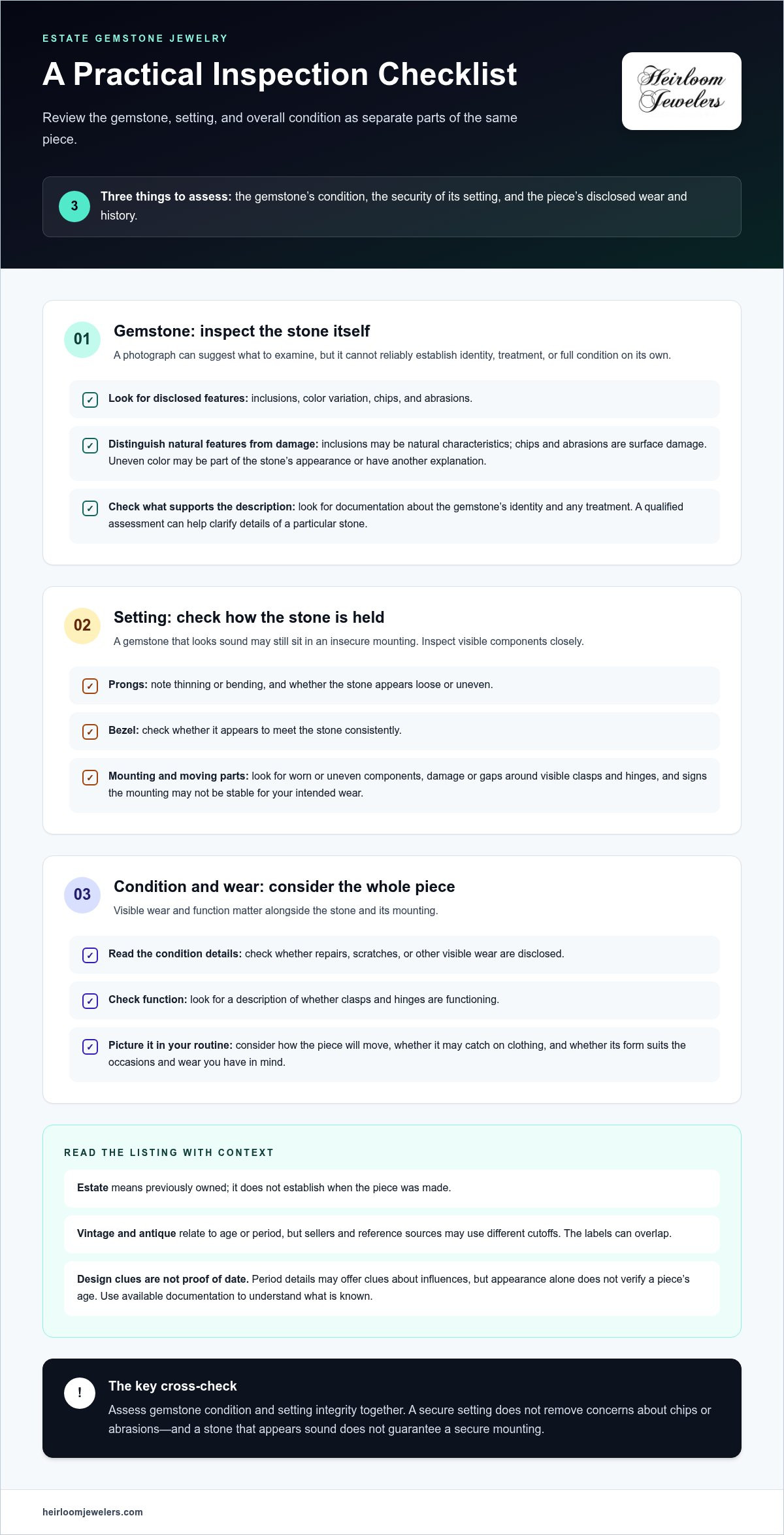
A considered purchase starts with a clear picture of what a piece is, how it’s made, and how it may fit your life. Use this checklist to connect the description, gemstone, setting, condition, documentation, and intended wear. The goal isn’t to eliminate every uncertainty from a listing. It’s to separate stated facts from assumptions and identify which details matter most to you.
- Read the description closely. Look for the named gemstone and metal, measurements, stated condition, and any disclosed treatments. Notice whether age, period, or origin is presented as documented information or inferred from appearance.
- Review the gemstone details. Check whether the description discusses visible inclusions, color, chips, or abrasions, and whether it explains the stone’s identity and any known treatment. A photo can help you see the piece, but it can’t always show the full condition or establish a gemstone’s identity.
- Consider the setting. Look for details about the mounting and how it holds the stone. Prongs, bezels, and other components should appear intact and aligned. For pieces with clasps or hinges, note whether their function is described.
- Assess the stated condition and documentation. Look for disclosure of visible wear, repairs, or loose components. Relevant records, such as a grading report, prior appraisal, receipt, or provenance notes, can add context. Treat documented details differently from claims based only on style or appearance.
- Match the piece to your intended wear. Consider how often you’ll wear it, how it feels, and whether its profile or movement suits your routine. A delicate older construction may call for gentler handling than a piece you plan to wear regularly. Keep care needs and comfort in mind, not appearance alone.
What Details Should a Clear Listing or Description Explain?
Useful photographs show the piece from more than one angle, including the front and visible details of the setting or clasp. They support the written description, but don’t replace it. Measurements help you understand scale, while explicit condition notes can clarify what images may not reveal. Documentation also helps distinguish known facts from assumptions about a piece’s age, gemstone treatment, or origin.
How Can You Match a Piece to Your Lifestyle?
Consider the practical questions: Will you wear it often or reserve it for special occasions? Does its size feel comfortable, and does the setting seem suited to the way you’ll handle it? A distinctive jewel can also appeal to collectors when its design and documented history are what draw them to it.
Use these details to compare curated estate gemstone jewelry from Heirloom Jewelers, a specialist in curated, authenticated estate and vintage fine jewelry.
Explore Curated Estate Gemstone Jewelry with Heirloom Jewelers
A meaningful piece brings together more than a beautiful gemstone. Consider the stone’s identity and condition, the setting’s construction, the piece’s documentation, and whether its form suits the way you intend to wear it. Reviewing these details together helps you appreciate both the design and the practical considerations involved in choosing estate gemstone jewelry.
What Can a Curated Estate Selection Help You Discover?
Heirloom Jewelers specializes in curated, authenticated estate and vintage fine jewelry. Its collection brings together pre-owned designs with distinct combinations of gemstones, metals, and settings. Authentication is part of the selection, providing context as you consider what a piece represents. It doesn’t replace attention to condition, documentation, and wearability; those details remain central to an informed decision.
An emerald and diamond necklace in 18K white gold, for example, has a different color balance and form from estate peridot and quartz dangle earrings in 14K yellow gold. These pieces show how gemstone pairing, metal, and silhouette shape a jewel’s character. They’re also a practical starting point for deciding which colors draw your eye, what form you’ll enjoy wearing, and whether the design suits your intended occasions.
How to Take the Next Step Toward a Meaningful Piece
Return to the checklist and identify your priorities. You might prefer a vivid center stone, a contrasting gemstone pairing, a necklace that draws attention to the neckline, or earrings with movement. Consider frequency of wear and comfort alongside the piece’s described condition, setting, and available documentation. Knowing what matters to you makes it easier to assess each piece on its own details.
There’s no single right choice. A piece that suits your taste and intended wear can feel personal without fitting a particular trend or occasion. Heirloom Jewelers brings together estate and vintage fine jewelry selected for its distinctive materials and design. Look closely at the details that make each piece individual.
Explore estate gemstone jewelry and find a piece that speaks to your style.
Choose a Piece That Feels Right for You
A meaningful estate gemstone piece is more than its age or appearance. Consider the gemstone’s documented details, the setting’s integrity, and the piece’s condition together. Then weigh those qualities against your preferred style, comfort, and intended wear. Clear descriptions and relevant documentation can help distinguish established facts from assumptions.
Heirloom Jewelers specializes in curated, authenticated estate and vintage fine jewelry. Its collection includes a Lugano emerald and diamond necklace and estate peridot and quartz earrings, each with a distinct combination of stones, metal, and form. Let those details guide you toward a piece that suits your taste and purpose.
Take your time, use the checklist, and trust the preferences you’ve clarified along the way. Explore the curated estate jewelry collection to discover an estate gemstone jewelry piece that feels meaningful to you.
Frequently Asked Questions
What is estate gemstone jewelry?
Estate gemstone jewelry is previously owned jewelry set with one or more gemstones. “Estate” describes a piece’s ownership history, not its age or design period. A piece may also be called vintage or antique if its age or style fits those descriptions, but the terms can overlap. Consider each piece’s combination of gemstone, metal, setting, condition, and documented history.
Is estate jewelry the same as antique or vintage jewelry?
No. Estate jewelry refers to previous ownership, while vintage and antique describe age or period. Their definitions can vary, so there isn’t one universal cutoff to apply to every description. A pre-owned gemstone ring, for example, may be estate jewelry and also be described as vintage if its age and design support that label. Read the stated details rather than assuming age from appearance alone.
How can you tell if an estate gemstone is authentic?
Appearance alone, especially in a photograph, can’t reliably establish a gemstone’s identity or whether it has been treated. Review the item description and any relevant grading reports or other documentation. A qualified gemological evaluation can help distinguish gemstone types and identify treatments. Also consider what “authentic” refers to in the description: the gemstone itself, the piece’s stated period, or its provenance.
Are estate gemstones suitable for everyday wear?
Some estate gemstone pieces may suit regular wear, but suitability depends on the individual stone, setting, condition, and your routine. Look for signs of loose stones, worn prongs, or damage, and consider the setting’s profile and comfort. A delicate design may need gentler handling than a lower-profile piece. Think about the activities you’ll wear it through and any care it may require.
What should you check before buying estate gemstone jewelry?
Review the gemstone and metal description, measurements, condition notes, setting, and any disclosed treatments. Check whether photographs show the piece from useful angles, while remembering they don’t replace written details. Look for relevant reports, appraisals, receipts, or provenance records. Finally, consider how often you plan to wear the piece and whether its form, comfort, and setting suit that purpose. This framework helps you compare pieces with more context.
Can estate gemstone jewelry have repairs or signs of wear?
Yes. Previously owned jewelry may show wear or have been repaired during its history. Scratches, solder marks, worn prongs, or replaced components don’t automatically determine whether a piece is suitable, but they deserve consideration. Review any disclosed repair information alongside the gemstone’s and setting’s current condition. The important questions are how the piece presents now and whether its construction suits your intended wear.
How much does estate gemstone jewelry cost?
There isn’t one standard price for estate gemstone jewelry. Cost can vary with the gemstone, metal, design, condition, documentation, and the piece’s individual history. Similar-looking pieces may differ in ways that affect their value, so appearance alone isn’t a reliable guide. Compare the details provided for each piece and distinguish an insurance replacement appraisal from fair market value, as they represent different kinds of valuation.
Are estate gemstones more sustainable than newly made jewelry?
Choosing a previously owned piece keeps an existing jewel in use rather than requiring a newly made equivalent, which may appeal to buyers seeking to reuse materials. However, sustainability depends on more than age or ownership history. A piece’s condition, any restoration it needs, and how long it will be worn all matter. Consider its documented materials and practical wearability alongside its environmental appeal.