
The oldest ring isn’t automatically the right choice. When comparing Estate rings for sale, clear documentation, condition, and personal fit can matter more than age alone. Online listings, however, don’t always make those details easy to judge.
Terms such as “estate,” “vintage,” and “antique” can be used differently, while photographs may leave questions about wear, gemstones, sizing, or supporting records. A careful comparison helps you separate what a listing confirms from what you still need to ask.
This guide explains what to review before deciding, how to compare metal, gemstones, condition, and style, and what to consider about fit and resizing. You’ll also learn how to read listing information with realistic expectations. Curated estate jewelry offers individual character, but each ring should be considered on its own merits. Start with the documented details, then decide whether the design and craftsmanship feel right for you.
Key Takeaways
- “Estate,” “vintage,” and “antique” can describe different things, so check how each seller defines these terms.
- When comparing Estate rings for sale, look for clear details about materials, gemstones, condition, and what the photographs show.
- Compare a ring’s style and stated metal with your preferences and intended wear, then note any details you still need to confirm.
- Before buying online, ask about unclear specifications, condition, fit, and applicable policies.
- Review curated estate and vintage jewelry piece by piece, since descriptions and details vary from ring to ring.
What Are Estate Rings for Sale, and How Do They Differ from Vintage Rings?
In jewelry listings, “estate” generally means a piece has had a previous owner. The term doesn’t, by itself, identify a ring’s age, design period, metal, or gemstone. Sellers may use “estate,” “vintage,” and “antique” differently, so the label alone can’t establish when a ring was made.
Estate rings are previously owned rings offered for resale; the term describes ownership history, not a guaranteed age or style. A ring can be estate jewelry without being antique, and a vintage design may be described as estate if it has passed through a previous owner. Ask the seller what each label means and what information supports a stated period or origin.
What does estate mean when a ring is for sale?
Estate refers to prior ownership, not necessarily inheritance or a particular historical era. The word doesn’t confirm that a ring is old, rare, or made from a specific material. Vintage and antique are often used to suggest age or period, but definitions can vary by retailer. Before relying on either label, ask how the seller defines it and whether the listing provides evidence, such as documented provenance or identifiable design details.
Design is a separate consideration. A ring’s silhouette, setting, and decorative details may reflect different influences, while its metal and gemstones are separate material facts. For broader context on how rings have changed across periods, explore this overview of the history of ring designs. Historical inspiration alone, however, doesn’t verify a ring’s age.
Why do shoppers consider estate rings?
Shoppers may be drawn to distinctive designs, signs of handcraft, or the character of pre-owned jewelry. Estate rings for sale offer a way to explore designs beyond current retail trends, but age is only one part of the decision. Pay close attention to the ring’s condition and the details documented by the seller, rather than relying on an appealing label.
Look for specific descriptions of materials, gemstones, visible wear, and known repairs. If those details are missing, treat them as questions to resolve rather than assumptions. A ring described as vintage or antique isn’t automatically in better condition or more historically significant than another estate piece. For a deeper look at period styles and collecting context, read the antique rings collector’s guide. Use historical context to inform your interest, then assess each listing on its documented facts.
How to Assess an Estate Ring Listing Before You Buy
A useful listing gives you more than an attractive photograph. When reviewing Estate rings for sale, consider the written description, images, condition notes, materials, and the seller’s answers together. Each helps clarify what is known and what still needs confirmation.
Which details should an estate-ring listing provide?
Look for the stated metal, ring size, gemstone descriptions, and clear photographs of the setting from several angles. Images should let you examine details such as the prongs, band, and visible wear. A listing should identify known metal and gemstone information, but not every ring will have a grading report or other formal documentation.
Condition notes should address known repairs, replaced components, alterations, and visible wear. If a detail is missing, ask about it. An incomplete description isn’t proof of a defect, but it does leave a question to resolve before deciding.
How can you evaluate authenticity and condition?
Ask what “authenticated” means for that specific ring and what evidence supports the description. For diamond or gemstone claims, request relevant reports or measurements if available. Reports can provide useful detail, but their absence doesn’t by itself establish that a piece is inauthentic. The GIA's guide to buying estate jewelry offers additional guidance on examining pre-owned pieces and considering documentation.
A listing records the seller’s stated details; independent verification requires supporting evidence, such as relevant documentation or an assessment by a qualified professional. Compare the description with the photographs and the seller’s answers, and keep the distinction between stated claims and supporting evidence in mind.
Use this checklist to organize your review:
- Description: Are the metal, ring size, and gemstone details stated?
- Photographs: Can you see the setting and band clearly from useful angles?
- Condition: Are wear, repairs, replacements, and alterations addressed?
- Documentation: What reports or other records, if any, support the claims?
- Seller response: Were your specific questions answered clearly?
If an important point remains unclear, ask for additional photographs, measurements, or an explanation before proceeding. Heirloom Jewelers describes its inventory as curated and authenticated estate and vintage fine jewelry. You can explore Heirloom Jewelers' curated estate jewelry and review the details for each piece.
How to Compare Estate Rings by Style, Metal, and Intended Wear
Comparing Estate rings for sale is easier when you start with your priorities, then check how each listing’s documented details meet them. Consider the look you enjoy, how you expect to wear the ring, and what information you still need. No single style or material is right for everyone.
Which estate ring style suits your priorities?
An understated design may appeal if you prefer a simple look, while an ornate setting or gemstone-centered ring may suit a taste for more visible detail. Art Deco geometry and Victorian-inspired motifs can help describe a style, but those references alone don’t prove when a ring was made. Start with your preferences and intended wear, then review the ring’s stated construction and condition.
What should you compare across metals and gemstones?
Compare platinum and 18-karat gold based on the metal named in each listing, your preference, and any details provided about the individual ring. Don’t assume a metal label establishes how a particular piece will wear. Check what the listing says about each gemstone, including any stated treatment, origin, or grading information, and whether supporting documentation is available.
An Old European cut describes a diamond cut style, not an overall quality grade. It doesn’t by itself establish a diamond’s grading, condition, or value. For deeper engagement-ring context, see the vintage engagement ring buying guide.
| Intended use | Setting style | Metal | Gemstone | Information still needed |
|---|---|---|---|---|
| Frequent or occasional wear | Understated or ornate | Check the stated metal | Identify the listed stone | Condition, repairs, and setting details |
| Engagement or personal wear | Gemstone-centered or diamond-focused | Compare listed materials | Review cut style and available grading details | Ring size, documentation, and any treatment information |
| Chosen for design interest | Art Deco or Victorian-inspired | Use the seller’s description | Confirm the stated gemstone | Whether the era is documented or simply a style reference |
Heirloom Jewelers lists a vintage platinum diamond engagement ring described as 0.5 carat. Check its current availability and review the item’s listing for specific details. Use it as a reminder to assess each ring on its own merits, rather than assuming a style or material tells the whole story.
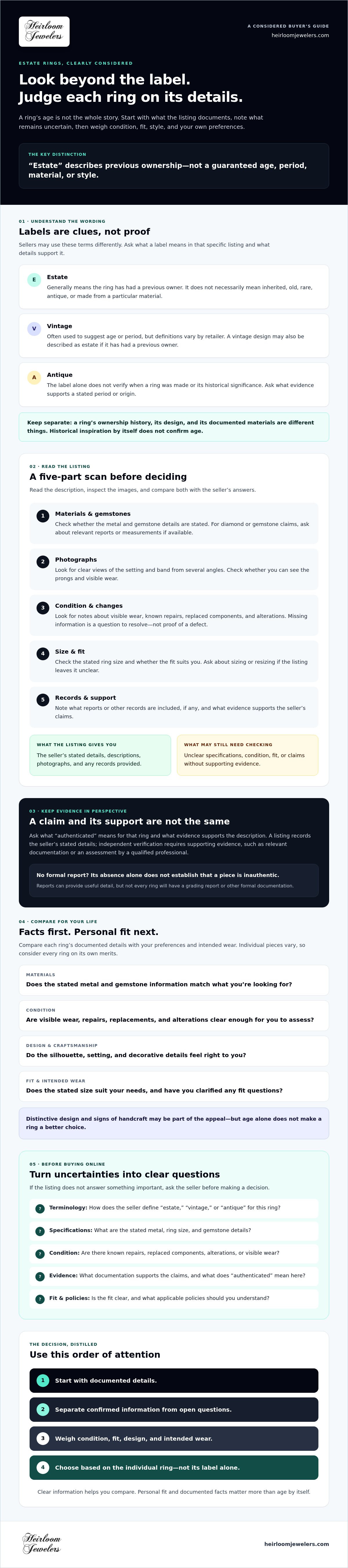
What to Ask Before Buying an Estate Ring Online
A thoughtful purchase starts with clear answers, not assumptions. Use this sequence to review Estate rings for sale, resolve practical questions, and decide whether a listing gives you enough information to proceed.
- 1. Confirm the specifications. Check the stated metal, ring size, and gemstone details. Ask what is known about the ring’s provenance and which details are documented. If a relevant measurement or specification is unclear, request it directly.
- 2. Inspect condition and history. Ask whether the stones or setting have been repaired, replaced, or altered. Clarify any wear or damage that isn’t clear in the photographs. If you need a closer look, request additional images of the setting, band, or specific area in question.
- 3. Resolve fit. Confirm the listed ring size and ask whether resizing is possible for that specific piece. Don’t assume a ring can be adjusted based on its appearance alone. If fit is important, request any relevant measurements before deciding.
- 4. Review current purchase terms. Read the seller’s current return, shipping, and payment terms directly. Policies can differ, so don’t rely on assumptions or information from another listing. Ask for an explanation if any term is unclear.
- 5. Decide using the complete record. Compare the seller’s answers with the listing and available documentation. Assess the actual ring and its stated details rather than relying on a price or market-value estimate without supporting information.
Keep written answers alongside the listing. This makes it easier to distinguish documented facts from details that remain uncertain and gives you a clear reference if you compare several rings. A seller’s response should address your question directly. If important information remains unclear, consider whether the listing meets your needs before moving forward.
For a closer assessment, focus on the ring as described: its materials, condition, fit, and available records. Requesting a photograph or measurement is a practical way to clarify a detail that could affect your choice. Not every ring will have the same paperwork, so aim to understand what is known about the specific piece and what isn’t.
Once you’ve established what matters to you, browse Heirloom Jewelers’ curated estate jewelry and review the details provided for each piece.
Shop Heirloom Jewelers for Curated Estate Rings
After comparing style, materials, condition, and documentation, consider a retailer whose focus aligns with the kind of piece you’re seeking. Heirloom Jewelers specializes in curated, authenticated estate and vintage fine jewelry. Its offerings include estate gemstone jewelry and a vintage platinum diamond engagement ring described as 0.5 carat. Availability and listing details can change, so check the current information for any piece that interests you.
What can shoppers expect from a curated estate jewelry retailer?
Curation means the retailer selects pieces for its inventory, while Heirloom Jewelers describes its estate jewelry as authenticated. These terms provide context, but they don’t replace the details for an individual item. Check each listing for its stated materials, gemstones, condition, photographs, and available documentation. If a detail matters to your decision and isn’t included, ask what is known about that specific piece.
Estate and vintage jewelry can encompass varied designs and materials. A gemstone piece, for example, shouldn’t be assumed to share the same attributes as a platinum diamond ring. For broader collecting context, read what defines heritage jewelry. It can help frame the historical interest behind a piece, while the listing remains the place to assess its specific details.
How to take the next step toward an estate ring
Before browsing Estate rings for sale, return to your priorities. Consider the style you’re drawn to, preferred metal and gemstone, intended wear, and fit. Then compare those preferences with what each listing actually states. A description may answer some questions and leave others open. Neither a historical label nor an appealing photograph confirms every detail.
Heirloom Jewelers’ listed vintage platinum diamond engagement ring is one example of the category. Check its current availability and item-specific information before deciding. Review the listing for details about condition, sizing, and available documentation. If an important point remains unclear, confirm it with the retailer rather than assuming the answer.
A considered choice doesn’t require rushing. Use the checklist from this guide as you compare current listings, and weigh documented facts alongside your personal taste. Browse estate and vintage fine jewelry to review the available pieces and their stated details.
Choose Your Estate Ring with Clarity
A confident choice begins with understanding what a listing actually tells you. “Estate” describes previous ownership, while “vintage” and “antique” may depend on the seller’s definitions. Look beyond the label to the ring’s stated materials, gemstone details, condition, and available documentation.
As you compare Estate rings for sale, keep your priorities in view: style, intended wear, and fit. Ask about repairs or alterations, request photographs or measurements if needed, and review the seller’s current resizing, shipping, and return terms before deciding. Clear answers help you judge each piece on its own merits.
Heirloom Jewelers specializes in curated, authenticated estate and vintage fine jewelry. A vintage platinum diamond engagement ring described as 0.5 carat is among its offerings, though current availability should be checked. Compare each item’s stated details with what matters to you.
Browse Heirloom Jewelers' curated estate jewelry and take the next step at your own pace. The right piece is one whose documented details and character feel right for you.
Frequently Asked Questions
What are estate rings?
Estate rings are previously owned rings offered for resale. The term describes ownership history, not a specific age, style, or gemstone. Estate rings for sale may also be described as vintage or antique, but sellers don’t always use those labels in the same way. Check the retailer’s definitions and read the individual listing before deciding that a ring belongs to a particular period or has specific historical significance.
Are estate rings the same as antique rings?
No, estate and antique aren’t interchangeable terms. Estate generally means a ring has had a previous owner. Antique refers to an age or historical classification, while vintage is often used for older designs. Sellers may define these terms differently, so ask how the retailer classifies the specific ring. Look for supporting details in the description or documentation instead of relying on the label alone to establish its age.
How can I tell if an estate ring is authentic?
Start by asking what the seller means by “authenticated” and what evidence supports the ring’s description. Review stated details about its metal, gemstone, maker, and period, then ask whether hallmarks, reports, or provenance records are available. A photograph or label alone can’t verify every claim. If an important detail is unclear, request an explanation or supporting information before deciding whether the listing meets your needs.
Can estate rings be resized?
Some estate rings may be resized, but suitability depends on the specific ring’s setting, metal, construction, and gemstones. Don’t assume resizing is possible or included in the purchase. Confirm the listed size and ask the seller or a qualified jeweler whether an adjustment is appropriate for that piece. If fit is essential, clarify the ring’s current size and review any applicable resizing terms before you buy.
How much do estate rings cost?
There’s no single price for estate rings. The listed amount may reflect factors such as metal, gemstones, craftsmanship, condition, provenance, and the seller’s assessment. Compare the specific ring’s description and available documentation with relevant listings, rather than relying on a broad estimate. Review the current listing and purchase terms carefully. A price alone doesn’t establish a ring’s condition, authenticity, or suitability for your needs.
Are estate rings a good choice for an engagement ring?
They can be a meaningful choice for someone drawn to distinctive design, vintage craftsmanship, or the history of a pre-owned piece. Whether a particular ring is suitable depends on the wearer’s taste, fit, condition, and the accuracy of its listing details. Confirm the metal and gemstone descriptions, ask about repairs or alterations, and check sizing and purchase terms before choosing. The right ring is a personal decision.
What should an online estate-ring listing include?
A helpful listing should include clear photographs and state the ring size, metal, gemstone description, and known condition details. Check whether it mentions repairs or alterations and explains what documentation is available. Not every ring will have a formal report, so ask the seller about missing information that matters to you. Confirm current shipping, return, and resizing terms directly before purchasing, since policies can differ between sellers.