
A ring can be estate without being antique. Estate rose gold rings are pre-owned jewelry; antique and vintage describe age categories, while Edwardian identifies a historical period. Each term answers a different question, so they aren’t interchangeable.
Rose gold’s warm color draws attention, but a ring’s period, construction, stones, and condition shape its character. An Edwardian example, an antique old mine diamond engagement ring, pairs 18K rose gold with platinum, showing how period design can bring different metals together.
This guide explains how antique, vintage, and estate labels differ, what to look for in older rings, and why Edwardian rose gold still interests buyers. It also covers historical styles and practical considerations such as stone security, restoration, and fit. The goal is to help you understand the terminology and see how a ring’s history contributes to its appeal.
Key Takeaways
- Distinguish a ring’s ownership history from its age and design period to read descriptions more accurately.
- Compare historical styles and craftsmanship to narrow your search to the details that matter to you.
- Look closely at stone security and signs of restoration when assessing a pre-owned ring.
- Learn how karat marks help identify rose gold purity, and what to examine when a mark is difficult to interpret.
Differences between antique, vintage, and estate rings
Estate describes previous ownership, while antique and vintage refer to a ring’s age or period. The terms can overlap: an antique Victorian ring can also be an estate piece.
Rarity and Value
Rarity depends on more than age. A distinctive design, scarce materials, documented history, and condition all shape a vintage ring’s appeal. A highly rare vintage ring may retain significant value in fair condition, rather than mint condition. Examine the setting, stone, and signs of restoration together. A worn surface alone doesn’t explain a ring’s full historical or collectible interest.
Gemstones and Settings
Diamonds, pearls, garnets, and opals appear in estate rose gold rings. Examples include a Victorian pearl and rose-cut diamond ring in 18K rose gold, and a cabochon garnet cocktail ring in 10K rose gold. Settings range from engraved bands to stone-set designs. Inspect prongs and bezels for secure stones, then look for evidence of repair or restoration.
Style can help place a ring in context. Victorian examples include engraved wedding bands and pearl designs; other sought-after periods include Georgian, Edwardian, Art Nouveau, and Art Deco. Vintage diamonds may have taller crowns, smaller tables, visible culets, and broad sparkle. Hand cutting can result in imperfect symmetry, a feature some buyers value as part of a stone’s character.
A vintage engagement ring can suit a proposal, anniversary, or personal collection. Focus on the details that matter most: the diamond’s cut, the setting’s craftsmanship, and how the rose gold complements the stone. A vintage rose gold engagement ring may have a distinct period character that sets it apart from a contemporary design.
Fit requires care. Some rings can be resized by half a size, but the work depends on the ring’s condition and the difference between its current and desired sizes. Assess the band’s structure and setting before deciding. Intricate engraving or stones around the band can affect how resizing is done.
Estate and antique jewelry collections
A considered collection can bring together jewelry from distinct eras, materials, and design traditions. Compare Georgian, Victorian, Edwardian, Art Nouveau, and Art Deco pieces by their silhouettes, metalwork, and stone settings. A collection may include rings alongside necklaces, earrings, and bands, so decide whether you’re drawn to one period or a wider range of designs. If your interest in preserving historical pieces also extends to antique coins or currency, Renniks offers specialized reference guides and storage supplies.
Authenticity begins with details you can examine. Look for marks inside the shank, consistent workmanship, and construction that suits the described period. Consider these clues together: a single mark does not establish a ring’s full history. Choose a jeweler who explains the piece’s materials and design clearly and distinguishes documented information from interpretation.
Before buying, inspect the setting and ask about restoration. Replaced stones, repaired prongs, and altered bands can affect a piece’s condition and character. An appraisal describes value for a stated purpose; a gem certificate addresses identified stone characteristics. Neither document alone establishes the entire ownership history. Keep written records with the item’s description and any supporting documents.
For routine care, wipe an estate ring with a clean, soft cloth after wearing it. Avoid abrasive cleaners and soaking older settings; store the ring separately from harder jewelry to limit scratches. If a stone is loose or a setting is weakened, have the ring assessed before wearing it again rather than attempting to clean it at home.
Before purchasing, read the return terms, including the return period, exclusions, and any condition requirements. Ask what an appraisal covers, what purpose its valuation serves, and whether gemstone or metal details are documented. For an example of estate jewelry with contrasting gemstones, explore estate jewelry pieces.
An appointment lets you compare pieces side by side, including their condition, design, and available documentation. Bring your priorities, such as a preferred era, gemstone, or setting, to guide the discussion. This focused approach makes it easier to assess whether a piece suits your collection.
Edwardian rose gold rings
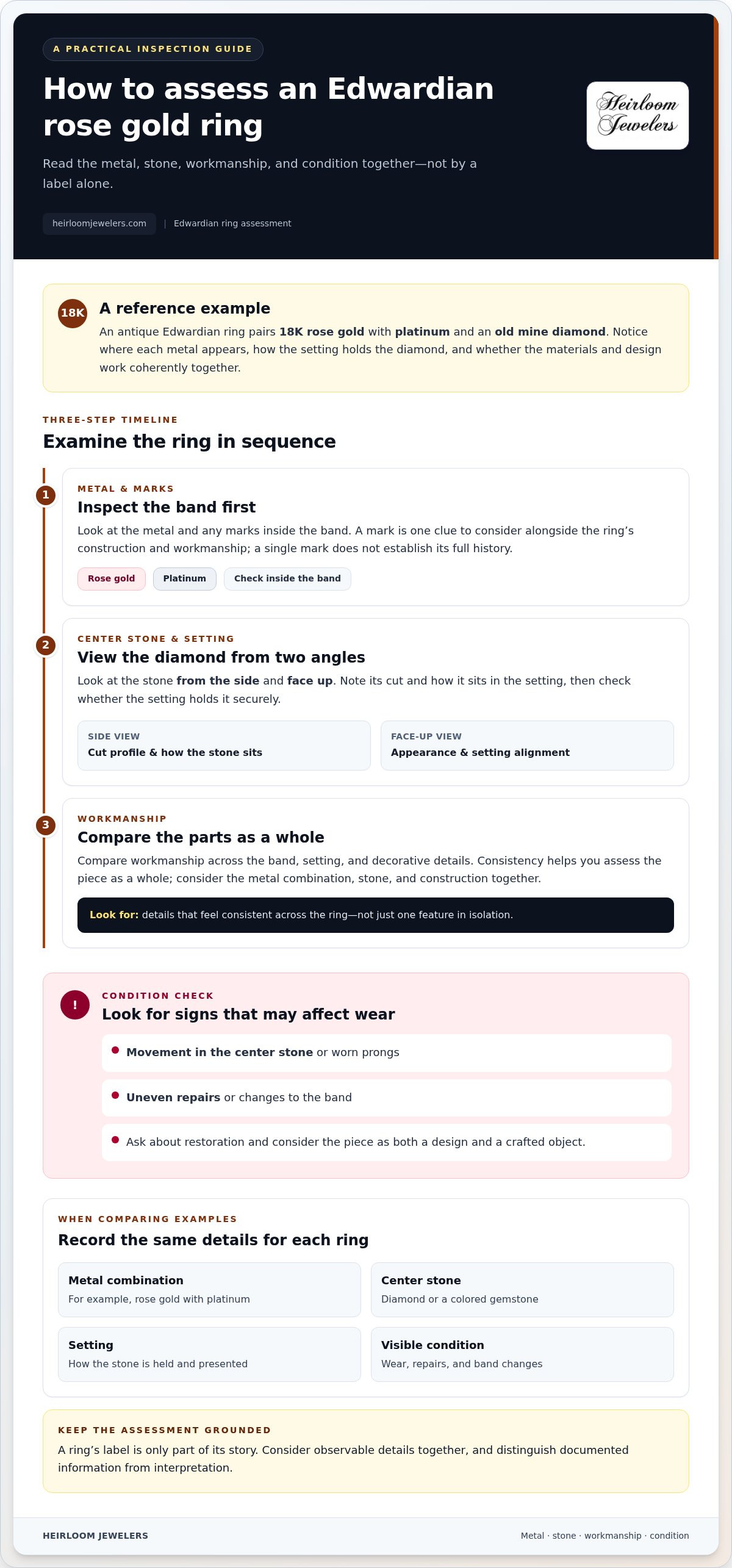
An antique Edwardian example combines 18K rose gold with platinum and an old mine diamond. That pairing gives buyers a practical detail to examine: note where each metal appears, how the setting holds the diamond, and whether the materials form a coherent design. The contrast can distinguish a ring’s character without relying on a label alone.
Use three steps to assess an Edwardian ring. First, inspect the metal and any marks inside the band. Next, view the diamond from the side and face up, noting its cut and how it sits in the setting. Finally, compare the workmanship across the band, setting, and decorative details. Consistency helps you assess the piece as a whole.
Styles vary, so start with your personal priorities. You may prefer the warm tone of rose gold or the visual contrast between rose gold and platinum. For an engagement ring, consider how the stone’s shape and setting look from several angles. A sapphire or another colored gemstone creates a different focal point from an old mine diamond, so assess the stone and metal together.
Condition matters in a historic piece. Look for movement in the center stone, worn prongs, uneven repairs, and changes to the band. These observations help frame questions about restoration and future wear. Consider an Edwardian ring as both a design and a crafted object, not just by its gemstone or metal.
Compare examples by recording the metal combination, center stone, setting, and visible condition. This simple method makes differences between Edwardian styles easier to see and keeps a selection focused. The 18K rose gold and platinum example offers a clear reference point, while each ring’s proportions and workmanship give it an individual presence.
How can I identify rose gold purity, such as 10K, 14K, and 18K?
Start by looking for a karat mark, often stamped inside the band. On a rose gold ring, the mark may read 10K, 14K, or 18K. These labels identify different gold-purity levels. They don’t, by themselves, establish a ring’s age, maker, or complete history. Treat the stamp as one clue, then consider it alongside the piece’s construction and any accompanying description.
Use this inspection sequence:
- Examine the inside of the shank under good light and look for a clear karat stamp.
- Record the mark exactly, including its letters and numbers, rather than relying on color alone.
- Compare the mark with the ring’s description and note any differences to discuss before purchase.
Rose gold’s pink tone comes from its alloy, so color cannot reliably distinguish 10K from 14K or 18K. Wear, lighting, and the ring’s condition can also affect how its surface appears. For an estate ring with a colored stone, assess the metal mark separately from the gemstone. A stamp identifies the stated gold purity; it doesn’t identify a peridot, diamond, or other stone.
Marks can be faint, worn, or difficult to see on a narrow band. Don’t deepen a stamp or use abrasive cleaning to make it clearer, since that can damage the ring’s surface. Instead, note the mark’s location and appearance. If the ring has been resized or repaired, inspect the band carefully because the work may affect the area where a stamp appears.
For a thoughtful purchase, compare the mark, metal color, setting, and written description as separate details. Keep those observations with the ring’s records, especially if it has a diamond or another notable gemstone. To view estate jewelry with clearly described materials, explore estate jewelry offerings.
Heirloom Jewelers: Lugano Emerald & Diamond Necklace 18K White Gold
The Lugano Emerald & Diamond Necklace 18K White Gold illustrates how gemstone color and precious-metal choice shape a piece’s character. For readers drawn to estate and vintage jewelry, Heirloom Jewelers offers a curated selection that includes a Vintage White Gold Old European Cut Diamond Stud Earrings and a Vintage Platinum 0.5 Carat Diamond Engagement Ring. These pieces provide examples of historic styles across different settings and materials.
Explore the collection when you’re ready to compare craftsmanship, gemstones, and design details in pre-owned fine jewelry. The Estate Peridot & Quartz Dangle Earrings 14K Yellow Gold offer another example of estate jewelry featuring colored stones. Each piece has its own materials and character, giving you concrete details to consider alongside the qualities you value in a ring.
For a closer look at the collection, contact Heirloom Jewelers.
Choose a Piece That Feels Right for You
Choosing an heirloom is also choosing how you want its history to continue. As you consider estate rose gold rings, think beyond appearance: which details will matter to you after the first impression? You might value a distinctive setting, a particular gemstone, or the character of careful workmanship. Let those preferences guide your choice.
It can help to make a short list before browsing: note the styles you’re drawn to, the materials you prefer, and how you expect to wear the piece. Then compare individual jewelry pieces on those terms. Heirloom Jewelers’ collection also includes the Lugano Emerald & Diamond Necklace 18K White Gold, Vintage White Gold Old European Cut Diamond Stud Earrings, and Vintage Platinum 0.5 Carat Diamond Engagement Ring.
When you’re ready to explore the collection further, contact Heirloom Jewelers. A thoughtful choice can connect personal taste with a piece’s enduring character.
Frequently Asked Questions
What is an estate rose gold ring?
An estate rose gold ring is a previously owned ring made with rose gold. “Estate” describes its ownership history, not a specific age or design period. For example, a ring passed down within a family and later resold can be estate jewelry, whether its design is antique or more recent. Read the description to understand the stated materials and history.
What styles and eras are common for estate rose gold rings?
Common examples include Victorian, Edwardian, and Art Deco designs. You may see floral motifs, engraved bands, diamond clusters, or geometric details. Compare the setting’s shape and decorative work to identify the features you prefer. A period label can guide your search, but the ring’s details help you decide whether its style suits your taste.
How much do estate rose gold rings cost in the United States?
Estate rose gold rings don’t have one standard price in the United States. The asking price depends on factors such as gold purity, gemstone characteristics, craftsmanship, condition, and documented history. Compare pieces with similar materials and design details rather than judging by appearance alone. Restoration or alterations may also affect how a ring is assessed and what a buyer considers appropriate.
What affects the value of an estate rose gold ring?
Gold purity, gemstone quality, workmanship, condition, and historical interest all contribute to value. For a diamond ring, assess the stone and setting separately. Repairs, replaced stones, or a modified band can also influence a buyer’s view. Keep the written description and any records with the ring, since they can clarify details that visual inspection cannot establish.
How can I check whether an estate rose gold ring is authentic?
Compare the hallmark with the seller’s description, then examine the construction and setting for consistency. Note whether the gemstone and metal are described specifically, and review available documentation for stated materials or restoration. A photograph may help you view a faint stamp, but it cannot establish a ring’s full history. Consider the description and physical details together.
Where can I buy estate rose gold rings from reputable sellers?
Estate rose gold rings are best considered through sellers who provide clear item descriptions and explain the materials and condition. Heirloom Jewelers offers authenticated pre-owned jewelry, including the Vintage Platinum 0.5 Carat Diamond Engagement Ring and the Vintage 10K Rose Gold Turquoise Cluster Ring. Jewelry is available by appointment. Review each piece’s details to see how its design aligns with your preferences.