
The safest cleaning method is often the simplest. How to care for vintage jewelry starts with gently wiping each piece with a soft, lint-free cloth after wearing it. For jewelry that can tolerate damp cleaning, use lukewarm water and mild soap. Keep water and strong cleaners away from vulnerable gems and foil-backed settings.
It’s natural to want every piece to look its brightest, but older materials and settings may react differently to cleaning. Pearls, opals, emeralds, and foil-backed jewelry each need particular care. A method that suits one piece may damage another.
This guide explains how to clean antique jewelry gently, store it to reduce damage, and recognize when a piece needs more cautious handling. You’ll also learn which products and cleaning methods to avoid, with focused advice for delicate gems and settings. A few thoughtful habits can help preserve a piece’s craftsmanship and character for years to come.
Key Takeaways
- Choose a gentle cleaning method suited to the metal and construction, and avoid harsh products that can harm older settings.
- Store each piece dry and separate from other jewelry to help prevent scratches, tangles, and moisture damage.
- Preserve a vintage finish by treating tarnish and patina with care rather than reaching for abrasive polish or chemical removers.
- Give pearls, opals, emeralds, and foil-backed settings special handling, since their care needs differ from more durable materials.
How to care for antique jewelry?
Before cleaning, identify the metal, gemstones, and setting, since each affects which method is safest. A good first step in how to care for vintage jewelry is to examine its construction before using moisture or a cleaner.
-
Choose Cleaners for Each Material
Check hallmarks and visible details to identify gold, platinum, silver, or cut steel, then note the stones and setting. How to care for vintage jewelry also depends on whether it has a closed back or delicate gems. Use silver polish only on suitable silver surfaces, and keep it away from stones. An appraisal can document a piece’s materials and condition, providing a useful insurance record if documentation is missing.
-
Clean Gently with Lukewarm Water
For jewelry suited to damp cleaning, use lukewarm water with a small amount of mild detergent. Wipe gently with a soft cloth, rinse carefully, then dry with a smooth, lint-free cloth. Don’t soak pieces with vulnerable stones or settings. Handle gold and platinum gently, too: rough scrubbing can scratch softer materials or loosen a setting.
-
Avoid Harsh and Commercial Cleaners
Read product ingredients and avoid bleach, ammonia, alcohol, vinegar, and abrasive or acidic cleaners. They can damage antique metals, gemstones, and delicate workmanship. Commercial products aren’t suitable for every material, and silver polish can harm stones if it touches them. Don’t use a chemical dip as a universal solution. If you can’t identify the materials, use a dry, soft cloth.
-
Clean Jewelry Regularly
After wearing a piece, wipe it with a soft cloth to remove surface residue. As a general guideline, clean vintage jewelry about 1-2 times a year, using a method suited to its materials. For antique jewelry worn regularly, arrange professional cleaning and a check-up once a year. If a stone rattles or a prong looks lifted, stop wearing the piece until it has been inspected. An appraisal can also record its condition for insurance purposes, helping you properly document valuable personal assets with a provider like SMI Insurance Agency.
Jewelry storage
Store vintage pieces separately, in a dry place away from direct sunlight. Consistent storage helps protect settings, gemstones, and delicate surfaces from contact and moisture.
Store Pieces Separately
Give each piece its own space so metal edges and gemstones don’t rub against one another. A chain stored beside a ring can tangle or scratch its surface; separate compartments help prevent contact. Keep jewelry away from bathroom sinks, toothbrushes, warm water, and beauty products, where splashes or residue can reach it. Make sure each piece is completely dry before putting it away.
- Place rings, earrings, and pendants in separate compartments or individual fabric pouches, rather than together in one dish.
- Lay delicate chains flat and unclasped. This can help reduce tension and make tangles less likely when you take them out.
Use Soft, Padded Storage
Choose a padded jewelry box or a soft fabric pouch for each piece. Cushioning helps prevent scratches from hard surfaces, while separate storage keeps items from pressing against one another. Store the container in a cool, dry place away from direct sunlight. Avoid sealed plastic bags or containers, which can trap condensation and leave jewelry exposed to moisture.
- Make sure every piece is fully dry before storing it, especially after cleaning. Trapped moisture can contribute to verdigris on vintage jewelry.
- Keep abrasive polishing materials separate from stored pieces. Preserve a delicate finish by avoiding unnecessary rubbing and contact with rough surfaces.
Avoiding abrasive polish and tarnish removers
Help prevent tarnish by wiping silver and gold jewelry with a soft cloth after wearing it, then storing each piece dry. Keep silver away from sulfur-rich materials, which can accelerate tarnishing.
- Avoid abrasive polish and modern tarnish removers on antique jewelry. They can strip an aged patina, weaken delicate metals, or dull stones. An antique surface carries evidence of its history, so assess its condition before trying to restore its brightness. If a piece has a valued finish, avoid impregnated polishing cloths that may remove it.
- Remove rings before exercising, cooking, or handling household chemicals. Repeated knocks and contact with cleaning products can affect the metal and settings. Take rings off at night, too, to reduce wear during sleep. Put each ring in a secure, separate place rather than on a sink ledge, where it could be misplaced or exposed to moisture.
- For routine care, choose a gentle, dry wipe instead of polishing whenever metal looks dull. Silver tarnishes over time and can react with sulfur-rich materials, but a tarnished appearance doesn’t mean every surface needs aggressive treatment. Keep silver polish away from gemstones, and don’t use solid-silver cleaning methods on silver-plated jewelry.
- Inspect a piece before wearing it, especially if it has delicate settings or visible surface wear. Look for a lifted prong, a loose stone, or a change in condition. Don’t polish a setting that seems unstable, since friction can worsen damage. If tarnish remains or the finish is uncertain, pause rather than testing a strong remover on the entire piece.
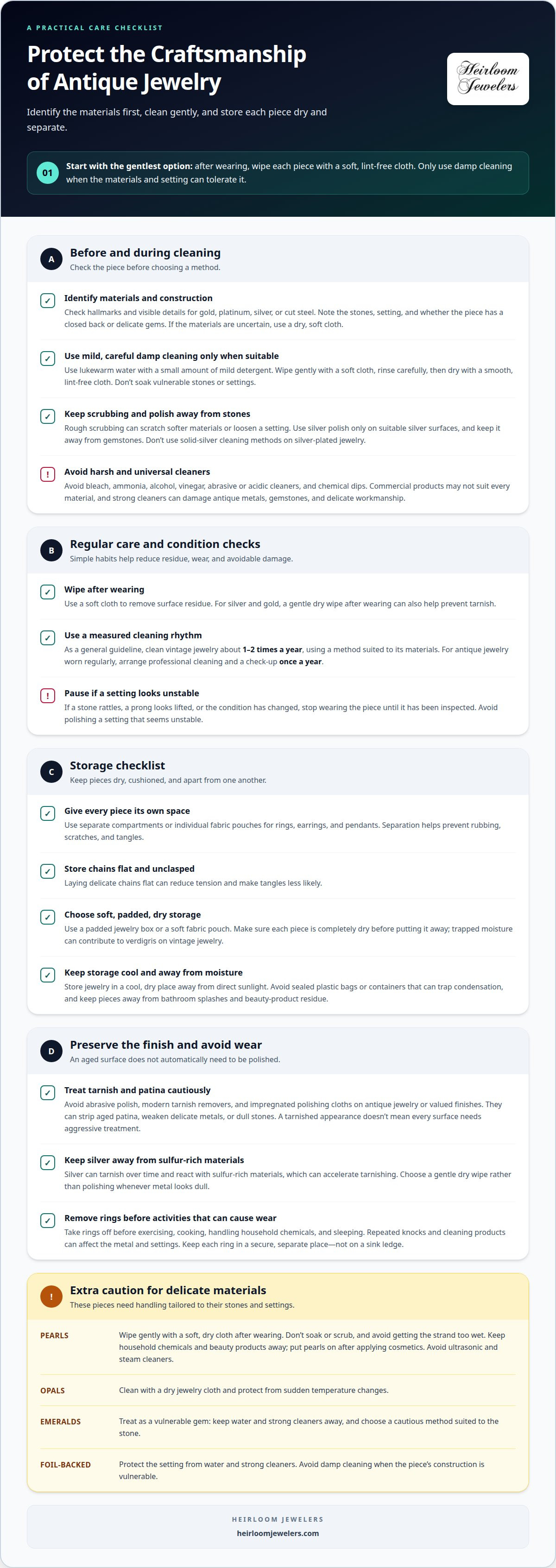
Care requirements for pearls, opals, emeralds, and foil-backed pieces
Identify vulnerable stones and settings before choosing a cleaning method. Pearls, opals, emeralds, and foil-backed pieces need different precautions from sturdier jewelry.
- Gently wipe pearls with a soft, dry cloth after wearing them. Don’t soak or scrub them, and avoid getting the strand too wet. Household chemicals and beauty products can harm pearls, so put them on after applying cosmetics. Keep them away from ultrasonic and steam cleaners, which can damage delicate materials.
- Clean opals with a dry jewelry cloth and protect them from sudden temperature changes. Their sensitivity makes hot water, steam, and ultrasonic cleaning poor choices. Avoid harsh chemicals and household cleaners, too. Opals are softer than many gemstones, so use light pressure and take care not to catch the cloth on the setting.
- Handle emeralds carefully because pressure can cause them to crack. Don’t press a brush or cloth against the stone, and avoid ultrasonic or steam cleaners. Like pearls and opals, emeralds should be kept away from household cleaners and beauty products. A gentle, dry wipe is safer than scrubbing with mild soap.
- Keep water away from closed-back and foil-backed settings, since moisture can reach the backing. Don’t soak these pieces or use damp cleaning methods. Instead, wipe accessible surfaces with a dry, soft cloth. Take the same care with other delicate materials, including shell, coral, turquoise, lapis lazuli, peridot, moonstone, and glass paste stones.
- Choose care according to the most vulnerable material in a piece, not just its metal. If an emerald setting also includes pearls or foil backing, follow the stricter precautions for all of them. For an example of vintage emerald jewelry, explore the Lugano Emerald & Diamond Necklace 18K White Gold.
Heirloom Jewelers
Heirloom Jewelers offers authenticated estate and vintage jewelry for readers who value distinctive materials and craftsmanship. When considering a vintage piece, factor its stones and setting into your care routine: pearls, emeralds, and foil-backed settings each have different needs. The collection includes examples such as a Lugano Emerald & Diamond Necklace in 18K White Gold, Vintage White Gold Old European Cut Diamond Stud Earrings, and Estate Peridot & Quartz Dangle Earrings in 14K Yellow Gold. These pieces illustrate the range of metals and gemstones found in estate jewelry, not a one-method-fits-all approach to care. Consider which cleaning and storage habits suit the materials you wear. For questions about the available estate and vintage jewelry, contact Heirloom Jewelers.
Make Care Part of the Heirloom
Let each piece’s materials guide how you wear and care for it. A simple record of its stones, setting, and preferred cleaning method can help you make consistent choices. Add notes if you notice a change in appearance or condition. This provides a clearer starting point if you later need to discuss its care. Learning how to care for vintage jewelry isn’t about making every piece look newly polished. It’s about respecting the materials and preserving the details that give it character.
If a piece’s construction or gemstone makes you unsure about its care, seek informed advice before trying a new cleaning method. Heirloom Jewelers offers estate and vintage jewelry selected for its distinctive materials and craftsmanship. Contact Heirloom Jewelers for advice about caring for a treasured vintage piece. A considered approach can help you enjoy its history while treating it with care.
Frequently Asked Questions
What should you not clean jewelry with?
Avoid bleach, ammonia, alcohol, vinegar, and abrasive or acidic cleaners on vintage jewelry. These substances can harm delicate metals, gemstones, or older craftsmanship. Ammonia can permanently damage gold if left on too long. Don’t use silver polish on gemstones, and don’t treat silver-plated pieces like solid silver. If you’re unsure whether a product is suitable, don’t apply it to the piece.
How do you clean vintage jewelry safely by material?
Match the cleaning method to the metal, stones, and setting. Gold and diamonds can generally be cleaned with mild soap and water, while silver needs care to keep polish away from stones. Clean cut-steel jewelry gently and dry. For an unfamiliar combination, first identify whether the piece has a closed back or vulnerable gems, since those details affect which methods are suitable.
How should you store vintage jewelry to prevent tarnish and damage?
Keep pieces dry and separate, and avoid storing them beside materials that may transfer sulfur to silver. Before putting jewelry away, check clasps and make sure chains aren’t under tension. A tangled chain can pull when lifted, while contact between pieces can mark their surfaces. Choose storage that makes each item easy to see and retrieve without disturbing the others.
How do you care for antique pearls, opals, and other delicate gemstones?
Use a dry, light touch for pearls, opals, coral, lapis lazuli, turquoise, peridot, moonstone, and glass paste stones. Keep these materials away from household cleaners, beauty products, steam, and ultrasonic cleaning. Don’t scrub or soak pearls. Opals are sensitive to temperature changes, while pressure can crack emeralds, so avoid pressing tools against their settings.
Can you use ultrasonic cleaners or steam cleaners on vintage jewelry?
Don’t use ultrasonic or steam cleaners on vintage jewelry with pearls, opals, emeralds, or other vulnerable materials. Vibration can loosen settings or dislodge small stones, while steam or heat may harm delicate gems. Keep foil-backed and closed-back pieces dry, too. If a piece combines several materials, use the gentlest method required by its most sensitive component.
What should you avoid when wearing vintage jewelry?
Remove antique jewelry before exercising, cooking, or handling household chemicals. These activities can expose pieces to impact, residue, or substances that damage their surfaces. Before wearing a ring, look for a lifted prong or a moving stone. If it rattles when gently tapped, stop wearing it. Check earrings, hinges, and fasteners as well, since loose components can be lost.