
What if the best place for a vintage brooch isn’t the coat’s lapel? Learning how to style vintage brooches on a coat starts with looking at its shape, fabric, and details. A carefully chosen position brings the piece into focus, while the wrong spot or scale can compete with the coat or pull at its fabric.
It’s natural to hesitate before pinning a treasured brooch to a favorite coat. You want it to sit securely, flatter the silhouette, and leave delicate or lightweight fabric unharmed. Thoughtful placement and a few simple precautions can help you achieve a composed look while respecting the brooch’s character.
This guide explains how to choose a position that suits your coat, match the brooch’s weight to its fabric, and fasten it with care. You’ll also learn how to balance the piece with lapels, buttons, scarves, and other accessories. With an appreciation for vintage craftsmanship and history, styling can feel personal, polished, and easy to wear.
Key Takeaways
- Let the coat’s lines guide placement, then step back to check the brooch’s balance before fastening it.
- For how to style vintage brooches on a coat, consider the fabric, brooch scale, and fastening together rather than treating them as separate choices.
- Use color and shape to create either a clear point of contrast or a quieter, coordinated finish.
- Check that the pin is fully closed and the brooch stays steady without pulling the coat.
- Before heading out, consider how movement and accessories affect the finished look, then care for the brooch after wearing.
How to Style a Vintage Brooch on a Coat: Start with Placement
Let the coat’s lines guide the brooch’s placement. A lapel edge, collar point, closure, or pocket can act as a natural visual anchor, helping the piece look considered rather than randomly attached. Choose a spot where the brooch complements those features without interfering with how the coat opens or moves.
Place the brooch so it follows the garment’s lines instead of competing with them. Assess the coat, preview a position, and decide whether the piece belongs near a familiar feature or in a more unexpected spot. Brooches have served both ornamental and practical purposes across their history; the Brooch overview offers context for appreciating their varied forms.
- Assess the coat. Notice its lapels, collar, pockets, buttons, and overall shape. Identify the strongest lines and any details that already draw the eye.
- Preview a position. Hold the brooch against the fabric before fastening it. Use a small removable marker if helpful, taking care not to mark or snag the coat.
- Check the balance. Look in a mirror from a few steps away. Consider whether the brooch feels proportionate and works with the coat’s other details.
- Fasten when the placement feels settled. Secure it with care, then check its position again while standing naturally.
Where should a brooch sit on a coat?
An upper lapel is a natural choice on a tailored coat, especially when the brooch can follow the lapel’s angle without crowding a buttonhole. A collar offers a more compact anchor. Shoulder placement draws attention upward, while the chest gives a brooch room to stand apart from collar details. These are options, not fixed rules.
Asymmetry often feels balanced when it echoes the coat’s design. If one side has a prominent lapel or pocket, placing the brooch on the other side may distribute visual weight. Preview the position in a mirror with the coat buttoned as you usually wear it. Turn slightly and relax your shoulders. A spot that looks balanced straight on may feel crowded from another angle.
How coat shape changes the placement
On a coat with tailored lapels, follow the garment’s existing diagonal or place the brooch where the lapel meets the chest. Neither position suits every silhouette. A collarless coat has no lapel to guide the eye, so a pocket, seam, or clear area near the neckline may provide a better anchor. With a high-neck coat, position the brooch where it remains visible without crowding the collar.
Keep the piece clear of closures that need to open and close, scarf knots that shift, and areas you handle often, such as pockets or cuffs. These practical checks help the brooch stay visually distinct and reduce interference as you move. For how to style vintage brooches on a coat, begin with the coat’s structure, then choose a position that looks composed from more than one angle.
Match the Vintage Brooch to Coat Fabric, Weight, and Scale
A brooch needs support as well as visual balance. A firm wool coat can usually hold a pin more steadily than a fine knit or loosely woven cloth, but fabric thickness alone doesn’t tell the whole story. Consider how the material responds to touch, how broad the fastening area is, and whether the brooch’s weight could make the coat sag.
Choose a brooch the fabric can support, and fasten it without pulling or distorting the coat. A piece that looks substantial can overwhelm lightweight fabric or a narrow lapel, even if its colors suit the garment. This practical guidance on How to Wear a Brooch Without Damaging Clothes also considers the relationship between a brooch’s weight and the garment beneath it.
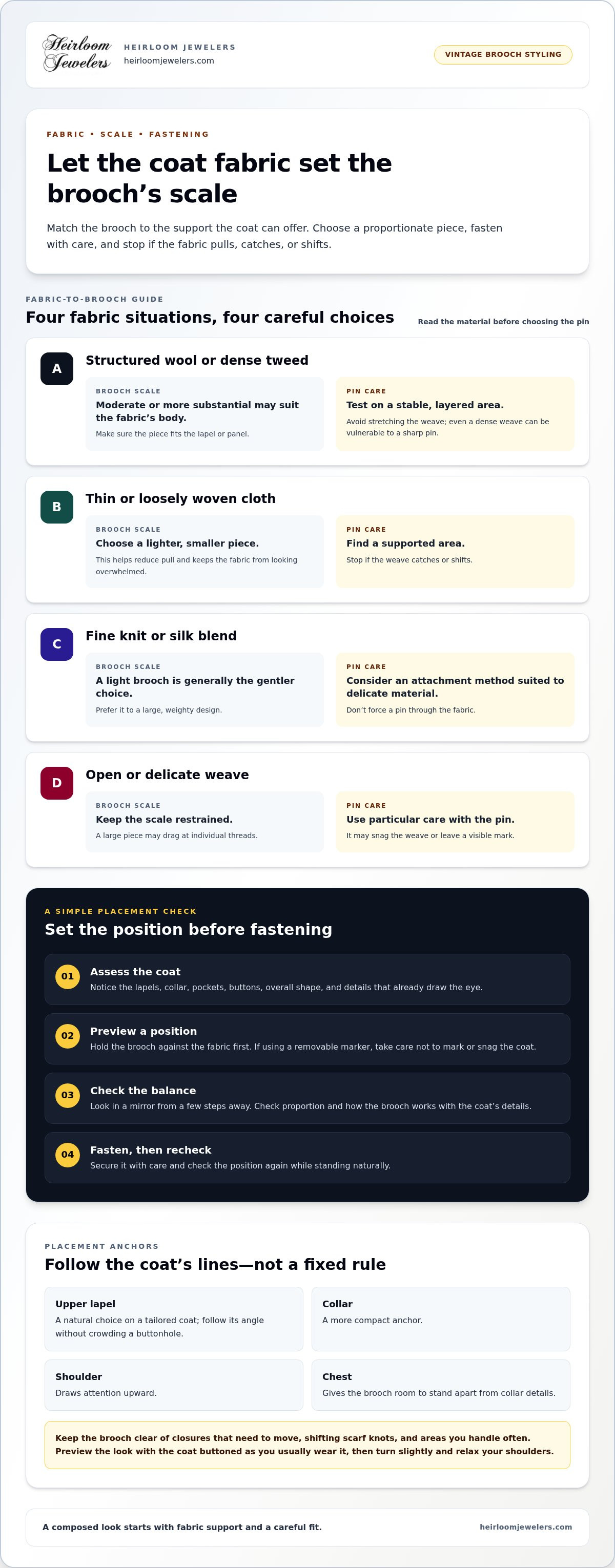
| Coat fabric | Brooch weight and scale | Fastening consideration |
|---|---|---|
| Structured wool or dense tweed | A moderate or more substantial piece may suit the fabric’s body, provided it fits the lapel or panel. | Test the pin on a stable, layered area; avoid stretching the weave. |
| Thin or loosely woven cloth | Choose a lighter, smaller piece to reduce pull and keep the fabric from looking overwhelmed. | Look for a supported area and stop if the weave catches or shifts. |
| Fine knit or silk blend | A light brooch is generally a gentler choice than a large, weighty design. | Consider an attachment method suited to delicate material; don’t force a pin through it. |
| Open or delicate weave | Keep scale restrained so the brooch doesn’t drag at individual threads. | Use particular care, since the pin may snag or leave a visible mark. |
Choosing a brooch for wool, tweed, and structured coats
Firm, structured fabrics often provide more support than thin cloth, but a dense weave can still be vulnerable to a sharp pin. Match the brooch’s visual weight to the coat’s proportions: a broad lapel can carry a larger design more comfortably than a narrow one, while a compact brooch may suit a trim silhouette. If you’re unsure how the fabric responds, test a discreet area first and check for snags or lasting marks.
Styling a brooch on delicate or lightweight coats
Fine knits, silk blends, and open weaves need extra care because they may stretch, snag, or show pinholes more readily. Consider a lighter piece or an alternative attachment method appropriate for the material. If the fabric resists as you try to fasten the pin, or begins to pull visibly, stop rather than pushing through. Protecting the garment matters more than keeping a particular placement.
As you consider how to style vintage brooches on a coat, let the fabric set practical limits on weight and scale. A measured choice can honor the brooch’s craftsmanship while keeping the coat’s silhouette composed. For a broader appreciation of vintage pieces and their enduring workmanship, explore Heirloom Jewelers’ curated vintage jewelry.
Balance Brooch Color, Shape, and Coat Details
Once you’ve considered the coat’s fabric and proportions, look at the relationship between the brooch and the garment’s colors, shapes, and surface details. A piece can complement a coat without matching it exactly. The goal is to make the brooch feel intentional, whether it becomes a quiet accent or a clear focal point.
Color affects how strongly a brooch stands out. A gold-toned piece can bring warmth to a navy or charcoal coat, while a silver-toned design may sit quietly against cool gray. Gemstones can add a measured touch of color. Consider the whole palette, including the coat’s buttons and any scarf, rather than matching a single shade by rule.
Should a vintage brooch match or contrast with a coat?
Tonal coordination creates a restrained effect: a muted brooch can blend gently with a coat in a similar shade, letting its shape or workmanship provide interest. Deliberate contrast draws the eye. A bright stone on a dark coat, for example, can make the brooch a focal point. Choose the impression you prefer, then view the combination from a little distance.
Shape matters, too. A curved floral design may soften a coat with crisp lines, while a geometric motif can reinforce a tailored silhouette. For inspiration on period geometry and ornament, explore this guide to Art Deco jewelry. Its design language can help you notice how symmetry, angles, and repeated forms relate to the coat’s details.
Surface finish changes the effect as well. A highly reflective brooch catches attention, while a matte or finely textured surface may feel more understated. Consider contrast in both color and finish. A dark, smooth coat can give a textured piece definition; on a patterned coat, a simpler shape may read more clearly.
How to keep one statement brooch in focus
Take stock of what already draws the eye. A busy pattern, ornate buttons, decorative trim, and a brooch can all compete for attention. If the coat has prominent details, choose a piece whose shape and color sit comfortably among them rather than adding another strong element.
If the brooch is the focal point, keep nearby accessories simple. A plain scarf or an understated bag from a boutique like Second Chapter Hamburg can leave the design room to be appreciated. Historical context can deepen that appreciation: a vintage piece carries its own character and workmanship. This guide to heritage jewelry offers perspective on the enduring appeal of jewelry with a past.
As you decide how to style vintage brooches on a coat, assess the combined effect rather than judging the brooch alone. Check whether its color, shape, and detail complement the coat’s buttons, lapels, and pattern. A considered balance lets the piece stand out without making the outfit feel crowded.
How to Pin a Vintage Brooch Securely Without Straining the Coat
A secure fastening should hold the brooch in place without making the fabric do more work than it can bear. Take your time, especially with a delicate coat or a vintage piece with an intricate setting. The pin should pass through the material smoothly, close fully, and leave the coat sitting naturally.
Before you begin, check that the brooch’s pin and clasp move freely. Handle the piece by its body rather than pressing on stones or decorative details. If a clasp feels stiff, the pin appears bent, or the fabric is especially fragile, don’t force the fastening.
A careful step-by-step method for fastening a brooch
Work on a stable surface and support the cloth as you fasten the brooch. Keep the coat relaxed rather than stretched taut. This makes it easier to notice resistance and helps prevent the fabric from twisting around the pin.
- Lay the coat flat. Smooth the chosen area gently, without pulling the fabric. If the coat is on a hanger, support the material from behind so it doesn’t hang under its own weight.
- Position the brooch. Hold it where you intend to wear it and check that the fabric beneath is supported. Avoid placing the pin through an area that shifts or bunches easily.
- Guide the pin through. Ease the pin through the fabric with a controlled motion. Don’t push against resistance, twist the coat, or stretch the weave to make the pin pass.
- Close and inspect. Fasten the clasp fully. Look at the front to see whether the brooch sits level, then check the reverse to ensure the pin is caught securely and the fabric isn’t gathered around it.
When a coat or brooch needs a gentler approach
Fine knits, silk blends, and open weaves can snag or show strain, while a heavy piece may pull on a coat that offers little support. Intricate vintage settings also deserve careful handling. If the pin catches, the fabric puckers, or the brooch presses uncomfortably against the coat, remove it and choose a safer position. A suitable magnetic fastener or fabric backing may work for some combinations, but neither suits every garment or brooch.
After fastening, move gently and check that the brooch remains steady. A loose clasp, visible sagging, pinching, snagging, or new puckering means it isn’t sitting securely. Stop and reposition it rather than repeatedly forcing the pin through the same spot. If no suitable area supports the piece, wear it another way or choose a lighter brooch for that coat.
Remove the brooch before taking off the coat or placing it in storage. This helps prevent the pin from catching on the fabric or nearby items. Thoughtful handling is part of appreciating the workmanship and history of vintage jewelry. Explore Heirloom Jewelers’ curated vintage jewelry for more pieces with enduring character.
Finish the Look and Care for a Vintage Brooch After Wearing
A final check helps ensure the brooch feels like part of the outfit, not an addition that needs constant adjustment. Look at the complete silhouette, then move naturally in the coat. A position that looks polished while standing still should also feel comfortable as you walk, reach, and turn.
A final outfit check before heading out
Use a full-length mirror if possible, and assess the brooch from a little distance. Small details are easier to judge as part of the whole outfit. Check these points before leaving:
- Placement: Does the brooch sit where you intended, without appearing to drift toward a seam or edge?
- Movement: Does it remain steady as you walk and move your arms?
- Proportion: Does its scale suit the coat’s silhouette, lapels, and other prominent details?
- Comfort: Does the pin feel secure without pressing, catching, or making the fabric pull?
- Clearance: Does the brooch avoid the coat closure and stay free of scarf fringe or a shifting scarf?
Consider how the rest of your accessories behave with the brooch. A scarf can brush against its setting or cover part of the design as it moves. Gloves may catch on a piece near the sleeve, while a shoulder bag’s strap can rub against a brooch worn on that side. Adjust the accessories, or change how you carry the bag, if they repeatedly touch the piece. The aim is for everything to move comfortably together.
As you refine how to style vintage brooches on a coat, remember that the finished look should work in motion as well as in the mirror. A brooch that stays visible, feels comfortable, and doesn’t interfere with everyday movement is more likely to become a wearable part of your wardrobe.
Putting away a vintage brooch with care
Remove the brooch gently before taking off or hanging the coat. Support the fabric near the fastening as you open the clasp, then guide the pin out without tugging. This helps reduce the chance of catching the coat or putting unnecessary pressure on the brooch’s setting.
Once removed, close the pin if its design allows, and store the brooch separately in a clean, secure place. Keeping it apart from other jewelry helps limit contact that could scratch or snag delicate details. Avoid leaving it loose where it may shift or become tangled with other pieces.
Careful styling and handling honor the history and workmanship of vintage jewelry. For further appreciation of historic craftsmanship, explore Heirloom Jewelers’ curated vintage and estate jewelry, including authenticated pieces in precious metals and gemstones.
Make a Vintage Piece Your Own
A vintage brooch can hold personal meaning as well as historical character. Wear it for an ordinary day, a special occasion, or simply because it brings a favorite coat into sharper focus. The most lasting style choices are often the ones that feel natural to you, not those that follow a fixed rule.
As you explore how to style vintage brooches on a coat, let curiosity guide your next choice. Notice the details that draw you in, from a distinctive silhouette to the craftsmanship of an older piece. Whether paired with classic outerwear or vintage-inspired tailoring from Kitten D'Amour, those qualities can connect jewelry to its past while helping it feel at home in your wardrobe.
Heirloom Jewelers brings together authenticated estate and vintage fine jewelry, with curated pieces in precious metals and estate gemstones. Explore Heirloom Jewelers’ curated vintage and estate jewelry and discover the artistry and history of pieces made to be treasured.
Frequently Asked Questions
Can you wear a vintage brooch on any coat?
Many coats can accommodate a brooch, but some fabrics and constructions are better suited to pinning than others. A lined wool coat with a firm lapel may offer a more stable place than a loosely knitted cardigan-style coat. Check the fabric in good light before fastening, especially if it has a visible nap, delicate finish, or loose threads. If the material catches or changes shape, choose another way to wear the brooch.
How do you keep a brooch from falling off a coat?
Close the clasp completely and check that the brooch doesn’t wobble when the coat is worn. After putting the coat on, move your arms and shoulders as you normally would, then check whether the fastening has shifted. A crossbody bag strap or a scarf that brushes the brooch can disturb it over time. If it feels loose, remove it rather than relying on a quick adjustment while wearing it.
Should a brooch go on the left or right side of a coat?
Either side can work, so use the coat’s design and your usual accessories to decide. If a bag strap regularly crosses one shoulder, the opposite side may keep the brooch more visible and reduce contact. Try each side with the coat closed and your usual scarf in place. The better choice is the one that looks balanced with the garment and stays clear of items you handle throughout the day.
Can you wear more than one vintage brooch at a time?
Yes, but consider the combined effect before fastening several pieces. Start by placing them against the coat without pinning, and check whether one remains the clear focal point or whether the designs compete. Brooches with a shared feature, such as a related color or shape, can feel connected without being identical. Also consider the added weight: multiple fastenings may place more strain on one area of fabric.
How do you style a brooch on a coat with no lapel?
On a collarless coat, use a clear area of the upper chest, a collar edge, or a seam as a visual reference. Stand back and check that the brooch relates to the coat’s closure and overall shape rather than appearing isolated. A high-neck design may leave less open space, so a smaller, lighter piece can be easier to incorporate. If the fabric catches or pulls, don’t force the pin.
Can a brooch damage a wool coat?
A brooch can mark or strain wool if the pin is forced through the weave or repeatedly moved in the same spot. Wool coats differ in thickness, texture, and construction, so inspect the exact area you plan to use. Watch for raised fibers, a snag, or puckering around the pin. Remove the brooch before hanging or storing the coat, and avoid pinning through a visibly worn or weakened section.
How should you store a vintage brooch after wearing it?
Remove the brooch carefully and close its clasp before putting it away. Store it by itself in a clean, secure place, rather than loose beside rings, chains, or other pieces that could rub against its surface. Handle it by the body of the brooch, not by a stone or delicate setting. If the pin appears bent or the clasp won’t stay closed, set it aside until it can be assessed.