
A necklace can tell a fuller story as your life changes. Learning how to tell a story with your jewelry starts with a chain and clasp that can accommodate additions, then pendants that reflect people, places, memories, and milestones. Each piece can mark a new chapter without requiring you to plan the whole necklace at once.
Meaningful jewelry doesn’t need to follow a trend or come with an elaborate explanation. It should feel personal and natural to wear. A birthstone, engraved date, inherited gemstone, or symbolic charm can hold meaning because of the connection you have with it. If you’re deciding how to tell a story with your jewelry, begin with the details that matter most to you.
This guide explains how to choose a starting necklace, give each charm or pendant a place in your story, and add pieces as life changes. You’ll also learn how to tell a story with your jewelry while preserving family history for future generations.
Key Takeaways
- Choose pieces for the memories and values they hold, not simply because they follow a trend.
- Give charms and pendants personal meaning through symbols, gemstones, initials, or dates tied to important relationships and milestones.
- Preserve an heirloom’s story with a written note that explains the people, events, or memories behind it.
- Build a necklace gradually, selecting components that can accommodate meaningful additions as your life changes.
Using emotion and authenticity to add meaning to jewellery
Use these four steps to connect relationships, materials, and personal history through jewelry you can wear and explain comfortably.
-
Build Around Meaningful Relationships
Start with the people you want to remember, then give each relationship a distinct detail. A birthstone, shared initial, or small charm can represent a family member, partner, or close friend. Birthstones are commonly used to symbolize loved ones. If you’re choosing a gift, consider the recipient’s usual jewelry habits and preferred metal so the piece feels natural to wear, not meaningful only as a keepsake.
-
Choose Meaningful Metals and Gemstones
Choose a metal or gemstone for a reason you can explain, such as a family association, a remembered place, or a personal preference. Victorian mourning jewelry and symbolic gemstones, for example, conveyed remembrance and personal sentiment. For travel souvenirs or cultural motifs, learn what the symbol means and choose one connected to your own experience; avoid using sacred imagery without context. For custom story jewelry, discuss the intended meaning, materials, proportions, and everyday wear with the jeweler before settling on a design.
-
Balance Personal Meaning with Everyday Style
Choose a scale and silhouette that suit the clothes and jewelry you already wear. A discreet pendant can hold a private association, while a more visible charm can invite conversation. For example, pair a meaningful gemstone with a familiar chain rather than adding several unrelated symbols at once. Make sure the piece feels comfortable in your usual routine; an emotionally important design is more useful when it fits your real style.
-
Share Meaning Without Oversharing
Prepare a short explanation that names the connection without revealing private details. “This stone reminds me of my grandmother” shares its meaning while keeping family history personal. To preserve a sentimental piece’s story, write a note describing its owner, occasion, and symbolism, then keep the note with the jewelry. Store the piece carefully and handle it gently, especially if it includes delicate details or an inherited gemstone.
How charms and pendants represent memories and milestones
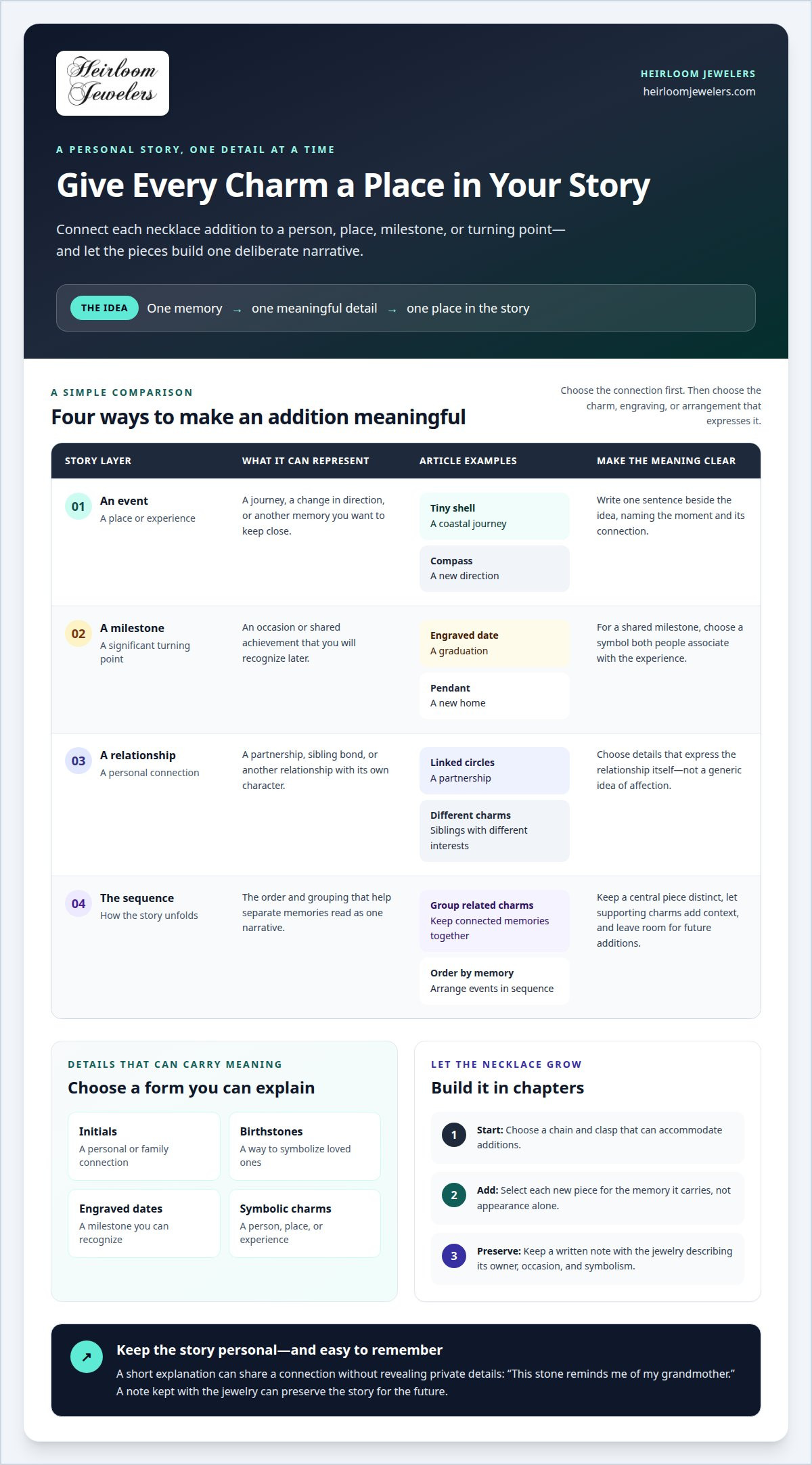
Give each addition a clear connection to a person, place, or turning point. A deliberate sequence lets separate charms form one personal narrative. To decide how to tell a story with your jewelry, connect every piece to a specific memory.
- Choose an event for each charm before settling on its shape. A tiny shell can mark a coastal journey, while a compass can recall a new direction. Write one sentence beside each idea, naming the moment and its connection. This note helps distinguish meaningful ornaments from pieces chosen only for appearance.
- Mark a milestone with a detail that recalls the occasion. An engraved date can commemorate a graduation, while a pendant can represent a new home. Choose a detail you’ll recognize later, even if its meaning isn’t obvious to others. For a shared milestone, select a symbol both people associate with the experience.
- Represent relationships with connected, not necessarily identical, pieces. Two linked circles might recall a partnership, while separate charms could reflect siblings with different interests. Choose details that express the relationship itself, rather than a generic idea of affection.
- Arrange the pieces so their order supports the story. Group related charms or place them in the sequence the memories occurred. When considering how to tell a story with your jewelry, keep a central piece distinct and let supporting charms add context. Leave room for future additions, so new milestones can join the necklace without crowding its existing details.
A personalized necklace can use initials, birthstones, engraved dates, or symbolic charms to represent meaningful people, places, and experiences. Choose a detail whose connection you can recall, then let it keep that person or occasion close in the story the necklace carries. Different keepsakes can feel connected through the memories they represent.
A storyteller necklace can use separate charms, gemstones, engravings, or interchangeable components to represent different chapters of the wearer’s life. Include pieces that represent important relationships and shared memories with loved ones. These can sit alongside symbols for personal experiences, allowing the necklace to hold individual chapters as well as moments shared with others. As the story grows, choose additions for the memories they carry, not appearance alone.
Jewelry as a record of personal history
Build a family heirloom’s story by recording who owned it, what it marked, and how it reached you. Pair that history with a personal detail that connects the inherited piece to your own life.
- Begin with the heirloom’s known history, separating family memories from details you can establish. Note the previous owner, the occasion when it was worn, and any story passed down with it. If a relative remembers a particular event, record the connection in their words. Distinguishing recollection from documented detail helps future family members understand what the piece means.
- Connect the object to the person who wore it by noting its materials, design, or personal associations. An engraved initial may identify an owner, while a familiar gemstone may recall a family tradition. Ancient Egyptians wore amulets for protection, religious beliefs, and personal significance. This shows how an object’s meaning can include both its visible form and the beliefs attached to it.
- Preserve a small memento or memory alongside the jewelry’s history. European lockets held photographs, hair, or other small keepsakes close; the use of human hair in jewelry can be traced to the seventeenth century. Today, a written description can preserve a similar connection without adding anything to the piece. Record what the memento represents and whose story it carries.
- Create a simple timeline that follows the heirloom through its owners and occasions. Add the year only when the family knows it, and describe events plainly, such as “worn at a wedding” or “passed from grandmother to daughter.” Include how the piece came into your care. Keep this record with the jewelry so its history can travel with it.
Adding pieces to a necklace as life changes
Plan a necklace that can welcome new charms while keeping its story visually coherent. To make future additions easier, choose a chain, clasp, and construction suited to supporting them.
- Begin with a foundation that suits how you dress and wear jewelry. Choose a chain and clasp that can accommodate future additions, rather than a design with no room to change. Consider how a pendant will hang and whether added pieces could crowd it. A simple foundation gives later charms space to mark new chapters.
- Set a visual thread before adding different pieces. You might connect charms through a recurring gemstone, a similar finish, or a shared theme such as travel. Combining metals, textures, and stones can create a collected-over-time appearance, even when assembled at once. Repeat one detail to link new additions without making every piece identical.
- Layer chains around a clear focal point. Pair different chain lengths with pendants that carry related meanings, then give one pendant visual priority. For example, a family symbol can sit closest to the heart, while a travel memento rests on a longer chain. Check that the chains sit comfortably together and the pendants don’t compete for attention.
- Add each new piece with a specific chapter in mind. Before attaching a charm, decide what it represents and how it relates to the necklace’s existing theme. Revisit the arrangement as your story grows; moving a pendant can make room for a later milestone without removing an earlier memory. For a starting point, explore estate jewelry with enduring character.
A necklace intended to grow with its wearer should have a chain, clasp, and construction suited to adding charms. Keep those elements in mind whenever you consider a new piece, and assess how it fits the necklace as a whole. A well-chosen foundation makes additions easier to accommodate while preserving the space, balance, and visual thread established at the start. This lets new charms join the arrangement without crowding pendants or obscuring the meanings already attached to them.
Heirloom Jewelers
Heirloom Jewelers specializes in buying and selling quality second-hand jewelry, with a passion for fine antique pieces. For a meaningful addition, a newly made charm isn’t the only option: an existing necklace, gemstone, or pair of earrings can represent a chapter in your life or connect you with family history.
The collection includes a Lugano emerald and diamond necklace in 18K white gold, vintage Old European cut diamond stud earrings, and estate gemstone jewelry. These pieces can offer inspiration as you consider which materials, periods, and details feel personal to you. Choose jewelry for its connection to your story, as well as its place in your everyday style.
If you’re considering a meaningful estate or vintage piece, contact Heirloom Jewelers.
Let Your Story Continue
The next piece you choose can reflect who you are now, not only where you’ve been. Leave room for that change. A necklace doesn’t need a final arrangement; its meaning can deepen as new relationships, places, and experiences become part of your life.
As you consider how to tell a story with your jewelry, focus on one detail you want to carry forward. It might be a stone associated with someone you love, a design that recalls a turning point, or an heirloom that connects generations. For those marking a milestone with a new piercing or curated stud, specialists like Stellar SG offer guidance on selection and aftercare to ensure the piece heals well and lasts. The right choice is personal, and its significance can remain private or become a story you share.
Heirloom Jewelers offers estate and vintage pieces that can help you find a meaningful addition. Its collection includes a vintage platinum diamond engagement ring, alongside distinctive necklaces and earrings. Consider which piece feels connected to your own history and the chapters still ahead.
Contact Heirloom Jewelers about your story and take the next step toward a collection that continues to reflect your life.
Frequently Asked Questions
How can I choose jewelry that reflects my personal story or identity?
Choose a piece that reflects a value or part of your identity you want to carry visibly. Start by naming the idea, such as independence, family, or a dedication to music, then select a design detail that expresses it. If craftsmanship matters to you, for example, a vintage piece may resonate. Let your own association guide the choice, rather than a symbol’s popularity.
How do birthstones, initials, engravings, and charms add meaning to jewelry?
Each detail can serve a different role: a birthstone can represent a loved one, initials can identify a person, and an engraved date can anchor a piece to an event. A charm can express a broader idea, such as a musical instrument representing a lifelong interest. Choose details that work together rather than encoding every memory. One clear focal point makes the meaning easier to recognize.