
A meaningful jewelry gift can carry a history as well as a design. The best luxury pre-owned jewelry gifts may be estate, vintage, antique, or modern designer pieces, chosen for their craftsmanship and the person who will wear them. Age alone doesn’t define the right choice; style, condition, and the story behind a piece all matter.
It’s natural to want a distinctive gift and to make a considered purchase. Understanding jewelry categories can help you recognize what gives a piece its character and which details matter when buying or selling pre-owned jewelry.
This guide explains how estate, vintage, antique, and modern designer jewelry differ, and what to consider when assessing authenticity and condition. It also covers the buying and selling process and the role of customer support, so you can approach a meaningful jewelry gift with greater confidence.
Key Takeaways
- Learn how estate, vintage, antique, and modern designer jewelry differ, so you can choose a style with meaning for its recipient.
- Understand which details of a piece’s materials, craftsmanship, condition, and documentation can inform an authenticity assessment.
- See how the jewelry’s characteristics and history shape decisions when buying or selling pre-owned pieces.
- Explore distinctive gift options, from vintage diamond earrings to estate gemstone jewelry, and consider which best suits the occasion.
Authenticity guarantee and customer support
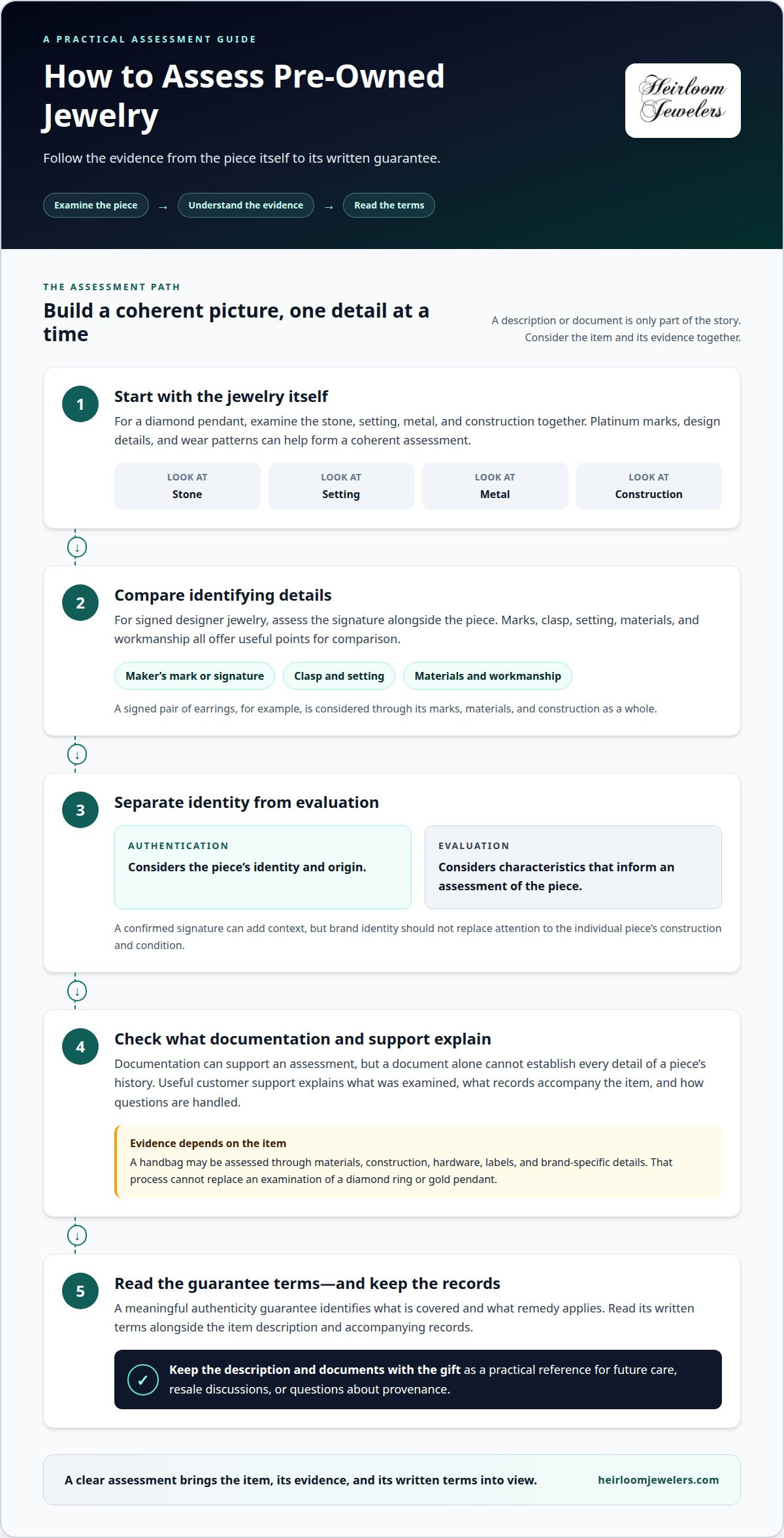
Authenticity review starts with the piece, not its description. For a diamond pendant, an evaluator examines the stone, setting, metal, and construction together. Platinum marks, design details, and wear patterns can help build a coherent assessment. Documentation can support that assessment, but a document alone cannot establish every detail of a piece’s history.
Signed designer jewelry calls for attention to both the signature and the piece itself. A maker’s mark, clasp, setting, and workmanship offer useful points for comparison. A signed pair of earrings, for example, can be assessed through its marks, materials, and construction as a whole. Authentication and evaluation are related but distinct: authentication considers identity and origin, while evaluation considers characteristics that inform an assessment of the piece.
Authenticated pre-owned luxury handbags involve different evidence from jewelry. Materials, construction, hardware, labels, and brand-specific details may all matter. A handbag’s authentication process cannot replace an examination of a diamond ring or gold pendant. Each category calls for evidence suited to its materials and design, rather than one checklist applied to every item.
Authentication and concierge services describe different kinds of support. Authentication focuses on assessing a piece; concierge assistance may help organize information or guide a purchase. Customer support is most useful when it explains what was examined, what documentation accompanies the item, and how questions are handled. For a vintage platinum ring, clear details about the metal, setting, and diamond help explain what the assessment covers.
An authenticity guarantee is meaningful when its written terms identify what is covered and what remedy applies. Read those terms alongside the item description and accompanying records. Keep the description and documents with the gift as a practical reference for future care, resale discussions, or questions about the piece’s provenance.
Estate, vintage, antique, and modern designer jewelry
Luxury gifts can include estate, vintage, antique, or modern designer pieces. The best fit depends on the recipient’s style, the jewelry’s design, and the significance you want the gift to carry.
Designer Estate Jewelry
Designer estate jewelry brings a previous owner’s history together with a recognizable maker or design house. Assess the piece’s materials, craftsmanship, condition, and identifying marks together. A signed pendant, for example, may appeal to someone who values a designer’s aesthetic as much as its gemstone. Brand identity adds context, but it shouldn’t replace attention to the individual piece.
Pre-owned designer jewelry spans different periods and design languages. Since no single brand suits every recipient, consider whether they favor understated settings, bold details, or classic diamond earrings. An authenticated signature can help establish a connection to a designer, while the jewelry’s construction and condition explain its character. These details make the gift feel selected, not simply labeled.
Luxury Pre-Owned Jewelry Gift Types
Choose a form that fits how the recipient dresses. Stud earrings suit someone who prefers a discreet accent, while a pendant offers a visible focal point. A ring can carry personal meaning, but fit and comfort matter. Estate gemstone pieces bring color, while diamond jewelry offers familiar brilliance.
Estate describes previously owned jewelry, while vintage often refers to designs at least 20-30 years old. Antique is another period label, so consider a piece’s documented history and design rather than relying on the word alone. Modern designer jewelry may also be pre-owned, combining a current aesthetic with prior ownership. These distinctions help narrow a gift without treating age as a measure of quality.
Watches sit alongside jewelry in the broader luxury market, but they’re a separate gift choice—if you are exploring high-end timepieces instead, destinations like watchcapital.com.sg/shop offer insight into curated luxury models. For jewelry, compare the recipient’s usual metals, preferred scale, and favorite forms. A trustworthy description should distinguish a designer attribution from a confirmed signature and explain the piece’s condition. That context helps you choose among designer estate jewelry, vintage designs, and modern pre-owned pieces with greater confidence.
Estate and pre-owned jewelry collection
A pre-owned collection brings together pieces with different histories, designs, and materials. Knowing how estate jewelry is sourced and categorized makes buying more deliberate.
Vintage and Estate Jewelry
Vintage describes a design associated with an earlier period; estate refers to previous ownership. A vintage piece can also be estate jewelry, but the terms describe different things. Look at its silhouette, construction, materials, and condition. A diamond ring with a distinctive older setting, for example, may appeal to someone drawn to period design, while a simpler piece may suit everyday wear.
Estate jewelry can come from inherited holdings, private resales, or the dispersal of personal collections. Each route may leave different records, such as an old receipt, an inscription, or family history. For a signed designer piece, a Cartier mark or Van Cleef & Arpels signature can offer a clue to its maker. Provenance and the object’s details together provide context for buying.
Meaning of Estate Jewelry
Estate jewelry means previously owned jewelry; it isn’t automatically antique, rare, or designer-made. The category can include a contemporary pendant, vintage earrings, or an older ring. Consider the piece itself: its design, materials, wear, and available history. Those details help distinguish personal appeal from assumptions based only on the estate label.
A listed estate collection includes 578 jewelry products, with 199 necklaces, 131 pairs of earrings, and 13 rings. Condition listings include 566 products described as excellent and 59 as very good. These figures help illustrate the range of forms and condition descriptions a collection may present. For an individual item, read its own description and consider how its design and condition suit the intended recipient.
For a gift, use the category as a starting point, not a verdict. A vintage setting can carry period character, while an estate pendant may be valued for its personal history. Comparing materials, form, and condition helps narrow the choices to a piece that feels considered.
Jewelry buying and selling
Buying or selling fine jewelry involves more than choosing a necklace or bracelet. Compare the selling format, item details, and fit before deciding.
Buying from Dealers, Marketplaces, and Auction Houses
A dealer typically presents selected pieces with descriptions and direct assistance. A marketplace connects buyers and sellers, so item details and seller-provided records can vary. An auction house offers jewelry through bidding, with sale terms that shape how you participate. Before purchasing, compare the description, condition information, authentication details, and return terms for the specific piece.
A diamond bracelet, for example, may be listed by a dealer, offered by an individual through a marketplace, or included in an auction. These routes differ in how selection, questions, and purchase terms are handled. The useful distinction is the transaction itself, not an assumption that one channel suits every buyer. Review the listing’s terms and documentation.
Finding Authenticated Pre-Owned Luxury Jewelry
When buying in the United States, look to established jewelry dealers and auction houses that describe their authentication process. Review how the seller identifies the maker, materials, condition, and any supporting records. For signed designer jewelry, consider the signature and construction together. A clear item description helps you understand what the authentication addresses before you choose.
For a gift, match the selection to the recipient’s style and practical needs. A necklace’s length and pendant scale affect how it sits; a bracelet’s fit affects comfort. If selling, gather any available receipts, appraisals, or provenance records. An evaluator can consider those materials alongside the piece’s condition, metal, gemstones, and design. The selling estimate depends on those qualities and market interest.
Ring sizing needs care. If possible, discreetly borrow a ring the recipient wears on the same finger and have its size measured. Rings worn on different fingers may fit differently. For a bracelet, compare its fit with one the recipient already wears, considering whether they prefer a close or relaxed feel. Avoid guessing from appearance alone.
Choose the channel whose terms and documentation suit your priorities. To explore a considered selection of estate jewelry, browse estate jewelry.
Heirloom Jewelers
Heirloom Jewelers helps you explore distinctive estate and vintage jewelry when a gift calls for craftsmanship, history, and character. Its selection features authenticated pre-owned pieces for a considered alternative to choosing by style alone. Compare the design, materials, and period details with the recipient’s taste, then focus on the piece that feels most personal.
The collection includes options such as designer diamond jewelry and estate gemstone earrings. This range lets you consider different expressions of fine jewelry without treating every gift as the same choice. For a meaningful present, weigh the recipient’s everyday style alongside the piece’s distinctive design and heritage.
If you’re ready to discuss a thoughtful jewelry gift, contact Heirloom Jewelers.
Choose a Piece to Be Treasured
Think beyond the occasion and picture how the recipient will wear the gift. A piece that suits their everyday style can become part of their personal story. Luxury pre-owned jewelry gifts offer a thoughtful way to mark a moment with a design that already carries character.
Consider the contrast between a Lugano Emerald & Diamond Necklace 18K White Gold and Vintage White Gold Old European Cut Diamond Stud Earrings. One offers a colorful focal point; the other presents a classic, understated accent. A Vintage Platinum 0.5 Carat Diamond Engagement Ring offers another distinctive choice for a meaningful milestone. Each has its own materials and design, giving you a tangible starting point for matching a gift to its recipient.
When you’re ready to consider a piece, contact Heirloom Jewelers about jewelry. A thoughtful choice can make the occasion memorable and give a distinctive piece a place in someone’s life.
Frequently Asked Questions
What are the best brands for pre-owned luxury jewelry gifts?
The best brand is the one whose design suits the recipient, not simply the most recognizable name. Consider whether they prefer clean lines, ornate detailing, or a distinctive gemstone setting. For a signed piece, examine whether the signature fits the item’s design and construction. A gift’s fit with the recipient’s taste matters more than brand prestige alone.
How can I verify the authenticity and condition of pre-owned jewelry?
Review the item description, clear photographs, and any available authentication information together. Zoom in on clasps, stone settings, hallmarks, and areas showing wear. A close view of a ring’s prongs, for example, can reveal their condition more clearly than a distant image. Compare details across photographs, and look for specific descriptions of visible wear or repairs.
What certifications, appraisals, or documentation should come with pre-owned jewelry?
Documentation depends on the piece and the claims made about it. A gemstone report may describe a stone, while an appraisal may document an item’s characteristics and estimated value for a stated purpose. Receipts, prior appraisals, or provenance records can add context. Treat each document as supporting evidence, and make sure it refers to the jewelry you’re considering.
What return policies and warranties do pre-owned luxury jewelry sellers offer?
Return terms and warranty coverage differ by seller and item, so read the written conditions before purchasing. Check the return window, eligible item condition, and any exclusions. A warranty may cover specific defects for a defined period, while a return policy explains whether a purchase can be sent back. Keep the listing and transaction terms for reference.
What are the risks of buying pre-owned luxury jewelry online, and how can I avoid scams?
Online listings can leave questions about condition, attribution, or whether photographs show the actual piece. Choose listings with detailed images and item-specific descriptions, and review the seller’s identity and transaction terms. Keep payment and order records. Be cautious of pressure to pay through an unusual method or outside the stated checkout process. Pause if key details conflict.