
A ring’s design language often reveals more than whether it simply looks old or new. Mixing modern and vintage jewelry starts with noticing visual cues: Art Deco rings, associated with the 1920s to 1930s, are known for bold symmetry, straight lines, sharp corners, and geometric patterns. Modern styles often favor minimalism, fluid forms, and slender stackable bands. These contrasts offer a practical starting point for pairing pieces with intention.
It’s natural to want jewelry that feels cohesive without losing the character of each piece. This guide shows how to identify vintage and modern rings, layer necklaces from different eras, and bring distinct designs together in a way that reflects your taste. You’ll also learn how diamond shapes can influence a ring’s style and how a striking vintage piece can sit comfortably beside cleaner, contemporary designs.
Key Takeaways
- Choose a vintage anchor that feels personal, then keep supporting pieces quieter so its details remain the focus.
- Look at a ring’s diamond shape and overall design for clues to its era and character.
- For a mixed-era necklace layer, place the vintage piece longest and avoid pairing two ornate necklaces at similar lengths.
- Bring vintage jewelry into everyday outfits by balancing its detail with clean clothing lines and simpler accessories.
Choosing pieces that express personal style
- Start with the jewelry you already wear. Notice which shapes, metals, and textures you reach for most. A preference for smooth gold, fine chains, or detailed filigree can guide your choices. Consider your everyday clothing, too: an open neckline can frame a pendant, while a tailored jacket may suit a brooch.
- Choose one anchor piece with personal meaning or a strong visual detail. It might be a family heirloom, a vintage bracelet, or a ring with an unusual gemstone. Knowing its story can make it feel more personal and give you a natural conversation point. Let its scale and color guide the rest of your jewelry.
- Use a pendant as the focal point when you want jewelry to shape an outfit. An heirloom pendant on a sleek modern chain creates a clear contrast in age and finish. Keep nearby necklaces simpler, so their lengths and surfaces support the pendant rather than compete with it.
- Choose gemstones with color, mood, and your wardrobe in mind. Peridot brings a fresh green note, while quartz can add a lighter, quieter tone. Pair a colored vintage stone with neutral clothing for definition, or echo its color in a modern piece. The result can feel personal without following trends.
- Add two supporting pieces that connect to the anchor through metal, shape, or color. For example, pair a detailed ring with a plain band and understated earrings—clean everyday staples from accessory retailers like BodyJ4You work well as quiet companions to ornate pieces. Mixing modern and vintage jewelry works well when each piece has a role. Keep comfort in mind, especially for jewelry you’ll wear throughout the day.
Diamond shapes associated with vintage and modern styles
- Read the ring’s overall design rather than judging it by diamond shape alone. A cut can suggest a style, but it doesn’t establish a ring’s age. Consider the setting, metalwork, and proportions together. A geometric outline with crisp, symmetrical details, for example, creates a different impression from a spare setting with clean lines.
- Use Art Deco design as a clear visual reference. Jewelry associated with the 1920s to 1930s often features symmetry, straight lines, sharp corners, and geometric patterns. A diamond set within that structure can feel architectural. Pair it with a simple contemporary band to let the older design remain distinct without making the combination feel overly ornate.
- Notice whether the diamond’s outline feels angular or rounded. Square, rectangular, or step-like outlines can echo the geometry associated with Art Deco, while rounded outlines have a softer character. Treat these as styling cues, not proof of age. Compare the stone’s outline with the setting’s shape and decorative details.
- For a modern, minimalist effect, look for a restrained setting and little visual clutter. Fluid lines, asymmetry, and thin stackable rings are features often associated with modern jewelry styles. A simple band beside a more detailed heirloom ring creates contrast. Keep nearby shapes quiet so the diamond remains easy to notice.
- Build a pairing around one clear point of difference. Set an ornate, geometric ring beside a smooth band, or pair a streamlined ring with a design rich in detail. Connect the pieces through a shared metal tone, or combine yellow gold with silver for warm-and-cool contrast. Shape, setting, and metalwork together give the pairing its character.
Wearing vintage jewelry with everyday outfits
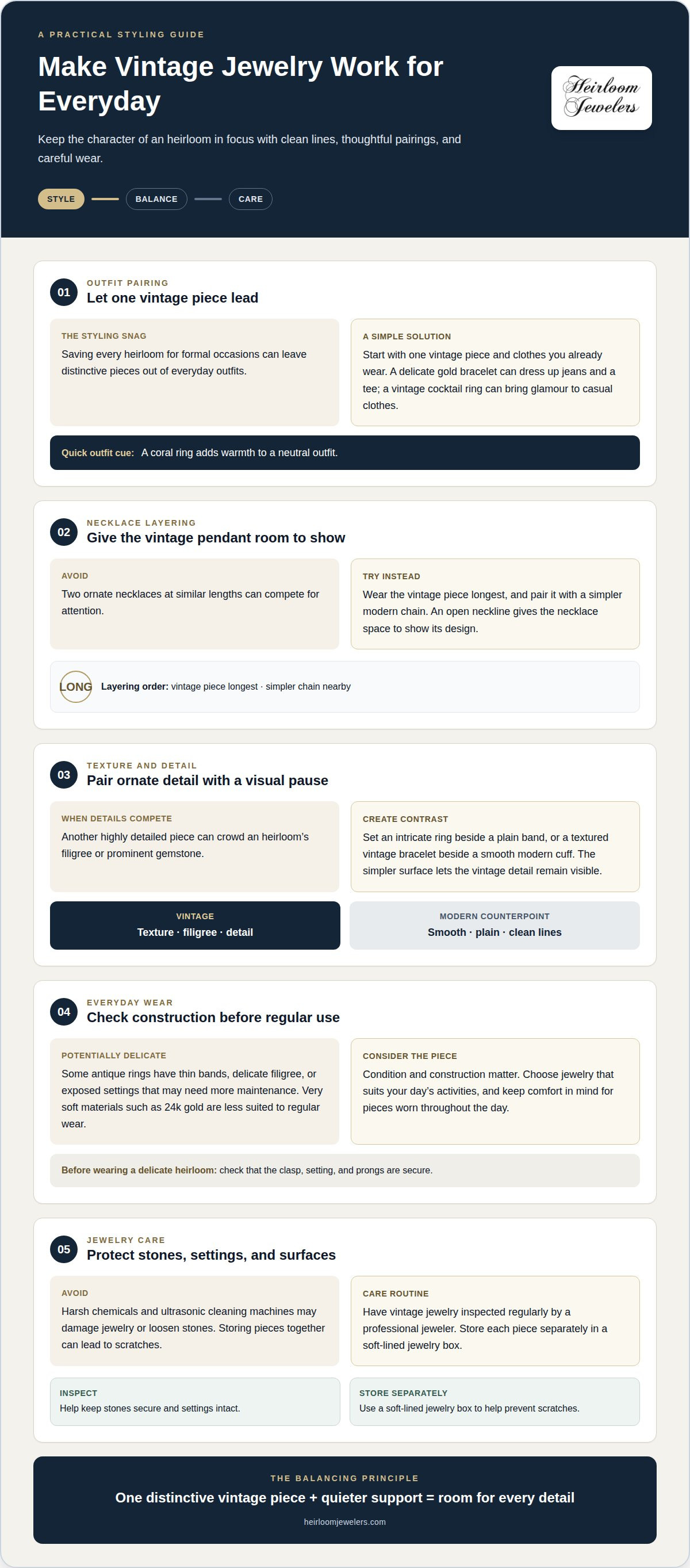
- Start with one vintage piece and an outfit you already wear. A delicate gold bracelet can add detail to jeans and a tee, while a vintage cocktail ring brings glamour to casual clothes. With a neutral outfit, a coral ring adds warmth. Choose a piece that suits your day’s activities and clothing rather than saving every heirloom for formal occasions.
- Pair a vintage necklace with a clean, modern outfit and an open neckline. When layering across eras, try two necklaces: wear the vintage piece longest and avoid placing two ornate necklaces at similar lengths. This gives each pendant room to show its design. A simple modern chain can complement a more detailed vintage pendant.
- Use texture to make everyday combinations feel considered. A smooth modern cuff beside a textured vintage bracelet creates contrast without requiring matching designs. Bold vintage earrings can work with a sleek hairstyle and understated makeup. With a blazer or denim jacket, a vintage brooch adds detail, while the garment’s clean lines keep the look grounded.
- Consider construction before making a vintage ring part of daily wear. Many antique rings have thin bands, delicate filigree, or exposed settings that may need more maintenance. Well-maintained vintage jewelry can suit everyday use, but very soft materials such as 24k gold are less suited to regular wear. The piece’s condition and construction matter.
- Before wearing a delicate heirloom, check that its clasp, setting, and prongs are secure. Have vintage jewelry inspected regularly by a professional jeweler to help keep stones secure and settings intact. Avoid harsh chemicals and ultrasonic cleaning machines, which may damage jewelry or loosen stones. Store each piece separately in a soft-lined jewelry box to help prevent scratches.
Balancing ornate vintage pieces with clean modern designs
- Choose the ornate piece first, then use a modern design to give it visual space. A detailed chain bracelet can sit beside a smooth cuff, whose open surface creates negative space. The contrast keeps the vintage metalwork visible without making the combination feel crowded.
- Keep one area of the look simple. If an heirloom ring has intricate filigree or a prominent gemstone, pair it with a plain band instead of another detailed ring. The unadorned surface acts as a pause between designs. Similar metal tones can connect the rings while preserving their distinct characters.
- Distinguish vintage and modern rings by examining the whole design. Vintage styles may have detailed metalwork, decorative shoulders, or distinctive gemstone cuts. Modern designs often favor minimal settings, clean geometry, or asymmetry. These are useful visual cues, not proof of a ring’s age. Compare the setting, band, and stone together.
- Build contrast through shape as well as detail. A sleek geometric bracelet can balance a rounded, ornate vintage piece. For rings, place a narrow modern band beside a broader heirloom design, leaving each silhouette clear. Avoid stacking pieces with the same scale and decoration, since their details may compete.
- Refine the combination by removing one piece at a time. Keep the pairing that makes the older design easier to notice and the modern piece feel intentional. If you’re considering a vintage ring as your focal point, explore vintage ring styles for examples of distinctive settings and details.
Heirloom Jewelers
Heirloom Jewelers offers a curated selection of authenticated estate and vintage fine jewelry for those drawn to pieces with history and distinctive design. The collection includes vintage diamond earrings, a vintage platinum engagement ring, and estate gemstone jewelry. These pieces show how setting, metal, and gemstone color can shape a personal style.
For example, vintage white gold Old European cut diamond stud earrings can provide a classic accent, while estate peridot and quartz dangle earrings add color and movement. A vintage platinum diamond engagement ring offers another example of how an heirloom design might complement simpler contemporary pieces. Each has a distinct character, so choose based on the details and look you value.
If you’re considering a vintage or estate piece for your style, explore Heirloom Jewelers’ curated collection. Visits are available by appointment.
Make Your Next Pairing Your Own
Let your jewelry choices evolve with the occasions and memories that matter to you. A piece chosen for its craftsmanship can become part of your everyday style, while a contemporary companion can keep the look feeling current. You don’t have to make every combination permanent. Try different pairings with clothes you already wear, then notice which details feel most like you.
As you continue mixing modern and vintage jewelry, let personal meaning guide your choices as much as appearance. A family piece may carry a story; a newer design may mark a moment you want to remember. Together, they can create a style that feels individual rather than dictated by trends.
If you’d like to explore how a vintage or estate piece could suit your taste, contact Heirloom Jewelers for styling advice. Choose the pieces that feel right to wear, and let your personal style take shape at its own pace.
Frequently Asked Questions
How do you mix modern and vintage jewelry without clashing?
Connect pieces through one shared detail, such as gemstone color, shape, or finish. For example, pair a vintage green-stone ring with contemporary earrings that echo its color in simpler forms—distinctive handcrafted styles from Aihki Design work well to balance older heirlooms. This creates a visual link without making the designs identical. If each piece has a different focal point, remove one until the combination feels intentional.
What are the rules for layering vintage and contemporary jewelry?
Choose necklaces with different pendant shapes or chain textures, and arrange them so each detail remains visible. A small vintage locket can sit beside a plain contemporary chain, while a larger pendant needs more room. Before wearing the combination, move naturally and check that the chains don’t catch or twist together. Adjust them for comfort.
How do you balance proportions when mixing old and new jewelry?
Balance the outfit’s visual weight instead of matching every piece in size. If a vintage ring has a prominent stone, choose understated earrings and keep bracelets light. If the ring is delicate, a bolder necklace can add emphasis. Consider your clothing, too: a structured sleeve can support a substantial bracelet, while a narrow cuff suits lighter details.
Which metals can be mixed in jewelry styling?
Yellow gold, rose gold, and silver can be worn together. Use one metal as the main presence, then introduce another in a smaller piece, such as silver earrings with a gold necklace. Repeating one metal elsewhere, perhaps in a ring or bracelet, helps the combination feel deliberate. Differences in finish and texture can add further definition.
How do you mix vintage jewelry with modern outfits?
Let your outfit provide a clean setting for the jewelry. A vintage brooch can add detail to a plain knit, while an older bracelet can complement a crisp shirt and tailored trousers. Choose clothing colors that support the stone or metal. This lets a distinctive piece feel at home without requiring formal clothes.
What vintage jewelry styles pair well with contemporary pieces?
Geometric Art Deco designs pair naturally with minimalist jewelry: their strong lines stand out against simpler forms. Victorian pieces often feature flowers, leaves, hearts, vines, and colored gemstones, bringing softness beside a clean modern cuff. Art Nouveau jewelry, known for flowing, nature-inspired lines, also pairs well with contemporary pieces that keep their shapes restrained.