
The oldest gemstone ring in the room isn’t necessarily the most valuable. The value of vintage gemstone jewelry depends on more than age or apparent rarity. A vivid stone in a well-made setting may attract more interest than an older piece with damage, uncertain treatments, or limited demand. That can make an initial assessment difficult, especially when small details are hard to judge by eye.
Age and rarity can matter, and it’s natural to wonder whether a family heirloom or unusual design carries added value. But neither tells the whole story. Gem quality, craftsmanship, condition, provenance, and current buyer interest all help shape what a piece may be worth.
This article explains how to consider those factors together, what hallmarks, gemstone reports, receipts, and ownership records can clarify, and when an expert assessment may help. It also distinguishes retail, appraisal, insurance, and resale values, which serve different purposes. Use it as a practical framework for comparing vintage pieces, rather than relying on age alone.
Key Takeaways
- The value of vintage gemstone jewelry reflects the stone, workmanship, condition, provenance, and buyer demand, not age alone.
- Assess gemstone qualities together, including color, clarity, cut, size, and condition. No single characteristic tells the whole story.
- Look for signs of repairs, replaced stones, wear, or alterations, and gather records that may help establish a piece’s history.
- Use clear photographs and notes on gemstones, metal marks, and known repairs to make comparisons and expert assessments more informative.
- Separate verified details from uncertain history, and weigh documented facts alongside craftsmanship and personal preference.
What determines the value of vintage gemstone jewelry?
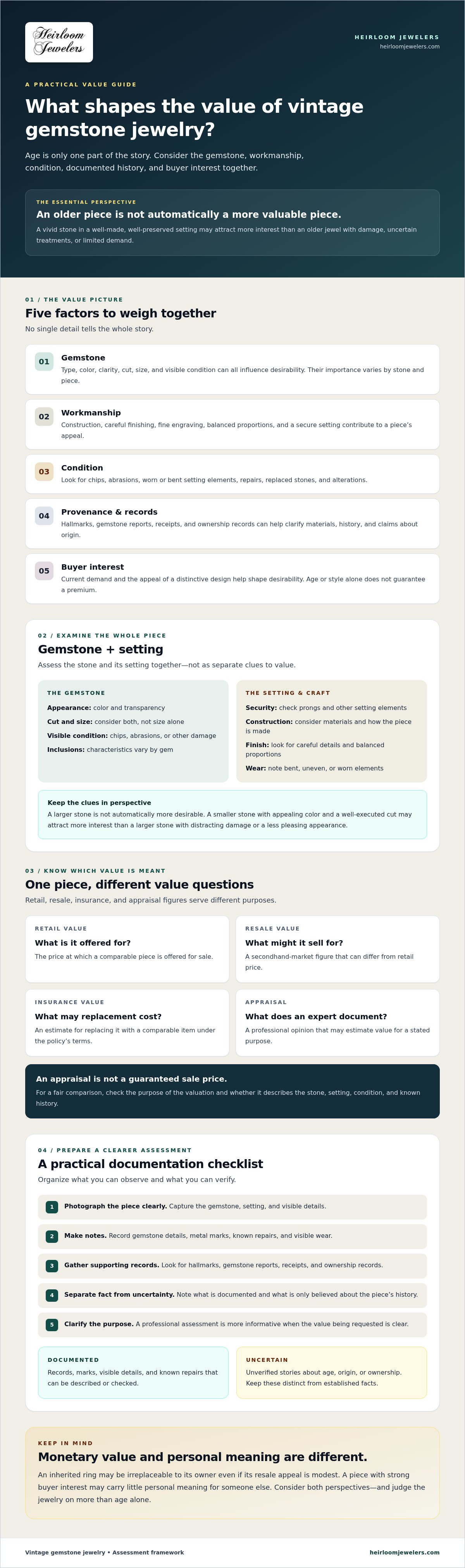
The value of vintage gemstone jewelry depends on the gemstone, workmanship, condition, documented history, and buyer demand. Age can add historical interest, but it doesn’t establish quality or price on its own. A distinctive design with a well-preserved stone may be more desirable than an older piece with significant damage or alterations.
Consider each gemstone individually. Color, clarity, cut, and carat weight can all inform an assessment, but their importance varies by stone and piece. For background on gemstones and the characteristics used to describe them, a general reference can help. It can’t replace examining a particular jewel.
Monetary value is also separate from sentimental significance. A ring inherited from a loved one may be irreplaceable to its owner, even if its resale appeal is modest. Conversely, a piece with strong market interest may have little personal meaning to a particular buyer. These are different ways of valuing the same object, and both may matter to a decision.
Does older gemstone jewelry always have greater value?
No. Age provides context, but it isn’t a standalone measure of quality or desirability. A well-preserved piece with distinctive workmanship may appeal to buyers more than an older jewel with a chipped stone, worn setting, or extensive alterations. Period features can help explain a design’s historical interest, but marks, records, and construction details are needed to support claims about age or origin.
Which kinds of value are people usually asking about?
Different figures serve different purposes. Retail value is the price at which a comparable piece is offered for sale. Resale value refers to what it may sell for in the secondhand market, which can differ from its retail price. Insurance value estimates the cost of replacing it with a comparable item under the policy’s terms. An appraisal is a documented professional opinion that may estimate a value for a stated purpose, so the purpose should be clear.
How gemstone quality and vintage craftsmanship shape value
The gemstone and its setting need to be assessed together. Type, color, clarity, cut, size, and visible condition can influence desirability, but no single trait determines value. An emerald, diamond, peridot, or quartz may appeal for different qualities. Even within one gemstone type, appearance and condition vary. The GIA Gem Encyclopedia offers background on individual gems, but a specific stone may need expert examination.
How do gemstone characteristics affect a vintage piece?
Look at the stone’s color and transparency, the way it’s cut, and whether it has chips, abrasions, or other visible damage. Inclusions may be natural characteristics, but their appearance and effect differ by gem, so don’t apply one grading rule to every stone. The Mohs scale describes a mineral’s resistance to scratching. It is not a score for beauty or monetary value, and it doesn’t describe every aspect of durability.
Size matters, but it doesn’t tell the whole story. A smaller stone with appealing color and a well-executed cut may be more desirable than a larger stone with distracting damage or a less pleasing appearance. A qualified gem assessment can help distinguish what’s visible from what can’t be reliably judged by eye.
Why do setting, design, and craftsmanship matter?
The setting affects both presentation and practical condition. Precious-metal content, construction, and the security of the stone all deserve attention. Check whether prongs or other setting elements appear worn, bent, or uneven. Fine engraving, balanced proportions, and carefully finished details can signal skilled workmanship and contribute to a piece’s appeal, though they don’t guarantee a particular market value.
Distinctive period design may interest collectors, especially when the piece’s features and history are supported by evidence. But style alone doesn’t establish an era or promise a premium. If you’re learning to recognize period details, explore this Art Deco jewelry guide alongside the piece’s marks, construction, and documentation.
The value of vintage gemstone jewelry comes from how these qualities work together. A vivid stone may draw the eye, while a sound setting and thoughtful workmanship support its appeal. Compare the gemstone, metal, condition, and visible craftsmanship as a whole. Treat any uncertain detail as something to verify rather than assume.
How condition, provenance, and market demand change jewelry value
Condition can affect both wearability and collector interest. Worn prongs, loose stones, chips, previous repairs, or replaced gems may influence an assessment. Alterations can also change the original design, though their effect depends on the work and the preferences of potential buyers. A repair isn’t automatically a flaw, but it should be documented and considered alongside the rest of the piece.
Provenance adds context when supported by evidence. Dated receipts, earlier appraisals, maker marks, and ownership records can help establish a piece’s history, but no single clue proves age or authenticity. Market interest matters, too. Market demand can shift while a piece’s physical attributes remain unchanged. Buyer interest may affect what someone is willing to pay, even when the jewelry itself has not changed.
What evidence can help establish a piece's history?
Gather records and markings that can be checked against the jewelry itself. These may include:
- Dated receipts or earlier appraisals describing the piece
- Maker’s marks or metal hallmarks, if present
- Ownership records, family documents, or other dated references
- Notes and photographs showing repairs, replaced stones, or alterations
Treat these as clues, not conclusive proof. Marks can be difficult to interpret, and design details may require specialist knowledge. A careful examination can help determine whether the documentation aligns with the materials and construction. For more context on heritage pieces, see this heritage jewelry collector's guide.
How is resale value different from appraisal or insurance value?
Each figure answers a different question. An asking price is what a seller hopes to receive; it isn’t proof of what a buyer will pay. An appraisal is a professional opinion prepared for a stated purpose. An insurance figure is intended to help guide replacement coverage under an insurer’s terms. Resale value concerns what a buyer may pay in a particular secondhand market, based on the piece and current demand.
For a meaningful comparison, check the purpose and date of any appraisal, the details it describes, and whether it reflects a retail, insurance, or resale context. The Gemological Institute of America offers guidance on how to find a qualified jewelry appraiser. No estimate guarantees a future sale price or investment return. To explore curated, authenticated estate and vintage jewelry, visit Heirloom Jewelers.
How to assess vintage gemstone jewelry before buying or insuring it
A consistent process makes it easier to separate visible facts from assumptions. Start with a careful inspection, record what you observe, verify details that matter, and compare pieces on similar terms. For a significant purchase or an insurance decision, a qualified independent opinion may help clarify the value of vintage gemstone jewelry.
What should you inspect and document first?
Examine the piece in good light, but don’t attempt to tighten, clean, or repair it yourself. Note visible wear, loose settings, missing accent stones, chips, and signs of alteration. Take clear photographs from several angles, including close views of the gemstone, setting, and any metal marks. Images can document condition, but they don’t establish a stone’s identity or prove a piece’s age.
Gather any receipts, previous appraisals, gem reports, certificates, and known ownership history. Ask the seller what is verified and what remains uncertain about the stone, metal, maker, and period. Keep those details with your photographs and notes. A simple record makes it easier to compare descriptions and raise specific questions before buying or seeking an assessment.
When is a professional appraisal worth considering?
The right assessment depends on its intended use. A purchase decision, resale estimate, and insurance record may call for different valuation purposes. Before relying on an appraisal, confirm what type of value it addresses and what the document will cover. Ask about the appraiser’s relevant qualifications, examination methods, and whether the written report will describe the gemstone, metal, condition, and known repairs.
Also check whether the opinion is independent of the transaction and whether its scope suits your needs. An appraisal is an informed opinion based on stated evidence and purpose, not a promise of what a future buyer will pay. If you’re considering a historic ring, the antique rings collector's guide offers further context for examining period details.
Use this sequence as a practical checklist: inspect the jewelry, photograph and document it, verify important claims, compare like with like, then seek a qualified assessment where appropriate. For a closer look at curated, authenticated estate and vintage pieces, explore estate and vintage jewelry.
Choosing authenticated vintage gemstone jewelry with confidence
A confident choice comes from weighing the whole piece, not focusing on a single feature. Consider the gemstone’s documented details, the quality of the workmanship, visible condition, supporting records, and your own taste. The value of vintage gemstone jewelry can guide a comparison, but personal preference matters too. A piece may suit you because of its design or history, even if it isn’t the one with the strongest resale appeal.
What should a transparent vintage jewelry listing explain?
A clear description helps you understand what is being offered and what still needs confirmation. Look for specific information about the stone and setting, notes on wear or repairs, photographs that show the piece from multiple angles, and details about available documentation. The description should separate verified facts from uncertain history rather than present assumptions as established provenance.
Ask direct questions if a detail is unclear. Which information comes from a document or visible mark? Has the stone’s identity been confirmed, or is it described by appearance? Are any repairs or replacements known? Not every vintage piece has complete records, and that should be stated plainly. A careful answer is more useful than an unsupported claim about age, maker, or appraisal value.
How can specialist curation help your decision?
A specialist retailer can offer a focused context for considering estate and vintage jewelry, including how a piece is described and which details are documented. Heirloom Jewelers specializes in curated, authenticated estate and vintage fine jewelry. Its confirmed examples include emerald and diamond jewelry, old European cut diamond earrings, a vintage platinum diamond engagement ring, and estate peridot and quartz earrings. These examples show the range of materials and designs a buyer may encounter, not a claim that any specific piece is currently available.
Use the same questions for every piece you compare: What is known about the materials? What condition details are disclosed? What records support the description? Does the design suit your preferences and intended wear? This steady approach helps you compare pieces based on evidence as well as appearance.
For a considered next step, explore curated estate and vintage jewelry. Review each piece’s description and ask about the specific details that matter to you before deciding.
Make your next vintage jewelry decision with confidence
The value of vintage gemstone jewelry rests on more than age or a striking appearance. Gemstone characteristics, workmanship, condition, supporting documentation, and market interest all contribute to how a piece is assessed. Keep the intended value in mind, too: a retail price, resale estimate, insurance figure, and personal significance each answer a different question.
Before buying or insuring a piece, record what you can observe, check which details are documented, and ask about anything uncertain. Clear descriptions and a qualified assessment, when appropriate, can help you make a decision grounded in evidence as well as personal taste.
Heirloom Jewelers specializes in authenticated, curated estate and vintage jewelry, with confirmed examples that include emerald, diamond, peridot, and quartz pieces. Explore the selection at your own pace and consider which materials, craftsmanship, and details matter most to you. Explore curated estate and vintage fine jewelry, and take the next step with confidence.
Frequently Asked Questions
Does vintage gemstone jewelry increase in value over time?
Not necessarily. Age alone doesn’t guarantee appreciation. Materials, gemstone quality, craftsmanship, condition, documentation, and current buyer demand all affect desirability. Resale outcomes can differ from retail or insurance figures, and market preferences can change over time. Treat vintage jewelry first as a personal purchase, not a guaranteed investment. If you need a value for a specific purpose, seek a professional appraisal that clearly states its scope and intended use.
How can I tell if a vintage gemstone is valuable?
Start by identifying the gemstone, then consider its color, clarity, cut, size, and visible condition alongside the setting and workmanship. The value of vintage gemstone jewelry depends on how these details come together, not on one feature alone. Documentation or expert examination may help confirm the stone’s identity and whether it has been altered. If you need a formal opinion, choose an appraisal prepared for your specific purpose.
Does a gemstone certificate determine the value of vintage jewelry?
No. A gemstone certificate or report may document characteristics of a particular stone, but it doesn’t automatically establish the market value of the entire piece. The setting, condition, craftsmanship, provenance, and intended valuation purpose also matter. Check what the document covers, who issued it, and whether it clearly relates to the gemstone currently set in the jewelry. If details don’t match, ask for clarification before relying on it.
Is an appraisal value the same as resale value?
No. An appraisal is an opinion prepared for a stated purpose, such as insurance or another documented need. Resale value depends on the piece’s condition, the buyer, the selling venue, and timing. An asking price is what a seller hopes to receive, not proof of a completed sale. Before relying on an appraisal, ask what type of value it estimates, what evidence it considers, and what limitations apply.
Can repairs or replaced gemstones lower vintage jewelry value?
They can affect a piece’s condition, originality, or appeal to some buyers, but the effect depends on the individual item and the work performed. A secure, documented repair may be preferable to leaving damage untreated. Disclose known alterations and ask a qualified professional how they affect the assessment. Don’t assume every replacement stone has the same impact; its match, quality, and role in the design may all be relevant.
What documents should I keep for vintage gemstone jewelry?
Keep purchase records, prior appraisals, gemstone reports, repair receipts, clear photographs, and reliable information about ownership history. These records help explain what’s known about the piece, but they don’t independently prove every claim about its age or origin. Store copies securely and update your records after an alteration or a new assessment. Note which details are documented and which remain uncertain, so future reviews have a clear starting point.
Is vintage gemstone jewelry a good investment?
Vintage gemstone jewelry may interest collectors, but it shouldn’t be treated as a guaranteed investment. Future resale depends on the specific piece, its condition and documentation, buyer demand, and the circumstances of sale. Historical interest or a high appraisal doesn’t ensure a profit. Consider materials, craftsmanship, and personal appeal first. For financial decisions, seek advice from an independent professional and distinguish a valuation opinion from a prediction of future returns.