
A modern, machine-cut diamond often lacks the specific character found in a stone shaped by a master craftsman's hand. While many believe newer technology always produces superior sparkle, the deep, warm glow of vintage diamond stud earrings offers a presence that contemporary mass production cannot replicate. You're likely looking for more than just a pair of accessories. You want a piece of history that retains its value and tells a story through its distinctive facets.
It's natural to feel uncertain when distinguishing between a true antique and a modern reproduction. Finding an authentic pair requires a discerning eye and a solid understanding of historical jewelry periods. This guide will help you evaluate the nuances between an Old European cut and a Transitional cut so you can choose with confidence. We'll compare the structural durability of antique platinum versus gold settings and explore how different eras impact the long-term value of your investment. You'll gain the knowledge needed to identify a pair that serves as both a wearable heirloom and a stable asset for years to come.
Key Takeaways
- Distinguish between antique and vintage classifications to accurately assess the rarity and historical context of your next fine jewelry purchase.
- Master the technical traits of the Old European cut, including the higher crown and distinctive culet that define its soulful sparkle.
- Recognize era-specific design elements, such as Victorian gold clusters and Edwardian platinum lace, to find a style that aligns with your personal aesthetic.
- Evaluate the benefits of 18K white gold and platinum settings to ensure your vintage diamond stud earrings provide a secure and enduring foundation for their stones.
- Gain confidence in the authentication process, learning why curated estate pieces offer superior craftsmanship compared to modern mass-produced alternatives.
The Enduring Appeal of Vintage Diamond Stud Earrings
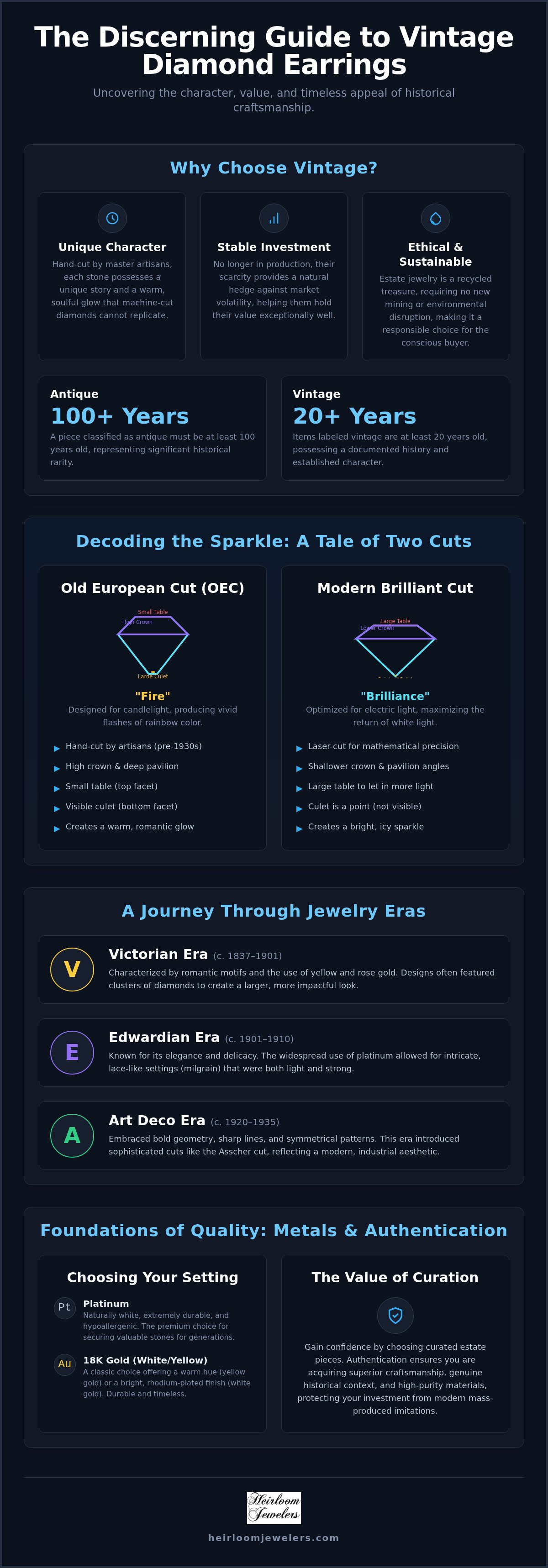
Selecting fine jewelry is an exercise in discerning quality from mere decoration. In the secondary market, terms like antique and vintage carry specific weights that influence both rarity and price. As of July 2026, a piece is classified as antique only if it is at least 100 years old, meaning it was crafted in or before 1926. Items labeled as vintage must be at least 20 years old. For those seeking vintage diamond stud earrings, these distinctions ensure you are purchasing a piece with a documented history rather than a modern imitation. These earrings represent a period of craftsmanship that prioritized the unique personality of each stone over the uniform output of modern machinery.
Modern retail often relies on mass production to meet high demand. This results in diamonds that look nearly identical, stripped of the individual characteristics that define heritage jewelry. Vintage studs offer a level of character that is increasingly rare. Because these pieces are no longer in production, their scarcity provides a natural hedge against the volatility of the retail market. They hold their value exceptionally well. This stability is bolstered by the rising price of precious metals in early 2026, which has increased the baseline worth of authenticated estate pieces across the board.
Sustainability Meets Timeless Sophistication
Choosing estate jewelry is one of the most ethical ways to acquire high-value diamonds. These stones are essentially recycled, requiring no new mining or environmental disruption. This sustainable approach appeals to the modern buyer who values environmental stewardship as much as aesthetic beauty. Historical craftsmanship also ensures longevity. A pair of earrings from the Art Deco or Edwardian era was built to last for generations, utilizing high-purity metals and hand-finishing techniques that modern "fast jewelry" cannot match. These are not temporary purchases; they are modern heirlooms intended to be passed down.
The "Fire" vs. The "Brilliance": A Visual Difference
The visual appeal of an antique diamond differs fundamentally from a modern stone. Older cuts were designed to perform under candlelight or low-intensity gas lamps. This resulted in what experts call "fire," which refers to the vivid rainbow flashes of light dispersed from the stone. Modern laser-cut diamonds are optimized for "brilliance," or the reflection of white light, which can sometimes feel clinical or cold. Antique diamonds feature larger facets and higher crowns, creating a deep, warm glow. This distinctive light performance is the primary reason why collectors favor vintage diamond stud earrings over their contemporary counterparts. You are not just buying a diamond; you are acquiring a specific, historical way of capturing light.
Comparing Diamond Cuts: Old European vs. Modern Brilliant
The evolution of diamond cutting is a journey from the human hand to the precision of the laser. Before the advent of modern technology, diamonds were shaped by master cutters who relied on their eyes and intuition. The result was the Old European cut (OEC), which served as the primary style for round diamonds from the late 19th century through the early 1930s. When you examine vintage diamond stud earrings, you aren't just looking at a stone; you're observing the unique fingerprint of a historical artisan. These diamonds were designed to maximize light performance in a world before electricity, creating a look that is fundamentally different from what you find in a modern jewelry store.
Collectors seek out these older cuts because they possess a rarity that cannot be manufactured. While modern brilliant diamonds are engineered for high-volume retail, OEC stones are finite. Many were lost to history or recut into modern shapes during the mid-20th century, making intact pairs of OEC studs a prized find. For those who prefer a non-traditional silhouette, the Asscher cut offers a sophisticated, hall-of-mirrors effect typical of the Art Deco era. Alternatively, the Rose cut provides a low-profile, romantic glow that dates back even further, offering a soft alternative to the high-intensity sparkle of round stones.
The Anatomy of an Old European Cut
Understanding the technical traits of an OEC diamond helps you verify its authenticity. One of the most recognizable features is the culet, which is the facet at the very bottom of the stone. In an Old European cut, the culet is often flat and large enough to be seen through the top of the diamond, appearing as a small, dark circle. This is not a flaw; it's a hallmark of the era. These stones also feature a high crown and a small table, which is the flat top surface. This geometry produces chunky, broad flashes of light rather than the tiny, splintered reflections seen in newer pieces. You can explore these nuances in detail by viewing The Charm of Old European Cut Diamond Stud Earrings.
Modern Brilliant Cuts: The Standard of Comparison
The modern round brilliant is the result of mathematical formulas designed to achieve maximum white light return. It features a standard of 58 facets, all polished to exacting proportions. While this creates a high level of brilliance, some enthusiasts find the effect too clinical or uniform. Modern cuts prioritize "brightness," whereas vintage cuts prioritize "personality." Choosing between them is a matter of personal preference. If you value a stone that feels lively and unique under various lighting conditions, the older cutting styles often provide a more satisfying experience. Our collection of vintage white gold old european cut diamond stud earrings showcases how these historical stones maintain their elegance in high-quality 18K settings.
Evaluating Eras: Victorian, Edwardian, and Art Deco Styles
Identifying the era of a piece of jewelry is about more than just dating a stone. It involves recognizing the specific metalwork and design philosophies that defined a generation. When you examine vintage diamond stud earrings, the setting often tells a more detailed story than the diamond itself. Each era utilized the technology and social trends of its time to frame light in a unique way. From the romantic clusters of the 19th century to the sharp geometry of the 1920s, these stylistic markers are essential for authenticating a true historical piece.
The Delicate Lace of Edwardian Studs
The Edwardian era (1901-1915) introduced a level of refinement that was previously impossible. This period saw the widespread introduction of platinum in fine jewelry. Platinum is significantly stronger and more durable than gold, which allowed jewelers to use far less metal to secure a stone. This technical breakthrough led to the creation of "lace-like" designs featuring filigree and milgrain. Milgrain consists of tiny, beaded edges along the metal, adding a textured, antique finish that modern reproductions rarely get right. These techniques created earrings that felt airy yet structurally sound. To understand the level of detail required for these historical pieces, you can explore The Timeless Artistry of Antique Rings, which details the craftsmanship of the era.
Art Deco: The Birth of Geometric Sophistication
By the 1920s, the soft curves of the Edwardian period gave way to the bold symmetry of Art Deco. This era embraced a monochromatic palette, favoring white gold and platinum to create a seamless, icy look. Art Deco vintage diamond stud earrings often feature geometric silhouettes, such as hexagonal or octagonal frames. It was also common to see a central round stone accented by small baguette or square-cut diamonds. This architectural approach creates a sense of order and sophistication. Because of their clean lines and balanced proportions, Art Deco pieces remain the most sought-after choice for modern daily wear. They offer a bridge between the intricate hand-work of the past and the streamlined aesthetics of the present.
Following the 1930s, the Retro and Mid-Century periods saw a return to yellow and rose gold, partly due to the diversion of platinum for wartime efforts. Designs became larger and more sculptural, reflecting the bold optimism of the post-war years. Understanding these shifts helps you choose a pair that aligns with your personal style and historical appreciation.
Quality and Value: Metal Settings and Authentication
The structural integrity of vintage diamond stud earrings is as critical as the quality of the stones they hold. When evaluating these pieces, the metal purity significantly influences both the earring's durability and its long-term market value. 18K white gold is a frequent choice in high-end vintage jewelry because its 75% gold content offers a rich, substantial feel and a naturally bright finish. While 14K gold is slightly harder due to a higher percentage of base metal alloys, 18K remains the preference for collectors who value material purity and historical prestige. These settings provide a stable foundation that has already proven its resilience over decades.
Platinum remains the gold standard for antique and vintage settings, particularly for pieces crafted during the Edwardian and Art Deco periods. Its natural white color doesn't fade, and its strength allows for the incredibly fine, detailed work that defines these eras. Because platinum is a dense and noble metal, it holds diamonds more securely than gold over long periods of time. This physical reliability is a key factor in why platinum pieces often command a premium in the secondary market.
Platinum vs. White Gold: A Comparison
White gold was developed in the 1920s as a more affordable alternative to platinum, which was becoming increasingly expensive and difficult to source. While they may look similar at first glance, they age differently. Vintage white gold often requires rhodium plating to maintain its crisp, cool tone. In contrast, vintage platinum develops a soft, matte "patina" over time that many collectors find desirable because it highlights the brilliance of the diamonds. Platinum's exceptional density provides a superior level of security for the diamonds it holds, ensuring the prongs remain intact through generations of wear.
Hallmarks and Provenance
Authenticating a piece of vintage jewelry requires a close look at its hallmarks. These tiny stamps, usually found on the post or the butterfly backing, indicate the metal purity and often the maker's mark. Identifying a signature from a renowned historical jeweler can significantly increase the valuation of the earrings. Beyond the metal, the diamonds themselves should be scrutinized. Serious collectors prioritize "un-enhanced" stones that haven't been subjected to modern treatments like laser drilling or fracture filling. Verifying these details through independent appraisals is the only way to ensure you're investing in a genuine artifact. To find a pair that meets these rigorous standards, you can browse our collection of authenticated vintage jewelry.
Selecting Your Perfect Pair at Heirloom Jewelers
Choosing a piece of history requires a partner who values integrity as much as aesthetic beauty. At Heirloom Jewelers, we don't view ourselves as simple retailers. We act as a bridge between the masterful craftsmanship of the past and the discerning collectors of the present. Every pair of vintage diamond stud earrings in our collection is selected for its unique soul and historical significance. We prioritize transparency, ensuring that each client understands the origin and quality of their purchase before it ever leaves our doors. This commitment to authentication builds a foundation of trust that is essential when navigating high-value secondary markets.
The Curator’s Approach to Fine Jewelry
Our selection process is methodical and disciplined. We intentionally exclude mass-produced modern items to maintain a collection that represents the pinnacle of estate quality. This focus allows us to specialize in rare finds, particularly Old European cut stones that possess a character impossible to replicate with modern machinery. We look for stones with exceptional fire and settings that demonstrate the hand-finished detail of their era. Whether you're searching for a specific historical style or a timeless daily accessory, our curated selection of vintage diamond stud earrings offers pieces that have been vetted for both beauty and authenticity. We believe that a diamond should be as individual as the person wearing it.
Investment-Grade Heirlooms
A purchase from Heirloom Jewelers is an investment in enduring value. While modern jewelry often loses a significant portion of its retail price immediately, authenticated vintage pieces tend to hold their worth due to their scarcity and material quality. We focus on high-purity 18K white gold and platinum settings because they provide the necessary security for these precious stones. These metals aren't just choices for durability; they are markers of quality that define a true heirloom. Our expertise in the estate market ensures that your earrings are not just jewelry, but a legacy piece intended to be cherished for generations. We invite you to experience our steady, respectful atmosphere and discover a pair of studs that reflects your appreciation for heritage and fine craftsmanship.
While focusing on heritage pieces, many collectors also enjoy finding modern accents to round out their wardrobe. For those interested in contemporary style, Frenelle Jewellery provides an array of fashion and hair accessories that can beautifully offset the classic look of vintage diamonds.
Investing in Your Jewelry Legacy
Choosing the right pair of vintage diamond stud earrings is an intentional act of preservation. You've learned how the hand-cut facets of an Old European diamond capture light with a depth that modern stones often miss. By recognizing the hallmark of an Art Deco setting or the delicate milgrain of the Edwardian era, you can identify a piece that truly resonates with your personal style. Quality remains paramount. Opting for authenticated platinum or 18K white gold ensures your earrings will remain secure and beautiful for decades.
At Heirloom Jewelers, we specialize in authenticated Old European cut diamonds and maintain an expertly curated estate collection. Our deep knowledge of 18K white gold and platinum authentication provides the peace of mind you need when acquiring high-value secondary market pieces. We invite you to Explore Our Curated Collection of Vintage Diamond Studs and find a pair that bridges the gap between historical craftsmanship and modern elegance. We look forward to helping you secure a piece that serves as both a stunning accessory and a meaningful investment in history.
Frequently Asked Questions
Is a vintage diamond stud earring as sparkly as a modern one?
Vintage diamonds possess a distinctive type of sparkle known as "fire" rather than the "brilliance" found in modern stones. While contemporary diamonds are cut for maximum white light return, older cuts produce broad, rainbow-colored flashes. This creates a deep, warm glow that many collectors find more soulful than the clinical reflections of modern mass-produced jewelry.
How do I know if the vintage earrings are real diamonds?
Authenticity is verified through a combination of historical hallmarks and professional gemological assessment. You should look for metal purity stamps on the posts and request an independent appraisal or GIA report. At Heirloom Jewelers, we specialize in authenticated vintage diamond stud earrings, ensuring every stone is a genuine natural diamond with a documented history.
Are vintage platinum settings better than modern ones?
Vintage platinum settings are highly regarded for their exceptional density and hand-crafted detail. Because platinum was often used in its purest form during the early 20th century, these settings are incredibly durable and resistant to wear. They develop a soft matte patina over time that highlights the stone's character, a feature that modern machine-made settings rarely replicate.
What is the difference between "Estate" and "Vintage" earrings?
The distinction lies primarily in the age of the piece. "Estate" is a broad term that simply means the jewelry is pre-owned, regardless of its age. "Vintage" refers specifically to items that are at least 20 years old but less than 100 years old. If a piece exceeds the 100-year mark, it is technically classified as antique fine jewelry.
Can I wear vintage diamond studs every day?
You can certainly wear vintage diamond stud earrings daily. Diamonds are the hardest natural substance on earth, making them ideal for frequent use. Platinum and 18K gold settings provide a structurally sound foundation for regular wear, provided you have the prongs inspected periodically by a specialist to ensure the stones remain secure.
Why do vintage diamonds sometimes look "warmer" in color?
Older diamonds often exhibit a warmer body color because they were cut to perform under candlelight rather than modern artificial light. These stones were frequently sourced from historical mines that produced diamonds with slight yellow or brown tints. This warmth is considered a desirable trait by enthusiasts because it adds to the piece's historical charm and character.
What should I look for in a vintage earring setting?
Focus on the condition of the prongs and the clarity of the metal hallmarks. A secure setting is essential for protecting your investment, so check for any signs of thinning metal or loose stones. Look for signs of hand-finishing, such as milgrain or filigree, which indicate the piece was crafted by an artisan rather than a modern casting machine.