
A new piece isn’t always the more considered choice. The benefits of buying vintage fine jewelry include distinctive period design, established craftsmanship, and the chance to give an existing piece a second life. Compared with new jewelry, vintage jewelry offers a different balance of materials, history, and value.
When choosing fine jewelry, look beyond appearance. Consider how a piece was made, its materials and condition, and whether you’ll enjoy wearing its style over time.
This guide compares pre-owned and new jewelry, explains how historical design and craftsmanship shape a vintage piece’s appeal, and considers why its value may endure without promising an investment return. It also covers the environmental case for buying pre-owned: keeping existing jewelry in circulation can reduce demand for newly mined metals and gemstones.
Key Takeaways
- Learn how period details and distinctive cuts can give vintage jewelry a character that is difficult to find in contemporary designs.
- Understand what shapes a pre-owned piece’s long-term value, from its materials and craftsmanship to its rarity and condition.
- See why craftsmanship matters when considering durability, including the role of settings and construction in a piece’s lasting appeal.
- Discover how choosing pre-owned jewelry can extend the life of existing materials and reduce demand for new mining.
Historical significance and period styles
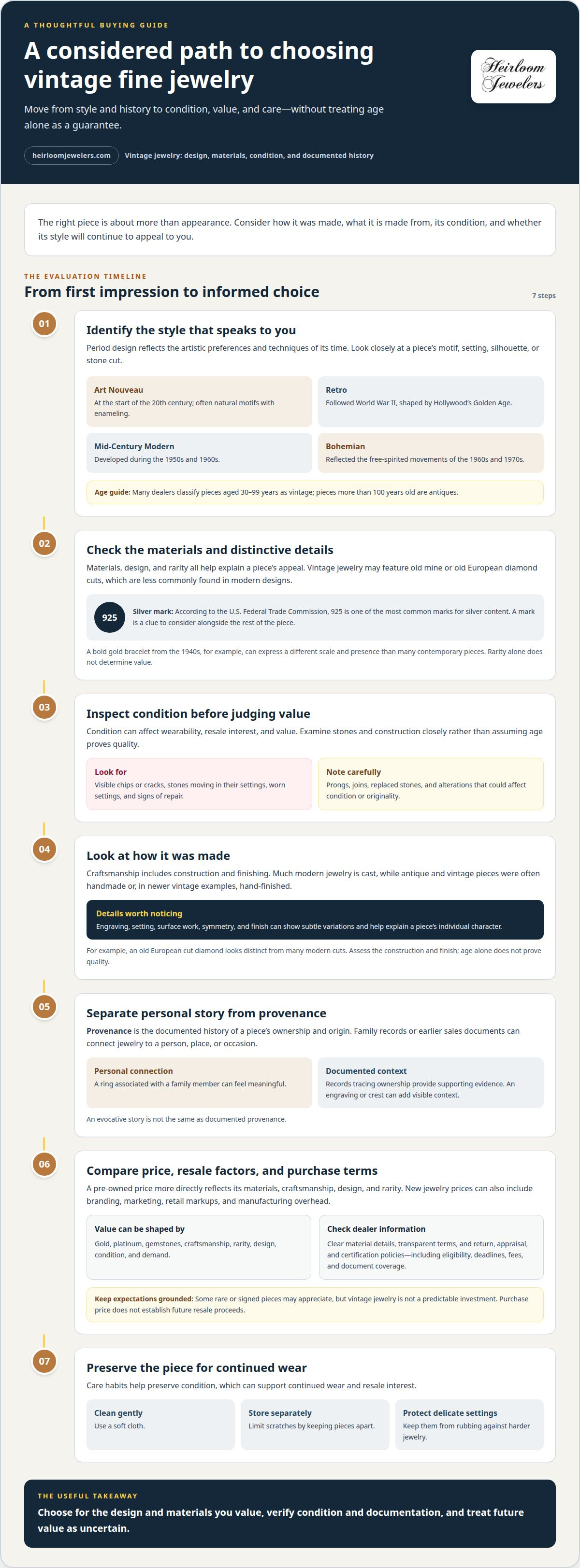
Vintage jewelry carries the design language of its era, from its silhouettes to its stone cuts. Many dealers classify pieces aged 30 to 99 years as vintage, while pieces more than 100 years old are antiques.
Distinctive Period Designs
Period design means that a piece reflects the artistic preferences and techniques of the time when it was made. Art Nouveau emerged at the start of the 20th century, often pairing natural motifs with enameling. Retro jewelry followed World War II, shaped by Hollywood’s Golden Age. Mid-Century Modern design developed during the 1950s and 1960s, while Bohemian jewelry reflected the free-spirited movements of the 1960s and 1970s. These visual differences help you choose pieces with character rather than a style repeated across current production. Look closely at a motif, setting, or cut; each can reveal a distinctive design tradition.
Historical Rarity
Historical rarity comes from a piece’s age, design, and the fact that its original production belongs to a past era. Vintage jewelry may feature old mine or old European diamond cuts, which are less commonly found in modern designs. A bold gold bracelet from the 1940s, for example, expresses a different scale and presence than many contemporary pieces. Silver marks can also offer a clue about material content: according to the U.S. Federal Trade Commission, 925 is one of the most common marks for silver content. Such details help explain what makes a piece distinctive, though rarity alone does not determine its value.
Provenance and Personal History
Provenance is the documented history of a piece’s ownership and origin. A family record or earlier sales document can connect jewelry to a person, place, or occasion. That history can deepen its meaning, but an evocative story isn’t the same as documented provenance. For example, a ring associated with a family member has a personal connection; records tracing its ownership provide supporting context. Consider the available documentation alongside visible details, such as an engraving or crest. Together, these can make a piece feel personal while grounding its history in identifiable evidence.
Buying Pre-Owned Jewelry vs New Jewelry: Which Is Better?
Long-Term Value and Appreciation
Long-term value describes how a piece’s desirability and resale appeal may change after purchase. Pre-owned jewelry has already undergone much of its initial depreciation, while some rare or signed pieces may appreciate. That possibility may matter if you want a piece with lasting appeal, but it doesn’t make jewelry a predictable investment. Gold, platinum, gemstones, craftsmanship, rarity, and condition all influence value. An antique with an uncommon design may attract different interest from a widely produced style.
Vintage pieces don’t all hold or increase in value. A signed design or rare cut may attract demand, while condition and alterations also affect resale interest. In the United States, insurance cost depends on the piece’s appraised replacement value, the coverage selected, and the insurer’s terms.
Pricing and Resale Value
Pricing reflects what a buyer pays for materials, workmanship, design, and retail costs. New jewelry prices can include branding, marketing, retail markups, and manufacturing overhead. A pre-owned piece’s price more directly reflects its gold, platinum, gemstones, craftsmanship, design, and rarity. Comparing those elements carefully can clarify whether a particular piece offers value for your budget, rather than relying on age alone. Resale value also depends on condition and demand, so an attractive purchase price does not establish future proceeds.
Common risks include worn settings, repairs, replaced stones, or undisclosed alterations that affect condition or originality. Dealer reputation is reflected in clear descriptions, documented material details, and transparent terms, not simply in a claim of expertise. Return, appraisal, and certification policies should explain eligibility, deadlines, fees, and which details a document covers.
For care, clean a piece gently with a soft cloth and store it separately to limit scratches. Keep delicate settings from rubbing against harder jewelry. These habits help preserve the condition that supports continued wear and resale interest.
What Makes Vintage Jewelry a Smart Investment Right Now?
Vintage jewelry can appeal through its construction, materials, and distinctive details. These qualities may support lasting interest, but they don’t guarantee financial returns.
Inspect diamonds and gemstones for visible chips, cracks, or movement in their settings. Look closely at prongs and joins, and note any signs of repair or alteration, since condition affects wearability and value.
Craftsmanship and Hand-Finished Details
Craftsmanship describes how a piece was made and finished, including the care shown in small details. Much modern jewelry is cast, while antique and vintage pieces were often handmade or, in newer vintage examples, hand-finished. These methods can produce subtle variations in engraving, setting, and surface work. Noticing these details helps explain a piece’s character and what you’re paying for beyond its materials.
An old European cut diamond, for example, looks distinct from many modern cuts. Hand-finishing can also leave details that make a piece feel individual rather than uniform. Examine the symmetry and finish without assuming age alone proves quality. Careful attention to construction gives you a more useful basis for judging a piece’s appeal and condition.
Materials, Rarity, and Durability
Materials and setting construction influence both durability and a vintage piece’s appeal. Some older fine jewelry has thicker gold, heavier settings, and stones set more securely than much modern mass-produced jewelry. Modern production often prioritizes lower material weight, so assess the individual piece rather than using age as a shortcut. A robust setting may support regular wear, while worn prongs or a loose stone warrant caution.
Older designs may feature settings and antique cuts that are no longer produced, adding rarity and distinctive character. Gold crafted years or decades earlier may cost less than the current market rate for its materials, though that doesn’t ensure future appreciation. Vintage makes the most sense when the craftsmanship, materials, condition, and design suit your priorities. Let visible construction and the stone’s condition guide your assessment.
Environmental benefits of buying vintage
Mining precious metals and gemstones requires significant resources. Buying vintage keeps an existing piece in use and can reduce demand for newly mined gold and diamonds.
The environmental value comes from choosing jewelry already made, rather than requiring new materials for your purchase. A vintage diamond ring, for example, gives an existing stone and setting another use. The same principle applies to gold earrings or a gemstone pendant. This choice doesn’t make the piece impact-free, but it avoids creating new demand for materials simply to acquire jewelry.
That distinction matters because jewelry production depends on mined materials. Gold, platinum, diamonds, and colored gemstones are extracted before they become finished pieces. Choosing pre-owned jewelry supports continued use of those existing materials. It also gives a distinctive design a place in a new wardrobe, rather than leaving it unworn or replacing it with a newly produced equivalent.
Vintage jewelry can carry styles across generations. Estate earrings or an older diamond setting can remain wearable as modern tastes change. Keeping these pieces in circulation extends their useful life and preserves the work already invested in their materials and construction. The practical environmental benefit is to use what already exists before creating demand for newly mined materials.
For a considered choice, look beyond age to condition, materials, and whether the design suits your regular wear. A durable piece that remains in use offers a clearer second-life benefit than one bought and quickly set aside. Buying pre-owned is one way to align personal style with reduced demand for new mining, without assuming every vintage purchase has the same environmental impact.
Explore vintage fine jewelry and consider how an existing design can become part of your own collection.
Heirloom Jewelers
Heirloom Jewelers offers a curated selection of authenticated estate and vintage fine jewelry for readers drawn to distinctive design, enduring materials, and historical character. Its offerings include diamond pieces in white gold and platinum, an emerald and diamond necklace, and estate gemstone earrings. These examples let you explore different settings, stones, and styles while considering what matters most in a pre-owned piece.
Turn to Heirloom Jewelers when you’re ready to explore vintage and estate jewelry as a personal choice, not simply an investment decision. Consider design, materials, and craftsmanship alongside the history and environmental value discussed here. The curated collection features vintage and estate pieces, each with its own character.
Contact Heirloom Jewelers to discuss your interest in vintage fine jewelry.
Choose a Piece with Meaning
The benefits of buying vintage fine jewelry go beyond ownership: a thoughtfully chosen piece can reflect your taste, carry history forward, and keep existing materials in use. Let personal meaning guide your decision alongside condition, craftsmanship, and how the piece fits your life. A vintage jewel need not be an investment to be valuable to you.
Heirloom Jewelers offers pieces with distinct character, including a Lugano Emerald & Diamond Necklace 18K White Gold, Vintage White Gold Old European Cut Diamond Stud Earrings, and a Vintage Platinum 0.5 Carat Diamond Engagement Ring. Each gives you a different way to consider period style, gemstones, and precious-metal settings. Choose the qualities you’ll appreciate wearing and living with over time.
Ready to take the next step? Contact Heirloom Jewelers to explore vintage fine jewelry and share what matters most in your search. The right choice can connect your own story with the history already held in a beautifully made piece.
Frequently Asked Questions
Final Thoughts: Pre-Owned vs New, Which Should You Choose?
What are the benefits of buying vintage fine jewelry?
The benefits of buying vintage fine jewelry include access to designs and details that differ from current production, along with the chance to wear a piece with a past. Buying pre-owned also keeps existing jewelry in use and can reduce demand for newly mined materials. The appeal may be aesthetic, personal, or environmental, depending on what you value most.