
What makes a necklace feel connected to another era, rather than simply styled to look old? Vintage gemstone necklaces can be difficult to assess at first glance. A striking stone may catch your eye, while questions about its setting, metal, age, and condition make the choice less certain. Looking at those details together can help you understand a piece’s character and decide whether it suits you.
You don’t need to be an expert to compare necklaces thoughtfully. Start with the gemstone and its setting, then consider the design, metal, condition, and information provided about the piece. This guide explains what to look for and how to distinguish a period influence from evidence of age or authenticity. Heirloom Jewelers’ curated estate jewelry, including the Lugano Emerald & Diamond Necklace in 18K White Gold, offers a specific example of gemstones set in fine materials.
Key Takeaways
- Vintage gemstone necklaces are defined by more than their stones. Design details and workmanship can help distinguish an original older piece from a vintage-inspired design.
- Compare pendant, cluster, and multi-stone designs by their focal point and visual balance to find a style that suits how you like to wear jewelry.
- Consider a gemstone’s color, cut, transparency, and natural variation together rather than relying on one feature alone.
- Review photos alongside the description, paying attention to the setting, metal, visible wear, and any documented history.
- Heirloom Jewelers offers curated, authenticated estate and vintage fine jewelry, including the Lugano Emerald & Diamond Necklace in 18K White Gold.
What Makes Vintage Gemstone Necklaces Distinctive?
Vintage gemstone necklaces are original, pre-owned necklaces from an earlier period. Their appeal can come from the design and workmanship of their time as well as from their gemstones. That’s different from newly made vintage-inspired jewelry, which borrows historical details but was produced more recently. An older piece has its own material history; a vintage-inspired design interprets the past in a new object.
A vintage necklace is an original, pre-owned piece from an earlier period; a vintage-inspired necklace is newly made jewelry designed to evoke the past. This distinction is a useful starting point, but an age label alone doesn’t establish a piece’s exact history or authenticity.
Vintage, antique, and vintage-inspired: what is the difference?
“Vintage” generally describes jewelry associated with an earlier period, while “antique” usually signals greater age. There isn’t one cutoff that every seller or specialist applies in the same way. Look for a description that gives context beyond the label, such as a known period, maker, or documented ownership history where available.
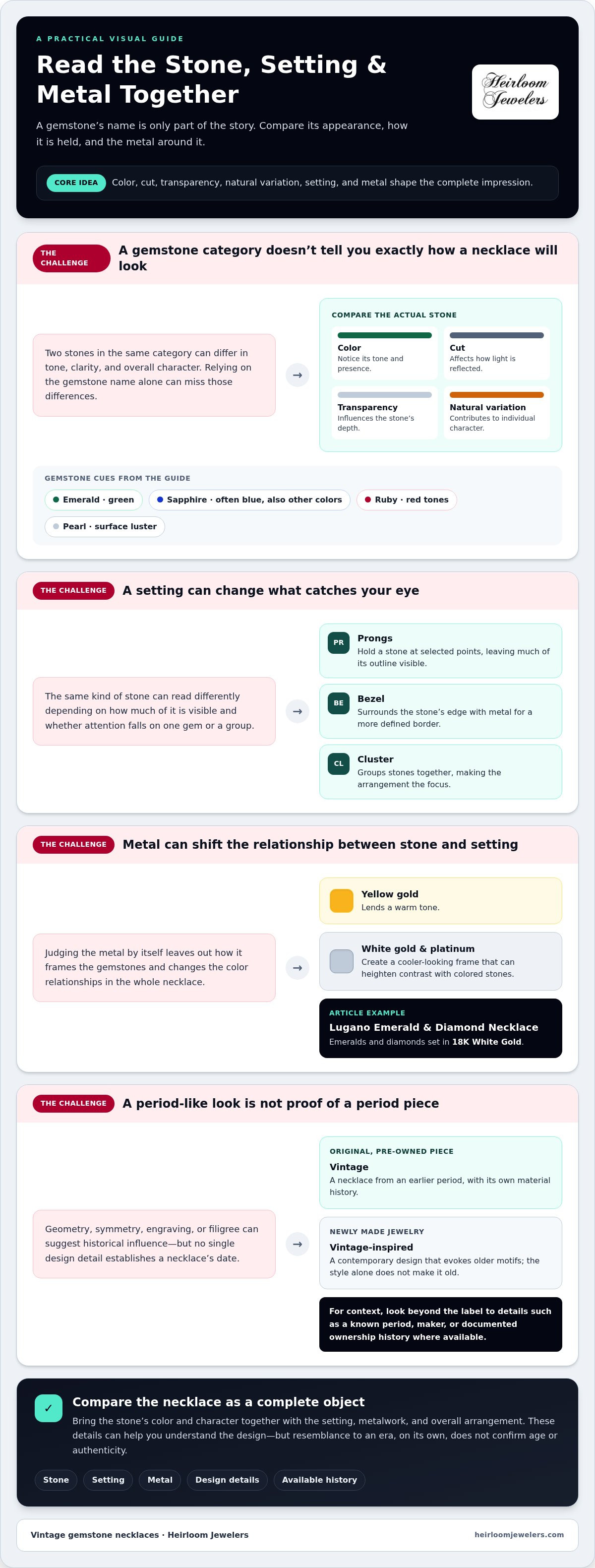
Vintage and antique refer to the age or historical character of an original piece. “Vintage-inspired,” by contrast, describes a design influence, not the age of the jewelry. A newly made necklace can echo older motifs without having been crafted in the period it references. Keeping the terms distinct helps you compare an original earlier object with a contemporary interpretation.
Why gemstone necklaces reflect their era
Design choices can offer clues to a necklace’s influences. Consider the shapes and cuts of the stones, how they sit in their settings, the use of symmetry, and details such as engraving or filigree. Metalwork contributes to the overall effect, too. A fine, delicate framework looks different from a substantial setting. These features are most useful when considered together, since no single detail establishes a piece’s date by itself.
Art Deco is a recognizable design reference often associated with strong geometry, orderly arrangements, and crisp contrasts. Those qualities can describe a necklace’s visual style, but resemblance to a period isn’t proof that a particular piece comes from that era. For broader context on historical motifs, see the Art Deco jewelry guide. The wider history of jewellery also shows how materials and techniques have varied across cultures and eras.
That variety gives each necklace its individuality. Two pieces with similar gemstones may feel entirely different because one emphasizes a single focal stone while another uses repeated forms or intricate metalwork. Look at how the stones and metalwork work together to appreciate the necklace as a complete object, not simply a gemstone attached to a chain.
How Gemstones, Settings, and Metals Shape a Vintage Necklace
Stone, setting, and metal combine to shape a necklace’s overall impression. Color may draw your eye first, but cut affects how a stone reflects light, transparency influences its depth, and natural variation gives each gem its own character. Compare the complete design rather than treating a gemstone’s name as a full description of its appearance.
Gemstone identity tells you what a stone is; its color, cut, transparency, and natural variation, shaped by the setting and metal, determine how it looks in a necklace. Two emeralds, for example, can differ noticeably in tone and clarity. Their appearance also depends on the surrounding metal and how much of each stone is visible above its setting.
Choosing a gemstone by color, character, and preference
Emeralds bring green color and often serve as a vivid focal point. Sapphires are widely associated with blue, though the family includes other colors. Rubies offer red tones, while pearls create a softer effect through surface luster rather than faceted sparkle. Individual stones vary, so consider the actual necklace rather than relying only on the gemstone category.
Decide what role you want the stone to play. A prominent gem can anchor a pendant or draw attention to the center of a design. Smaller stones may provide a subtle accent or create a repeated pattern. If you prefer a clear focal point, compare necklaces where one stone stands out. If you like a more even effect, look at how the smaller stones are arranged and spaced.
How settings and precious metals influence the design
Prongs hold a stone at selected points, leaving much of its outline visible. A bezel surrounds the edge with metal, creating a more defined border. Cluster settings group stones together, shifting attention from one gem to the arrangement as a whole. These settings create different visual effects, and the right comparison depends on the stone and the design you prefer.
Metal changes the color relationships. Yellow gold lends a warm tone, while white gold and platinum create a cooler-looking frame that can heighten contrast with colored stones. The Lugano Emerald & Diamond Necklace in 18K White Gold is one example of emeralds and diamonds set against white gold. Consider how the metal frames the gemstones, rather than judging the metal on its own.
For more context on the materials and details found in estate pieces, Heirloom Jewelers’ guide to heritage jewelry explores the broader subject. The Gemological Institute of America also offers guidance on identifying vintage jewelry. A stone’s identity and appearance are only part of understanding a necklace’s history. To see how these qualities come together in authenticated estate and vintage fine jewelry, explore Heirloom Jewelers’ curated pieces.
How to Compare Vintage Gemstone Necklace Styles
Once you know what draws you to a necklace, compare how its stones are arranged. Some designs concentrate attention in one place; others create a rhythm across the neckline. Focal point, visual balance, and scale provide practical ways to compare styles without assuming one is best for everyone.
Pendant, cluster, and multi-stone designs
A pendant usually gives the eye one clear destination, such as a central gemstone or motif. Cluster designs group stones into a compact composition, creating a broader focal area. Multi-stone necklaces distribute color or detail along the chain, so the eye moves across the design instead of settling on a single center.
| Design | Focal point and balance | Styling character |
|---|---|---|
| Pendant | One central element anchors the look, often with open space around it. | Defined and direct, with attention drawn to the neckline’s center. |
| Cluster | Several stones form a concentrated focal area, which may read as one larger motif. | Decorative and composed, with detail gathered in one place. |
| Multi-stone | Color and visual weight extend along more of the necklace. | Rhythmic and expressive, with repeated details across the neckline. |
Scale affects the impression as much as arrangement. A small pendant can feel understated, while a larger one may become the defining element of an outfit. A compact cluster gathers detail in one place; stones spaced along a necklace create a more expansive effect. Consider how much visual emphasis you enjoy and whether the necklace works with the collars, necklines, and other jewelry you wear often.
Matching period character to everyday or occasion wear
Motifs can help you identify a style direction. Geometric lines, floral details, and repeating forms each create a distinct mood. They may suggest a period influence, but a motif alone can’t establish when a specific necklace was made. Treat it as a guide to visual preference, not proof of age or origin.
For everyday wear, consider whether the necklace’s scale and detail suit your usual wardrobe. A restrained design may work with a wider range of outfits, while an ornate motif can bring a more formal impression or serve as a statement. Think about the occasions you have in mind, the necklines you favor, and whether you want the necklace to complement an outfit or lead it.
Vintage gemstone necklaces can differ greatly, even when they share a similar arrangement. Compare the overall silhouette, spacing between stones, and how strongly the design draws the eye. These practical visual cues help you choose a piece that feels personal and fits the way you dress.
What to Check Before Buying a Vintage Gemstone Necklace
A careful review goes beyond first impressions. Read the description closely, study the photographs, and distinguish stated details from information that is unknown. Use this checklist to compare vintage gemstone necklaces while remembering that images alone can’t establish a gemstone’s identity, a necklace’s age, or its authenticity.
Assessing the gemstone, setting, and visible condition
- Stone appearance: Look for a description of the gemstone and photographs that show its color, cut, transparency, and natural variation. Views from more than one angle can reveal details a single image may not show.
- Setting: Examine how the stone is held and how the setting meets the surrounding metal. Photos may show visible gaps, unevenness, or areas that deserve attention, but they can’t confirm that a setting is secure.
- Metal: Check whether the description identifies the metal and its stated fineness. Hallmarks or other marks may appear in close-up photographs, but a photograph alone doesn’t verify metal content.
- Condition: Look for disclosed wear, scratches, chips, or repairs. Distinguish age-related character, such as surface patina, from damage or another condition concern. A photo may not show every flaw, so read the written description alongside the images.
- Available history: Note any documented information about the maker, period, or past ownership. Treat details not supported by the description or accompanying records as unknown rather than filling gaps with assumptions.
Photographs and product descriptions are most useful together. Images help you examine visible details, while written information can explain materials, condition, and what is known about the piece. Neither replaces the other. If a detail matters to your decision but isn’t addressed, don’t assume an answer from appearance alone.
Understanding provenance and supporting details
Provenance is the documented history or background associated with a piece. It might include records identifying a maker or tracing past ownership, but not every necklace has an extensive record. A clear account distinguishes what documentation supports from what is suggested by style or appearance. A period resemblance can inform your interest, but it doesn’t establish a date or maker by itself.
The Lugano emerald and diamond necklace is a specific example of an estate necklace described by its named gemstones and 18K white gold. Heirloom Jewelers specializes in curated, authenticated estate and vintage fine jewelry. Explore Heirloom Jewelers’ curated vintage jewelry as you consider which details matter most to you.
Explore Vintage Gemstone Necklaces with Heirloom Jewelers
A thoughtful choice brings several preferences into focus. Consider which gemstone colors appeal to you, whether you prefer a single pendant or a more distributed design, and how the metal tone fits your wardrobe. Then consider the necklace’s visible condition and the background documented for it. These details help you compare individual pieces on their own merits, rather than expecting every vintage necklace to share the same materials, history, or style.
A curated approach to estate and vintage jewelry
Heirloom Jewelers is an independent retailer specializing in curated, authenticated estate and vintage fine jewelry. Its collection focuses on pre-owned pieces with distinct design and material character. Authentication is one part of understanding a piece; your preferences still guide which details matter most to you.
As you browse, keep your priorities in view. You may be drawn to a particular gemstone, a setting that gives it prominence, or a metal that complements its color. You may also care about condition or the history available for an individual piece. There’s no single combination that suits everyone. Look for a necklace whose known details and overall character feel right for your taste.
Use the criteria in this guide as a practical lens, not a rigid formula. A vivid stone may catch your attention, while the design’s scale or the contrast between metal and gemstone may be what makes the piece distinctive. Consider those elements together, and evaluate each necklace on its own details.
A confirmed emerald and diamond necklace example
The Lugano Emerald & Diamond Necklace 18K White Gold is a specific piece in Heirloom Jewelers’ offerings. Its name identifies emeralds, diamonds, and 18K white gold, giving you a concrete starting point for considering gemstone preference and metal tone. For more item-specific context, visit the Lugano emerald and diamond necklace feature.
This necklace is one example, not a template for all vintage gemstone necklaces. Other estate and vintage jewelry can differ in gemstone, construction, design, condition, and documented background. Read the details of each piece individually, then use what you’ve learned about stones, settings, style, and records to decide what appeals to you.
Ready to browse with your preferences in mind? Explore Heirloom Jewelers’ vintage fine jewelry. Compare each piece’s details and let its own character guide your choice.
Choose a Piece That Feels Personal
The right necklace isn’t simply one that catches your eye. It’s one whose character feels at home with your taste and the way you want to wear it. As you explore vintage gemstone necklaces, notice which details draw you in and which pieces you can imagine returning to over time.
Heirloom Jewelers specializes in curated, authenticated estate and vintage fine jewelry. The Lugano Emerald & Diamond Necklace 18K White Gold is one example, with its name identifying its gemstones and metal. Use it as a starting point as you discover the qualities that matter most to you.
Take time to compare the design, materials, and details available for each piece. Explore Heirloom Jewelers’ curated vintage fine jewelry and find a necklace that feels distinctly your own.
Frequently Asked Questions
What is the difference between a vintage and an antique gemstone necklace?
A vintage necklace is generally from an earlier period, while antique usually refers to a piece of greater age. There’s no single age cutoff applied consistently by every seller or specialist, so the terms alone may not establish a precise date. Look for a description that explains the basis for the label, such as documented history or a known maker, rather than relying on the word “antique” by itself.
Are vintage gemstone necklaces made with real gemstones?
Some are, but “vintage” describes a piece’s age or style, not the identity of its stones. A necklace may contain natural or lab-created gemstones, imitations, or a combination of materials. Pearls may also be cultured or natural. Read the description for specific stone information and treatments. If it uses a general term such as “green stone,” don’t assume that means emerald without supporting details.
How can I tell if a vintage gemstone necklace is authentic?
No single visual clue proves a necklace is authentic. Hallmarks, maker’s marks, construction details, and records can each offer useful evidence, but marks may be worn, incomplete, or difficult to interpret. A newer piece can also borrow an older style. Look for an account that distinguishes documented facts from estimates, and treat photographs as supporting evidence, not definitive proof of age, maker, or gemstone identity.
Which gemstones are commonly found in vintage necklaces?
Vintage necklaces may feature emeralds, sapphires, rubies, pearls, garnets, amethysts, or other colored stones. The choice often reflects the design’s palette and arrangement, rather than a fixed list associated with every period. A necklace might use one saturated stone as its centerpiece or combine small gems in a repeated pattern. Check each description carefully, since similar colors can come from different gemstones or imitations.
How do I assess the condition of a vintage gemstone necklace?
Check the chain links, clasp, and points where the setting meets the stone, as well as the gem’s surface for chips or abrasions. Look for missing accent stones, bent components, or visible repairs in close-up images. A necklace that appears intact in a photograph may still have hidden wear, so don’t treat an image as a hands-on test. Compare the written condition notes with the views provided.
Can I wear a vintage gemstone necklace every day?
Possibly, but suitability depends on the specific stone, setting, chain, and condition. A low-profile pendant may fit your daily routine better than a design with exposed details that could catch on clothing. Consider your activities and how often the necklace might be pulled or knocked. Vintage gemstone necklaces don’t all have the same durability, so base everyday use on the individual piece, not its age label.
How should I care for a vintage gemstone necklace?
Use gentle care suited to the specific stones and construction. Wipe the necklace with a soft, dry cloth after wearing, then store it separately to reduce contact with other jewelry. Avoid household cleaners and don’t assume ultrasonic or steam cleaning is appropriate, especially when the stone or setting is unfamiliar. Pearls and treated gems can have different care needs, so follow guidance specific to the materials in your necklace.