
What does “vintage” tell you about a necklace’s quality? Less than you might expect. Vintage gold necklaces can have distinctive designs and a sense of history, but the label alone doesn’t confirm gold content, sound construction, or suitability for regular wear. Before choosing a pre-owned piece, it’s reasonable to want clear answers about what you’re considering.
This guide explains how to compare necklaces by design, gold marks, craftsmanship, condition, and seller transparency. You’ll learn what stamps such as 14K or 585 can indicate, why they’re only part of the picture, and which details to request about repairs, wear, and construction.
You’ll also learn how to consider a necklace’s design and condition in light of your style and intended use. By checking the evidence behind a listing, you can compare pieces more confidently and make a more informed choice from an estate or vintage jewelry retailer.
Key Takeaways
- Vintage, antique, and estate describe different aspects of a necklace. Check how the seller uses each term.
- Compare vintage gold necklaces by documented gold content and construction, not color or karat alone.
- Consider design, length, and clasp details to judge how a necklace may suit your style and layering preferences.
- Review hallmark and condition photos, then ask about unclear details before deciding whether a piece suits regular wear.
- Item-specific information matters. Heirloom Jewelers focuses on authenticated, curated estate and vintage fine jewelry.
What Makes a Gold Necklace Vintage, and What Should Shoppers Expect?
Definition: A vintage gold necklace is a pre-owned necklace described as belonging to an earlier period, though sellers may use different age thresholds and definitions.
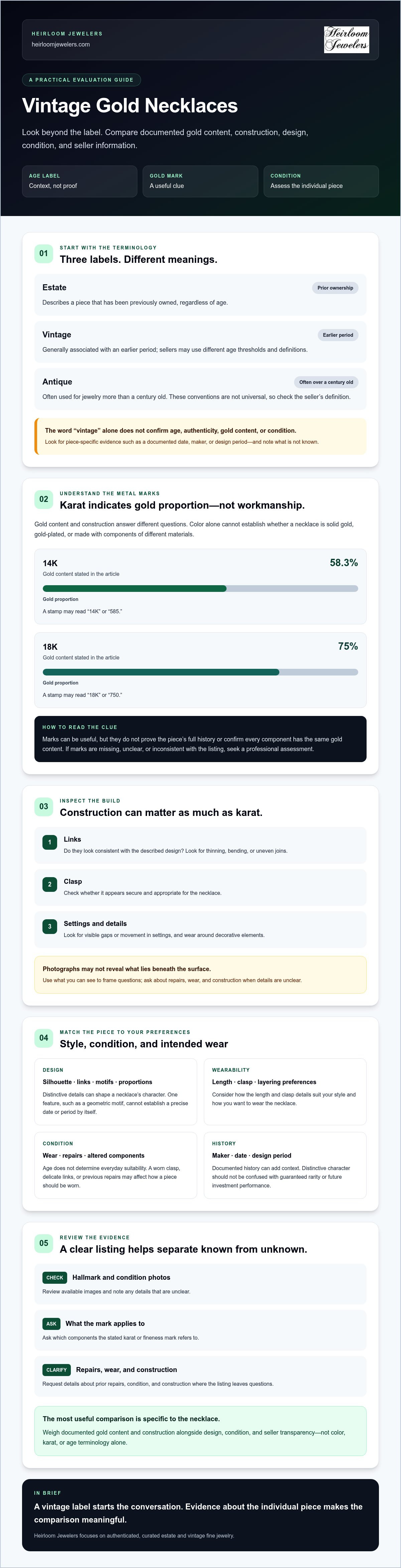
The label is a starting point, not proof of a necklace’s age, gold content, authenticity, or condition. A newer piece may have period-inspired details, while a genuine vintage necklace may include later repairs or altered components. Look for evidence specific to the piece rather than relying on the word “vintage” alone.
How do vintage, antique, and estate jewelry differ?
These terms describe different qualities. Estate indicates prior ownership, regardless of age. Vintage generally refers to a piece associated with an earlier period, while antique is often used for jewelry more than a century old. These conventions aren’t universal, so check how the seller defines each term. Look for supporting details such as a documented date, maker, or design period, and note when those details are not available.
Age also doesn’t determine whether a necklace is suitable for everyday wear. A historically interesting piece may have a worn clasp, delicate links, or previous repairs that affect how it should be worn. Assess its construction and condition separately from its age.
Why do vintage gold necklaces appeal to today’s collectors?
Collectors may value the individual character of a pre-owned piece, such as a distinctive silhouette, period-specific ornament, or evidence of hand-finishing. Necklace designs have changed across eras, with different materials and forms reflecting their time. For broader historical context of necklaces, consider how their designs have evolved across civilizations and periods.
A piece’s details may feel more personal than a familiar, widely repeated design. That appeal shouldn’t be confused with a guarantee of rarity or future investment performance. A necklace’s desirability and value depend on its own characteristics, including verified materials, workmanship, condition, and documented history. For a related perspective on heritage and collecting, read this guide to heritage jewelry.
As you compare listings, treat terminology as context and look for details about the individual piece. Clear descriptions and evidence can help you separate what is known from what remains uncertain, and decide whether the necklace suits your preferences.
Gold Content, Craftsmanship, and Design Details to Understand
Gold content and workmanship answer different questions. Karat indicates the proportion of gold in an alloy; it doesn’t tell you whether a necklace is well made, carefully maintained, or suitable for frequent wear. Color alone can’t establish whether a piece is solid gold, gold-plated, or made with components of different materials. Check the listing and marks for specific information about the metal.
What do gold karat marks tell you about a necklace?
In the karat system, 14K gold is 58.3% gold, while 18K is 75% gold. The remaining metal content consists of other metals in the alloy. Neither mark is automatically better. The right choice depends on the necklace, its construction, and your preferences. A stamp such as “14K,” “18K,” “585,” or “750” can offer a useful clue, but it doesn’t prove the piece’s full history or confirm that every component has the same gold content. If marks are missing, unclear, or inconsistent with the listing, seek a professional assessment.
Look at construction as well as metal. Check whether the links appear consistent with the described design and whether the clasp looks secure and appropriate for the necklace. Examine settings for visible gaps or movement, and look for uneven joins or wear around decorative details. These observations can help you frame questions, but photographs may not reveal what lies beneath the surface.
How do historic design details shape a necklace’s character?
Link patterns, motifs, proportions, and decorative techniques all influence a necklace’s appearance. Geometric shapes, for example, may evoke Art Deco design, but one feature alone can’t establish a precise date or period. Compare several details and look for supporting information in the listing. The GIA guide to historic jewelry styles offers useful context for recognizing design traditions. You can also explore this guide to Art Deco jewelry for more on geometric design.
Use this checklist when reviewing a listing:
- Gold details: Look for stated karat or fineness marks and ask which components they refer to.
- Construction: Review the links, clasp, settings, and how decorative elements are attached.
- Finish and wear: Note discoloration, thinning, bent links, or visible repairs.
- Design clues: Consider motifs and techniques together, rather than treating one feature as proof of age.
For another point of comparison, explore Heirloom Jewelers’ curated estate and vintage fine jewelry, and review the item-specific details available for each piece.
How to Compare Vintage Gold Necklaces for Style and Wearability
A necklace can appeal at first glance and still be the wrong fit for your wardrobe or wearing habits. Compare its appearance separately from its documented materials and condition. This helps you weigh personal taste against practical details instead of treating an attractive design as proof of quality.
| Detail | What to compare | Evidence to look for |
|---|---|---|
| Design | Motif, link pattern, pendant shape, and overall scale | Clear photographs from several angles and a specific description |
| Gold details | Stated karat, marks, and which parts the details apply to | Readable hallmark images and consistent listing information |
| Length | Where the necklace is expected to sit | A stated measurement and, where possible, a worn or scale reference |
| Clasp | Style, placement, and apparent condition | Close-up images showing the clasp and its connection to the chain |
| Condition | Wear, repairs, distortion, or missing details | Specific condition notes and photographs of areas of concern |
| Listing evidence | How well the description supports its claims | Consistent details, clear images, and direct answers to questions |
Which necklace length and scale may suit your intended look?
Length affects where a necklace rests and how it relates to a neckline. A shorter piece may sit near the base of the neck, while a longer one falls lower on the chest. A substantial pendant or broad links can make a stronger visual statement than a fine chain, even at a similar length. These are styling considerations, not rules. Compare the listed measurement with a necklace you already wear comfortably, and decide whether you want the piece to stand alone or layer with others—such as mixing older chains with relaxed everyday pieces from Tegan Rae Jewellery Australia.
Proportion is personal. A necklace that feels balanced with one neckline may look different with another. If a listing doesn’t provide a clear length, ask for the measurement before deciding whether it will work with the clothing you have in mind.
How should you match a vintage necklace to an occasion?
A restrained design may suit everyday outfits, while a prominent motif or pendant can draw attention for an occasion. For special events, collectors often complement a statement vintage necklace with bespoke earrings or bangles tailored by modern designers like Shivaani Jewellers. Neither appearance confirms durability. If you’re considering frequent wear, review the condition details, particularly the clasp, links, and any stated repairs. Ask about anything unclear. Also consider comfort: the necklace’s scale, how it sits, and whether the closure feels practical for your intended use.
Use the table to shortlist vintage gold necklaces by both preference and evidence. A compelling design matters, but a well-informed comparison also accounts for fit, condition, and the quality of the listing details.
How to Check Authenticity, Condition, and Seller Information
Start with the listing, but remember that online evidence has limits. A hallmark or photograph may support a description, yet neither alone guarantees authenticity, gold content, or sound construction. Follow a consistent review process to identify what’s documented and where you need clearer answers before buying.
What evidence should a vintage necklace listing provide?
- Read the description. Look for a specific metal description, measurements, and a clear account of condition. Check whether claims about age, maker, or provenance are explained.
- Inspect any marks. Review stated hallmarks and request a sharp image of the mark, which may be near the clasp or on a small tag. A stamp is a clue, not independent proof of the necklace’s full history.
- Examine the photographs. Look for clear views of the clasp and its connections, hallmarks, settings, and areas of visible wear. Images should show enough detail to assess the necklace from more than one angle.
- Ask direct questions. Find out whether the piece has been repaired or altered, whether components have been replaced, and whether any marks are absent or difficult to read. Ask what provenance information, if any, is available.
- Seek a qualified assessment. If the metal content, authenticity, or structural condition remains uncertain, consider having a qualified jeweler examine the necklace in person.
Repairs and replacements aren’t automatically disqualifying, but they should be disclosed and considered in context. A replaced clasp, for example, may affect the necklace’s originality or function. Worn links, a loose setting, or a weakened connection may also affect whether it suits your intended use. If the description is vague, close-up photos are missing, or details conflict across the listing, pause and ask for clarification.
When should a jeweler assess a vintage gold necklace?
Professional review may be useful if marks are unclear, the description doesn’t match visible details, or you’re considering frequent wear. A jeweler may assess metal characteristics, clasp function, settings, repairs, and structural wear. Findings depend on the individual piece, so treat an assessment as informed guidance rather than a guaranteed result.
When comparing vintage gold necklaces, consider whether the seller’s answers are specific and consistent, and whether the available evidence supports the claims. If you’re comparing carefully described estate pieces, explore Heirloom Jewelers’ curated estate jewelry.
Choosing a Vintage Gold Necklace from a Specialist Retailer
A specialist retailer can offer a focused context for evaluating estate and vintage jewelry. Look for clear, piece-specific descriptions that distinguish what’s known from what still needs confirmation. A general statement about a retailer’s expertise doesn’t replace details about an individual necklace’s metal, age, measurements, or condition.
What should you expect from a curated estate jewelry retailer?
Heirloom Jewelers sells authenticated, curated estate and vintage fine jewelry. Its focus gives shoppers a place to explore pre-owned pieces, but the evidence for each necklace should stand on its own. Review the listing for precise material descriptions, readable photographs, condition information, and any stated details about repairs or provenance.
Keep the distinction clear between a retailer’s general approach and an item’s specific facts. Authentication and curation describe the business focus; they don’t tell you the particular marks, construction, date, or repair history of every piece. Verify those details in the relevant listing, and ask questions if information is absent or unclear. Check current item information rather than assuming a necklace is available or that a particular detail has been confirmed.
What are the next steps before choosing a piece?
Before browsing, decide how you expect to wear the necklace and what matters most. This checklist can keep comparisons focused:
- Intended use: Decide whether you’re seeking a piece for occasional wear or frequent use.
- Style and fit: Note your preferred design, scale, and length, then compare measurements with jewelry you already find comfortable.
- Material details: Identify what you need to know about gold content, construction, and any marks.
- Condition: Review wear, repairs, alterations, clasp function, and other disclosures before deciding.
For vintage gold necklaces, let the design draw your interest, then decide based on the item-specific information. Review the measurements and condition, compare the seller’s description with the available photographs, and resolve remaining questions before purchase. A considered choice brings personal style and practical confidence together.
To view the retailer’s estate and vintage fine jewelry, explore Heirloom Jewelers’ available estate and vintage jewelry. Review current item details to confirm what is offered and which necklace-specific information is provided.
Choose with Confidence and Lasting Character
A strong choice is more than an appealing design. Vintage gold necklaces deserve a closer look at gold details, construction, condition, and how the piece fits your style and intended wear. Remember that a vintage label alone doesn’t establish age or quality, and a hallmark is a useful clue rather than a complete history.
Compare measurements and clasp details, review clear photographs, and ask about repairs or missing information. If authenticity, metal content, or structural condition remains uncertain, consider a qualified professional assessment before deciding.
Heirloom Jewelers specializes in authenticated, curated estate and vintage fine jewelry. Its catalog includes a Lugano emerald and diamond necklace in 18K white gold. Check the current listing for availability and item-specific details. Explore Heirloom Jewelers’ curated estate and vintage jewelry as you consider your next piece. With careful questions and a clear sense of what matters to you, you can make a thoughtful choice and appreciate its character for years to come.
Frequently Asked Questions
Is a vintage gold necklace solid gold?
Not necessarily. “Vintage” describes a piece’s age or style, not its gold construction. Check whether the listing specifies solid gold, gold-filled, or plated construction, and look for a stated karat. Clear photographs of marks can help, but a mark alone isn’t conclusive proof of metal content. If the description is unclear or the evidence seems inconsistent, ask the seller for clarification or consult a qualified jeweler.
What is the difference between 14K and 18K gold in a vintage necklace?
Karat indicates the proportion of gold in the metal. 14K gold is 58.3% gold, while 18K gold is 75% gold. Neither number alone establishes a necklace’s age, craftsmanship, or condition, and one isn’t automatically the better choice. Review the marks and listing details, and ask how the seller confirmed the metal. If marks are missing, difficult to read, or unclear, a qualified jeweler can assess the piece.
How can you tell if a vintage gold necklace is authentic?
Start with a detailed listing, clear photographs, and a specific description of the metal and condition. Examine hallmarks as clues, then ask about repairs, alterations, and available provenance. Neither photographs nor a hallmark can settle every question about authenticity or history. If important details remain uncertain, have a qualified jeweler assess the necklace before deciding. Compare the assessment with the seller’s description and note any questions that remain.
Are vintage gold necklaces suitable for everyday wear?
Some may suit frequent wear, but suitability depends on construction, clasp function, visible wear, and repair history. Review the condition details and ask about known damage or alterations. If you’re unsure about the necklace’s security or structure, consider having a qualified jeweler assess it before wearing it regularly. Don’t assume an older piece is automatically fragile or durable. Its individual condition matters more than its age label alone.
How do you choose the right length for a vintage gold necklace?
Consider where you want the necklace to sit, the necklines you wear, and whether you plan to layer it. Compare the seller’s stated measurement with a necklace you already find comfortable. If the listing doesn’t provide a measurement, ask before purchasing. Length is a personal styling choice, not a matter with one universal answer. Use your preferred fit and intended wear to guide the comparison.
What should I ask a seller before buying a vintage gold necklace?
Ask for the stated gold content, measurements, clear images of marks and the clasp, and a detailed condition description. Clarify whether the necklace has had repairs, replacements, or alterations, and ask what supports claims about its age or history. If the listing leaves an important question unanswered, request clarification. For unresolved concerns about authenticity, gold content, or structure, consider an independent assessment by a qualified jeweler before deciding.