
A vintage ring's hallmark is more than just a stamp; it's a fingerprint of a lost era. While modern jewelry often prioritizes mass production, vintage 18k gold rings represent a time when artisans worked with a higher standard of purity and intent. You might worry that these older pieces are too delicate for daily wear or feel confused by the cryptic symbols etched inside the band. These are valid concerns for any collector who values both history and material integrity.
We believe that every collector deserves to shop with clarity and confidence. This guide will teach you how to evaluate craftsmanship, decode historical hallmarks like the "750" stamp, and understand the specific allure of high-karat estate jewelry. By the end, you'll know how to verify authenticity and choose a reputable jeweler who shares your appreciation for heritage. We'll provide the tools you need to build a collection that stands the test of time.
Key Takeaways
- Understand why 18k gold was the preferred standard for master craftsmanship during the Victorian and Art Deco eras.
- Learn how to locate and decode the historical hallmarks used to verify the authenticity of vintage 18k gold rings.
- Compare the durability and aesthetic qualities of 18k gold with 14k gold and platinum to find the ideal setting for your lifestyle.
- Gain the expertise needed to vet reputable estate jewelers and request the proper authentication documents for high-value acquisitions.
- Discover specialized cleaning and storage techniques that preserve the integrity and luster of high-purity vintage jewelry.
The Enduring Allure of Vintage 18k Gold Rings
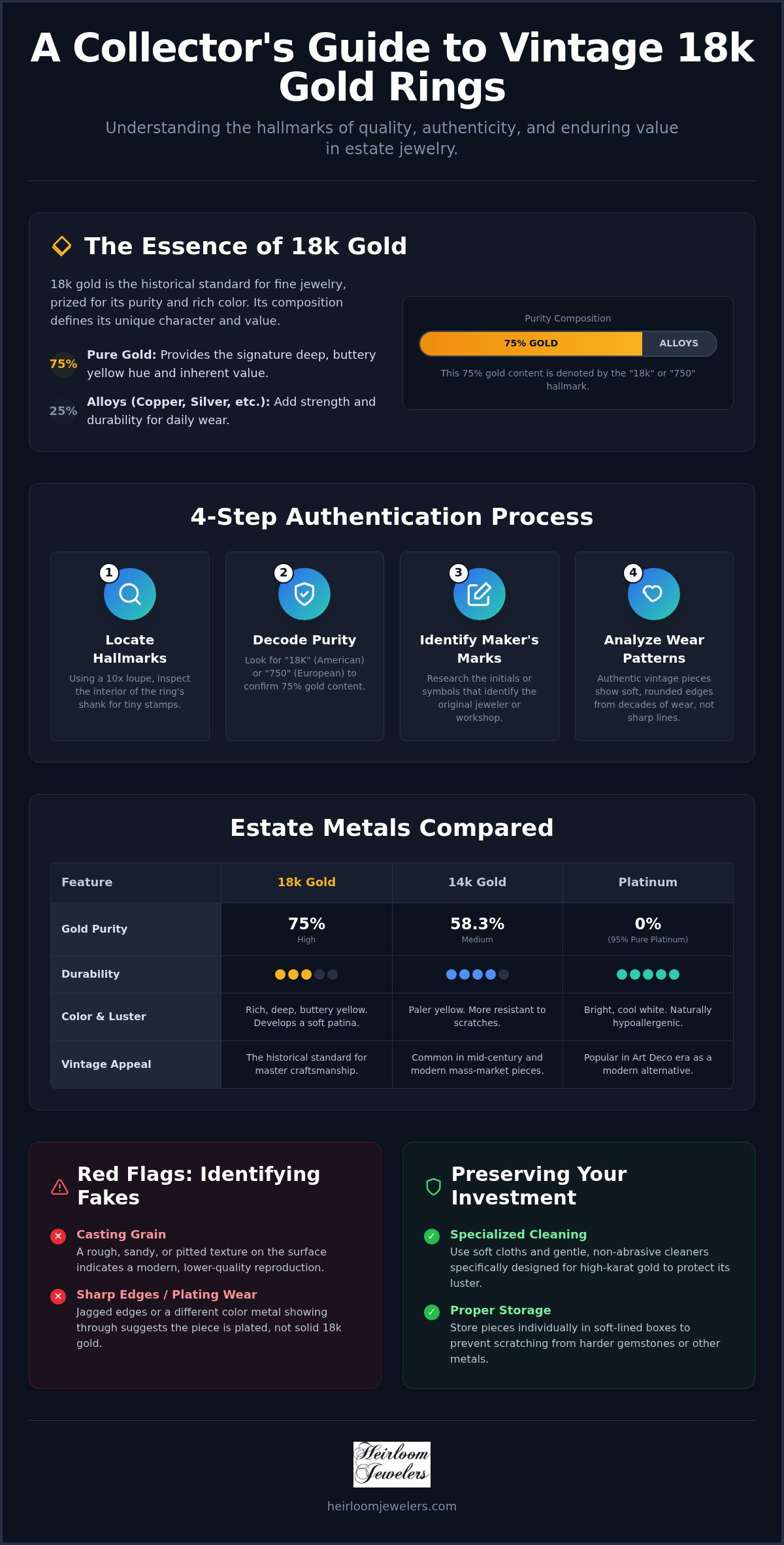
Fine jewelry is often defined by the purity of its components. In the world of high-end estate pieces, 18k gold stands as the gold standard. It contains 75% pure gold alloyed with 25% other metals like copper or silver for added strength. This specific composition creates a rich, buttery color that is instantly recognizable to the trained eye. For those seeking vintage 18k gold rings, the appeal lies in this material density and the historical intent behind the design. It's a tangible legacy that carries the weight of past eras.
Why 18k Gold Defines Estate Quality
Most modern retail jewelry relies on 14k gold for its durability and lower cost. While functional, it lacks the deep saturation found in higher-karat alloys. In previous centuries, 18k gold was a status symbol reserved for the elite. It signaled that a piece was commissioned rather than mass-produced. Finding these high-purity items in excellent condition today requires a discerning eye. The metal's natural tendency to develop a soft patina over time adds a layer of character that new gold lacks. This glow, often called a "bloom," is a hallmark of authentic age. This warmth is particularly evident in aged yellow and rose gold, where the copper alloys react subtly with the environment to create a deep, sunset-like hue. Beyond aesthetics, estate jewelry represents a sustainable choice. It allows collectors to invest in existing beauty rather than contributing to the environmental demands of new mining operations. Every ring tells a story of preservation.
The Historical Context of Gold Craftsmanship
The history of gold craftsmanship is a story of evolving technology. Early Victorian pieces were often hand-forged, a process that required immense skill to manipulate the metal without modern machinery. The malleability of 18k gold made it the perfect medium for the intricate, nature-inspired detailing found in antique rings. As the 20th century approached, the Art Deco movement introduced white gold as a modern alternative to yellow. This shift reflected a change in global fashion and the rise of industrial precision. Artisans began using early die-striking methods, yet they maintained the high standards of the 18k alloy. A key part of collecting is understanding gold hallmarks, which act as a verified record of purity and origin. These stamps ensure that the piece meets the legal standards of the era in which it was created. They bridge the gap between the jeweler's bench and the modern collector's hands.
How to Identify and Authenticate 18k Gold Hallmarks
Authentication is the foundation of any serious jewelry collection. When you examine vintage 18k gold rings, you are looking for physical proof of purity and origin. This process requires patience and a steady hand. Most markings are microscopic, so we recommend using a 10x jeweler's loupe to gain a clear view of the interior surfaces. Following a methodical four step process will help you separate genuine historical artifacts from modern imitations.
First, locate the hallmark. This is typically found on the interior of the ring shank, often near the base. Second, decode the purity marks. You will likely see "18K" in American pieces or "750" in European items, signifying 75% gold content. Third, research the maker's marks. These small initials or symbols identify the specific jeweler or workshop. Under the National Gold and Silver Marking Act in the United States, any quality mark must be accompanied by a registered maker's mark. Finally, analyze the wear patterns. Solid 18k gold is a relatively soft metal that develops soft, rounded edges over decades of wear. If you see sharp, jagged edges or a different color of metal peeking through the surface, the piece may be plated rather than solid gold. For those beginning their journey, viewing a curated collection of authenticated estate jewelry can provide a helpful visual reference for these standards.
Common 18k Markings Across Eras
Hallmarking standards have shifted significantly over the last two centuries. Victorian era pieces often feature complex regional assay office symbols, such as the crown for Sheffield or the anchor for Birmingham. These marks were legally required in the UK for any gold item weighing one gram or more. In contrast, Art Deco rings from the 1920s and 30s moved toward a more streamlined "18K" stamp. These are frequently paired with the signatures of prominent designers from that period. If you encounter a ring marked with the "750" decimal, it likely originated in Europe or was produced for the international market, where this numerical standard is the preferred convention for 18k purity.
Identifying Counterfeits and Reproductions
The secondary market requires a vigilant eye for modern reproductions. One red flag is "casting grain," which appears as tiny pits or a rough, sandy texture on the metal surface. This suggests the ring was made from a modern mold of a vintage original rather than being hand-forged. You should also be wary of stamps like "18K HGE" or "18K GP." These stand for Heavy Gold Electroplate and Gold Plated, respectively, indicating the item is made of a base metal like brass with a thin gold coating. A professional acid test is a non-destructive way for experts to verify gold purity by observing how the metal reacts to specific chemical solutions. These technical details ensure that your investment retains its value and historical significance.
Comparing 18k Gold with Other Estate Metals
Selecting the right metal for a collection involves understanding the balance between purity and performance. In the estate market, 14k gold is often prized for its hardness, containing 58.3% pure gold. However, vintage 18k gold rings offer a significantly higher gold content at 75%. This difference isn't just about value; it's about the visual depth of the metal. The specific alloys used, such as copper for a warm rose tone or silver for a bright yellow, react differently over time. These historical alloys often possess a unique density that modern, mass-produced metals can't replicate.
18k Gold vs. Platinum in Vintage Rings
Platinum is significantly denser and heavier than gold. When you hold a platinum diamond engagement ring, the weight is immediate and substantial. In contrast, 18k white gold feels lighter on the finger. White gold was originally popularized in the early 20th century as a more accessible alternative to platinum's high cost. While platinum is naturally white and develops a "frosted" patina, 18k white gold often requires occasional rhodium plating to maintain its bright, silvery finish. Both metals offer exceptional longevity, but they require different care routines to preserve their original luster over several decades of wear.
The Durability Myth: Is 18k Too Soft?
A common misconception suggests that 18k gold is too delicate for daily wear. While pure 24k gold is indeed soft, the 25% alloy in 18k gold provides ample structural integrity. Historical jewelers often used proprietary alloy blends that were harder than many modern equivalents. This makes vintage 18k gold rings remarkably resilient. When evaluating a piece for your collection, it's essential to inspect the structural health of the setting. Use this checklist to ensure the ring is fit for daily life:
- Examine prongs under a loupe for signs of thinning or uneven wear.
- Check the base of the shank for any hairline fractures or previous clumsy repairs.
- Ensure stones are secure by gently tapping the side of the setting with a fingernail.
- Look for uniform thickness throughout the band to prevent future warping.
In the pre-owned market, 18k gold often retains its value better than lower-karat options. Its higher intrinsic gold content provides a stronger price floor based on the current market value of pure gold. While platinum may carry a higher initial cost, the enduring demand for high-purity gold makes it a stable and sophisticated investment for the long term. This metal choice reflects a commitment to quality that transcends temporary fashion trends.
A Guide to Sourcing Heirloom-Quality Gold Rings
Sourcing vintage 18k gold rings is an exercise in discernment. Unlike modern retail where stock is replenished, estate jewelry involves one-of-a-kind acquisitions. This requires you to vet the jeweler's expertise in the secondary market. A professional curator acts as a bridge between the past and the present. They should provide authentication documentation or third-party appraisals for any high-value item. These documents verify the material purity and confirm the historical era of the piece. You're looking for a specialist who values heritage over a quick sale.
Beyond the paperwork, a physical inspection is vital. Look for "sizing joins" on the interior of the shank. These are subtle seams where a ring was previously adjusted. While resizing is common in vintage pieces, a poorly executed join can weaken the structure over time. You should also understand the return policy. Since these items are pre-owned and unique, a clear warranty or return window provides necessary peace of mind for your investment. It's about establishing a relationship built on transparency and trust.
Evaluating the Sourcing Ethics
Choosing vintage jewelry is a commitment to sustainability. Every purchase of an 18k gold ring avoids the environmental impact of new mining operations. It's a form of recycled luxury that honors existing craftsmanship. This closed-loop approach reduces waste and preserves historical artistry. The "story" of the ring, its previous life and journey, adds an intrinsic value that mass-produced items cannot offer. You aren't just buying gold; you're preserving a legacy of elegance.
What to Ask an Estate Jeweler
Transparency is the hallmark of a trusted specialist. When you find a piece that resonates, ask about its provenance. Inquire if the stones are original to the setting. For example, many Art Deco rings feature old European cut diamonds that were specifically chosen for that mount. Replacing them with modern cuts can alter the historical integrity of the piece. A detailed condition report is also essential. Ask specifically about the health of the shank and the security of the setting. If you're ready to begin your search, view our authenticated collection of estate jewelry to find a piece with lasting significance.
Caring for Your Vintage 18k Gold Investment
Preserving the beauty of vintage 18k gold rings requires a balance of regular maintenance and a gentle touch. These pieces have survived decades, yet they remain susceptible to the cumulative effects of daily wear. Because 18k gold contains 75% pure gold, the alloy is softer than modern 10k or 14k alternatives. This high purity makes the metal more prone to surface scratches if stored improperly. We recommend using individual fabric-lined pouches or separate compartments in a jewelry box. This prevents harder gemstones, such as diamonds or sapphires, from abrading the gold surfaces of neighboring pieces. Protecting the metal from contact with abrasive surfaces ensures the original luster remains undisturbed.
Professional inspections are the most effective way to safeguard your investment. We suggest a check-up every twelve months to examine the structural integrity of the setting. A specialist will look for thinning shanks or hairline fractures that are invisible to the naked eye. There is also a distinct difference between a simple cleaning and a full restoration. Cleaning removes surface oils and dirt, while restoration addresses structural failures. If a ring has lost its original form or the setting has become dangerously thin, a sympathetic restoration can return it to a wearable state without erasing its historical soul. It's about maintaining the piece as a functional artifact of jewelry history.
Safe Cleaning at Home
You can maintain the radiance of your gold using simple household items. Avoid harsh chemicals like bleach or chlorine, as these can weaken the historical solder used in vintage construction. Instead, create a mild solution by mixing a few drops of non-detergent dish soap with warm, filtered water. Soak the ring for fifteen minutes, then gently clear away debris using a soft-bristled brush. Be particularly cautious with ultrasonic cleaners. While effective for modern jewelry, the high-frequency vibrations can dislodge stones in older, worn settings or damage delicate gems like opals. Dry the ring with a soft, lint-free cloth and polish it gently to bring out the metal's natural warmth.
Professional Maintenance and Restoration
Structural issues often manifest as small snags on fine fabrics or a subtle "clicking" sound when the stone is touched. These are clear signs that the ring needs re-tipping or prong repair. Re-tipping involves adding a small amount of fresh 18k gold to the top of a worn prong to secure the gemstone. When seeking these services, prioritize jewelers who respect the original patina of the metal. Aggressive machine polishing can strip away the soft glow that only comes with age. A knowledgeable curator will focus on safety first, ensuring the stones are secure while leaving the historical character of the gold intact. Explore our curated collection of estate emerald and diamond jewelry to find your next heirloom.
Preserving the Legacy of Your Collection
Building a collection of fine jewelry is a journey into the past. By mastering hallmark identification and understanding the specific properties of high-purity alloys, you can invest with absolute certainty. You now have the tools to verify authenticity, evaluate structural health, and maintain the luster of your pieces for a lifetime. Choosing vintage 18k gold rings is a deliberate decision to prioritize historical craftsmanship and sustainable luxury over mass-produced alternatives. It's a way to ensure that the beauty you wear today remains a treasure for future generations.
We invite you to apply these insights as you search for your next acquisition. As specialists in old European cut diamonds, we ensure every piece meets the highest standards of material quality and historical significance. Our focus remains on offering unique, one-of-a-kind heritage pieces that have been meticulously vetted. You don't have to navigate the secondary market alone when you have a trusted partner to guide you through the process.
Discover Our Curated Collection of Vintage 18k Gold Rings and find an authenticated estate jewelry piece that speaks to your personal story. Your path toward a collection of lasting elegance is ready for you to explore.
Frequently Asked Questions
Is 18k gold good for an everyday vintage ring?
Yes, 18k gold is an excellent choice for daily wear if the ring is well-maintained. While 14k gold is technically harder, the 75% purity of 18k gold provides a rich color that is highly desirable in estate jewelry. You should have the prongs inspected annually to ensure the gemstones remain secure. Historical alloys were often formulated for strength, making these rings remarkably resilient for everyday use.
How can I tell if an 18k gold hallmark is real?
Real hallmarks are stamped into the metal with crisp, clear lines that show under magnification. You should look for the "18K" or "750" purity mark alongside a registered maker's mark. In the United States, the National Gold and Silver Marking Act requires these two marks to appear together. If the stamp looks blurred or cast as part of the ring, it may be a modern reproduction rather than an original.
Why is vintage 18k gold sometimes a different color than modern gold?
The color variations in older gold stem from the specific metals used in the 25% alloy portion. Victorian era jewelers often favored higher copper content to achieve a warm, glowing yellow or rose hue. Modern gold tends to follow standardized industrial formulas that produce a more uniform, bright yellow. Over decades, the metal also develops a soft patina that creates a visual depth unique to aged high-purity gold.
What is the difference between antique and vintage 18k gold rings?
An antique ring is legally defined as being at least 100 years old. In contrast, vintage pieces are generally those produced at least 20 years ago. This distinction is important for collectors of vintage 18k gold rings because it influences the rarity and the specific craftsmanship techniques used. Both categories represent a significant departure from modern mass-production, focusing instead on material integrity and historical design.
Do vintage 18k gold rings hold their value over time?
High-purity estate jewelry typically holds its value well due to the intrinsic worth of the gold and the diminishing supply of rare designs. Unlike new jewelry, which loses value the moment it leaves a retail store, vintage pieces are already priced for the secondary market. The 18k gold content ensures a stable investment floor. Collectors often find that unique, well-preserved items even appreciate as historical interest in specific eras grows.
Can a vintage 18k gold ring be resized?
Most 18k gold rings can be resized, though pieces with intricate engraving or stones set around the entire band require expert handling. A skilled jeweler will add or remove gold that matches the 75% purity of the original piece. It's important to inspect the "sizing join" after the work is complete. A professional repair should be invisible to the naked eye and shouldn't compromise the ring's overall structural strength or hallmark.
What should I look for when buying an estate diamond ring?
Prioritize the security of the setting and the cut of the stones. You should verify that the diamonds are original to the era, such as old European cuts, rather than modern replacements. Check the prongs for thinning and ensure the shank is thick enough for continued wear. Requesting a condition report from a reputable estate jeweler will help you understand the ring's history and any previous restoration work.
How do I clean a vintage ring without damaging the gold?
Clean your jewelry using a mild solution of warm, filtered water and non-detergent soap. Avoid using ultrasonic cleaners, as the vibrations can loosen stones in older settings. A soft-bristled brush is ideal for removing surface oils without scratching the metal. Always dry your vintage 18k gold rings with a lint-free cloth. This simple routine protects the historical solder and maintains the soft, natural glow of the gold without using abrasive chemicals.