
What if the simple act of resizing an Art Deco ring permanently erased the hand-carved wheat patterns on its band? You've found a piece of history that speaks to you, but it doesn't quite fit your finger. It's natural to feel hesitant before handing over a rare heirloom. You likely worry about visible seams, distorted filigree, or the intense heat required to work with such a dense metal. Understanding what to know about vintage ring sizing is the first step in ensuring your piece remains a legacy rather than a casualty of a standard repair shop.
A vintage platinum ring is a historical document. Every repair must be treated as a preservation project. This guide explains how specialized techniques achieve a perfect fit while keeping the original craftsmanship entirely untouched. We will explore the critical differences between laser and torch methods, the specific risks to antique stones, and how to identify a specialist who respects the integrity of estate metalwork. Your ring deserves a future that honors its past.
Key Takeaways
- Vintage platinum alloys behave differently under heat than modern metals. Learn why this distinction is critical for a seamless finish.
- Discover the "Rule of Two" and other essential facts about what to know about vintage ring sizing to avoid distorting your ring's design.
- Specialized mapping techniques protect your ring's historical hallmarks. You'll see how experts preserve these irreplaceable details during the resizing process.
- Laser welding offers precision that traditional torches can't match. Find out how this technology protects fragile antique diamonds from thermal damage.
- Not every jeweler is an estate specialist. Learn the specific questions to ask to ensure your heirloom is in the right hands.
The Unique Nature of Vintage Platinum: Why Resizing is a Specialized Craft
Historically, platinum was the premier choice for Edwardian and Art Deco artisans. Its incredible strength allowed for the creation of "jewelry as lace," featuring the delicate milgrain and filigree seen in high-value estate pieces. While gold is soft and relatively easy to manipulate, platinum is stubborn. It demands temperatures exceeding 3,000 degrees Fahrenheit. Standard jewelers often lack the specialized oxygen-hydrogen torches required for this work. Without them, the metal doesn't reach a true flow state, which leads to weak joints and compromised settings. Understanding the metallurgy behind these pieces is the most important factor in what to know about vintage ring sizing.
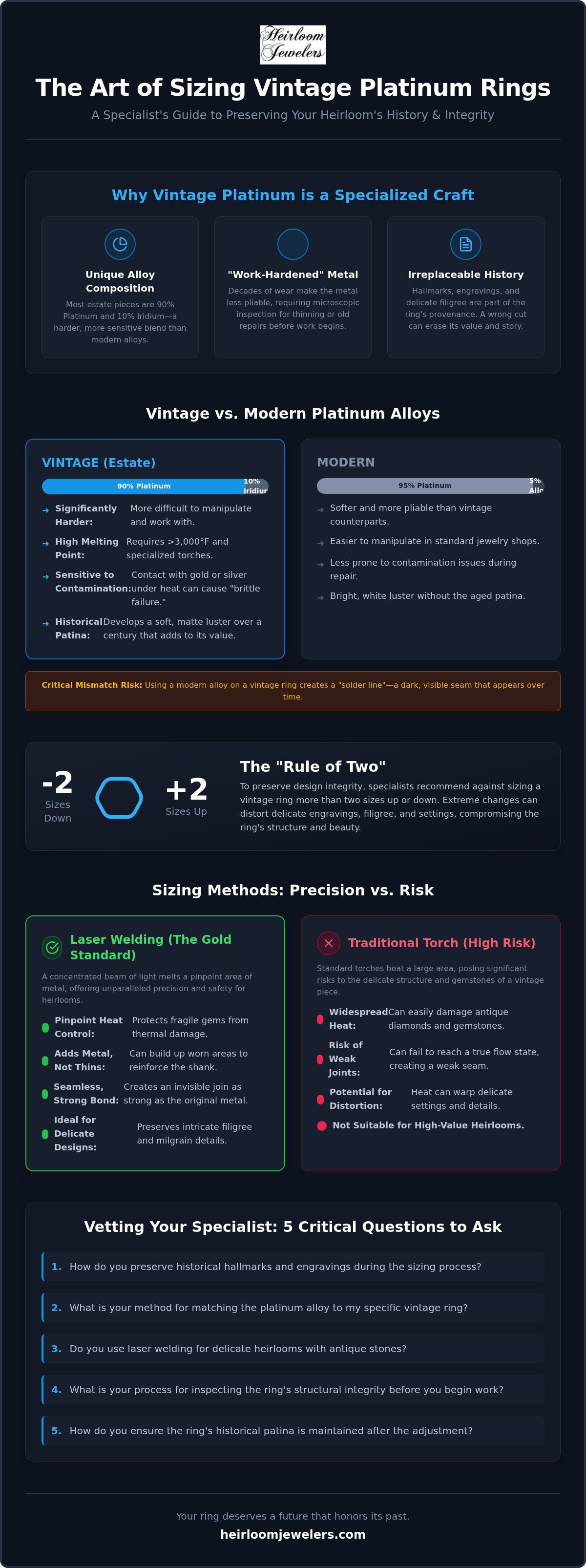
A primary challenge involves the evolution of chemical alloys. Most estate pieces are composed of 90% platinum and 10% iridium. This specific blend is significantly harder than modern 95/5 alloys. It's also more sensitive to contamination. If even a microscopic trace of gold or silver touches the platinum during the heating process, it can cause "brittle failure," where the metal shatters like glass. A specialist understands that vintage platinum isn't just a material; it's a century-old structure that has been chemically altered by time and wear.
Understanding Platinum Purity in Estate Jewelry
Hallmarks serve as the primary map for a specialist. You'll often find "900 PLAT 100 IRID" or a simple "PLAT" stamp inside the band. These marks tell the jeweler exactly which alloy to use for the sizing wire. Using a mismatched metal causes a "solder line," a dark ring that appears months after the repair as the metal oxidizes. Preservation also means respecting the patina. Over a century, platinum develops a soft, matte luster. A skilled curator ensures that any polishing after resizing doesn't strip away this historical character, maintaining the ring's value and soul.
The Structural Integrity of Century-Old Metal
Antique metal is often "work-hardened" from decades of daily use. This makes the shank less pliable than a new casting. A specialist begins with a microscopic inspection to check for thinning at the base of the shank or "porosity" from old repairs. They must ensure the piece adheres to global ring sizing standards without over-stressing the metal. If the shank is too thin, they may recommend a "half-shank" replacement rather than a simple stretch. This methodical approach is a core part of what to know about vintage ring sizing, as it maintains the ring's arc and prevents the settings from shifting or losing stones.
The Technical Process: How Specialists Resize Vintage Platinum
Resizing an estate piece is a methodical journey that begins long before a tool touches the metal. A specialist starts by creating a visual map of the ring. They identify every hallmark, maker's mark, and hand-carved engraving. This step ensures the structural adjustment happens in a location that preserves the ring's historical record. One of the most important things to remember about what to know about vintage ring sizing is that the cut must be strategic. If a jeweler cuts through a rare hallmark, the piece loses a portion of its provenance and value.
After mapping, the jeweler selects a matching platinum alloy wire. Since vintage rings often use a 90% platinum and 10% iridium blend, using a modern 95/5 wire would create a permanent, visible color mismatch. The technical process for resizing platinum requires this level of material precision. Once the metal is prepped, the jeweler chooses between two primary methods: laser welding or traditional torch soldering. Each has a specific place in the restoration of a vintage platinum engagement ring, though modern technology has shifted the preference for high-value estate pieces.
Laser Welding: The Gold Standard for Vintage Pieces
Laser technology has transformed the way we handle delicate heirlooms. A laser welder produces a concentrated beam of light that melts only a tiny area of metal. This allows for pinpoint heat control. A jeweler can work within millimeters of a fragile gemstone without the heat traveling through the metal to cause damage. It's particularly useful for adding metal to a worn-down shank. Instead of thinning the band further, the laser allows the specialist to build up the platinum. This reinforces the ring's strength while achieving a seamless, invisible bond that's as strong as the original metal.
Traditional Torch Soldering: When and Why it is Used
Traditional soldering involves heating the entire ring with a torch until the solder flows. This method carries significant risks for vintage pieces. Platinum's high melting point means the stones are subjected to intense thermal stress. If a jeweler isn't careful, oxidation can occur, which can be difficult to remove from intricate filigree. Torch joints often rely on a solder with a lower melting point than the platinum itself. Over time, this joint may oxidize and leave a faint dark line around the band. Master jewelers only use this method when a laser cannot reach specific deep-set joints, and they do so with extreme caution.
The final stage is finishing. Using 10x magnification, the jeweler polishes the work area until the seam disappears. A perfectly resized ring should show no evidence of the intervention, even under a jeweler's loupe. This level of detail is why choosing a specialist who understands what to know about vintage ring sizing is essential for protecting your investment.
Navigating Risks: When Resizing Might Affect Design Integrity
Most specialists adhere to the "Rule of Two." This guideline suggests that adjusting a ring more than two sizes in either direction can fundamentally alter its geometry. When you dramatically increase or decrease the diameter, the arc of the band changes. This shift can cause the settings to pull away from the stones. It is a critical part of what to know about vintage ring sizing before committing to an adjustment. For pieces with significant historical value, such as a vintage platinum 0.5 carat diamond engagement ring, preservation must take priority over a perfect fit. If the gap is small, sizing beads or spring inserts are often better alternatives to cutting the original band. These additions allow the ring to stay secure on the finger without compromising the metal's structural memory.
The Challenges of Filigree and Pierced Metalwork
Art Deco and Edwardian rings often feature intricate filigree that acts as a structural element. Resizing these pieces is complex because the patterns are mathematically aligned with the ring's original circumference. If you stretch the metal, you risk "squashing" these delicate windows or breaking the milgrain edges. Rings with patterns that wrap entirely around the band present the greatest challenge. In these cases, a jeweler must decide whether to leave a blank sizing bar at the base or attempt to hand-engrave the pattern back into the new metal. This requires a level of artistry that goes far beyond basic benchwork. When evaluating the risks of resizing vintage rings, one must consider how these aesthetic details will survive the transition.
Stone Security in Antique Settings
Vintage stones, particularly Old European Cut diamonds, possess unique proportions that require specialized care. Their deep pavilions and high crowns mean they sit differently in their prongs than modern rounds. During the resizing process, the change in the band's curvature can compromise side-stone tension. In channel settings, the stones may pop or become loose as the metal walls are bent. A specialist will always perform a stone-tightening service following any size change. They may also recommend retipping prongs that have become thin over the last century. Understanding these potential complications is essential for what to know about vintage ring sizing, as it ensures your heirloom remains secure for another generation of wear. Every adjustment should begin with a thorough inspection of the existing settings to prevent future stone loss.
Vetting a Specialist: What to Ask Your Estate Jeweler
Choosing the right professional is the most critical part of what to know about vintage ring sizing. A standard retail jeweler often lacks the specialized equipment and historical knowledge required for dense, century-old platinum alloys. Start by asking if they perform laser welding on-site. Shipping a piece off-site increases the risk of loss and prevents the jeweler from having direct control over the heat application. You should also request to see a portfolio of previous work. Look specifically for before-and-after photos of Art Deco or Edwardian rings rather than modern pieces. Modern repair work does not demonstrate the ability to navigate the delicate milgrain or hand-pierced metalwork found in high-value estate jewelry.
Inquire about their policy regarding hallmarks and maker's marks. A master jeweler will strategically place the sizing cut to avoid these irreplaceable stamps. If a cut must be made near a mark, they should explain the specific precautions they will take to protect it. Be wary of "while-you-wait" or same-day services. A proper vintage resize requires a microscopic inspection, alloy matching, and meticulous finishing. It is a slow, methodical process that respects the ring's historical integrity. If you are seeking a team that prioritizes these standards, explore the expertise at Heirloom Jewelers.
The Importance of an Initial Appraisal
Before any tools touch the metal, a detailed condition report is essential. This document should record the current stone security, any existing metal fatigue, and the presence of original engravings. For those still in the acquisition phase, consulting A Definitive Buying Guide to Vintage Engagement Rings provides the necessary context on authentication and what to look for in a high-quality piece. This appraisal ensures both you and the jeweler agree on the ring's starting state, protecting the value of your investment.
Insurance and Liability for Rare Pieces
Rare estate items require specific coverage that standard jewelry stores may not carry. Confirm that the jeweler's insurance policy covers the full replacement value of your specific piece while it is in their care. Ask directly about their protocol if a stone is damaged during the resizing process. While a specialist minimizes these risks through thermal protection and laser precision, transparency in the repair contract is vital for peace of mind. You should feel like a partner in the preservation of your heirloom, not just another customer in a queue. A professional establishment will always be happy to provide these details in writing before accepting the work.
The Heirloom Jewelers Philosophy: Integrity in Every Adjustment
At Heirloom Jewelers, we view every vintage platinum piece as a living history. A ring isn't merely an accessory; it's a testament to the craftsmanship of a bygone era. This perspective informs everything we believe about what to know about vintage ring sizing. We prioritize preservation over convenience. Our goal is to ensure the ring fits your life today without erasing the marks of its past. We treat every adjustment with the gravity it deserves, ensuring the metal's memory remains intact for the next generation.
A true curator recommends the least invasive path first. If a ring only needs a minor adjustment, we might suggest sizing beads or spring inserts. These methods allow for a secure fit while keeping the original shank untouched. This approach protects the ring's value in the secondary market. Understanding what to know about vintage ring sizing involves recognizing that every intervention should be reversible whenever possible. A piece that retains its original hallmarks and continuous metal flow is always more desirable to collectors. We act as a bridge between the jeweler who first forged the metal and the person who wears it now.
Beyond the Resize: Long-term Care for Vintage Platinum
Owning an estate piece requires a level of vigilance that modern jewelry doesn't always demand. Platinum is incredibly durable, but the delicate settings of the Art Deco era need regular inspection. We recommend professional cleaning every six months to check for loose stones or worn prongs. You should also educate yourself on the specific era of your piece. You can review The Timeless Artistry of Antique Rings to deepen your understanding of these historical styles. Early detection of wear prevents the need for more aggressive repairs later.
Finding Your Next Heritage Piece
Confidence comes from knowing the history of what you wear. When you select a piece from our curated collection, you aren't just buying jewelry. You're acquiring a piece that has been vetted for its structural integrity and historical authenticity. We understand the full life cycle of estate jewelry, from its initial creation to its eventual restoration. If you're ready to find a ring that tells a story, discover our authenticated collection of vintage platinum engagement rings. Each item, such as our vintage platinum 0.5 carat diamond engagement ring, represents our commitment to quality and heritage. We ensure that your next treasure is ready for its next century of wear.
Preserving Your Legacy for the Next Generation
A vintage ring is more than a piece of jewelry; it's a survivor of history. Ensuring a proper fit requires a delicate balance between modern technology and traditional craftsmanship. By prioritizing laser welding over traditional torches and respecting original alloy compositions, you can achieve a perfect fit without leaving a trace of the intervention. Understanding what to know about vintage ring sizing empowers you to make decisions that protect both the structural integrity and the market value of your heirloom. A well-executed resize ensures that delicate milgrain and rare hallmarks remain exactly as the original artisan intended.
Heirloom Jewelers remains dedicated to the meticulous care of rare Art Deco and Edwardian platinum. As specialists in authenticated estate jewelry, we view our role as curators who bridge the gap between a ring's storied past and its future. Whether you are adjusting a family treasure or seeking a new addition to your collection, historical preservation is our core commitment. We invite you to view our curated collection of authenticated vintage platinum engagement rings to find a piece that resonates with your personal history.
Your ring has already traveled through decades of life. With the right specialist, it will continue its journey with elegance and grace for many years to come.
Frequently Asked Questions
How many sizes can a vintage platinum ring be safely resized?
Most specialists recommend staying within two sizes of the original measurement. Adjusting a ring beyond this "Rule of Two" often distorts the circular arc of the band. This shift puts unnecessary tension on the settings, which can cause stones to loosen or pop out. If you need a larger adjustment, a jeweler may recommend replacing the entire lower half of the shank to maintain structural integrity and aesthetic balance.
Will resizing my antique ring make it lose its value?
Professional resizing won't diminish value if the historical integrity remains intact. A specialist ensures that hallmarks and maker's marks are preserved and that the metal seams are invisible under 10x magnification. Value is only lost when poor workmanship creates visible lines or damages original filigree. This is a vital part of what to know about vintage ring sizing, as high-quality preservation actually protects your long-term investment and provenance.
Can you resize a platinum ring with an engraving inside?
You can resize engraved rings, but the process requires strategic planning. A specialist maps the interior of the band to find a location where the cut will cause the least disruption. If the engraving is continuous, laser welding allows the jeweler to bridge the gap with minimal heat. In some cases, a master engraver can hand-restore any portion of the inscription that was affected by the resizing process to maintain the ring's unique story.
What is the difference between a sizing bar and a traditional resize?
A traditional resize involves cutting the metal to add or remove a section of the band. A sizing bar or sizing beads are non-invasive alternatives. These involve adding small platinum spheres or a thin bar to the interior of the shank. This reduces the inner diameter without cutting the original metal. It's an excellent choice for top-heavy rings that spin or for preserving the continuous pattern of a decorated band.
How can I tell if my platinum ring has been resized before?
You can often identify previous repairs by inspecting the shank under a jeweler's loupe. Look for "solder lines," which appear as faint, dark rings where mismatched alloys were used. You might also notice a slight thinning at the base of the band or hallmarks that appear stretched or partially erased. A microscopic inspection by a professional curator will confirm if the metal has been previously stressed or contaminated by non-platinum solders.
Is laser welding safe for old European cut diamonds?
Laser welding is the preferred method for protecting Old European cut diamonds. Unlike a traditional torch that heats the entire ring, a laser focuses intense heat on a microscopic point. This prevents thermal shock from reaching the stone's girdle or pavilion. Since antique diamonds often have unique inclusions or fragile edges, this localized precision is essential for what to know about vintage ring sizing when dealing with high-value estate pieces.
How long does it typically take to resize a vintage platinum ring?
A professional restoration typically takes between one and two weeks. This is not a service that should be rushed or performed while you wait. The process involves detailed mapping, custom alloy matching, and meticulous hand-finishing to ensure the repair is invisible. Rushing the cooling or polishing phases can lead to brittle metal or a compromised finish. Patience ensures that your heirloom remains a durable piece of history for many decades.
What should I do if my ring is a full eternity band and cannot be cut?
Full eternity bands generally cannot be cut without destroying the continuous pattern of diamonds and metalwork. If the ring is too large, the most effective solution is to install sizing beads or a horseshoe-shaped spring insert. These additions sit discreetly inside the band to provide a snug fit. If the ring is too small, you may need to consider wearing it on a different finger or selecting a different heritage piece from a curated collection.