
A modern diamond might offer technical precision, but it often lacks the character found in a piece that has survived a century of history. You're likely looking for something more than a standard retail item. You want a story. Finding the perfect vintage engagement rings requires more than just an eye for beauty. It demands an understanding of craftsmanship that modern mass production doesn't replicate. Authenticity is the ultimate luxury in a market often filled with temporary trends.
It's natural to feel uncertain about the technical differences between an Old European cut and a modern round brilliant. You might also worry about the structural integrity of an antique setting or the risk of buying a reproduction. We recognize these challenges. This guide will provide the clarity you need to identify era-specific styles and ensure your selection is authenticated. We'll explore how to evaluate the history, durability, and ethical value of these rare pieces. By the end, you'll be prepared to choose a high-quality ring that is as enduring as your commitment.
Key Takeaways
- Distinguish between antique jewelry over a century old and vintage pieces aged at least fifty years to ensure accurate historical context.
- Identify the signature motifs of the Victorian and Edwardian eras to select a design aesthetic that aligns with your personal style.
- Learn to recognize the difference between hand-fabricated vintage engagement rings and mass-produced modern reproductions that lack original character.
- Evaluate the structural integrity and authenticity of a piece by inspecting metal hallmarks and the unique faceting of Old European cut stones.
- Understand why professional curation is essential for securing a high-value, authenticated heirloom that transcends common secondary market finds.
Defining the True Vintage Engagement Ring
The term "vintage" is often used loosely in modern retail. For a serious collector or a couple seeking a meaningful symbol, precision matters. Authentic vintage engagement rings aren't merely old. They are artifacts of specific eras that represent shifts in art, culture, and technology. Understanding these distinctions helps you move beyond aesthetic preferences to find a piece with genuine historical integrity.
Vintage vs. Antique: The 100-Year Threshold
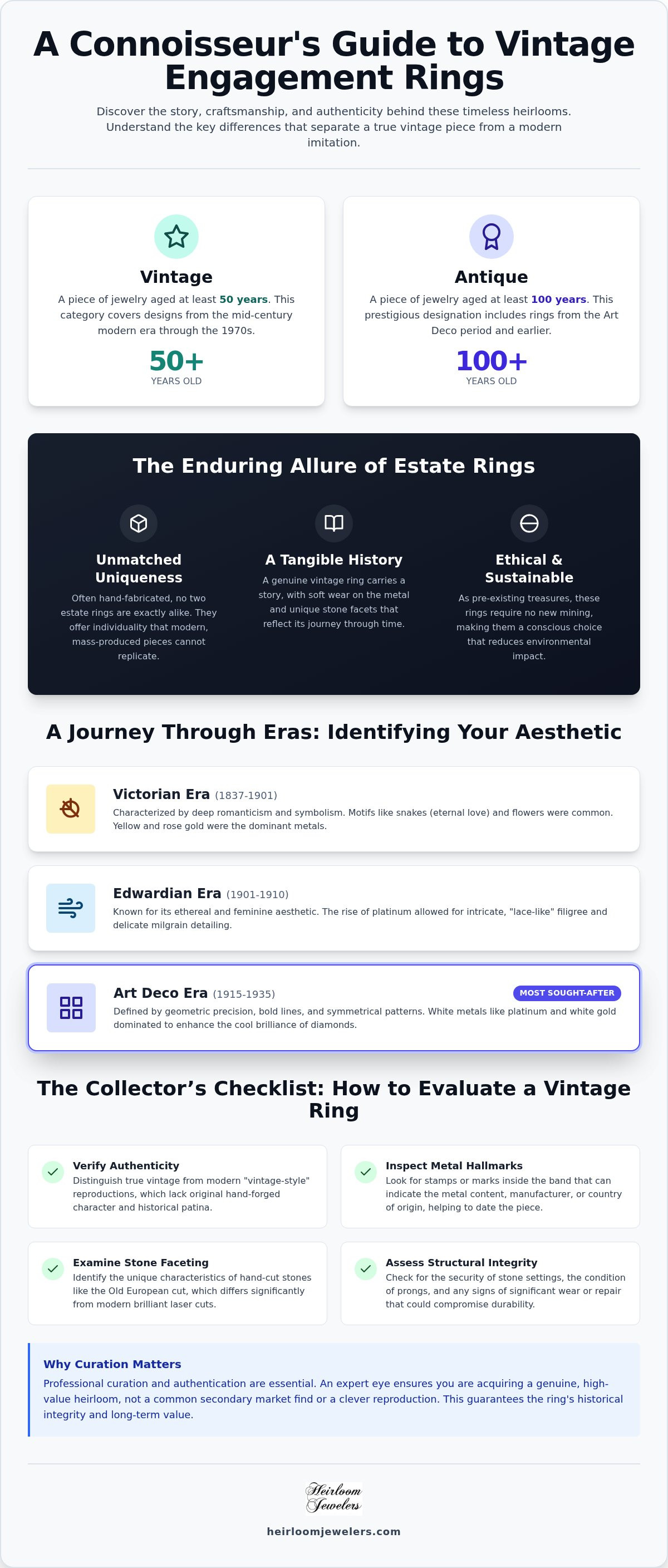
In the fine jewelry industry, the distinction between vintage and antique is based on age. An antique ring must be at least 100 years old. As of 2026, this includes pieces from the Art Deco period and earlier. A ring crafted in 1926 or before carries the antique designation. Vintage items are typically defined as being at least 50 years old, covering mid-century designs through the 1970s. At Heirloom Jewelers, we categorize our curated estate collection by these strict definitions. This ensures you know whether you're holding a piece of early 20th-century history or a mid-century classic.
The Appeal of Estate Fine Jewelry
Many modern consumers are moving away from mass-produced "mall jewelry." There is a growing desire for pieces that possess a quiet confidence rather than loud, uniform brilliance. An authentic estate ring offers a level of individuality that modern casting cannot replicate. These pieces were often hand-fabricated, meaning no two are exactly alike. This uniqueness is a primary reason why one-of-a-kind vintage engagement rings are trending for modern proposals. They offer a connection to the history of the engagement ring while standing out in a sea of modern solitaires.
You'll often see "vintage-style" rings in modern showrooms. These are new reproductions made to look old. They lack the hand-forged soul and the authentic patina of a true estate piece. A genuine vintage ring carries a soft wear on the metal and unique faceting on the stones that tell a story of a previous life. This emotional weight is something a modern reproduction simply cannot offer. When you choose an authenticated piece, you're becoming the next chapter in its history.
Choosing a pre-owned ring is also the most ethical choice for 2026. Because these pieces already exist, they require no new mining. This significantly reduces the environmental footprint of your purchase. You aren't just buying a ring; you're participating in a sustainable cycle of preservation. An authentic vintage piece avoids the ethical complexities often associated with new gemstone extraction. It represents a commitment to both your partner and the planet.
A Journey Through Eras: Identifying Your Aesthetic
Identifying your personal style starts with an appreciation for history. Every era left a distinct mark on vintage engagement rings, reflecting the social and artistic movements of the time. Whether you prefer the romanticism of the 19th century or the bold lines of the early 20th century, each period offers a unique visual language. Understanding these eras allows you to choose a piece that resonates with your personal narrative.
The Victorian Era (1837-1901) was defined by deep romanticism and the influence of Queen Victoria herself. Jewelers during this time primarily worked with yellow gold and rose gold. They often incorporated symbolic motifs like snakes, which represented eternal love, or floral patterns. For those interested in the broader evolution of these styles, the Gemological Institute of America offers a detailed look at Engagement Rings through the Ages. Following this, the Edwardian Era (1901-1910) saw the rise of platinum. This period is famous for "lace-like" filigree and milgrain detailing, creating an ethereal and feminine aesthetic.
The Architectural Brilliance of Art Deco Rings
The Art Deco movement (1915-1935) discarded the soft curves of previous eras in favor of geometric precision. These pieces feature bold lines, symmetrical patterns, and a focus on white metals. White gold and platinum became the standard because they highlighted the cool brilliance of diamonds. If you appreciate structured, high-contrast design, Art Deco platinum engagement rings offer a sophisticated balance of strength and sparkle. This aesthetic remains the most sought-after vintage style because it feels both historic and remarkably modern.
Old European Cuts: The Soul of Vintage Diamonds
Before laser-cutting became the industry standard, diamonds were faceted by hand. The Old European cut solitaire engagement ring is the quintessential example of this historic craftsmanship. These stones have a smaller table and a higher crown than modern round brilliants. They are prized for their "inner fire" and chunky facets, which perform beautifully in low-light environments. Unlike modern machine-cut stones, each Old European diamond has a unique personality that reflects the hand of the cutter.
Retro and Mid-Century styles emerged after the Great Depression, bringing a return to yellow gold and larger, sculptural designs. This period saw the rise of the classic solitaire, influenced by Hollywood glamour and the increasing popularity of diamond-focused marketing. These rings offer a clean, timeless aesthetic that bridges the gap between antique complexity and contemporary simplicity. You can explore these diverse historical eras through our curated collection of estate jewelry to find a piece that speaks to you.
Authentic Vintage vs. Modern Reproductions: The Critical Differences
Distinguishing between a modern "vintage-style" ring and authentic vintage engagement rings is essential for any serious buyer. Modern reproductions are typically created through mass-casting. This process involves pouring molten metal into a mold, which can result in porous metal and less defined details. True vintage pieces were often hand-fabricated or die-struck. These methods produce a denser, more durable piece of jewelry that withstands the test of time. Understanding these structural differences is the first step in recognizing true quality.
Perfection is often the primary goal of modern manufacturing, but in the world of estate jewelry, the patina of age is a mark of authenticity. This soft, glowing finish on the metal is the result of decades of wear. It creates a luster that cannot be replicated in a factory. This character, combined with the ethical advantage of avoiding new mining, makes heritage pieces a superior choice for the conscious consumer. You aren't just buying a design; you're acquiring a piece that has already proven its resilience.
Craftsmanship That Cannot Be Replicated
Hand-applied filigree and milgrain are nearly lost arts. In modern "vintage-inspired" rings, these delicate patterns are often part of the initial cast, leading to a "mushy" or lightweight feel. Authentic pieces feature crisp, sharp details applied by a master jeweler using specialized hand tools. When you examine the depth and soul of antique rings, the difference in weight and intricacy becomes immediately apparent. These rings feel substantial and balanced because they were built to last for generations.
The Investment Case for Heritage Jewelry
Most mass-produced modern jewelry loses approximately 50% of its retail value the moment it leaves the store. This is because the price is heavily inflated by marketing and high-volume retail overhead. Authentic vintage engagement rings represent a finite resource. Because no more are being made, their rarity supports long-term value retention. They aren't subject to the same rapid depreciation as modern commercial products.
Choosing an authenticated estate piece is a strategic move. While modern jewelry is often a consumable purchase, heritage jewelry serves as a wearable investment. These rings have already stood the test of time and carry a historical premium that modern reproductions simply cannot command. Investing in a curated collection ensures you are acquiring a piece that prioritizes material quality and historical significance over temporary trends.
The Collector’s Checklist: How to Evaluate a Vintage Ring
Evaluating a high-value estate piece requires a blend of historical knowledge and technical scrutiny. While modern rings are graded on standardized scales, vintage engagement rings demand a more nuanced approach. You must look for physical evidence of the ring’s journey and the quality of its original construction. A systematic checklist ensures that your chosen heirloom is both beautiful and structurally sound for a lifetime of wear.
Understanding Vintage Metals and Hallmarks
Identify the metal by locating the quality marks or hallmarks inside the band. Victorian pieces often lack formal stamps, while Art Deco items frequently feature "PLAT" or "18K" marks. Platinum is exceptionally durable for daily wear because it doesn't lose metal over time; it merely displaces it. 18K white gold is another staple of high-end estate collections, prized for its bright finish and structural strength.
- Locate the purity stamp (e.g., 18K, 14K, or Platinum) to confirm metal content.
- Search for a maker's mark, which acts as a signature of the original jeweler or workshop.
- Inspect for solder lines from previous resizing, which should be clean and nearly invisible.
- Verify that the metal weight feels substantial, indicating a hand-fabricated or die-struck origin.
Assessing Condition and Wear
Acceptable wear in a 100-year-old ring includes a soft patina and slight smoothing of the decorative details. These signs of age add character and confirm the ring's history. However, the structural integrity must remain uncompromised. Inspect the prongs to ensure they are securely holding the center stone. If the prongs appear thin or pancake-flat, the ring may require professional tipping to prevent stone loss.
Evaluating the center stone goes beyond the standard 4Cs. In historic cuts, light performance and unique facet patterns are more important than modern laboratory grades. You should look for the "inner fire" characteristic of hand-cut stones, which often perform better in natural light than modern machine-cut diamonds. A trusted estate jeweler plays a vital role in vetting inventory. They ensure that every piece is structurally sound and historically accurate before it reaches the showroom.
Professional authentication is the final safeguard in the secondary market. It bridges the gap between a simple purchase and a secure investment. This process verifies that the materials, era, and craftsmanship align with the seller's claims. You can browse our authenticated collection of vintage engagement rings to find a piece that has been rigorously inspected for historical accuracy and quality.
Finding Your Heirloom: Why Curation Matters
Acquiring a piece of history requires a departure from the traditional retail experience. While a "thrift find" might offer a lower price point, it often carries hidden risks regarding structural integrity and gemstone authenticity. Professional curation eliminates this uncertainty. Selecting vintage engagement rings from a curated collection ensures that every item has been vetted for its historical accuracy, material purity, and craftsmanship. You aren't just browsing an inventory; you're exploring a gallery of authenticated artifacts.
The peace of mind that comes with expert curation is invaluable. When a specialist evaluates an estate piece, they look for signs of original hand-fabrication and era-appropriate wear that a layperson might miss. This process separates high-value jewelry from common secondary market items. By focusing on quality over volume, a curator preserves the legacy of the original jeweler while protecting the interests of the modern collector. This steady, methodical approach ensures that your selection is a true heirloom rather than a temporary trend.
The Heirloom Jewelers Standards
Our commitment to excellence begins with a strict exclusion policy. We don't sell mass-produced modern jewelry or custom-manufactured reproductions. Instead, we focus on rare, high-value items that possess a distinct soul. This specialization allows us to offer exceptional pieces like the Vintage Platinum 0.5 Carat Diamond Engagement Ring, which exemplifies the precision of early 20th-century metalwork. Our expertise is rooted in a deep knowledge of the secondary market, ensuring that every setting and stone meets our rigorous standards for authentication.
We prioritize materials that stand the test of time, such as 18K white gold and platinum. These metals provide the necessary durability for daily wear while maintaining their historical luster. Whether you are seeking a rare Old European cut stone or a delicate filigree setting, our collection is curated to reflect the highest levels of artistry. This focused reading experience allows you to appreciate the specific attributes of each piece without the distraction of modern commercial clutter.
Next Steps in Your Journey
Beginning your search for a one-of-a-kind ring should be an enjoyable and educational process. You can view our national collection of estate fine jewelry to understand the breadth of styles available across different eras. Consulting with an expert can help you narrow down your preferences, whether you're drawn to the geometric strength of Art Deco or the romantic motifs of the Victorian period. We act as a bridge between the past and the present, helping you navigate the complexities of high-value estate markets with quiet confidence.
Finalizing your choice is about more than just aesthetics. It's about finding a ring that tells a story for generations. When you choose an authenticated vintage piece, you're investing in a legacy of craftsmanship that transcends modern retail. We invite you to explore our curated selection and discover a ring that resonates with your personal history and values.
Securing Your Piece of History
Choosing an engagement ring is a significant milestone that deserves a thoughtful, informed approach. By prioritizing authenticated vintage engagement rings, you're selecting a piece that offers unmatched craftsmanship and a unique narrative. True quality is found in the hand-fabricated details of Victorian motifs and the geometric precision of Art Deco platinum. These elements represent a level of artistry that modern mass production simply cannot replicate.
As specialists in authenticated estate jewelry, we maintain a curated selection of rare platinum and 18K gold pieces. Our position as a national authority on vintage diamond cuts ensures that every stone, from an Old European cut to a historic rose cut, meets the highest standards of integrity. You don't have to navigate the complexities of the secondary market alone. Our expertise acts as a bridge, connecting you with high-value items that have already stood the test of time.
Discover our curated collection of authenticated vintage engagement rings to find a timeless symbol of your commitment. We look forward to helping you identify an heirloom that will be cherished for generations to come.
Frequently Asked Questions
Are vintage engagement rings more fragile than modern ones?
Vintage rings are often more durable than modern mass-produced pieces because they were frequently hand-fabricated or die-struck. This process creates a dense metal structure that resists bending. You should still have a specialist inspect the prongs for any thinning due to a century of wear. Regular maintenance ensures these historic pieces remain secure for daily use.
Can I resize a vintage or antique engagement ring?
Most rings can be resized by a skilled jeweler who understands historic metalwork. However, designs with intricate filigree that wraps around the entire band or certain eternity styles may have limitations. It's best to consult a professional curator to evaluate the structural integrity before attempting modifications. This ensures the original hallmarks and decorative elements remain intact during the process.
How do I know if a vintage ring is authentic and not a reproduction?
Identifying authentic vintage engagement rings involves looking for specific era hallmarks and signs of hand-craftsmanship. Modern reproductions often show "mushy" details from casting molds and lack the natural patina found on genuine estate jewelry. A professional authentication process verifies the metal content and the specific faceting of the stones to ensure the piece aligns with its claimed era.
Are vintage diamonds ethical and conflict-free?
Vintage diamonds are an ethical choice because they are pre-owned and require no new mining. These stones were cut and set decades ago, making them a sustainable alternative to modern gemstone extraction. By choosing an authenticated estate piece, you avoid the environmental and ethical complexities associated with the modern diamond supply chain while preserving a unique piece of history.
Why should I choose a platinum setting for a vintage ring?
Platinum is a superior choice for historic settings because it is exceptionally durable and doesn't lose metal over time. When platinum is scratched, the metal is merely displaced rather than worn away, which helps maintain the security of the prongs. This strength allowed Edwardian and Art Deco jewelers to create the delicate, lace-like designs that remain popular today.
What is the most popular era for vintage engagement rings in 2026?
The Art Deco era remains the most popular choice for vintage engagement rings in 2026 due to its geometric precision and modern appeal. Collectors are drawn to the bold lines and symmetrical patterns that define the 1920s and 1930s. These designs bridge the gap between historical significance and contemporary fashion, making them highly sought after in curated collections.
Do vintage rings come with appraisals or certifications?
High-quality vintage rings should come with a professional appraisal or a laboratory evaluation for the center stone. While older diamonds may not have original GIA reports, a modern evaluation can verify the stone's dimensions, cut type, and quality. Heirloom Jewelers provides authentication for every piece to ensure you have a documented record of your ring's material value and origin.
Can I find a solitaire ring with diamonds in a vintage style?
You can find exceptional solitaire designs within our estate collection, particularly from the Mid-Century and Retro periods. These rings focus on a single, high-quality center stone, often an Old European or Transitional cut diamond, set in a simple platinum or gold band. These pieces offer a clean aesthetic that highlights the character of the historic diamond without excessive ornamentation.