
A modern machine can cut a diamond with mathematical precision, but it can never replicate the soul found in a hand-hewn Old European cut. These slight variations in facets and the weight of hand-forged gold are what make authentic estate pieces superior to contemporary, mass-produced jewelry. When you browse vintage earrings for sale, you aren't just searching for a simple accessory. You're looking for a wearable piece of history that has already proven its ability to endure for generations.
It's natural to feel a sense of hesitation when entering the secondary market. The fear of purchasing a sophisticated replica or the confusion over historical diamond cuts can make the selection process feel overwhelming. You want to ensure that your choice is both a reflection of your personal style and a secure investment that holds its value over time.
This guide will help you master the art of selecting authenticated estate jewelry with quiet confidence. We'll examine the defining traits of historical eras, explain the rarity of specific diamond cuts, and provide the essential knowledge you need to distinguish genuine craftsmanship from modern imitations.
Key Takeaways
- Learn to distinguish between antique, vintage, and estate terminology to accurately identify the age and rarity of a piece.
- Discover the defining characteristics of historical design eras, from the romanticism of the Victorian period to the geometric precision of Art Deco.
- Understand why historic Old European cuts offer unique character and fire that modern, machine-cut diamonds cannot replicate.
- Gain confidence when browsing vintage earrings for sale by prioritizing professional authentication and verified metal hallmarks.
- Master practical styling techniques to choose earring shapes that complement your face shape and transition effortlessly from day to night.
Understanding Vintage Earrings for Sale: More Than Just Jewelry
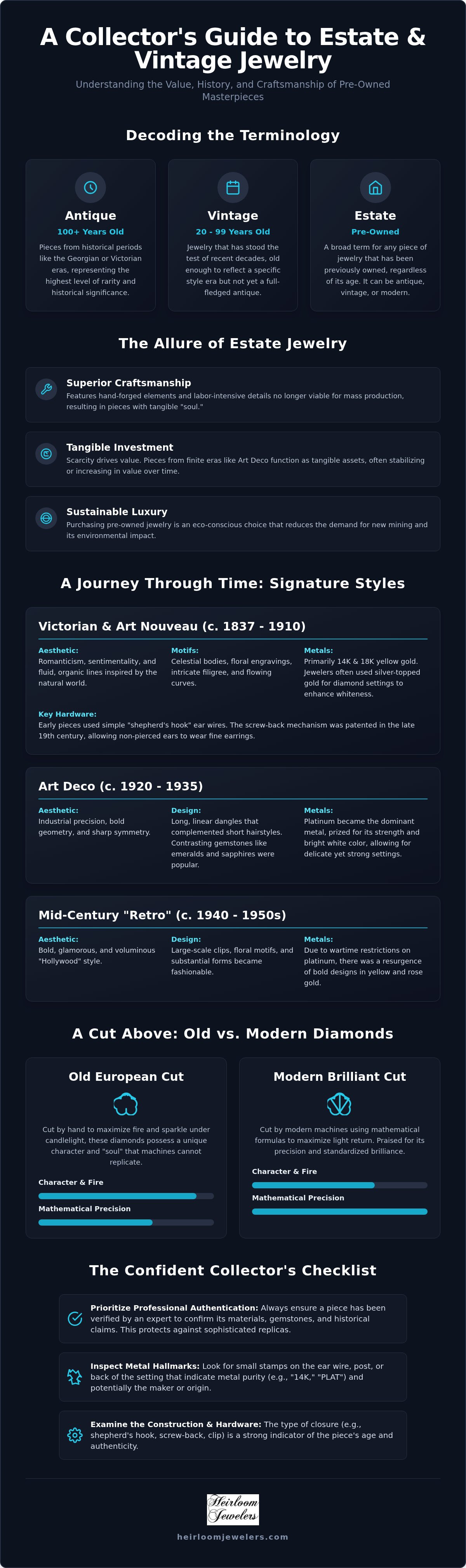
Collecting fine jewelry is an act of preservation. When you browse vintage earrings for sale, you're looking for pieces that have survived decades of shifting trends. Understanding the vocabulary of the secondary market is the first step toward building a meaningful collection. The industry uses specific benchmarks to categorize these items. An antique piece is at least 100 years old, often originating from the Georgian or Victorian eras. Vintage refers to items at least 20 years old, while estate is a broader term that simply means the jewelry is pre-owned. While many modern pieces are cast in large batches, estate jewelry often features hand-forged elements and labor-intensive details that are no longer commercially viable for mass production.
Earrings serve as an ideal entry point for new collectors. They don't require the precise sizing of a ring or the complex structural integrity of a heavy necklace. They're personal, visible, and highly adaptable. Throughout the history of earrings, these pieces have been used to signal status and personal taste, making them a perfect canvas for those beginning their journey into heritage jewelry. However, the surge in sophisticated replicas makes professional authentication essential. Verification ensures that the metal purity and gemstone origins align with the historical claims of the piece.
The Appeal of Estate Fine Jewelry
Choosing estate jewelry is an intentional rejection of the disposable nature of modern retail. Vintage platinum and high-karat gold often possess a density and weight that feels substantial against the skin. These materials were chosen for their longevity, not just their immediate shine. Beyond the physical quality, there's a compelling sustainability argument. Purchasing pre-owned luxury reduces the demand for new mining. It allows you to own a masterpiece without the environmental footprint associated with modern manufacturing.
Investment Potential of Heritage Earrings
Authentic heritage pieces do more than just complement an outfit; they function as tangible assets. Scarcity is the primary driver of value in this market. Pieces from the Victorian or Art Deco periods are finite in number. As they disappear into private collections, their market value tends to stabilize or rise. Rare diamond cuts are particularly prized by collectors. These diamonds were cut by hand to maximize fire under candlelight, creating a distinct visual profile that modern brilliant cuts cannot replicate. Transitioning from a casual consumer to a jewelry curator means looking for these hallmarks of quality and historical significance.
Decoding the Eras: Finding Your Signature Vintage Style
Identifying the era of a piece requires looking beyond the surface aesthetic to the mechanical construction. When evaluating vintage earrings for sale, the closure often reveals more about the item's age than the gemstones themselves. Early Victorian pieces typically utilized simple ear wires, often referred to as "shepherd's hooks." By the late 19th century, the screw-back mechanism was patented. This allowed women without pierced ears to enjoy fine jewelry for the first time. Understanding these shifts in hardware helps you verify authenticity and ensures the piece aligns with your comfort preferences.
Victorian to Art Nouveau: Nature and Filigree
The Victorian era focused on sentimentality and the natural world. You'll often find celestial motifs, floral engravings, and intricate filigree in 14K or 18K yellow gold. During this time, jewelers frequently used silver-topped gold settings to ensure diamonds appeared as white as possible. As the era transitioned into Art Nouveau, designs became more fluid and organic. These styles pair beautifully with antique rings from the same period, creating a cohesive look that celebrates 19th-century craftsmanship. Look for hallmarks on the ear wire or the back of the setting to confirm the metal purity and origin.
Art Deco to Mid-Century: Geometry and Glamour
The 1920s introduced a shift toward industrial precision and the dominance of platinum. Art Deco earrings are defined by geometric shapes, symmetry, and the use of bold, contrasting gemstones like emeralds or sapphires. This era favored long, linear dangles that complemented the bobbed hairstyles of the time. By the 1940s and 50s, the "Retro" aesthetic emerged. Platinum was restricted for wartime use, leading to a resurgence of bold, voluminous yellow gold designs. These "Hollywood" styles often featured large-scale clips and floral sprays that sat high on the earlobe.
Before making a purchase, it's wise to inspect the piece for any signs of past restoration. According to GIA's Guide to Buying Estate Jewelry, you should look for lead solder marks or mismatched components that might suggest a piece has been altered. A well-maintained vintage piece should feel sturdy and balanced. If you're browsing vintage earrings for sale to find a specific era, remember that the most valuable pieces are those that remain in their original, unaltered state. You can find a variety of these authenticated pieces by exploring our estate jewelry collection, where history and quality meet.
Technical Evaluation: Metals, Gemstones, and Historic Cuts
Evaluating the technical merits of estate jewelry requires a discerning eye. When you look at vintage earrings for sale, you must look beyond the initial luster to understand the physical composition and the quality of the stones. A piece's value is deeply tied to its material integrity and the rarity of its components. Unlike modern mass-produced items, estate pieces often feature hand-wrought settings that have already stood the test of time. Finding authenticated vintage earrings for sale means prioritizing pieces where the gemstones are secure and the metal hallmarks remain legible.
Physical condition is paramount. You should always inspect the prongs for signs of thinning or wear, as these tiny metal claws are the only thing keeping your gemstones safe. Small chips along the girdle of a diamond or gemstone are common in older pieces, but they shouldn't compromise the stone's structural stability. A gentle patina is also desirable. This natural oxidation adds depth and character to the metalwork. Avoid pieces that have been over-polished to a mirror finish, as this can strip away the sharp edges of original engravings and devalue a historic item.
The Brilliance of Old European Cut Diamonds
The Old European cut is the predecessor to the modern round brilliant. These diamonds were cut by hand between the late 19th century and the early 20th century. They're defined by a high crown, a small table, and a large, flat culet at the bottom. While modern cuts focus on brilliance, Old European cuts are celebrated for their "inner fire." The larger facets create broad flashes of colored light that are particularly striking in low-light environments. This unique light performance is why they're the preferred choice for heritage jewelry collectors who value character over clinical perfection.
Precious Metals in Estate Jewelry
The choice of metal often dictates the longevity of the piece. Platinum was the gold standard for the Art Deco era due to its extreme density and strength. It allows for incredibly fine, lace-like details that remain durable even after a century of wear. 18K white gold is a common alternative, offering a similar cool tone with a high gold content. If you prefer warmth, 14K yellow gold provides a classic look that was ubiquitous in Victorian and Mid-Century designs. Always look for historic hallmarks, such as "PLAT" for platinum or "18K" for gold, usually located on the ear wire or the interior of the setting. These maker's marks serve as a signature of quality and origin.
A Practical Buying Guide: Selection and Care
Ownership of estate jewelry is a responsibility as much as a pleasure. When you evaluate vintage earrings for sale, you're choosing a piece that has already lived a full life. Integrating these items into your modern wardrobe requires a balance of aesthetic intuition and practical awareness. A common mistake for new collectors is focusing solely on the visual impact while overlooking the physical comfort of the piece. High-quality estate earrings should feel balanced on the earlobe without pulling or causing fatigue. If you're searching for vintage earrings for sale to wear daily, the weight and the security of the closure are your most important metrics.
Your physical features and personal style should guide your selection. Rounder face shapes often benefit from the vertical lines of Art Deco dangles, which create an elongating effect. Conversely, angular face shapes are softened by the organic, flowing curves found in Art Nouveau designs. Consider your hair length as well. Shorter styles or updos provide the perfect backdrop for intricate filigree or bold studs, while longer hair may require the movement of a drop earring to remain visible.
Choosing the Right Style for Your Lifestyle
Determine how the piece fits into your routine. Studs are the workhorse of any collection, offering a subtle elegance that transitions seamlessly from a professional setting to an evening event. Dangle earrings provide more drama but require a mindful approach to activity. For formal occasions, consider how your earrings coordinate with other heritage pieces. A pair of Art Deco platinum drops, for instance, pairs exceptionally well with a Lugano Emerald & Diamond Necklace. This combination creates a sophisticated, curated look that emphasizes a commitment to quality over trend.
Maintenance and Preservation
Preserving the value of your jewelry involves understanding the specific needs of different materials. Platinum is incredibly durable, but it can develop a dull patina over time that some collectors prefer to keep. 14K yellow gold is softer and requires a gentler touch during cleaning. With gold prices reaching approximately $4,057.53 per troy ounce in August 2026, maintaining the original metal weight by avoiding abrasive polishing is an economic necessity. Diamonds are hardy, but porous stones like pearls or opals should never be submerged in harsh chemicals or ultrasonic cleaners. Store your pieces in individual soft pouches to prevent metal-on-metal scratching.
Regular inspections are the best way to prevent the loss of a gemstone. We recommend a professional check of the prongs and closures at least once a year. If you're ready to find a piece that combines historical significance with enduring beauty, you can view our current inventory of authenticated estate earrings.
Curating Your Collection with Heirloom Jewelers
Building a collection of fine jewelry is a gradual process that requires a reliable partner. At Heirloom Jewelers, we view ourselves as curators rather than mere retailers. Our philosophy is rooted in a deep respect for history and a rejection of the disposable nature of modern fashion. When you search for vintage earrings for sale, you deserve a transparent experience that prioritizes the material integrity of each piece. We focus exclusively on authenticated estate items. This ensures that every setting and stone meets our rigorous standards for quality and provenance.
Our role is to act as a bridge between the past and the present. We seek out pieces that exhibit exceptional craftsmanship, from the density of vintage platinum to the warmth of high-karat gold. By choosing to work with a specialist, you avoid the risks associated with unverified secondary markets. We provide the expertise necessary to navigate the complexities of historical cuts and metal hallmarks. This steady approach allows you to build a collection with quiet confidence, knowing that each acquisition is a secure investment in wearable history.
Standout Pieces in Our Current Collection
Our current selection features items that serve as both foundational staples and unique statement pieces. The Vintage White Gold Old European Cut Diamond Stud Earrings are a prime example of a classic investment. Set in 18K white gold, these diamonds exhibit the broad, colorful flashes of light that define the era. They represent a level of hand-cut artistry that modern, mass-produced manufacturing cannot duplicate. These studs are essential for any curator looking to establish a high-end estate collection.
For those seeking distinctive color and movement, our Estate Peridot & Quartz Dangle Earrings in 14K Yellow Gold offer a rare gemstone pairing. The vibrant green of the peridot is complemented by the clarity of the quartz, all held within a warm gold setting. We also maintain a selection of 18K white gold and platinum offerings for those who prefer the cool, industrial elegance of the Art Deco and Mid-Century periods. Each piece is chosen for its ability to stand alone or pair with other significant items, such as a Lugano Emerald & Diamond Necklace 18K White Gold.
Your Journey with Heirloom Jewelers
We understand that purchasing high-value estate jewelry is a significant decision. Our goal is to provide a steady and respectful atmosphere, whether you are a seasoned collector or a first-time buyer. You can easily browse our online collection to view our latest acquisitions. Each listing provides the essential technical details you need to make an informed choice. We're committed to a professional service model that values long-term relationships over high-pressure sales. Explore our authenticated vintage earrings for sale today and find a piece that resonates with your personal legacy.
Begin Your Collection of Timeless Artistry
Selecting estate jewelry is about more than just aesthetics. It's a commitment to preserving history and valuing the hand-forged details that modern manufacturing lacks. By understanding the nuances of historical eras and the distinct "inner fire" of Old European cut diamonds, you can navigate the market with clarity. Professional authentication remains the most vital step in securing a piece that will hold its value and integrity for years to come.
Finding the right piece requires patience and a trusted partner. Whether you're drawn to the geometric precision of Art Deco or the romanticism of the Victorian era, we're here to guide your search. When you browse our vintage earrings for sale, you'll discover expertly authenticated estate pieces set in timeless 14K and 18K gold. As specialists in rare Old European cuts, we prioritize quality and heritage in every item we curate.
Browse our curated collection of authenticated vintage earrings to find a piece that reflects your personal style. We look forward to helping you find a wearable legacy that you'll cherish for a lifetime.
Frequently Asked Questions
What is the difference between vintage and antique earrings?
Antique earrings are at least 100 years old, while vintage pieces are categorized as being between 20 and 99 years old. This distinction is a matter of chronology and historical categorization used by curators to define rarity. Anything less than 20 years old is typically classified as "estate" if it's pre-owned. Understanding these specific benchmarks helps you assess the rarity and potential investment value of a piece accurately before making a selection.
How do I know if the vintage earrings I'm buying are authentic?
Professional authentication is the only way to guarantee the legitimacy of a piece. When evaluating vintage earrings for sale, look for period-correct construction techniques and verified metal hallmarks. A specialist will examine the gemstone cuts and setting styles to ensure they align with the claimed era. we recommend only purchasing from established curators who provide a transparent authentication process for every item in their inventory to ensure complete peace of mind.
Are Old European cut diamonds more valuable than modern cuts?
Old European cut diamonds are often more valuable to collectors due to their scarcity and hand-cut character. Unlike modern brilliant cuts, which are produced in large volumes using computer-aided technology, Old European cuts are finite in number. Their value is driven by their unique light performance and historical significance. While a modern diamond may have higher technical clarity, a historic cut offers an "inner fire" that many enthusiasts find far more desirable.
Can vintage earrings be worn every day without damaging them?
Most vintage earrings can be worn daily if they're made from durable precious metals and have secure settings. Platinum and 18K white gold are particularly resilient choices for frequent wear. You should avoid wearing heritage pieces during high-impact activities or while using harsh chemicals. Regular inspections of the prongs and closures will ensure your jewelry remains safe and secure throughout your daily routine without risking damage to the delicate settings.
What should I look for in terms of hallmarks on estate jewelry?
Hallmarks are small stamps that indicate metal purity and the identity of the maker. You'll typically find these on the ear wire, the post, or the interior of the earring basket. Common marks include "14K" or "585" for gold and "PLAT" or "950" for platinum. Historic maker's marks or town stamps provide valuable clues about the piece's origin and the reputation of the workshop that originally created the item for its first owner.
Why is platinum so common in Art Deco earrings?
Platinum became the preferred metal during the Art Deco era because its extreme density allowed jewelers to create incredibly fine, strong settings. This strength was essential for the geometric precision and intricate filigree work that defined the 1920s aesthetic. Platinum doesn't require the same bulk as gold to hold gemstones securely. This allowed for the creation of delicate, lace-like designs that remain durable even a century after they were first crafted by hand.
How do I clean my vintage gold and diamond earrings safely?
Safely cleaning your vintage gold and diamond earrings requires only mild dish soap, warm water, and a very soft brush. Gently scrub the setting to remove oils and dust, then rinse thoroughly and pat dry with a lint-free cloth. You must avoid ultrasonic cleaners for pieces containing porous stones like pearls or opals. For high-value heritage items, a professional cleaning by a trusted jeweler is the safest way to restore the piece's original luster.
What makes estate jewelry a sustainable choice for consumers?
Estate jewelry is an inherently sustainable choice because it recirculates existing precious metals and gemstones. When you choose vintage earrings for sale, you're reducing the demand for new mining operations and the environmental impact of modern industrial manufacturing. You're also preserving the labor and artistry of previous generations. This eco-friendly approach allows you to own a luxury item while supporting a more circular and responsible jewelry economy that values longevity over trends.