
Why settle for a ring that looks like a thousand others when you can wear a piece of living history on your finger? Many modern collectors feel overwhelmed by the repetitive, geometric designs found in high-street jewelry stores. You aren't just looking for a piece of jewelry; you're seeking a personal connection to craftsmanship and the natural world. Choosing Art Nouveau engagement rings allows you to embrace a level of artisanal detail that contemporary mass production simply cannot replicate.
In this analysis, you'll discover why the flowing lines and ethereal symbolism of these pieces are the definitive choice for the modern collector in 2026. We'll help you distinguish these organic treasures from the rigid geometry of Art Deco styles and provide the expertise needed to identify authentic antique pieces. We also address common concerns regarding the durability of historical enamel and softer gemstones, ensuring your investment remains as resilient as it is beautiful. By the end of this guide, you'll have the confidence to choose a heritage piece that truly resonates with your story.
Key Takeaways
- Understand the historical shift from mass-produced Victorian styles to the hand-crafted, organic elegance of the "New Art" movement.
- Learn how to identify authentic Art Nouveau engagement rings by examining fluid whiplash curves and verifying period-accurate hallmarks.
- Discover why the 2026 shift toward quiet luxury makes these unique, nature-inspired pieces the ideal choice for modern collectors.
- Explore practical ways to pair elaborate historical settings with contemporary wedding bands for a balanced and sophisticated daily look.
The Origins of Art Nouveau: A Romantic Rebellion in Ring Design
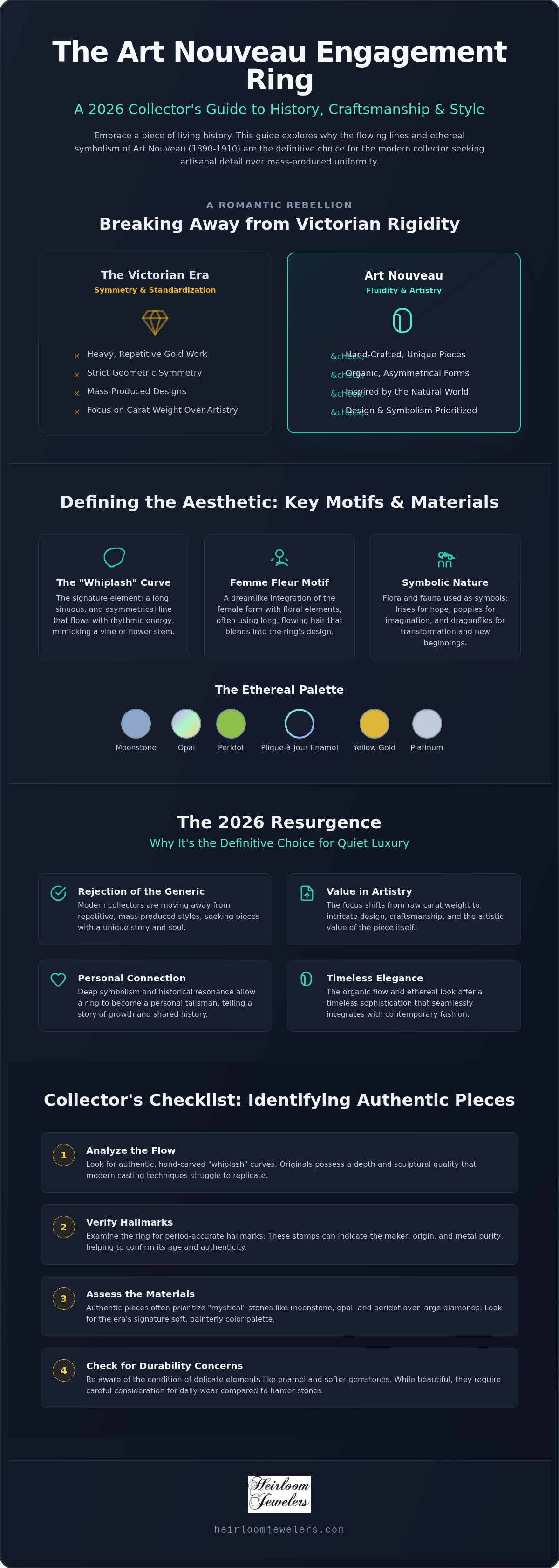
The Art Nouveau movement emerged at the end of the 19th century as a defiant response to the smog and standardization of the Industrial Revolution. Flourishing between 1890 and 1910, this "New Art" sought to reunite fine craftsmanship with everyday objects. Jewelry became a primary canvas. Designers moved away from the repetitive, mass-produced styles of the Victorian era. They favored the unpredictable beauty of the natural world instead. It was a romantic rebellion.
A significant catalyst for this shift was Japonisme. The opening of trade with Japan introduced European artists to woodblock prints featuring asymmetrical compositions and fluid, organic forms. These influences directly shaped the aesthetic of Art Nouveau engagement rings. Jewelers began to view their work as fine art rather than a mere display of wealth. This period marked a transition where the artistic value of a piece often eclipsed the intrinsic cost of its materials. Design became the priority.
The Fin de Siècle Spirit and Artisanal Luxury
The "Fin de Siècle" or end-of-century mood was one of both anxiety and excitement. This cultural atmosphere fostered a deep appreciation for the unique and the handmade. Master jewelers prioritized intricate design and ethereal symbolism over the raw carat weight of a central stone. They frequently chose materials for their color and light-play, such as moonstones, opals, and delicate enamel. We see a clear parallel in 2026. Modern collectors are moving away from bulk. They seek artisanal quality. They want pieces that feel personal and curated rather than generic.
Breaking Away from Victorian Rigidity
Before this movement, Victorian jewelry was characterized by heavy gold work and strict symmetry. Art Nouveau shattered these conventions. Designers introduced the "whiplash curve," a signature long, sinuous line that mimics the movement of a vine or a flower stem. This fluidity created a sense of motion that had never been seen in fine jewelry before. While yellow gold remained popular, this era also saw the early, sophisticated use of platinum in high-end settings. These Art Nouveau engagement rings offered a lighter, more ethereal look. The style felt modern then; it remains timelessly elegant today. This transition from stiff geometry to organic flow represents one of the most significant evolutions in jewelry history.
Defining the Aesthetic: Whiplash Curves and Ethereal Motifs
The hallmark of this era is the "whiplash curve." This sinuous, asymmetrical line flows with a rhythmic energy that suggests organic growth. While some collectors confuse these designs with the rigid geometry of the Art Deco period, Art Nouveau engagement rings are fundamentally different. They prioritize movement and hand-carved fluidity. Modern casting techniques often struggle to replicate the depth and delicacy found in these original galleries and shoulders. These pieces aren't just jewelry; they're tiny sculptures.
Beyond the structural curves, many pieces feature the "femme fleur" motif. This design integrates the female form with floral elements, often using long, flowing hair to blend into the ring's band. It creates a dreamlike quality that feels both intimate and high-art. This focus on the human and natural connection set the movement apart from the industrial trends of its time.
Flora, Fauna, and Symbolic Nature
Nature was the primary dictionary for Nouveau designers. They didn't just replicate plants; they used them as symbols. Irises represented faith and hope. Poppies symbolized the realm of imagination and dreams. These meanings add layers of sentiment to a proposal that a standard solitaire cannot match. Insects also played a vital role. Dragonflies and butterflies were frequently used to represent transformation and the beauty of a new beginning. It's this intentional symbolism that makes these rings feel like personal talismans rather than mere accessories. They tell a story of growth and shared history.
Materials of the Era: Enamel, Moonstones, and Pastel Palettes
The color palette of this period was soft and painterly. Designers often moved away from the traditional focus on high-carat diamonds. Instead, they used "mystical" stones like moonstone, opal, and peridot to create an ethereal glow. You can see many exquisite examples of these palettes in the V&A's Art Nouveau collection. These stones were chosen for their inner life and light-play rather than their market value.
A defining technique of the era was plique-à-jour enamel. This process creates a stained-glass effect, allowing light to pass through the translucent enamel without a metal backing. It's incredibly difficult to master and remains a rare find in the secondary market. This focus on artistry over material bulk is a core reason why many choose antique rings over modern alternatives. If you value this level of historical craftsmanship, exploring our curated estate collection may reveal the unique piece you've been searching for.
The 2026 Resurgence: Why Art Nouveau is the Trend of the Year
The current market shows a decisive shift toward "Quiet Luxury." This movement values understated elegance and historical depth over flashy, modern branding. Art Nouveau engagement rings align perfectly with this aesthetic. They offer a sophisticated alternative to the social media-driven design clones that dominate the retail landscape. Today's collectors prioritize pieces that feel personal and discovered rather than merely purchased. They want a ring that reflects their individuality.
The "Heirloom Effect" is a major driver of this resurgence. Modern couples are increasingly drawn to rings that possess a pre-existing story. They view themselves as temporary guardians of a piece's history. This connection to the past provides a sense of continuity in a rapidly changing world. By choosing a vintage ring, you aren't just buying jewelry; you're acquiring a narrative that spans generations. Couples are rediscovering that Art Nouveau engagement rings provide a level of character that modern mass-market rings lack.
Artisanal Uniqueness in a Digital World
In our highly digitalized era, there is a growing demand for the tactile and the handmade. Buyers are becoming tech-weary. They seek objects that show the "mark of the maker." The hand-forged nature of 1900s jewelry appeals to this desire for human connection. Every authenticated Art Nouveau piece is essentially one-of-a-kind. The tools and techniques used a century ago allowed for subtle variations that modern machines cannot duplicate. Slow luxury is the intentional choice of a piece crafted with a century-old soul rather than a week-old trend.
The Sustainability of Heritage Jewelry
Sustainability is no longer a niche concern. It is a core value for the 2026 consumer. Purchasing estate pieces is the most eco-friendly choice for an engagement because it requires no new mining or industrial processing. This concept of "recycled luxury" allows you to own a high-value item without the environmental footprint associated with new production. It is a responsible way to celebrate a new beginning.
Choosing heritage jewelry serves as a long-term investment in both style and ethics. These pieces have already stood the test of time, proving their durability and enduring appeal. You can explore the Victoria and Albert Museum's Art Nouveau Collection to see how these designs have maintained their cultural significance for over a hundred years. This historical validation ensures that your choice will remain relevant long after modern trends have faded. It is a legacy you can wear every day.
A Collector’s Framework: Selecting an Authentic Art Nouveau Ring
Identifying genuine Art Nouveau engagement rings requires a methodical eye for detail. Because the movement was brief, authentic pieces are rare and highly sought after in the secondary market. When evaluating a potential acquisition, use this framework to ensure the piece is a true historical treasure rather than a modern imitation. Authenticity in this era is found in the subtle imperfections of the human hand.
- Analyze the Flow: Authentic designs should feel fluid and organic. Lines should move with a sense of rhythmic energy. If the whiplash curves look stiff or perfectly symmetrical, it may be a later reproduction.
- Verify the Hallmarks: Examine the inner band for period-correct stamps. British pieces often feature date letters and maker's marks that confirm the era. French pieces may use specific animal-head stamps for gold and platinum.
- Inspect the Metal: High-end rings from this period were primarily crafted in 18K gold or platinum. If a ring is marked 14K or uses modern white gold alloys, it warrants closer scrutiny.
- Examine Enamel Condition: Look for original enamel work under magnification. Small signs of wear are expected. Extensive restoration or perfectly pristine surfaces on a century-old ring can indicate a modern remake.
Evaluating Craftsmanship vs. Modern Reproductions
There is a distinct difference between hand-tooling and modern laser-cutting. Original pieces show subtle variations that come from a jeweler's hand. Look for the "patina of time" on the metal. This soft, matte finish develops over decades and is difficult to replicate through chemical aging. A ring that is perfectly shiny in every crevice is often a red flag. Many "Nouveau-style" rings exist today, but they lack the structural integrity and soul of an authentic piece from the 1890 to 1910 period. Hand-engraving has a depth that machines simply cannot mimic.
Understanding Period Gemstone Cuts
The diamonds found in these rings were cut by hand. You should specifically look for an old european cut solitaire engagement ring or an Old Mine cut stone. These cuts feature smaller tables and higher crowns than modern diamonds. They produce a "softer" glow. They were designed to sparkle under candlelight rather than the harsh LED lighting of modern showrooms. Small accent diamonds were often used to highlight elaborate metalwork. These "melee" stones should also show period-correct cutting styles to be considered original to the setting.
Selecting the right piece involves balancing historical significance with physical condition. If you are ready to find a ring that combines artisanal history with timeless beauty, we invite you to browse our authenticated estate jewelry today.
Integrating a Century of History into a Modern Proposal
While these rings are rooted in the past, they are remarkably suited for the contemporary wearer. The organic flow of Art Nouveau engagement rings allows them to transition seamlessly from a formal evening event to a relaxed weekend afternoon. They don't feel like stiff museum objects; they feel like living art. Choosing an authenticated heritage piece adds an emotional weight to your proposal that a new ring cannot replicate. You are becoming part of a story that began over a century ago. It is a legacy you can wear every day.
The versatility of the Nouveau style is one of its greatest strengths. These rings complement a variety of personal styles, from bohemian to classic. Because the designs are inspired by nature, they possess a timeless quality that transcends passing fashion trends. You aren't just buying a piece of jewelry for the present. You are securing a future heirloom that will continue its story with a new generation. This sense of guardianship is what makes vintage collecting so rewarding.
Pairing with Contemporary Bands
The elaborate nature of a Nouveau setting often benefits from a minimalist companion. Thin, contoured wedding bands are an excellent choice. These bands follow the natural whiplash curves of the engagement ring, creating a cohesive look that doesn't feel cluttered. Many modern collectors also embrace the mixed metal trend. Pairing an 18K yellow gold antique ring with a simple platinum band can modernize the aesthetic without overshadowing the historical detail. For more styling inspiration, you can consult our art nouveau engagement rings guide.
The Heirloom Jewelers Curation Process
We understand that selecting a vintage ring is a significant decision. Our process is designed to be calm and professional, providing the steady guidance you need when exploring the secondary market. Every piece in our collection undergoes a rigorous authentication process to verify its historical origin and material quality. We specialize in rare finds that feature artisanal cuts and significant heritage. This commitment to integrity ensures that your investment is both beautiful and historically accurate. We invite you to explore our curated collection of authenticated vintage jewelry and find the unique piece that speaks to your personal history.
Securing Your Place in Jewelry History
Choosing a ring from this era means embracing a design philosophy that values artistry above all else. Art Nouveau engagement rings offer a rare combination of ethereal symbolism and masterful hand-craftsmanship. As the 2026 market shifts toward individuality and sustainable luxury, these historical pieces stand out as the definitive choice for the discerning collector. They provide a living connection to the past while remaining perfectly suited for a modern lifestyle.
At Heirloom Jewelers, we maintain a steadfast commitment to quality and heritage. Every item in our inventory is expertly authenticated vintage and estate jewelry; this ensures you receive a genuine piece of history. We specialize in rare, one-of-a-kind historical pieces that cannot be replicated by modern casting. Discover our curated collection of authenticated Art Nouveau engagement rings to find a treasure that resonates with your unique story. We look forward to helping you find a future heirloom that you'll be proud to protect for years to come.
Frequently Asked Questions
What is the difference between Art Nouveau and Art Deco engagement rings?
The primary difference lies in the design philosophy and era. Art Nouveau rings, created between 1890 and 1910, focus on asymmetrical, organic lines and nature-inspired motifs. In contrast, Art Deco rings from the 1920s and 1930s prioritize geometric precision, bold symmetry, and industrial themes. While Nouveau feels fluid and romantic, Deco feels architectural and structured.
How can I tell if an Art Nouveau ring is authentic?
Authenticity is verified through a combination of maker's marks, period-correct metal alloys, and signs of hand-tooling. Look for 18K gold or platinum hallmarks and examine the piece for the "whiplash curve" fluidity. Modern reproductions often lack the depth of original hand-carving and may appear too uniform or flat under magnification. Expert authentication is always recommended for high-value estate pieces.
Are Art Nouveau rings durable enough for everyday wear?
Most of these rings are durable enough for daily wear if they are crafted in platinum or 18K gold. However, specific materials common to the era, such as plique-à-jour enamel, opals, and moonstones, require extra care. We recommend removing these rings during strenuous activity or when using harsh chemicals to preserve their delicate historical integrity and prevent chipping.
What gemstones were most common in the Art Nouveau period?
Designers of this era favored stones with a mystical light-play, including moonstones, opals, and peridots. They often chose gems for their color and ethereal quality rather than their market value. While diamonds and sapphires were also used, they frequently served as accents to highlight the intricate metalwork and the overall artistic composition of the piece.
Can an Art Nouveau engagement ring be resized?
Resizing is possible but must be performed by a specialist to avoid damaging the intricate shoulder designs. Because the organic patterns often wrap around the band, a standard jeweler might interrupt the visual flow. A specialist in Art Nouveau engagement rings can maintain the pattern's continuity, ensuring the historical aesthetic remains intact during the adjustment process.
Why are Art Nouveau rings more expensive than some modern rings?
Their value is driven by extreme rarity, artisanal labor, and historical significance. These pieces were hand-forged by master craftsmen during a brief twenty-year window, making them much scarcer than modern mass-produced jewelry. When you acquire one, you are investing in a unique work of art that reflects the high-level craftsmanship of the turn of the century.
Is it possible to find a diamond Art Nouveau ring, or are they all colored stones?
Many original pieces feature Old European or Old Mine cut diamonds as central or accent stones. While colored gemstones are a hallmark of the movement, diamonds remained a popular choice for high-end commissions. These hand-cut diamonds offer a distinctively soft, romantic sparkle that complements the flowing metalwork perfectly. They are excellent choices for those seeking a traditional diamond with a vintage soul.
What should I look for in the metalwork of a genuine 1900s ring?
Look for the subtle "mark of the maker," which includes hand-engraved details and a natural patina on the metal. Genuine Art Nouveau engagement rings feature significant depth in their carvings that modern casting cannot replicate. The whiplash curves should appear to grow out of the band naturally, showing the slight variations expected from a piece finished by a human hand.