
The most expensive jewelry you'll ever buy is often the piece that was manufactured yesterday. While modern showrooms offer convenience, they rarely provide the lasting value or distinct character of a historical treasure. You aren't alone if you feel overwhelmed by retail markups or the lack of soul in mass-produced designs. When comparing estate jewelry vs new, the difference isn't just about the price tag. It's about the standard of craftsmanship that defined previous generations.
We understand the hesitation that comes with exploring the secondary market. You want to ensure that a vintage white gold setting or an Old European Cut diamond is as durable as it is beautiful. This guide will give you the confidence to choose jewelry with intrinsic value and ethical peace of mind. We'll explore the technical artistry of the Art Deco era, the benefits of recycled precious metals, and how to identify the hallmarks of a truly exceptional investment. You'll soon have the knowledge to select a unique piece that tells a story no one else can claim.
Key Takeaways
- Identify the specific era-based design movements that distinguish vintage pieces from general estate items.
- Recognize the hallmarks of hand-crafted heritage, such as hand-forged settings, that offer more durability than mass-produced retail stock.
- Compare the investment potential of estate jewelry vs new to understand how pre-owned pieces retain their value over time.
- Use a professional framework to check for maker marks and verify metal purity before you commit to a purchase.
- Gain peace of mind by choosing authenticated items that prioritize ethical sustainability and historical significance.
Understanding the Distinction: What Defines Estate, Vintage, and Antique Jewelry?
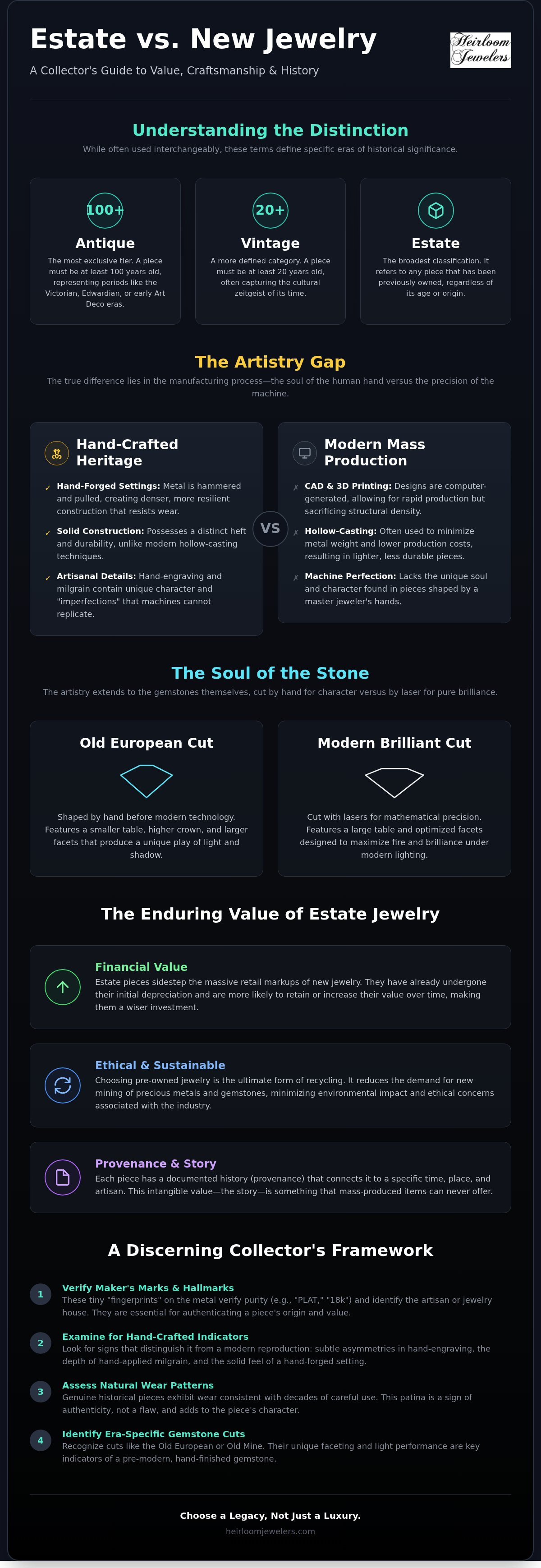
Understanding the lexicon of the secondary market is the first step in appreciating the value of estate jewelry vs new. While many use these terms interchangeably, they represent specific categories of age and historical significance. Estate jewelry is the broadest classification. It refers to any piece that has been previously owned, regardless of its age. This category includes everything from a contemporary designer piece sold last year to a century-old heirloom.
Vintage jewelry occupies a more defined space. To earn the vintage label, a piece must be at least 20 years old. These items often capture the cultural zeitgeist of their era, such as the bold yellow gold of the 1980s or the sleek lines of the mid-century modern period. Antique jewelry is the most exclusive tier. According to official 2026 standards, these pieces must be at least 100 years old. This means the jewelry was crafted in or before 1926, representing the height of the Victorian, Edwardian, or early Art Deco periods.
The Provenance Factor: More Than Just a Previous Owner
A piece's history provides a layer of intangible value that modern retail cannot offer. Provenance is the documented history of ownership, and it acts as a bridge between the past and present. Hallmarks and maker marks are the essential "fingerprints" of a high-value piece. These tiny stamps on the interior of a band or the back of a clasp verify the metal purity and identify the artisan or jewelry house responsible for the work. Understanding the timeless artistry of antique rings helps collectors recognize the specific hallmarks that signal genuine historical value.
Era-Specific Styles: From Art Deco to Retro
Each era possesses a distinct visual language. Art Deco pieces are defined by geometric precision and the frequent use of platinum or white gold. They often feature caliber-cut gemstones and symmetrical patterns. In contrast, Victorian and Edwardian jewelry leans toward romantic symbolism, utilizing motifs like bows, hearts, and floral engravings. These periods focused on delicate metalwork and the use of natural pearls or diamonds in intricate settings.
Distinguishing an original piece from a modern reproduction requires a discerning eye. While modern "vintage-style" jewelry is often cast in a mold for mass production, original era pieces feature hand-forged settings and hand-engraved details. Choosing between estate jewelry vs new often comes down to whether you value a mass-produced item or a piece with a verifiable history. You should look for specific indicators of age:
- Natural wear patterns on the metal that suggest decades of careful use.
- Artisanal gemstone cuts, such as the Old European or Old Mine cut, which possess unique light-refraction qualities.
- Hand-applied milgrain or filigree that lacks the rigid perfection of a computer-generated design.
The Artistry Gap: Hand-Crafted Heritage vs. Modern Mass Production
The technical distinction between estate jewelry vs new is rooted in the manufacturing process. Modern retail pieces are typically the result of Computer-Aided Design (CAD) and 3D printing. This technology allows for rapid mass production but often sacrifices the structural density found in heritage pieces. While a modern ring might look perfect on a screen, it lacks the soul of a piece shaped by a master jeweler's hands.
In contrast, many estate items were hand-forged. Artisans manually hammered and pulled the metal, a process that work-hardens the material. This creates a denser, more resilient setting that resists bending and thinning over decades of wear. Hand-engraved details and hand-applied milgrain possess a depth and character that machines simply cannot replicate. These "imperfections" of the human hand are what give vintage pieces their unique identity.
You can often feel this difference in the palm of your hand. Modern commercial jewelry frequently utilizes hollow-casting techniques to minimize metal weight and lower production costs. An estate piece possesses a distinct heft. This solid construction ensures that prongs and shanks remain secure for generations. When you hold a vintage platinum ring, the weight alone signals a level of quality that's becoming increasingly rare in the contemporary market.
The Charm of the Old European Cut Diamond
The artistry extends to the gemstones themselves. Before modern laser-cutting technology, diamonds like the Old European cut were shaped by hand. These stones feature a smaller table and a higher crown than modern brilliant cuts. They were designed to capture the warm, flickering glow of candlelight rather than the harsh fluorescent lights of a contemporary jewelry store. This creates a soft "inner fire" and broad flashes of light that many collectors find more soulful than the clinical precision of new diamonds. These artisanal cuts are finite resources, making them highly sought after by those who value rarity.
Material Quality: Platinum and High-Karat Gold
Heritage jewelry often showcases a superior use of noble metals. Platinum was the preferred choice for high-end vintage engagement rings during the Edwardian and Art Deco eras. It's naturally white and exceptionally durable, holding gemstones more securely than almost any other metal. When 18K white gold was used, the alloys were often mixed to maintain a high luster. These older metal compositions tend to retain their original finish better than modern commercial mixes. If you appreciate this level of technical detail, exploring a curated collection of authenticated estate pieces is the best way to see the difference firsthand.
Financial and Ethical Value: The Sustainability of Pre-Owned Fine Jewelry
The financial logic of choosing estate jewelry vs new is rooted in the concept of intrinsic value. When you purchase a piece from a modern retail showroom, a significant portion of the price covers the store's overhead, national marketing campaigns, and high-pressure sales commissions. This results in "instant depreciation" the moment the jewelry leaves the counter. By contrast, the price of an estate piece is more closely aligned with the actual worth of its materials and the rarity of its craftsmanship. You're paying for the gold, the gemstones, and the history, not the branding.
This shift in value allows collectors to secure more "carat for the dollar." In the secondary market, your budget often stretches further, enabling the acquisition of larger stones or higher-purity metals like platinum and 18K gold. While new jewelry is priced as a retail product, estate items are priced as assets. Understanding the nuances of heritage jewelry investment insights can help you identify pieces that are likely to maintain or even increase their value as the market for rare, historical items continues to grow.
The Ethical Lifecycle of a Gemstone
Sustainability is no longer a peripheral concern for the modern collector. Estate jewelry is the most environmentally friendly luxury purchase available because it represents the ultimate form of recycling. Every newly mined gemstone or ounce of gold requires significant land displacement and energy consumption. Choosing a vintage piece means you aren't contributing to the demand for new mining operations. It's a choice that respects the earth while preserving the artistry of the past.
Evaluating estate jewelry vs new requires a shift in perspective. You aren't looking for the sterile, uniform perfection of a modern factory line. Instead, you're looking for the integrity of a lived history and the markers of genuine hand-craftsmanship. A structured approach ensures that your purchase is as secure as it is beautiful. This framework allows you to move beyond the aesthetic and verify the intrinsic value of a piece.
Identifying Hallmarks and Signatures
Hallmarks are the primary language of the secondary market. You should first look for metal purity stamps like "18K" for gold or "Plat" and "950" for platinum. Designer signatures add a significant layer of value and collectability. For example, verifying a maker's mark on a high-end Lugano emerald and diamond necklace confirms its origin in a prestigious jewelry house. Historic assay marks offer even more detail. The French eagle head for gold or the dog head for platinum provide definitive proof of a piece's origin and era. These stamps are the "fingerprints" of an artisan, and their presence often dictates the piece's market standing.
Condition Assessment: What to Look For
Beyond the marks, you must assess the physical state of the jewelry. It's vital to distinguish between "patina" and actual damage. Patina is the soft, desirable luster that develops on vintage metals over decades of wear. Damage, however, includes thinning shanks or worn-down prongs that might compromise a gemstone's security. You should also inspect the gemstones themselves. Older diamonds may have small "nicks" or "flea bites" on the girdle. While these are common in historical pieces, they should be factored into your evaluation.
Deciding when to clean or restore a piece is a delicate balance. Some collectors prefer the original, unpolished state of a vintage ring to preserve its historical character. Others choose professional cleaning to reveal the stone's original brilliance. Regardless of your preference, every significant purchase should be accompanied by an independent appraisal or authentication report. This document acts as your insurance and your proof of value. Finally, consider the "wearability" of the item. An Edwardian brooch is a masterpiece, but it must fit your modern lifestyle to be a successful addition to your collection.
If you're ready to find a piece that meets these rigorous standards, you can browse our authenticated estate collection to discover jewelry with a verified heritage.
Curating a Legacy: Why Heirloom Jewelers Specializes in Authenticated Estate Finds
At Heirloom Jewelers, we don't view jewelry as a mere commodity. We see it as a vessel for history and a testament to human skill. The choice between estate jewelry vs new is often a choice between a mass-produced product and a unique work of art. We've dedicated ourselves to curating a collection that prioritizes the latter. Every piece we acquire must possess a distinct soul and a verifiable heritage. This commitment means we intentionally exclude modern, mass-produced items from our inventory. We prefer the quiet confidence of a hand-forged setting over the rigid, clinical perfection of a computer-generated design. Our gallery is a place for those who value quality over volume.
Our expertise allows us to act as a bridge between the past and the present. We specialize in rare, authenticated finds that represent the peak of their respective eras. Whether it's the architectural brilliance of a vintage platinum setting or the rare designer pedigree of a Lugano Emerald & Diamond Necklace 18K White Gold, our focus remains on quality. We value the "soul" of every item we bring into our collection. This includes the subtle variations in hand-cut stones and the deep, natural luster of aged noble metals. These details are the hallmarks of a piece that was made to last a lifetime. We believe that true luxury is found in items that have already proven their durability through the decades.
The Heirloom Jewelers Selection Process
Our curation process is methodical. We evaluate every acquisition for historical significance and material excellence. This includes a focus on rare gemstone pairings, like our Estate Peridot & Quartz Dangle Earrings 14K Yellow Gold. We also maintain strict standards for structural integrity. Every Vintage Platinum 0.5 Carat Diamond Engagement Ring is inspected to ensure the settings are secure. We believe a legacy piece must be as durable as it is beautiful.
Finding Your Unique Piece
Owning a treasure that no one else possesses brings a unique satisfaction. When you move beyond modern retail, you build a collection that tells a personal story. These pieces are conversations with the past. By selecting an authenticated estate piece, you invest in artistry that remains relevant for generations. We invite you to explore our latest estate arrivals to find your next heirloom.
Choosing a Piece That Transcends Trends
Investing in a historical piece is a commitment to quality that modern retail rarely matches. When comparing estate jewelry vs new, the choice rests on whether you value mass-produced convenience or the enduring soul of hand-crafted artistry. You've learned how to identify authentic hallmarks and why the structural integrity of vintage platinum often surpasses contemporary alloys. By choosing pre-owned, you also embrace a sustainable lifecycle that preserves the earth while securing a piece with verifiable intrinsic value.
Building a jewelry collection is an opportunity to curate your own personal history. It's about finding those rare items that speak to your style and values. Our curated national collection of rare estate fine jewelry is designed for the discerning collector who seeks more than just a brand name. We take pride in our role as specialists in Old European Cut diamonds and authenticated Lugano designer jewelry, ensuring every treasure meets our rigorous standards for excellence.
Discover your next one-of-a-kind treasure at Heirloom Jewelers and begin your journey into the world of fine heritage pieces. We look forward to helping you find a legacy item you'll be proud to wear for years to come.
Frequently Asked Questions
Is estate jewelry safe to wear and is it properly cleaned?
Estate jewelry is entirely safe to wear after undergoing a professional restoration process. Every piece in a curated collection is ultrasonically cleaned and steam-sterilized to ensure it meets modern hygiene standards. Beyond cleanliness, these items are often structurally superior to modern alternatives. Because many historical pieces were hand-forged rather than hollow-cast, they possess a density that makes them exceptionally durable for daily wear once the prongs and settings have been expertly inspected.
Does estate jewelry hold its value better than new jewelry?
Estate jewelry generally holds its value better than new retail pieces because it bypasses the steep initial markup found in showrooms. When comparing estate jewelry vs new, the secondary market price is closely tied to the intrinsic value of the metals and gemstones. A new ring often loses a significant percentage of its value the moment it leaves the store. In contrast, a vintage piece has already stabilized in price, making it a more resilient financial asset.
How can I be sure the diamonds in estate jewelry are real?
Authentication is the cornerstone of a secure purchase. Professional curators use advanced gemological tools and historical knowledge to verify that diamonds are natural and era-appropriate. We look for specific artisanal cuts, such as the Old European or Old Mine cut, which were prevalent before modern laser technology. Every significant gemstone should be accompanied by an authentication report or an independent appraisal to provide definitive proof of its origin and natural status.
What is the difference between a vintage ring and a "vintage-style" ring?
A vintage ring is an authentic historical item at least 20 years old, while a "vintage-style" ring is a modern reproduction. Modern reproductions are typically mass-produced using CAD software and casting molds, lacking the hand-forged density of an original. True vintage pieces offer unique artistry and a verifiable provenance. When choosing between estate jewelry vs new reproductions, collectors usually prefer the original for its superior craftsmanship and the soul of its historical era.
Can estate jewelry be resized or repaired?
Most high-quality estate jewelry can be resized or repaired by a skilled jeweler specializing in historical pieces. Platinum and high-karat gold are particularly malleable and responsive to traditional bench techniques. It's important to work with a specialist who understands era-specific methods to ensure the piece's integrity remains intact. While we focus on curating and selling authenticated finds, we always recommend that collectors maintain their heirlooms through periodic professional inspections of prongs and clasps.
Why is estate jewelry often more affordable than new pieces at a mall jeweler?
Estate jewelry is often more affordable because the price is not inflated by modern manufacturing costs or national advertising budgets. Mall jewelers must cover immense overhead, including prime real estate and high-pressure marketing campaigns. Secondary market pieces are priced based on the quality of the materials and the rarity of the design. This allows you to acquire higher-quality gemstones and denser metal settings for a price that is often significantly lower than a comparable new item.
What are the most popular eras for estate jewelry collectors in 2026?
In 2026, the most sought-after eras for collectors include the Art Deco and Victorian periods. Art Deco is prized for its geometric precision and the use of platinum, while the Victorian era is experiencing a revival due to its romantic symbolism and intricate gold work. There is also a growing interest in "Retro" pieces from the 1940s, which feature bold designs and large colored gemstones. These eras represent a peak in hand-crafted jewelry artistry.
Do estate pieces come with grading reports like GIA?
Many high-value estate pieces come with original GIA grading reports or modern independent appraisals. While older diamonds were often cut before standardized grading became common, reputable dealers will provide a contemporary report to verify the stone's quality. For designer items, such as a Lugano necklace, we prioritize pieces with verifiable hallmarks and documentation. These reports are essential for insurance purposes and provide you with total confidence in the technical specifications of your purchase.