
An authentic cameo necklace is more than just a decorative accessory. It is a miniature sculpture that captures a moment of history in a single, delicate carving. Many collectors are drawn to the romantic allure of these pieces, yet the fear of accidentally purchasing a modern resin or plastic imitation often creates hesitation. You want to ensure that the piece you choose carries the weight of true artistry and heritage.
We understand that the nuances of antique jewelry can feel complex. It's common to feel uncertain when trying to distinguish between a hand-carved shell and a molded composite. This guide provides the clarity you need to build a collection with quiet confidence. You will learn to identify the specific hallmarks of Victorian and Art Deco styles, understand the differences between shell, stone, and glass, and master the techniques for verifying hand-carved details. We also include essential care instructions to preserve these delicate treasures for years to come. This overview will help you navigate the secondary market with the expertise of a seasoned curator.
Key Takeaways
- Learn the technical distinction between relief and intaglio carvings to better appreciate the depth of an authentic cameo necklace.
- Understand the material hierarchy and why hardstone carvings often command higher value and offer greater durability than shell or glass.
- Discover expert inspection techniques, such as using a jeweler’s loupe to identify tool marks and checking for "crazing" to verify age.
- Master the art of preservation by learning why certain materials require hydration and resting to maintain their structural integrity.
- Explore the benefits of acquiring authenticated estate pieces that prioritize historical significance over modern mass production.
What is a Cameo Necklace? Understanding the Art of Relief Carving
A cameo is a masterpiece of precision. At its core, the term refers to a method of carving where a design is sculpted in relief from a material like shell, agate, or onyx. This technique utilizes the natural color layers of the medium to create a distinct image against a contrasting background. While many recognize the classic cameo necklace as a profile of a woman, the artistry extends to intricate scenes of mythology and nature. This diversity makes each piece a unique historical document.
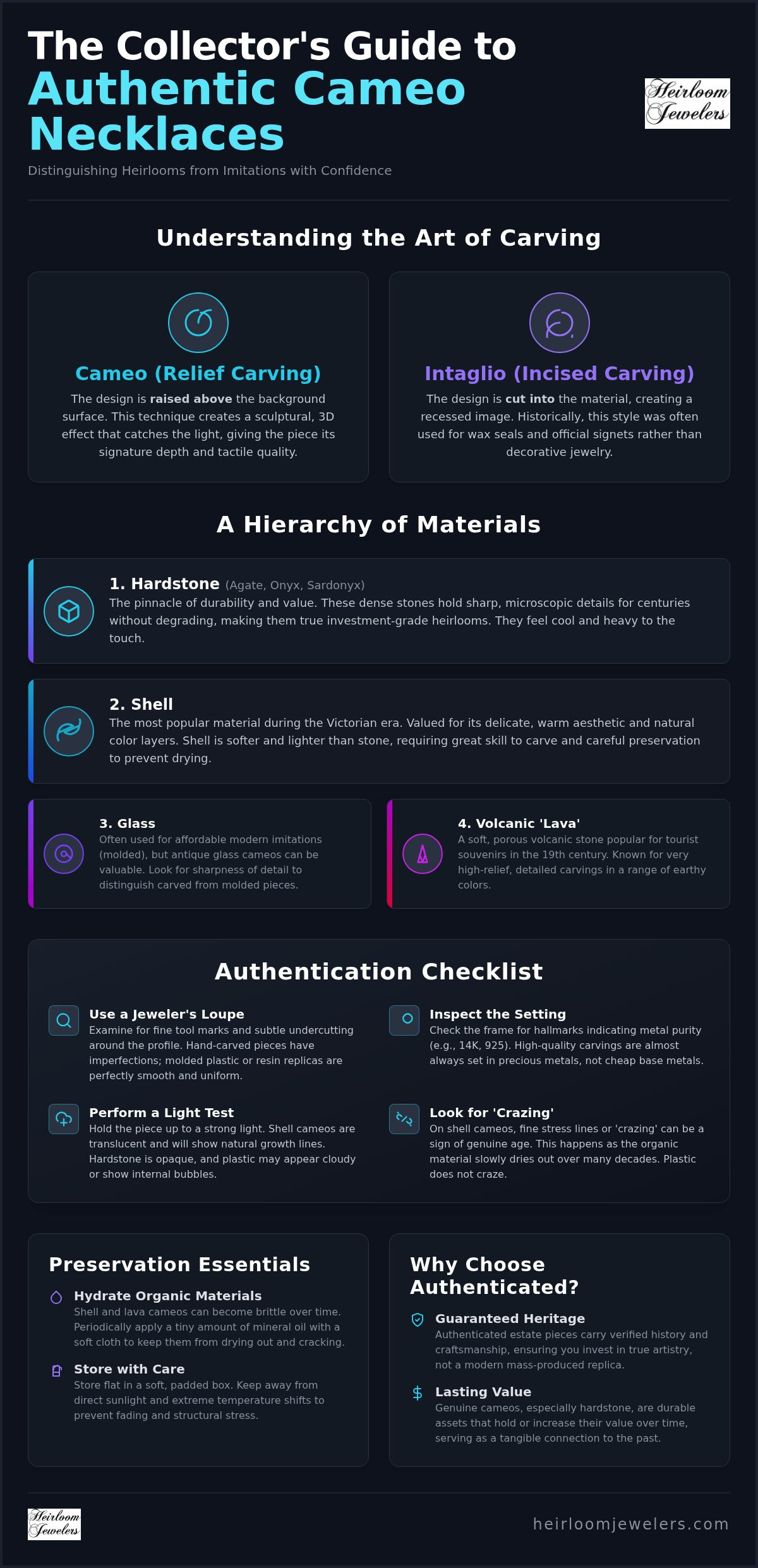
It's helpful to distinguish between relief and intaglio. In a cameo, the image is raised above the surface. In contrast, an intaglio carving is incised or cut into the material, creating a recessed design often used for wax seals. This raised relief gives the cameo its sculptural quality, catching the light and casting soft shadows that emphasize the artisan's skill. This tactile depth is what defines the category and separates it from flat, painted jewelry.
The choice of size for a cameo necklace often depends on the intended wear. Larger, bolder pendants were traditionally worn on high collars or velvet ribbons. Smaller, more delicate pieces complement modern V-necks or open collars. These necklaces have historically served as sentimental tokens, often exchanged as gifts of affection or kept as mementos of loved ones. They carry an emotional weight that few modern pieces can replicate, acting as wearable heirlooms that bridge generations.
The Anatomy of a Cameo Pendant
The subject matter of a cameo often defines its era. Classical mythology and floral motifs were popular in the 19th century, while the "Lady" profile became a staple of the early 20th century. Look closely at the background layer. It must provide a clean, uniform contrast to make the carving pop. Finally, the frame acts as the finishing touch. Estate pieces often feature 14K gold settings or intricate silver filigree. Some collectors specifically seek out frames accented with seed pearls or small diamonds to enhance the central carving. These details help determine the piece's origin and value.
A Brief History of the Cameo
Cameos trace their origins back to ancient Greece and Rome. They served as symbols of status and were often believed to offer protection. During the Renaissance, there was a significant revival of this art form as interest in classical antiquity surged. This shift led to more refined gemstone carvings and eventually the popularity of shell cameos in the Victorian era. Much like the intricate details found in antique rings, these pieces represent a bridge to the past. They preserve the craftsmanship of a bygone era for modern collectors who value heritage over mass production.
Materials and Craftsmanship: From Sardonyx to Shell
The value of a cameo necklace is fundamentally tied to the material beneath the artisan’s chisel. While modern reproductions often rely on molded plastics, authentic estate pieces adhere to a traditional hierarchy of materials. Hardstone sits at the top of this list; it is followed by shell, glass, and the unique volcanic 'lava' carvings. Each medium offers a distinct aesthetic and requires a specific level of technical expertise to manipulate. Understanding these differences helps you appreciate the true labor behind the art.
Stone cameos, often referred to as hardstone, are the most durable and valuable examples found in heritage collections. Artisans typically use varieties of agate or onyx. These stones possess natural, parallel layers of color. Carnelian provides a warm, orange-red background. Sardonyx offers a deep, brownish-red contrast. These materials are incredibly hard. They require a master lapidary to carve them using specialized tools and abrasive powders. Because stone doesn't degrade like organic materials, a hardstone cameo necklace maintains its crisp detail for centuries. This permanence makes them a preferred choice for those seeking a significant investment piece.
Stone Cameos: The Peak of Durability
Hardstone carvings represent the pinnacle of the craft. Agate and onyx are favored for their ability to hold sharp, minute details without chipping. This durability ensures that the profile’s features remain as clear today as they were when first carved. Collectors value these pieces for their weight and cool touch. If you're interested in adding a historically significant piece to your collection, you might view our selection of authenticated estate jewelry to see these materials in person.
Shell Cameos: Delicacy and Detail
Shell cameos gained immense popularity during the 19th century as the quintessential Victorian souvenir. They're carved from various marine shells. The Helmet shell is prized for its chocolate-brown background. The Queen Conch offers delicate pink hues. Shell is softer than stone. This allows for incredibly fine, fluid details that appear almost ethereal. You can verify the authenticity of a shell piece with the translucency test. Hold the carving up to a strong light source. An authentic shell will show a warm, natural glow and subtle growth lines. It's a simple way to confirm the material's origin.
Beyond stone and shell, you'll sometimes encounter 'Lava' cameos. Despite the name, these are actually carved from limestone or tuff found near Mount Vesuvius. These pieces are characterized by their matte finish and exceptionally high relief. They often feature deep undercuts that make the subject appear three-dimensional. They were popular 'Grand Tour' mementos. They represent a fascinating intersection of geology and art that remains highly collectible today.
How to Authenticate an Antique Cameo Necklace
Verifying the authenticity of a cameo necklace requires a methodical approach. It's about looking for the hand of the artist. While modern reproductions rely on mass-produced molds, true antique pieces reveal the subtle irregularities of manual labor. You can begin your inspection with a few clear steps that establish the piece's origin and quality.
First, use a 10x jeweler's loupe to examine the carving's surface. Look for tiny striations or uneven depths in the recessed areas. Hand-carved pieces aren't perfectly uniform. Molded resin or plastic will appear too smooth and lack these minute tool marks. Second, check for crazing. These are fine, hair-like cracks that develop in shell as it ages and loses moisture. While significant crazing can weaken a piece, light lines often act as a signature of true antiquity. They're rarely found in modern synthetics.
Third, analyze the subject’s features. Facial profiles evolved significantly over the decades. Victorian cameos often showcase Roman-style aquiline noses and elaborate, coiled hair. Later pieces from the mid-20th century tend to feature more snub-nosed faces or generic "pretty" profiles. Finally, examine the setting. Look for era-appropriate hallmarks on the frame or clasp. A high-quality 14K or 18K gold frame with a secure bezel often indicates a carving of equal caliber. These metal marks provide a verifiable timeline for the piece's creation.
Carving Marks vs. Molded Resin
Resin fakes often have a flat, soulless appearance. They lack the sculptural depth found in genuine relief. Look specifically for the hand of the artist in the hair and drapery of the figure. In a hand-carved piece, you'll see layered strands of hair and deep undercuts where the chin meets the neck. Don't use the hot needle test. It's a common suggestion that involves touching a heated point to the piece to smell for burning plastic. This is destructive and can permanently damage a fine estate item. Trust your eyes and a loupe instead.
Historical Subject Matter as a Clue
The subject matter provides a final clue to the era. Victorian pieces favor classical mythology and heavy symbolism, reflecting the romanticism of the time. In contrast, the 1920s and 30s introduced geometric frames and stylized, bobbed hair. These designs align with the broader movement toward Art Deco jewelry, where symmetry and sharp lines replaced the romantic curves of the previous century. Identifying these stylistic shifts helps you place a piece accurately within its historical context.
Styling and Caring for Your Heirloom Cameo
Owning a cameo necklace is a privilege that comes with the responsibility of preservation. These pieces aren't meant to sit in a dark box. They thrive when worn and appreciated. However, their organic nature requires a specific care routine to ensure they don't become brittle or damaged over time. Proper maintenance ensures that the intricate relief remains sharp for the next generation.
The Art of Layering
Modern fashion encourages a dialogue between different eras. You can easily integrate a vintage cameo into a contemporary wardrobe by layering it with 14K gold chains of varying lengths. Pairing the matte texture of a shell carving with the luster of pearls creates a sophisticated contrast. For a minimalist approach, let the cameo act as a singular statement piece against a simple blouse. This aesthetic mirrors the refined simplicity often found in vintage solitaire engagement rings. Both items prioritize the quality of a single, central focal point rather than excessive ornamentation.
Cleaning and Preservation
Shell cameos are biological materials. They can dry out if left in arid environments for too long. Resting your cameo involves giving it a break from wear, but it also means maintaining its hydration. A professional technique involves applying a tiny amount of high-quality mineral oil to the surface of the shell with a cotton swab. Let it sit for a few hours before gently wiping away the excess. This process helps prevent the crazing or fine cracks mentioned in previous sections. It keeps the shell supple and translucent.
Never place your cameo necklace in an ultrasonic cleaner. The intense vibrations can cause delicate shell or stone to shatter, especially if internal stress lines are present. Instead, use a soft baby toothbrush and a drop of mild, pH-neutral soap. Rinse with lukewarm water and pat dry with a lint-free cloth. Store your treasures away from direct sunlight and extreme temperature shifts. A dedicated jewelry pouch or a lined box is ideal for preventing scratches from harder gemstones like diamonds or sapphires.
If you're looking for a piece that has been professionally inspected and preserved, explore our collection of estate jewelry to find your next heirloom.
Why Choose Authenticated Estate Cameos from Heirloom Jewelers?
Choosing a cameo necklace from an estate collection is a deliberate decision to favor substance over convenience. Modern retail is saturated with "cameo-style" items that lack the soul and depth of a hand-carved piece. At Heirloom Jewelers, we act as curators of history. Every piece in our collection has been vetted for its historical accuracy and material integrity. We ensure that the story told by the carving is as authentic as the stone or shell it's etched upon. This commitment to quality protects your investment and honors the original artisan's vision.
Sustainability is a core value of our business. Selecting pre-owned heritage jewelry is an ethical choice that honors existing artistry. It reduces the demand for new mining and the energy-intensive processes of mass manufacturing. These pieces have already stood the test of time. They carry a natural patina of age that modern reproductions simply cannot replicate. This historical weight makes them ideal candidates for a family legacy. You're not just purchasing a necklace; you're preserving a piece of the past for the future.
Beyond Mass-Produced Jewelry
The market is full of molded plastic imitations. These items may mimic the look, but they fail to capture the "Hand of the Artist" revealed in the fine details of the hair and drapery. An authenticated antique retains its value because it's a finite resource. No two hand-carved cameos are identical. Every estate find comes with a unique history. It might have been a Grand Tour souvenir or a cherished gift between loved ones. This individuality is what makes a genuine cameo necklace a true work of fine art rather than a mere accessory.
Building Your Jewelry Legacy
A cameo is often the first step into the world of serious estate collecting. It's an accessible entry point that offers deep historical rewards. We provide the professional guidance needed to navigate this market with confidence. Our goal is to foster long-term relationships built on transparency and a shared passion for craftsmanship. We help you select pieces that will be cherished for decades and passed down through generations. When you're ready to start your journey, you can browse our curated collection of estate fine jewelry to find a piece that speaks to your personal style and heritage.
Preserving the Art of the Cameo for Future Generations
Collecting these wearable sculptures is a journey into the past. You now possess the knowledge to distinguish between molded resin and the "Hand of the Artist" found in genuine relief carvings. By recognizing the durability of hardstone and the delicate glow of high-quality shell, you can select pieces that offer both aesthetic beauty and long-term value. These historical documents require a specific touch; your mastery of proper care ensures they remain intact for decades.
Investing in a cameo necklace is a meaningful way to build a personal legacy through rare craftsmanship. At Heirloom Jewelers, we prioritize integrity and historical significance in every piece we curate. Our estate experts vet every item for material quality and accuracy, acting as your guide through the complexities of the secondary market. We invite you to explore our authenticated collection of estate and vintage jewelry to find a rare piece that resonates with your personal style. Start your collection today with the confidence that comes from expert curation and a deep respect for artisanal heritage.
Frequently Asked Questions
How can I tell if my cameo necklace is real shell or plastic?
You can distinguish real shell from plastic by holding the piece up to a strong light source. Authentic shell is translucent and reveals natural growth lines or subtle color variations. Plastic or resin imitations appear uniform and opaque. Additionally, use a loupe to look for tiny carving marks. Molded plastic lacks the sharp, irregular edges produced by an artisan's chisel.
Are old cameo necklaces worth a lot of money?
The value of an antique piece depends on the rarity of the material and the complexity of the carving. Stone cameos generally command higher prices than shell due to their durability and the skill required to carve them. Signed pieces or those depicting rare mythological scenes also carry significant value. A high-quality 14K or 18K gold frame further enhances the worth of a cameo necklace in the estate market.
What does a cameo necklace symbolize?
Cameos historically symbolized social status and refined taste. During the Victorian era, they were often worn as sentimental tokens of affection or mourning. The specific subject matter also carries meaning. A profile of a goddess like Diana might represent a connection to nature or independence. These pieces were intended to be wearable conversations, reflecting the wearer's personal values or intellectual interests.
Can I wear my cameo necklace every day?
You can wear a stone cameo daily because hardstone is resistant to scratches and environmental damage. Shell cameos require more caution. They are susceptible to damage from perfumes, hairsprays, and skin oils. If you wear shell frequently, ensure you wipe it with a soft cloth afterward. It's best to save delicate shell pieces for special occasions to prevent unnecessary wear or accidental impact.
What is the difference between a shell cameo and a stone cameo?
The primary difference lies in the hardness and origin of the material. Shell cameos are organic and carved from marine shells like the helmet or queen conch. They are softer and easier to carve. Stone cameos, or hardstones, are typically made from agate or onyx. These require diamond-tipped tools and a master lapidary. Stone pieces are more durable and often feature more precise, lasting details.
How do I clean a vintage cameo without damaging it?
Clean your vintage carving using a soft baby toothbrush and a drop of mild, pH-neutral soap in lukewarm water. Gently brush the recessed areas to remove dust. Avoid ultrasonic cleaners or harsh chemicals, as these can cause shell to crack or stone to shatter. After cleaning, pat the piece dry with a lint-free cloth. For shell, a light application of mineral oil can prevent drying and crazing.
Is a cameo necklace considered Art Deco?
A cameo necklace can certainly be Art Deco if it features the specific hallmarks of that era. Art Deco examples typically utilize geometric frames, white gold or platinum settings, and stylized profiles with bobbed hair. While the majority of antique cameos are Victorian or neoclassical in style, the 1920s introduced a modern, streamlined aesthetic that remains highly collectible for its unique, architectural look.
Why do some cameos have a "lady" profile and others have scenes?
Profiles were the most common subjects because they were easier to carve and widely popular for sentimental gifts. Mythological or historical scenes required a much higher level of skill and more time to complete. These complex compositions were often commissioned by wealthy patrons or created as "masterpieces" by skilled artisans. Consequently, scenic cameos are rarer and often more sought after by serious estate collectors today.