
A cocktail ring was never intended to be a subtle accessory; it was born as a sparkling act of defiance during the Prohibition era. These pieces served as bold symbols of independence, designed to catch the light at clandestine gatherings. Today, vintage cocktail rings remain the ultimate heritage statement, offering a level of craftsmanship and character that modern mass-production cannot replicate.
You likely appreciate the history behind these oversized gems but feel hesitant when faced with the complexities of the secondary market. It's difficult to distinguish a genuine mid-century treasure from a clever reproduction, and the fear of overpaying for a piece without provenance is a valid concern for any collector. This guide simplifies that process. We'll provide the expert knowledge required to identify era-specific styles and evaluate the quality of estate gemstones with confidence. We'll explore the evolution of these rings from the 1920s through the 1960s, offer practical advice for verifying authenticity, and show you how to style these historic pieces for a modern, sophisticated look.
Key Takeaways
- Discover how Prohibition-era social shifts transformed vintage cocktail rings into enduring symbols of female independence and personal style.
- Learn to identify the distinct design hallmarks of heritage eras, including Victorian romanticism and Art Deco geometric precision.
- Gain expertise in evaluating "Old World" gemstone cuts and the unique characteristics of estate materials like platinum and 18K gold.
- Master contemporary styling techniques using the "One Statement Rule" to seamlessly integrate bold heritage pieces into a modern wardrobe.
- Understand the essential steps for authenticating secondary market finds by examining hallmarks, wear patterns, and gemstone condition.
What Defines a Vintage Cocktail Ring?
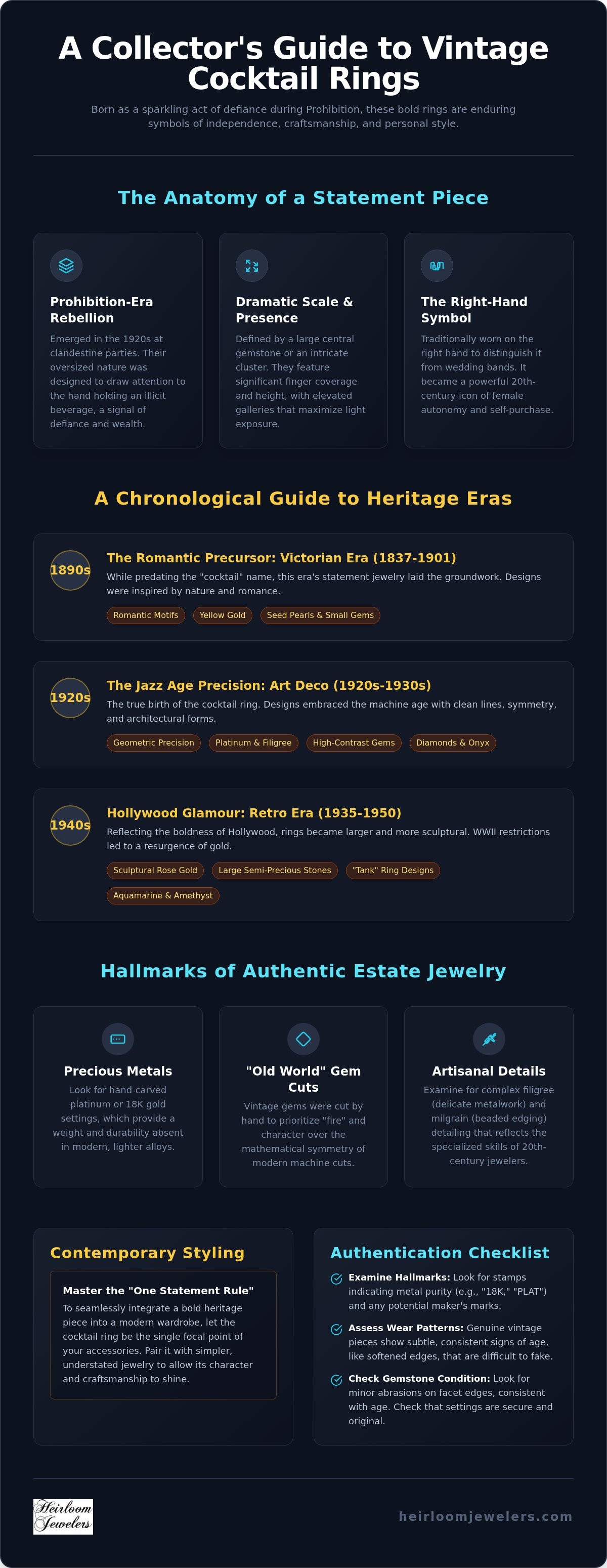
A vintage cocktail ring is defined by its dramatic scale and unapologetic presence. Unlike traditional bands, these pieces typically feature a large central gemstone or an intricate cluster of smaller stones designed to capture attention from across a room. This category of jewelry emerged as a specific response to the social shifts of the early 20th century. To understand the origins of these pieces, one must look at What is a Cocktail Ring? and its evolution from a functional accessory to a tool of social rebellion.
During the Prohibition era in the United States, clandestine cocktail parties became the stage for a new kind of fashion. Women began wearing oversized, vibrant rings to draw attention to the hand holding their illicit beverage. It was a signal of wealth, but more importantly, it was a signal of defiance. These vintage cocktail rings were never intended to be demure; they were crafted to be seen. They represent a departure from the conservative styles of previous generations, favoring imaginative settings and bold, colorful gemstones over the standard diamond solitaire.
The Symbolism of the Right Hand
Traditionally, these rings are worn on the right hand to distinguish them from engagement or wedding bands. This placement was a deliberate choice by women in the 1920s to signal that the jewelry was a self-purchase rather than a gift from a partner. The cocktail ring stands as a 20th-century icon of female autonomy. It's a piece that says the wearer is capable of providing for herself. Over the decades, the style evolved from a mark of underground rebellion into a sophisticated fashion staple that continues to celebrate personal achievement and individual taste.
Cocktail vs. Statement: Understanding the Scale
While the terms are often used interchangeably, true heritage cocktail rings possess specific technical characteristics. A primary factor is finger coverage. The setting often spans a significant portion of the phalange, creating a broad visual impact. Many vintage designs also emphasize height, with stones set in elevated galleries that rise several millimeters above the band to allow light to enter from every angle.
Heritage rings differ significantly from modern mass-produced oversized jewelry in their construction and material value. Authentic estate pieces often utilize specific craftsmanship techniques:
- Hand-carved platinum or 18K gold settings that provide a weight and durability absent in modern alloys.
- The use of "Old World" gemstone cuts that prioritize fire and character over modern mathematical symmetry.
- Complex filigree and milgrain detailing that reflects the specialized skills of 20th-century bench jewelers.
This focus on structural integrity ensures that vintage cocktail rings remain wearable decades after their creation. They aren't just fashion accessories; they're durable examples of historic artistry.
A Chronological Guide to Heritage Ring Eras
Identifying the era of vintage cocktail rings requires an eye for specific design movements. Each period reflects the prevailing social and artistic values of its time. While the Victorian era (1837-1901) predates the Prohibition-era "cocktail" moniker, its influence on statement jewelry is significant. These early pieces often feature romantic motifs, yellow gold settings, and delicate clusters of seed pearls. They laid the groundwork for the more assertive styles that followed in the 20th century.
The Precision of Art Deco Cocktail Rings
The 1920s and early 30s brought geometric precision to jewelry design. The advent of platinum allowed jewelers to create exceptionally fine, lace-like filigree that remained structurally sound despite its delicate appearance. Common pairings included high-contrast combinations like diamonds with black onyx, deep blue sapphires, or vibrant emeralds. These designs prioritized symmetry and sharp lines. For a deeper look at these Jazz Age treasures, explore our guide to art deco jewelry.
The Boldness of the Retro Era
Moving into the Retro period (1935-1950), the style shifted toward Hollywood glamour. World War II restrictions on platinum led to a resurgence of gold, particularly sculptural rose gold. Centerpieces grew larger, often featuring semi-precious stones like aquamarine or amethyst. One iconic design from this era is the "Tank" ring. Inspired by industrial machinery and military vehicles, these pieces possess an architectural, heavy-set aesthetic that remains highly collectible. The story of the cocktail ring and its production during this time highlights how industrial shifts directly influenced jewelry design.
The Mid-Century Modern period (1950-1970) introduced abstract forms and textured metals. Jewelers began experimenting with "bark" finishes and avant-garde gemstone placements that broke away from traditional symmetry. These pieces often feel more like miniature sculptures than standard jewelry. They represent a bridge between classic heritage and the experimental nature of contemporary design. At Heirloom Jewelers, we curate authenticated examples from each of these distinct periods. You can browse our current collection of estate and vintage fine jewelry to find a piece that resonates with your personal aesthetic.
Understanding these chronological shifts helps collectors verify the age and authenticity of vintage cocktail rings. A ring's metal choice, gemstone cut, and setting style are all markers of its place in history. By studying these details, you can confidently build a collection that represents the best of 20th-century craftsmanship.
Gemstone Variety and Setting Techniques in Estate Jewelry
The allure of vintage cocktail rings often lies in the diversity of the gemstones selected by 20th-century artisans. While diamonds, rubies, and sapphires remain staples, heritage pieces frequently feature stones that offer unique character and depth. Spinel, for instance, provides exceptional brilliance and a historical presence that rivals the finest rubies. Tourmaline was a favorite for its vast color spectrum, often used in the bold Retro designs mentioned earlier. Sardonyx and other hardstone cameos also appeared in more architectural Mid-Century settings, providing a matte contrast to the sparkle of surrounding accent stones.
The structural integrity of these pieces relies on metalwork mastery that modern casting often fails to replicate. Hand-carved galleries aren't just decorative elements; they're engineered to elevate large stones, allowing maximum light to enter from the sides and back. This elevation enhances the stone's presence on the hand. You'll also find intricate milgrain detailing-tiny, hand-applied beads of metal-along the edges of settings. This technique adds a textured, professional finish that defines the sophisticated look of high-quality estate jewelry.
Historic Diamond Cuts in Statement Pieces
Old European and Old Mine cut diamonds are common centerpieces in heritage jewelry. Unlike modern round brilliants, which are cut for scientific symmetry, these hand-cut stones possess a distinct "inner glow." Their larger facets create broad flashes of light, a quality often called "fire," rather than the tight, splintered sparkle of modern stones. This individual character makes them highly sought after for antique rings and statement pieces. These stones reflect the era's preference for personality and craftsmanship over clinical perfection.
The Art of the Cluster and Halo
The halo setting evolved significantly across the decades. It transitioned from the soft, floral clusters of the Victorian era to the sharp, geometric frames of the Art Deco period. By surrounding a central stone with a border of smaller diamonds, jewelers created the illusion of a much larger centerpiece. This technique was both an artistic choice and a practical way to increase visual impact. High-end vintage cocktail rings from the mid-20th century frequently utilized 18K white gold or platinum for these settings. These metals provide a neutral, durable backdrop that allows the colors of the gemstones to remain the focal point without distraction from the metal itself.
How to Style Bold Heritage Rings for Contemporary Occasions
Styling vintage cocktail rings requires a balance between historic drama and modern restraint. The most effective approach is the "One Statement Rule." By allowing the ring to serve as the singular focal point of your ensemble, you avoid a cluttered appearance. A large Art Deco piece in platinum pairs exceptionally well with the clean lines of a silk blouse or even the rugged texture of premium denim. This juxtaposition of heritage craftsmanship and contemporary fabrics creates a curated look that feels intentional rather than dated.
Transitioning from day to night is seamless with the right choice of stone and setting. A ring with a deep-colored gemstone provides a sophisticated touch in a professional setting. That same ring gains a different character under evening lights, where the hand-cut facets of the gemstones catch the shadows and highlights of a gala environment. Mixing eras is another way to personalize your jewelry. You can wear an Art Deco ring alongside a modern, minimalist wedding band to create a unique narrative of past and present on one hand. It's a method that respects the history of the piece while keeping the overall aesthetic current.
Balancing Proportions
Hand size and finger length should dictate your choice of ring shape. A vertical orientation, where the setting runs parallel to the finger, creates an elongating effect. This is often more flattering for shorter fingers or smaller hands. Conversely, horizontal or wide-set rings make a powerful statement on larger hands. If you're concerned about a ring feeling visually "heavy," look for pieces featuring openwork or filigree. These techniques provide significant finger coverage while maintaining a sense of light and air, ensuring the ring doesn't overwhelm your hand's natural proportions.
Occasion-Based Styling
These pieces are natural conversation starters at social events. They invite questions about their origin and era, allowing you to share the history of the piece. For a modern casual look, pair a bold ring with a monochromatic outfit. This allows the intricate details of the metalwork and the specific fire of the gemstones to take center stage. You can learn more about the significance of these pieces in our guide to heritage jewelry.
If you're ready to find a piece that complements your personal style, explore our authenticated estate and vintage fine jewelry collection today. Each piece is selected for its quality and historical significance, ensuring it remains a staple in your wardrobe for years to come.
Selecting and Preserving Your Next Heirloom
Selecting vintage cocktail rings is a process that requires both an appreciation for history and a critical eye for technical detail. In the secondary market, authentication is the most vital step for any serious collector. You should look for specific hallmarks on the inner shank that indicate metal purity, such as "14K," "18K," or "PLAT." These historic stamps provide immediate insight into the piece's origin and the standards of the era in which it was crafted. Wear patterns also tell a story. A genuine vintage ring will show slight, uniform softening of the metal in areas that touch the skin. Modern reproductions often appear unnaturally sharp or perfectly symmetrical, lacking the character earned through decades of wear.
Gemstone condition is equally important. When examining estate pieces, look for minor abrasions on facet edges. These are common in older stones like the Old European cuts discussed previously. For many collectors, an "unrestored" original condition is more valuable than a piece that has been heavily polished. Preserving the original patina and hand-carved details maintains the ring's historical integrity. Heavy-handed modern repairs can often strip away the very character and "soul" that makes heritage pieces desirable to enthusiasts.
The Collector’s Checklist
Verifying the integrity of the setting is a priority before any purchase. You should check the prongs to ensure they are secure and haven't worn down to unsafe levels. A professional jeweler can often reinforce these without compromising the design. Buying through a trusted authority like Heirloom Jewelers ensures that every piece has been professionally vetted for quality and authenticity. This removes the uncertainty often associated with high-value secondary markets, providing peace of mind that your investment is a true piece of history.
Long-Term Care for Antique Settings
Preserving these treasures requires a gentle hand and a methodical approach. Avoid exposing your rings to modern chemicals found in perfumes, lotions, or household cleaners. These substances can dull gemstones and weaken metal over time. For cleaning, use a soft-bristled brush and mild, soapy water to reach into delicate filigree or intricate galleries. Always store your heritage rings in separate soft pouches. This prevents harder stones, like diamonds, from scratching softer metals or gems during storage. This careful stewardship ensures your ring remains a wearable legacy for future generations.
If you're ready to find a piece with its own unique history and authenticated provenance, we invite you to explore our curated collection of vintage cocktail rings today. Each selection is chosen for its exceptional craftsmanship and enduring beauty.
Investing in a Wearable Legacy
A heritage ring is more than a decorative accessory; it's a testament to the bold spirits of the past. These pieces represent a unique intersection of social rebellion and masterful bench jewelry. Whether you're drawn to the architectural strength of a Retro setting or the delicate filigree of a Jazz Age design, these rings offer a level of character that modern manufacturing cannot achieve. Successful collecting relies on your ability to prioritize authentication and structural integrity over fleeting trends.
Heirloom Jewelers serves as a trusted guide for those seeking unique heritage finds. We focus on expertly vetted vintage platinum and gemstone pieces, ensuring that every item in our inventory is a genuine historical artifact. We don't carry mass-produced items, favoring instead the rare and the remarkable. We invite you to View Our Curated Collection of Authenticated Vintage Cocktail Rings today. Finding the right piece allows you to carry a fragment of history with you, blending the elegance of the past with the confidence of the present.
Frequently Asked Questions
What is the difference between an antique and a vintage cocktail ring?
An antique ring is any piece that is at least 100 years old. In contrast, the term vintage typically refers to items between 20 and 100 years old. Most vintage cocktail rings found in today's market originate from the mid-20th century, specifically the Retro and Mid-Century Modern eras, while Art Deco pieces are now transitioning into the antique category.
Can I wear a vintage cocktail ring every day?
You can wear these pieces daily if the gemstone and setting are durable enough for frequent use. Diamonds, sapphires, and rubies are ideal for regular wear because they rank high on the Mohs scale of hardness. However, it's best to remove your jewelry during strenuous activities or when using household chemicals to protect the integrity of the vintage metalwork and delicate settings.
Why are cocktail rings traditionally worn on the right hand?
Cocktail rings are worn on the right hand to signal that the piece was a self-purchase rather than an engagement or wedding gift. This tradition began during the Prohibition era as a symbol of female independence and social rebellion. By placing these bold statement pieces on the right hand, women clearly distinguished their personal style from traditional marital jewelry worn on the left.
How do I know if a vintage ring is authentic or a reproduction?
Authenticity is verified by examining hallmarks, metal purity stamps, and specific craftsmanship techniques. Genuine vintage cocktail rings often show uniform, soft wear patterns on the shank and feature hand-cut gemstones like Old European or Old Mine cuts. Modern reproductions often lack these subtle signs of age and typically use modern casting methods that feel lighter or sharper than authentic estate pieces.
What gemstones are most common in Art Deco cocktail rings?
Art Deco designs frequently feature high-contrast pairings like diamonds set against black onyx, deep blue sapphires, or vibrant emeralds. These combinations were chosen to emphasize the geometric precision and sharp lines of the era. You'll also find frequent use of calibre-cut accent stones, which were custom-cut to fit perfectly into the intricate, angular channels of the platinum or white gold settings.
How should I clean a vintage ring with delicate filigree?
The safest way to clean intricate filigree is with a soft-bristled brush and mild, soapy water. Gently scrub the recesses of the setting to remove dust and oils, then rinse with lukewarm water. It's important to avoid ultrasonic cleaners for rings containing emeralds, opals, or pearls, as the vibrations and heat can damage these porous or fractured gemstones.
Are vintage cocktail rings a good investment?
Fine estate jewelry is generally considered a sound investment due to its rarity and the intrinsic value of the precious metals and gemstones. Authenticated heritage pieces often retain their value better than mass-produced modern jewelry because they can't be replicated. As specific eras like the Art Deco or Retro periods become more collectible, the market value for well-preserved examples often sees a steady increase.
Can a large vintage cocktail ring be resized?
Most large rings can be resized, but the complexity depends on the design of the shank and the placement of the stones. A skilled bench jeweler can typically adjust a standard gold or platinum band without issue. However, pieces with intricate engraving, filigree, or stones that wrap around the entire finger require specialized care to ensure the structural integrity and aesthetic of the ring remain intact.