
A 0.5-carat diamond is often dismissed as a modest choice, yet in the world of vintage solitaire engagement rings, it represents a masterclass in balanced historical proportions. Choosing a ring with a story shouldn't feel like a compromise on quality or durability. You want a piece that reflects a specific era's artistry while ensuring the setting remains secure for a lifetime of wear. Many collectors find themselves caught between the allure of history and the fear of purchasing a fragile reproduction or a diamond with a mismatched cut.
It's natural to feel overwhelmed by the technical differences between Old European cuts and modern brilliant styles. This guide clarifies those distinctions, proving that a vintage 0.5-carat diamond often possesses a unique fire that mass-produced stones cannot replicate. You'll learn how to identify genuine estate craftsmanship and why the density of platinum, which is thirty times rarer than gold, makes it the ideal anchor for an heirloom. We will examine the historical significance of these pieces, the technical hallmarks of authentic platinum work, and the enduring financial value of a well-curated 0.5-carat vintage solitaire.
Key Takeaways
- Learn the specific era markers that define an authentic vintage piece and why the 0.5-carat weight held significant prestige in the early 20th century.
- Understand why platinum's high molecular density provides superior security for diamonds in vintage solitaire engagement rings compared to modern white gold alternatives.
- Discover the aesthetic differences between the historic Old European cut and modern brilliant styles to ensure your diamond matches the era of its setting.
- Identify the critical platinum hallmarks and natural wear patterns that distinguish a genuine estate heirloom from a modern reproduction.
- Recognize why the 0.5-carat platinum solitaire offers the ideal balance of historical character, daily durability, and long-term value for collectors.
What Defines a Vintage Platinum 0.5 Carat Diamond Engagement Ring?
A vintage designation is reserved for jewelry that has reached at least 50 years of age. These pieces are more than just pre-owned; they carry distinct era markers that reflect the cultural shifts of their time. In the context of vintage solitaire engagement rings, the design focuses on a single, central stone. This contrasts with the ornate cluster rings or multi-stone "Toi et Moi" styles popular in earlier centuries. A genuine vintage solitaire often features hand-crafted details like milgrain or delicate filigree that modern mass-produced pieces cannot replicate. It's a focused expression of quality over quantity.
The Historical Context of the Half-Carat Solitaire
During the early 20th century, particularly in the 1920s and 30s, a 0.5-carat diamond was considered a prestigious acquisition. Large stones were exceptionally rare and reserved for the ultra-wealthy. For the emerging middle class, a half-carat diamond represented a serious life investment and a symbol of stability. This period saw an aesthetic transition as the history of engagement rings moved away from heavy Victorian gold toward the refined elegance of the solitaire. Jewelers used clever techniques to maximize the stone's presence. Fishtail prongs and illusion settings were common. These features allowed a 0.5-carat diamond to command the same visual attention as much larger stones by reflecting light off the surrounding metal.
Platinum: The Choice of the Eras
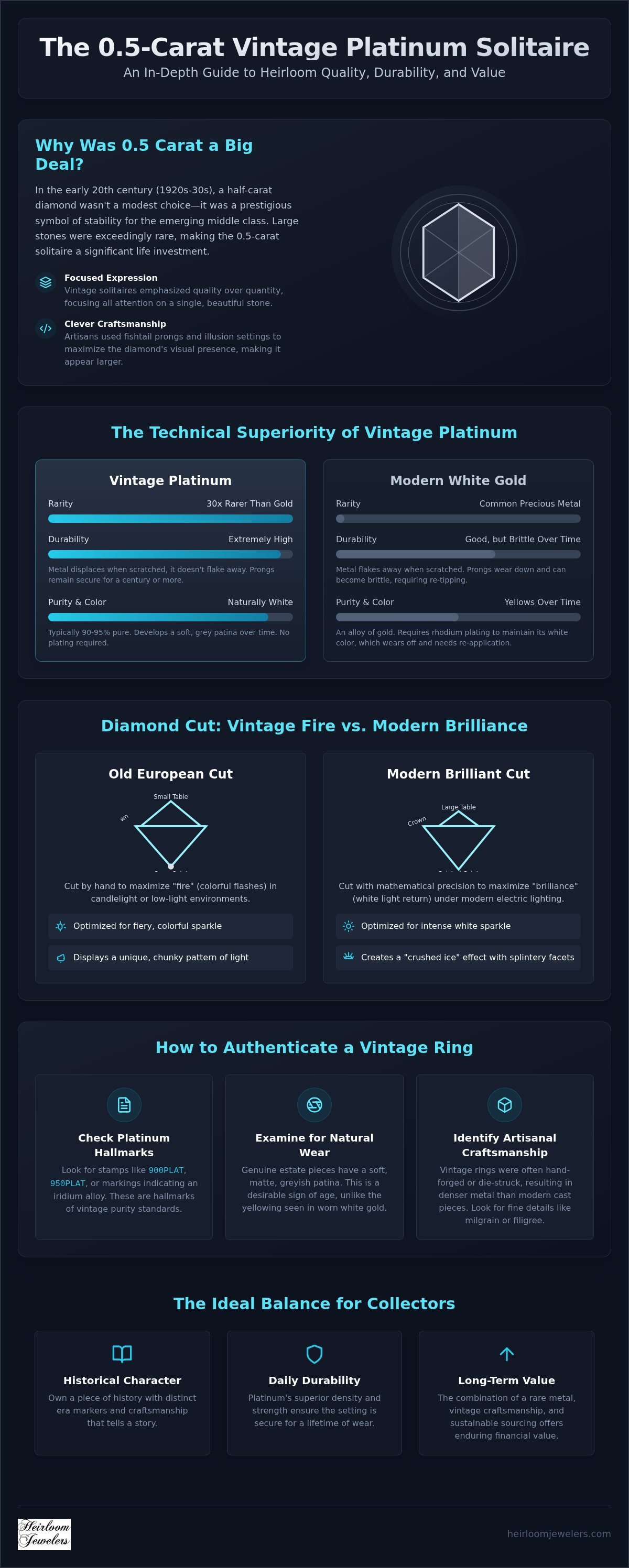
Platinum became the premier metal for engagement jewelry during the Edwardian era. Its popularity peaked in the Art Deco period because its cool, white luster perfectly complemented the geometric precision of the time. Platinum is significantly denser and stronger than gold. This strength allowed craftsmen to create "invisible" or extremely thin settings that remained secure over decades. While modern platinum is typically 95% pure (950PLAT), many vintage pieces utilize a 90% purity (900PLAT) alloyed with iridium. This specific vintage alloy is prized for its hardness and its ability to develop a soft, greyish patina over time. It doesn't require the rhodium plating found on modern white gold. This ensures the ring maintains its historical integrity without constant maintenance.
The Technical Superiority of Vintage Platinum Settings
Platinum's molecular density is its greatest technical advantage. Unlike gold, which is alloyed with other metals to increase hardness, platinum's natural density makes it exceptionally heavy and durable. This is crucial for vintage solitaire engagement rings because the security of the center stone depends entirely on the integrity of a few thin prongs. Over decades, gold prongs wear down and become brittle. Platinum, however, is a displacing metal. When it's scratched or struck, the metal moves aside rather than flaking away. This means the overall mass of a vintage platinum ring remains largely unchanged after a century of wear.
Durability and Longevity of Estate Platinum
Estate platinum prongs are significantly less likely to snap compared to modern white gold counterparts. Gold's crystalline structure can develop stress fractures over time, but platinum's malleable nature allows it to absorb impact. This resilience ensures that a 0.5-carat diamond remains firmly seated in its original housing. Platinum doesn't require rhodium plating because it's naturally white and won't yellow like white gold. Over time, it develops a soft patina of age, a matte finish that many collectors prefer because it highlights the diamond’s brilliance rather than competing with it. Choosing an estate piece is also a sustainable choice. It bypasses the environmental impact of modern mining by repurposing existing high-purity metals. Platinum is approximately thirty times rarer than gold, making these historic pieces even more significant as resources become scarcer.
Artisanal Craftsmanship vs. Modern Casting
Vintage rings were often hand-forged or die-struck, a process that compresses the metal and makes it even denser than cast pieces. Modern 3D-printed or cast rings can be porous, which leads to structural weaknesses. Early 20th-century artisans balanced the 0.5-carat stone with incredible precision. They understood how to use high-purity metal to create delicate, airy designs that didn't sacrifice strength. These craftsmen often adhered to what we now recognize as GIA diamond grading standards in spirit, selecting stones with specific proportions to maximize light return within custom settings. If you are looking for this level of historical integrity, you might explore our curated collection of vintage platinum rings.
Maintaining high-purity vintage platinum is straightforward. It requires occasional cleaning with mild soap and water to remove oils that dull the stone. Unlike gold, you won't need to resurface the band to maintain its color. If the patina becomes too pronounced, a professional jeweler can lightly buff the metal to restore its original luster without removing any material. This enduring quality is why platinum remains the gold standard for heirloom jewelry.
Old European Cut vs. Modern Brilliant: Choosing Your Diamond
The heart of vintage solitaire engagement rings is almost always an Old European cut diamond. This historic cut served as the primary predecessor to the modern round brilliant we see today. While modern stones focus on maximum white light return, vintage cuts prioritize "fire," the rainbow-colored flashes of light seen within the stone. A 0.5-carat Old European cut offers a soft, romantic glow that feels deeply personal. It's a departure from the clinical precision of modern retail. Ensuring the diamond cut matches the era of the platinum setting is essential for maintaining the ring's historical integrity.
Characteristics of the Old European Cut
You can identify an Old European cut by several distinct physical traits. They typically feature a smaller table, a higher crown, and a large, flat culet at the bottom. These proportions were intentional. Artisans cut these diamonds by hand to perform under the warm, flickering glow of candlelight rather than the harsh LED lighting found in modern showrooms. This hand-finished quality gives each stone a unique personality. For a deeper look at these specific design elements, you can read our Old European cut solitaire engagement ring guide. These diamonds possess a depth and facet pattern that creates a different visual rhythm compared to the splintered sparkle of modern stones.
Evaluating Color and Clarity in Estate Diamonds
Modern grading often prioritizes colorless stones, but vintage collectors frequently seek out warmer grades. Diamonds in the J through M color range pair beautifully with the cool, white properties of platinum. The metal's natural hue provides a sophisticated contrast that makes a slightly warm stone look intentional and rich. The larger facets of an Old European cut are also surprisingly effective at masking certain inclusions. While a modern cut might highlight a small crystal, the internal reflections of a vintage stone can often hide it from the naked eye. Even with these historic traits, securing a GIA-certified diamond is a wise move for any serious collector. It provides an objective baseline for your investment and ensures you aren't paying a premium for a stone that has been misrepresented. A 0.5-carat stone is the perfect size to appreciate these nuances without the prohibitive cost of much larger estate diamonds.
How to Authenticate a Vintage Platinum Engagement Ring
Authenticating vintage solitaire engagement rings requires a blend of technical inspection and historical knowledge. You aren't just looking for a beautiful stone; you're looking for the subtle signatures left by time and the craftsman's hand. Genuine estate pieces possess a specific weight and finish that modern reproductions struggle to emulate. Verifying these details ensures your investment is a true piece of history rather than a mass-produced imitation. Consulting with experienced estate jewelers is often the most reliable way to confirm provenance and protect your purchase.
Reading the Metal Hallmarks
Platinum purity marks serve as the primary roadmap for dating a ring. In the United States, common stamps from the 1920s through the 1950s include 'PLAT', '900PLAT', or '950PLAT'. European pieces often feature more complex assay marks, such as the French dog's head. To inspect these, you should perform a 'loupe test' using a 10x jeweler's loupe. Hold the ring under a strong, direct light source and focus on the inner surface of the shank. A genuine vintage hallmark should appear struck into the metal rather than laser-etched. Over decades, these marks may show slight softening or smoothing at the edges from contact with the skin, yet they should remain legible. If a ring has no hallmark, it doesn't always indicate a fake. Many vintage rings were resized at the base of the shank, a process that can accidentally remove the original purity stamp.
Verifying the Era through Design Elements
The architecture of the setting must align with the period of the diamond. Edwardian rings (1901-1915) are famous for delicate, lace-like filigree and milgrain edges. In contrast, Art Deco pieces (1920-1935) favor geometric symmetry and bold, clean lines. You should look for signs of hand-tooling. Genuine vintage rings were often worked from a single piece of metal or had components soldered together with invisible seams. Modern 'vintage-style' reproductions frequently show signs of casting, such as tiny pits known as porosity or faint mold lines on the interior. A high-quality vintage band should feel seamless and substantial. Independent appraisals are vital for high-value items. They provide a non-biased verification of the metal content and the specific era of the setting, which is essential for insurance and resale value.
If you're ready to find a piece with a verified history, view our authenticated vintage engagement rings today.
Selecting Your Heirloom: The 0.5 Carat Platinum Solitaire
A 0.5-carat diamond offers a practical elegance that larger stones often lack. For many, it's the ideal size for daily wear. It sits closer to the hand, making it less likely to snag on clothing or suffer impact damage during routine tasks. In the context of vintage solitaire engagement rings, this size allows the intricate metalwork of the platinum setting to shine without being overshadowed by the stone. You get a piece that is wearable, secure, and historically significant. It's a choice that prioritizes the story and the craftsmanship of the era over sheer scale.
Balancing your budget with quality becomes much simpler at the half-carat mark. Rather than compromising on the metal or the cut to afford a larger stone, you can invest in a piece with immense character. This might mean securing a rare Edwardian setting with exceptional filigree or an Old European cut diamond with a high clarity grade. These rings often retain their value better than modern alternatives because they're finite resources. You aren't just buying a ring; you're acquiring a preserved moment in jewelry history that remains as relevant today as it was a century ago.
The Versatility of the Solitaire Design
The solitaire remains the most requested style in heritage jewelry because of its unmatched versatility. Its clean lines allow it to pair seamlessly with a wide variety of vintage wedding bands, from simple platinum hoops to engraved Art Deco eternity bands. You can also build a cohesive look by pairing your ring with other estate pieces, such as Old European cut diamond stud earrings. If the ring requires resizing, it's vital to use a specialist vintage jeweler. Modern shops often use high-heat lasers that can damage the delicate patina or the structural integrity of a century-old platinum shank. A specialist understands how to preserve the original hallmarks and the flow of the metal.
Starting Your Legacy with Heirloom Jewelers
Heirloom Jewelers is dedicated to the preservation of high-end estate jewelry. We carefully curate our collection to ensure every piece meets our strict standards for authentication and condition. Our inventory is built on uniqueness. We exclude mass-produced modern jewelry to focus on genuine historical finds that carry a sense of permanence. Every Vintage Platinum 0.5 Carat Diamond Engagement Ring we offer has been inspected for its era-specific markers and structural health. We invite you to explore our current selection and find a piece that resonates with your personal history. Choosing an heirloom from our collection means securing a high-quality platinum piece that will retain its beauty and value for generations to come.
Securing Your Piece of History
A vintage platinum engagement ring is more than a purchase; it's a commitment to enduring quality and historical artistry. We've explored how the 0.5-carat diamond provides the perfect balance for daily wear. This size allows the sophisticated craftsmanship of the setting to take center stage. You now understand the technical resilience of high-purity platinum and the romantic fire found only in hand-cut Old European diamonds. These vintage solitaire engagement rings carry stories that modern mass-produced items simply cannot replicate.
Heirloom Jewelers operates as an independent boutique specializing in authenticated estate jewelry. Our inventory features rare Old European cut diamonds and meticulously vetted platinum settings. We offer national shipping to ensure these unique treasures find their way to collectors across the country. It's our passion to act as your trusted guide in finding a ring that reflects your personal values and appreciation for heritage.
Explore Our Curated Collection of Authenticated Vintage Platinum Engagement Rings and begin your own legacy today. We look forward to helping you discover a piece that will be cherished for generations.
Frequently Asked Questions
Is a 0.5-carat diamond too small for an engagement ring?
A 0.5-carat diamond is a classic choice that offers practical elegance and timeless appeal. Historically, this size represented a prestigious investment for the emerging middle class and remains sought after for its balanced proportions. It allows the hand-crafted details of a vintage setting to remain visible while providing a comfortable, low profile for daily wear. This size is often considered the ideal entry point for serious collectors.
How can I tell if my platinum ring is actually vintage or just vintage-style?
Authentic vintage pieces feature struck hallmarks and natural wear patterns that modern reproductions cannot easily replicate. You should look for soft, rounded edges on the interior shank and a characteristic greyish patina. Modern "vintage-style" rings often show signs of casting, such as tiny pits or perfectly sharp, laser-etched markings. A genuine estate piece will feel more substantial due to the hand-forged density of the metal.
Are vintage platinum rings more durable than modern white gold?
Platinum is significantly more durable than modern white gold because of its high molecular density. It is a displacing metal, meaning it moves aside when struck rather than flaking away. This resilience is why vintage solitaire engagement rings from the early 20th century often retain their original prong security today. Unlike white gold, platinum doesn't become brittle over time or require constant rhodium plating to maintain its color.
Do vintage diamonds have the same sparkle as modern diamonds?
Vintage diamonds like the Old European cut prioritize "fire" over the "brilliance" found in modern stones. While modern diamonds are engineered for maximum white light return, antique cuts were hand-faceted to produce broad, colorful flashes of light. This creates a romantic, deep glow that performs exceptionally well in low-light environments. Each vintage stone possesses a unique facet pattern that gives it a distinct, individual personality.
Can a vintage platinum engagement ring be resized?
Most vintage platinum rings can be safely resized by a jeweler who specializes in historical pieces. It's important to use traditional soldering techniques rather than high-heat lasers that can damage the original patina. A specialist will ensure the join is seamless and that any original hallmarks remain legible. You should always consult a professional who understands the specific purity levels of early 20th-century platinum alloys before proceeding.
What should I look for in a 1920s platinum hallmark?
In the 1920s, American platinum pieces were commonly stamped with "PLAT," "900PLAT," or "950PLAT" on the interior of the shank. These marks should appear struck into the metal rather than engraved. They often show slight softening at the edges from decades of contact with the skin. If the mark is perfectly crisp or appears laser-etched, it may indicate a modern reproduction rather than a genuine Art Deco heirloom.
Why is platinum more expensive than gold for vintage rings?
Platinum is approximately thirty times rarer than gold and requires much higher temperatures to work. Its natural density means a platinum ring is heavier than an identical gold design, which increases the material cost. During the vintage era, the labor required to hand-forge platinum was also more intensive. These factors, combined with the metal's superior durability, contribute to the higher value of vintage platinum pieces.
Does a vintage 0.5-carat diamond ring hold its value?
Genuine vintage solitaire engagement rings often retain their value because they are finite historical resources. They aren't subject to the immediate depreciation seen with new, mass-produced jewelry. A 0.5-carat platinum ring is a stable investment that combines the intrinsic value of rare materials with the added premium of historical provenance. As high-quality estate pieces become scarcer, their desirability among collectors and enthusiasts continues to grow.