
What if the most significant addition to your collection isn't found in a modern showroom, but within the storied history of a previous era? Many collectors feel a deep pull toward the character of vintage jewelry, yet they often hesitate because the market for estate bracelets can feel opaque. It's natural to worry about the authenticity of a stone or the quality of a restoration when you're looking for a truly one-of-a-kind piece.
We believe that acquiring a heritage accessory should be a steady, rewarding process rooted in knowledge rather than guesswork. This guide provides the tools you need to evaluate craftsmanship, identify specific historic eras, and select an authenticated piece that holds its value. We will examine the technical details of Old European Cut diamonds, the structural nuances of platinum settings, and the essential steps for verifying a bracelet’s provenance. By the end, you'll have the expertise to choose a timeless piece that reflects both your taste and your commitment to quality.
Key Takeaways
- Learn the professional distinctions between estate, vintage, and antique jewelry to understand the specific history and origin of your piece.
- Identify signature design elements from significant eras, including Art Deco geometric patterns and the bold, sculptural gold of the Retro period.
- Assess the authenticity of estate bracelets by verifying metal hallmarks and recognizing the unique fire of Old European Cut diamonds.
- Discover how to prioritize hand-finished craftsmanship and authenticated materials to secure an investment-grade accessory for your collection.
- Master the proper care and cleaning techniques required to maintain the structural integrity and luster of heritage jewelry for future generations.
Understanding the Value of Estate Bracelets
Selecting a piece of jewelry with a past is a deliberate act of curation. Unlike mass-produced items found in contemporary retail, estate bracelets offer a physical connection to the artistry of previous generations. These pieces carry a weight of history and a level of detail that modern manufacturing often fails to replicate. When you acquire a heritage piece, you aren't just buying an accessory. You're becoming a steward of a unique story.
Estate vs. Antique: Knowing the Difference
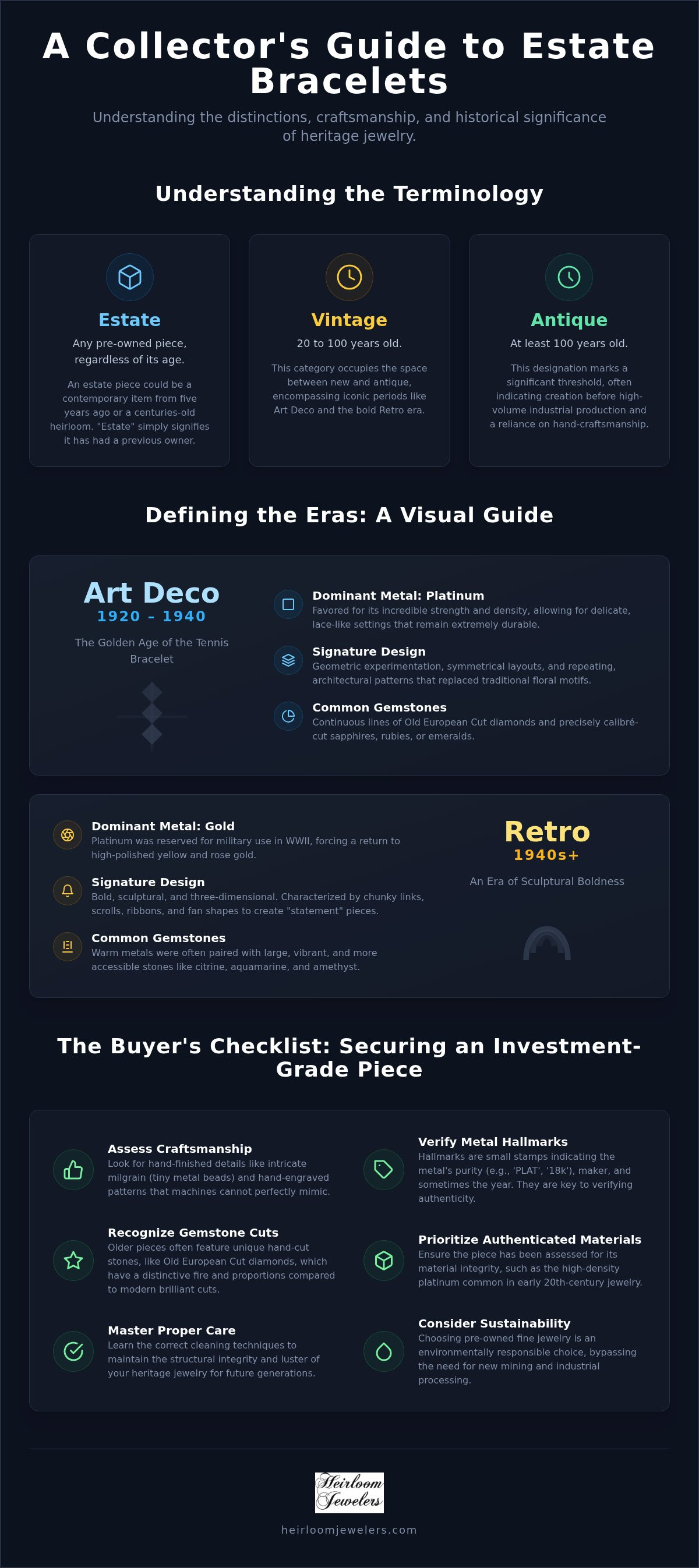
Clarity in terminology is essential for any collector. The term "estate" simply means the piece is pre-owned, regardless of its age. It could be a contemporary designer item from five years ago or a Victorian heirloom. To be classified as "antique," a piece must be at least 100 years old. This designation marks a significant threshold in the history of jewellery, often indicating that the item was created before the era of high-volume industrial production.
Vintage jewelry occupies the space between these two categories. These pieces are typically between 20 and 100 years old. This range includes the geometric rigor of the Art Deco era and the bold gold work of the Retro period. Understanding these timeframes helps you evaluate the rarity and historical context of your purchase.
The Craftsmanship Advantage
The primary appeal of older jewelry lies in the methods of its creation. Before the prevalence of modern casting, jewelers relied on hand-finishing techniques that produced exceptional results. You'll often find intricate milgrain work, which consists of tiny beads of metal along the edges of a setting, or hand-engraved patterns that modern machines cannot perfectly mimic. These details add texture and a sense of depth to the metal.
- Material Density: Early 20th-century pieces frequently utilized high-density platinum, providing a secure and durable setting for precious stones.
- Gemstone Integration: Older settings were specifically designed to highlight the unique proportions of hand-cut stones, such as Old European Cut diamonds.
- Sustainability: Choosing pre-owned fine jewelry is an environmentally responsible choice. It bypasses the need for new mining and industrial processing, repurposing existing luxury materials instead.
The emotional resonance of owning estate bracelets is significant. There is a quiet satisfaction in wearing a piece that has been cherished by others before you. It represents a commitment to quality and a rejection of the disposable culture that defines much of today's consumer market. Each piece acts as a bridge between the past and the present, offering an elegance that remains relevant regardless of current trends.
Defining the Eras: From Art Deco to Retro
Recognizing the era of a piece is more than a history lesson. It's a way to understand the structural integrity and aesthetic intent of your jewelry. When browsing estate bracelets, you'll notice that each period used specific metals and settings to reflect the cultural mood of the time. Whether you prefer the icy precision of the early 20th century or the warm, sculptural gold of the post-war years, defining these eras helps you build a cohesive collection.
Art Deco: The Golden Age of the Tennis Bracelet
The Art Deco period, roughly spanning from 1920 to 1940, remains one of the most sought-after eras for collectors. It was a time of industrial progress and geometric experimentation. You'll identify these pieces by their symmetrical layouts, repeating patterns, and the heavy use of platinum. This metal was favored for its strength, allowing jewelers to create delicate, "lace-like" settings that were incredibly durable. art deco jewelry defined the aesthetic of the 1920s by replacing traditional floral motifs with streamlined, architectural forms. This era essentially birthed the modern tennis bracelet, often featuring a continuous line of Old European Cut diamonds or calibré-cut sapphires.
Retro and Mid-Century Boldness
As the world moved into the 1940s, the design language shifted dramatically. During World War II, platinum was reserved for military use, forcing jewelers to return to gold. This led to the "Retro" period, characterized by high-polished yellow and rose gold. These designs are sculptural and bold, often featuring chunky links, scrolls, and fan shapes. It was an era of the "statement" piece. Jewelers often paired these warm metals with vibrant stones like citrine, aquamarine, or amethyst. For reliable gemstone information regarding the varieties used during this time, scientific data shows a wide range of semi-precious stones gained popularity due to their availability and size.
Mid-Century designs followed with a cleaner, more minimalist approach, often incorporating textured gold surfaces and "starburst" patterns. If your personal style leans toward modern minimalism, these later pieces may suit you best. However, if you're drawn to historical romance, you might look even further back to Victorian styles, which often featured symbolic motifs like snakes or interlocking hearts. Selecting the right era is about finding a balance between historical significance and daily wearability. You can view our current selection of era-specific pieces to see these styles in person. Each era offers a different weight and presence on the wrist, making it helpful to try various styles as you refine your taste in estate bracelets.
The Buyer's Checklist: Assessing Materials and Gemstones
Evaluating estate bracelets requires a shift in perspective. You aren't just looking for aesthetic appeal. You're inspecting the structural and material integrity of a piece that has already lived a full life. A professional assessment involves checking for authentic hallmarks, understanding historic stone cuts, and ensuring the mechanical components are secure enough for daily wear. This diligence ensures your purchase remains a wearable asset for decades to come.
Identifying Historic Diamond Cuts
The Old European Cut is perhaps the most iconic feature of early 20th-century jewelry. Unlike modern round brilliant diamonds, these stones were hand-cut with a smaller table and a noticeably higher crown. This specific geometry was designed to perform under the warm, low-light conditions of the era. Instead of the splintered brilliance of modern stones, Old European Cuts produce a deep, "blocky" inner fire that is especially captivating under candlelight. If you're looking to create a cohesive aesthetic, pairing your bracelet with antique diamond earrings ensures that the light performance of your diamonds remains consistent across your entire collection.
Metal Integrity and Hallmarks
Authenticating the metal of a piece starts with the hallmark. On bangles, you'll typically find these stamps on the inner circumference. For link or tennis-style estate bracelets, look at the clasp or the final connecting link. You're searching for "14K," "18K," or "Plat" to verify purity. Platinum is often the preferred choice for heritage jewelry because it doesn't wear away like gold. It's a dense, durable metal that holds gemstones more securely over long periods. The history of jewellery reveals that while "two-toned" pieces often use a mix of white and yellow gold, you should be wary of gold-filled alternatives which lack the long-term value of solid precious metals.
Mechanical integrity is just as vital as material purity. A high-quality vintage bracelet should have a crisp, audible "snap" when the clasp closes. Many pieces from the Art Deco or Retro periods include a safety chain or a side "figure-eight" latch. These features aren't merely decorative. They're essential safeguards that reflect the superior craftsmanship of the time. If a hinge feels loose or a clasp feels soft, it may require professional restoration before it's ready for regular use.
Finally, consider the gemstones. When inspecting sapphires or rubies, focus on color saturation and clarity. You want a rich, even hue throughout the stone. While modern stones are often treated for color, many estate pieces feature natural stones with unique "silk" inclusions. These natural markings can actually serve as evidence of the stone's origin and authenticity, adding to the historical significance of the piece.
Standout Pieces: Highlights from Our Collection
Observing the technical details of a buyer's checklist applied to physical objects brings the history of estate bracelets to life. Our collection is curated to represent the peak of craftsmanship from various eras, focusing on pieces that maintain their structural integrity while offering a distinct aesthetic presence. These selections exemplify the enduring value of authenticated heritage jewelry and provide a tangible connection to the past.
The Quintessential Tennis Bracelet
The Vintage Art Deco Platinum 5.5 Carat Old European Cut Diamond Tennis Bracelet is a masterclass in Jazz Age elegance. It features 37 Old European Cut diamonds, each selected for its individual character and the deep, blocky fire characteristic of the era. The piece weighs 18.1 grams in solid platinum and measures 6 1/2 inches in length. Its substantial weight and refined, secure setting make it an investment-grade choice for serious collectors. For those seeking a similar silhouette with a hint of color, the Estate Platinum Sapphire and Diamond Tennis Bracelet offers a classic sophistication that bridges the gap between formal evening wear and daily luxury.
Unique Gemstone and Metal Pairings
The collection also includes rare metal combinations and intricate metalwork that highlight the evolution of jewelry design. The Vintage Two Toned Diamond Bracelet in 14K Rose Gold utilizes the warmth of rose gold to accentuate the brilliance of its diamonds, creating a striking contrast that feels both historic and contemporary. If you prefer the delicate, lace-like metalwork discussed in previous sections, the Vintage Art Deco Wide Diamond Filigree Bracelet demonstrates the incredible precision possible before the era of mass production.
- Vintage Platinum Sapphire 12 Carat Tennis Bracelet: This piece showcases the precision of French-cut sapphires, creating a seamless flow of vibrant color across the wrist.
- Estate Zoë Chicco Cuban Link Diamond Bracelet: A modern entry point into the world of estate jewelry, providing a contemporary silhouette with the quality of pre-owned craftsmanship.
- Vintage Carved Jade & Seed Pearl Bracelet: Offers a unique sculptural quality and Retro-era flair that is rarely found in modern jewelry showrooms.
Selecting the right piece involves finding a balance between the historical significance of the era and how the bracelet complements your existing wardrobe. Each of these items has been thoroughly authenticated to ensure its materials and origins meet our standards for quality and heritage. You can explore our full collection of authenticated bracelets to find a piece that resonates with your personal style and appreciation for history.
How to Care for and Build Your Estate Collection
Owning a piece of history requires a commitment to its preservation. Unlike modern items, estate bracelets have already survived decades of wear, and their continued longevity depends on mindful maintenance. Building a collection is a gradual process of selection and care that ensures each piece remains as striking as the day it was first crafted. It's a journey that turns a simple purchase into a lasting legacy.
Cleaning and Maintenance Tips
Standard cleaning routines should be adjusted based on the specific materials and gemstones in your collection. You should avoid using ultrasonic cleaners for pieces containing porous stones like emeralds, opals, or seed pearls. These machines use high-frequency sound waves that can cause fractures in delicate stones or strip away natural oils. For durable metals like 18K white gold and platinum, a simple solution of warm water and mild dish soap is usually sufficient. Use a soft-bristled brush to gently remove dust from intricate filigree work and from underneath gemstone settings.
Professional inspections are a necessary part of being a serious collector. We recommend having your prongs and clasps checked at least once a year. This is especially true for antique rings and bracelets, where the metal settings may have thinned slightly over a century of use. Catching a loose stone early protects your financial and emotional investment. Additionally, store your jewelry in separate compartments or soft pouches. Platinum is significantly harder than gold and can easily scratch the surface of your 14K or 18K gold pieces if they are kept together.
Curating a Personal Heritage
Developing a cohesive collection doesn't mean you are restricted to a single era. The most interesting jewelry wardrobes often feature a thoughtful mix of styles, such as pairing the geometric lines of an Art Deco piece with the bold, sculptural gold of the Mid-Century period. This practice, often called "stacking," allows you to wear multiple estate bracelets at once for a look that feels contemporary yet deeply historical. It creates a visual narrative of your personal taste across different time periods.
If you're just beginning your collection, start with a versatile "base" piece. A solid gold link bracelet or a simple platinum bangle provides a foundation that you can build upon over time. Focus on quality and authentication rather than volume. By selecting pieces with documented origins and superior craftsmanship, you create a collection of wearable assets that can be passed down to future generations. You can browse our full collection of authenticated estate bracelets to find the next addition to your personal heritage.
Investing in a Legacy of Craftsmanship
Choosing a piece of heritage jewelry is a deliberate act that rewards those who prioritize material quality and historical significance. You now have the tools to distinguish between the icy precision of the Art Deco era and the warm, sculptural gold of the Retro period. By focusing on technical markers like metal hallmarks and the distinct performance of Old European Cut diamonds, you can build a collection that is both a personal joy and a secure investment.
Our specialists at Heirloom Jewelers act as a steady guide in this nuanced market. Every item we offer is authenticated by in-house experts to ensure its origin and structural integrity meet our exacting standards. We focus on rare finds that modern manufacturing simply cannot duplicate, specializing in the hand-finished details that define true luxury. It's a commitment to excellence that respects the history of every piece.
It's time to find the accessory that resonates with your personal style. We invite you to shop our curated collection of authenticated estate bracelets and discover a one-of-a-kind piece for your collection. Your next timeless heritage find is waiting to be worn and cherished once again.
Frequently Asked Questions
What is the difference between an estate bracelet and a vintage bracelet?
Estate jewelry refers to any piece that has been previously owned, regardless of its age. A vintage designation specifically applies to items that are between 20 and 100 years old. While all vintage pieces are technically estate, not all estate bracelets are old enough to be considered vintage. This distinction helps collectors understand the historical context and potential rarity of a piece.
How can I tell if an estate bracelet is made of real platinum?
The most reliable method is to locate the hallmark stamp, which is typically found on the clasp or inner circumference. Look for markings such as "PLAT," "950," or "900." Platinum is also significantly denser and heavier than gold. If a piece feels surprisingly substantial for its size, it's a strong indicator of platinum. Professional testing can confirm the metal’s purity.
Are estate bracelets a good financial investment?
High-quality heritage pieces often retain or increase in value due to their material content and historical scarcity. Unlike mass-produced items, these pieces are limited in number and feature hand-finished details that are expensive to replicate today. As the spot price of gold or platinum fluctuates, the intrinsic value of the metal provides a floor for your investment, while provenance adds a premium.
Can estate bracelets be resized to fit my wrist?
Resizing depends entirely on the construction and design of the specific piece. Link-style bracelets can often be adjusted by adding or removing links, provided the pattern can be matched accurately. However, solid bangles or bracelets with continuous filigree work are much more difficult to alter without compromising the design. It's best to consult with a specialist before attempting any structural modifications.
What should I look for in an Art Deco diamond tennis bracelet?
Prioritize geometric symmetry and the presence of platinum settings. Authentic Art Deco pieces from the 1920s should feature repeating patterns and streamlined forms. Look for Old European Cut diamonds, which provide a distinctively different light performance than modern stones. Ensure that the milgrain detailing is crisp and that the clasp includes a safety mechanism, which was a standard feature of high-end craftsmanship.
Is it safe to wear an estate bracelet every day?
Many heritage pieces are durable enough for daily wear, especially those crafted from platinum or 18K gold. You should, however, match the piece to your lifestyle. A heavy gold link bracelet is quite resilient, while a delicate filigree piece may be better suited for occasional use. Regular professional inspections of the prongs and hinges will ensure the piece remains secure for years.
What are the hallmarks of a high-quality estate sapphire bracelet?
Look for deep, even color saturation and a lack of significant visible zoning. High-quality estate sapphires often feature natural "silk" inclusions, which can verify that the stone is not a modern synthetic. The settings should be secure, with prongs that are not overly worn or thin. In many Art Deco pieces, you'll find calibré-cut sapphires that are custom-fitted to the metalwork.
Why are Old European Cut diamonds popular in estate jewelry?
These diamonds are prized for their hand-cut character and unique "inner fire." Unlike the precision of modern machine-cut stones, Old European Cuts were designed to glow under candlelight, featuring a smaller table and a higher crown. This gives them a blocky, romantic brilliance that modern rounds cannot replicate. Their presence in estate bracelets serves as a hallmark of authenticity, linking the piece to the past.