
A modern luxury showroom often lacks the one thing a discerning collector craves: a soul. Most retail jewelry today is produced in high volumes, resulting in pieces that feel repetitive rather than remarkable. When you begin your search for estate pendants for women, you're looking for more than an accessory. You're seeking a narrative. You understand that a piece from the past carries a weight of craftsmanship and character that modern manufacturing simply cannot replicate.
It's natural to feel hesitant when exploring the secondary market. You might worry about mistaking a clever reproduction for a genuine antique or feel confused by the overlap between vintage and estate terminology. We believe that acquiring jewelry should be an act of appreciation, not a source of stress. This guide will clarify those distinctions and provide you with the tools to evaluate material quality, from 18K gold settings to rare old European cut diamonds.
You'll learn how to identify authentic hallmarks, assess historical significance, and select a pendant that serves as a sound investment. We'll also discuss how to pair these timeless treasures with your modern wardrobe so they feel relevant today. By the end, you'll have the confidence to choose a one-of-a-kind piece that reflects your personal style and appreciation for heritage.
Key Takeaways
- Distinguish between antique, vintage, and estate pendants for women to identify authentic pieces with true historical significance.
- Understand the technical superiorities of historic jewelry, including the light performance of Old European Cut diamonds and the enduring quality of 18K white gold and platinum.
- Identify the hallmark characteristics of Victorian and Art Nouveau styles to choose a design that resonates with your personal collection.
- Learn how to evaluate hallmarks and metal purity to ensure your investment holds its value and reflects superior craftsmanship.
- Master the art of pairing historic pendants with modern chains and wardrobes for a sophisticated, timeless look.
Defining the Estate Pendant: More Than Just Pre-Owned Jewelry
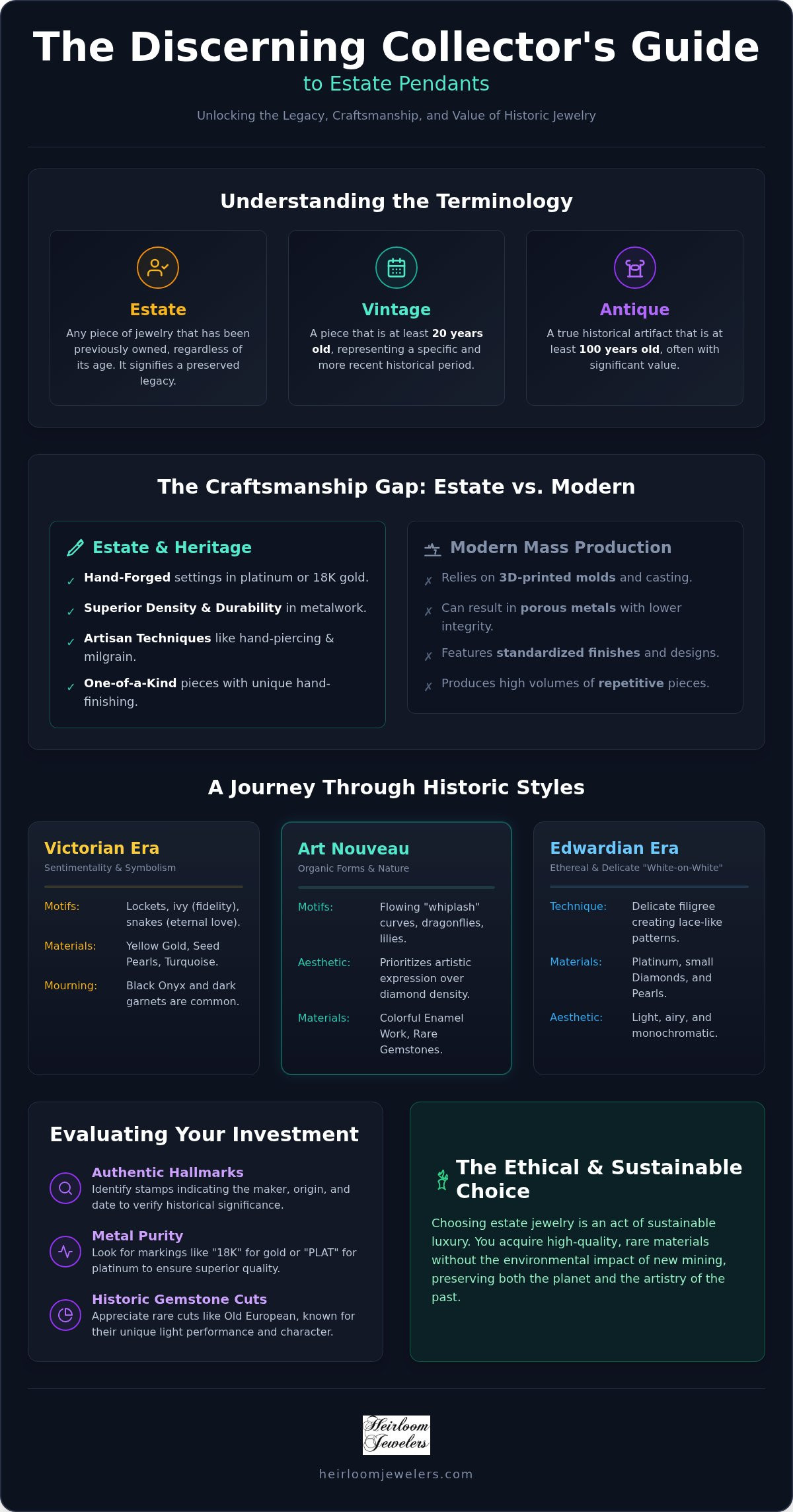
The term "estate" often carries a legal weight, but in the context of fine jewelry, it signifies a piece with a previous owner and a preserved legacy. While many shoppers use terminology interchangeably, technical distinctions help define the value and origin of a piece. Estate pendants for women encompass any item that has been previously owned, regardless of its age. However, collectors often look for specific subcategories: antique pieces are at least 100 years old, while vintage items must be at least 20 years old. These designations provide a framework for understanding the era and artistic movement that shaped the design.
Beyond the dates, the primary value driver for these pieces is the concept of wearable history. An estate pendant isn't a mere accessory; it's a curated artifact. It represents a specific moment in time, captured through the materials and motifs of its era. This connection to the past offers a depth that modern retail alternatives don't match. When you wear a heritage piece, you're participating in a story that began decades or even centuries ago.
The Craftsmanship Gap: Modern vs. Estate
The difference between modern mass production and historic craftsmanship is often found in the structural integrity of the metalwork. Modern jewelry frequently relies on 3D-printed molds and casting, which can result in porous metals and standardized finishes. In contrast, many estate pieces feature hand-forged platinum or 18K gold settings that offer superior density and durability. Artisan techniques such as hand-piercing, intricate milgrain, and manual engraving are increasingly rare in modern retail due to the time and skill required. Estate jewelry is a category of authenticated, high-value heritage items. These pieces showcase a level of hand-finishing that ensures no two items are exactly alike.
Sustainability and the Ethical Collector
Choosing estate jewelry is one of the most effective ways to practice sustainable luxury. In 2026, the environmental impact of gold and gemstone mining remains a significant concern for the conscious collector. By acquiring a heritage piece, you're bypassing the carbon footprint associated with modern industrial mining and manufacturing. This approach functions as a form of curated recycling for the sophisticated buyer. It allows you to own high-quality materials like platinum or rare diamonds without contributing to new environmental disruption. An estate pendant is an ethical choice that preserves both the planet and the artistry of the past.
Historic Eras and Iconic Styles of Estate Pendants
Identifying the era of a piece is the first step in understanding its value and aesthetic appeal. Each period in jewelry history reflects the cultural shifts and technological advancements of its time. When you evaluate estate pendants for women, you're looking at a timeline of artistic evolution. From the romantic symbolism of the 19th century to the architectural precision of the 1920s, these pieces offer a diversity that modern collections cannot replicate.
Art Nouveau designs represent a dramatic shift toward organic forms. This movement celebrated nature through flowing "whiplash" curves and motifs like dragonflies, lilies, and ethereal female figures. These pendants often feature rare gemstones or colorful enamel work, prioritizing artistic expression over traditional diamond density. In contrast, Mid-Century pendants from the 1940s and 50s transitioned back to bold yellow gold. These "cocktail" style pieces are characterized by sculptural, high-relief designs and large center stones, reflecting the post-war era's sense of optimism and glamour.
Victorian and Edwardian Refinement
Victorian jewelry is deeply rooted in sentimentality. This era popularized lockets and symbolic motifs like ivy for fidelity or snakes for eternal love. Craftsmen frequently used yellow gold paired with seed pearls and turquoise to create intricate, meaningful designs. Victorian mourning jewelry, often featuring black onyx or dark garnets, remains a highly collectible category for those who appreciate pieces with a somber, historical weight.
As the 20th century began, the Edwardian period introduced a lighter, more ethereal aesthetic. This era is famous for its delicate filigree work, where platinum was pulled into fine wires to create lace-like patterns. These pendants often incorporate small diamonds and pearls to maintain a monochromatic, "white-on-white" look. The level of detail found in these settings is remarkably similar to the craftsmanship seen in high-quality antique rings from the same period.
Art Deco Geometry and Platinum
The Art Deco era of the 1920s and 30s remains the most sought-after period for modern collectors. This style abandoned the flowing lines of the past in favor of geometric precision and bold symmetry. The widespread adoption of platinum and white gold allowed jewelers to create sharp, linear frames that securely held diamonds and vibrant calibré-cut emeralds or sapphires. These pieces are exceptionally versatile, as their clean lines complement contemporary fashion effortlessly. You can explore our curated selection of art deco jewelry to see how these historic proportions remain relevant today.
If you find yourself drawn to the structural integrity of these historic eras, we invite you to view our latest authenticated acquisitions. Each piece in our collection is chosen for its ability to represent the best of its respective period while maintaining the quality expected by a modern enthusiast.
Evaluating Value: Gemstones, Metal Purity, and Hallmarks
Evaluating the true value of estate pendants for women requires an eye for detail and a basic understanding of historic gemology. Unlike modern retail pieces, where value is often tied to mass-market branding, the worth of a heritage pendant lies in its material composition and the rarity of its components. Understanding these markers allows you to make an informed decision and ensures your acquisition remains a sound investment for the long term.
Gemstones play a vital role in dating a piece and determining its market demand. For instance, the frequent use of peridot or rose quartz often points to the Victorian or Art Nouveau periods, where these stones were prized for their symbolic colors and organic feel. High-quality emeralds, such as those found in a Lugano necklace, signal a commitment to exceptional material standards that transcend temporary fashion trends. These stones weren't just chosen for their beauty; they were often the centerpiece of an artisan's dedicated labor.
The Charm of Old European Cut Diamonds
Before the 1930s, diamonds were cut by hand rather than by precision machinery. The Old European Cut is the predecessor to the modern round brilliant, characterized by a smaller table, a higher crown, and a larger culet. These facets perform differently under varying light conditions compared to modern stones. Old European Cut diamonds were faceted by hand to maximize glow rather than sparkle. This results in broad flashes of light that appear particularly soft and romantic under candlelight. Collectors often value these stones more highly than modern brilliants because they represent a lost art form and possess a unique, fiery character that is impossible to replicate with modern technology.
Precious Metals and Hallmarking
The choice of metal is another critical indicator of quality in the secondary market. 18K white gold and platinum are the standards for high-value settings. Platinum is heavier and denser than gold, developing a soft grey patina over time that many collectors find desirable. 18K white gold, while lighter, offers a bright finish that provides a crisp, high-contrast backdrop for diamonds. Distinguishing between the two requires a close look at the wear patterns and the weight of the piece in your hand.
To verify the authenticity of these materials, you must look for hallmarks. These tiny stamps are typically located on the pendant bail or the reverse side of the setting. They provide essential data on metal purity and, in many cases, the maker’s identity. Authenticated hallmarks are essential for heritage jewelry value, as they prove provenance and protect you from modern reproductions. Identifying a specific maker’s mark can significantly increase the historical importance and the eventual resale value of your pendant.
The Buying Journey: Selecting the Right Pendant for Your Collection
Finding the right piece is a personal process. It requires you to consider how the scale of the jewelry interacts with your frame and your existing wardrobe. A large, sculptural Mid-Century pendant might overwhelm a petite frame, while a delicate Edwardian filigree piece could get lost against a heavy knit sweater. When you're browsing estate pendants for women, think about the primary role the item will play in your life. A locket might be a daily companion, whereas a platinum Art Deco piece could be reserved for formal milestones.
Your budget should reflect both the material rarity and the historical significance of the piece. High-purity metals like platinum or 18K gold naturally command a higher price, as do stones with exceptional provenance. It's also vital to consider the chain. While a period-correct chain preserves the aesthetic integrity of an antique, a modern chain often provides better security for daily wear. Choosing a chain that matches the weight and metal tone of the pendant ensures the piece sits correctly on the neckline.
Styling Estate Pendants with Modern Wardrobes
Styling is where the past meets the present. You don't need a vintage wardrobe to wear estate pendants for women effectively. A popular technique is layering different eras to create a textured look. You might pair a heavy Victorian locket with a thin, modern gold chain for a contemporary contrast. For professional settings, the geometric precision of an Art Deco pendant provides a sharp, sophisticated focal point that complements a structured blazer. You can also embrace a "high-low" mix by wearing a rare emerald pendant with casual luxury items like a crisp white shirt and denim. This approach makes high-value heritage pieces feel effortless and relevant.
Pairing with Other Estate Pieces
When you're building a cohesive look, balance is your most important tool. If you're wearing a statement pendant, keep your other accessories understated to avoid a cluttered appearance. You can create a harmonious set by pairing your pendant with antique diamond earrings, provided the styles don't compete for attention. Mixing metals is also a sophisticated option. Platinum and 18K white gold belong to the same tonal family, allowing them to be worn together comfortably. Focus on matching the "visual weight" of your pieces rather than seeking an exact replica of the design.
If you're ready to find a piece that speaks to your personal style, we invite you to browse our current collection of authenticated estate jewelry and discover a pendant that will become your next heirloom.
Why Choose Authenticated Estate Pendants from Heirloom Jewelers
Selecting a historic piece requires a partner who understands that quality is non-negotiable. At Heirloom Jewelers, we act as a filter against the saturation of modern, mass-produced jewelry. Our inventory isn't a collection of everything available on the secondary market. Instead, it's a focused selection of the exceptional. We prioritize the preservation of craftsmanship, ensuring that every item we offer meets a rigorous standard of authentication and aesthetic merit. By choosing a specialist, you bypass the uncertainty of modern retail and gain access to pieces with true historical weight.
Trust is the foundation of our business. We function as a bridge between the past and the present, providing the expertise necessary to navigate high-value secondary markets. Our methodical approach ensures that every gemstone and metal hallmark is verified before a piece enters our collection. This dedication to transparency allows you to focus on the beauty and history of the jewelry, knowing that the technical details have been handled by professionals who value heritage as much as you do.
The Heirloom Jewelers Curation Standard
We reject approximately 90% of the pieces we evaluate. This strict vetting process is necessary to maintain the integrity of our collection and ensure only the finest items reach our clients. We focus on 18K white gold and platinum settings because these metals represent the pinnacle of durability and value in heritage jewelry. Whether we're identifying the unique facets of old European cut diamonds or the vibrant saturation of a Lugano Emerald & Diamond Necklace in 18K White Gold, our expertise is your protection. We also look for rare gemstone pairings that define specific eras, such as the distinct charm of estate peridot and quartz. By excluding mass-produced items, we provide a secure environment where collectors can focus on artistry rather than the fear of a modern reproduction.
Investment and Legacy
Estate pendants for women are unique because they serve as both a personal adornment and a store of value. These pieces often function as portable wealth, retaining their worth through material purity and historical rarity. The emotional value of owning a piece with a documented history is equally significant. Passing down a pendant that's already survived decades or centuries creates a tangible link between generations. We believe in building long-term relationships through expert curation and steady guidance. When you choose a piece from our collection, you're investing in a legacy that will continue to tell its story for years to come.
Explore our curated collection of estate pendants for women and discover the timeless elegance of authenticated heritage jewelry.
Investing in a Legacy of Craftsmanship
Choosing a piece of history requires a blend of aesthetic appreciation and technical knowledge. You've seen how the density of hand-forged metals and the unique glow of Old European Cut diamonds set these treasures apart from modern alternatives. By focusing on authenticated hallmarks and historical eras, you can acquire a pendant that serves as both a personal signature and a sound investment. The journey of collecting is as much about the stories you preserve as it is about the materials you wear.
Heirloom Jewelers remains dedicated to sourcing only the most exceptional estate pendants for women. Our inventory is strictly curated to exclude mass-produced items, focusing instead on rare finds like our authenticated Lugano Emerald and Diamond pieces. We take pride in acting as a trusted guide for collectors who value integrity and superior material quality over retail convenience. Our expertise in identifying artisanal cuts ensures that every piece in our collection meets a standard of excellence that's increasingly rare today.
Owning a one-of-a-kind artifact allows you to carry a piece of the past into the future. We invite you to Browse Our Curated Collection of Authenticated Estate Pendants and find a design that resonates with your own story. Your next heirloom is waiting to be discovered.
Frequently Asked Questions
What is the difference between an antique pendant and an estate pendant?
An antique pendant must be at least 100 years old, whereas an estate pendant refers to any piece that has been previously owned. This means a pendant from the 1990s is an estate piece, while a Victorian locket is both antique and estate. We focus on the quality and historical significance of these items rather than just their age. Understanding these definitions helps you navigate the secondary market with greater clarity.
Are estate pendants safe for everyday wear?
Many estate pendants for women are exceptionally durable and suitable for daily wear, particularly those crafted from platinum or 18K gold. These materials were chosen for their density and ability to secure precious gemstones over decades. However, you should consider the hardness of the stones and the delicacy of the setting. While a diamond pendant in a platinum frame is quite robust, an Art Nouveau piece with fragile enamel may require more careful handling.
How can I tell if a vintage diamond pendant is authentic?
Authenticity is determined through a combination of hallmark identification, material testing, and gemstone analysis. For instance, many vintage pendants feature Old European cut diamonds, which are hand-faceted and possess a distinct light performance compared to modern stones. You should also examine the reverse side of the piece for maker's marks or purity stamps. Our curation process involves verifying these specific details to ensure every piece in our collection is a genuine heritage item.
Do estate pendants come with a certificate of authenticity?
While not every historic piece includes a modern lab report, we provide internal authentication for all our inventory. For high-value items featuring significant gemstones, such as our Lugano emerald and diamond necklaces, we often provide reports from recognized gemological laboratories like the GIA. These documents verify the stone's origin and characteristics. Our commitment to expertise means we only offer pieces that have been thoroughly evaluated for material purity and historical accuracy.
Can I change the chain on a vintage estate pendant?
You can certainly change the chain on most estate pendants to suit your personal style or preferred length. It's important to ensure the new chain matches the metal purity and visual weight of the pendant. For example, a heavy Mid-Century gold pendant requires a substantial chain for security and balance. We recommend checking the bail's size and condition before making a switch to ensure the piece hangs correctly and remains secure.
Is 18K white gold or platinum better for an estate pendant?
Both materials are excellent choices for estate jewelry, though they offer different benefits. Platinum is naturally white, exceptionally dense, and develops a soft grey patina over time that many collectors admire. 18K white gold is often preferred for its bright finish and crisp appearance, especially in Art Deco designs. We specialize in both materials, as they provide the structural integrity required to protect high-value gemstones like emeralds and diamonds for generations.
How should I clean and care for my estate gemstone pendant?
Gentle cleaning is the best way to maintain the luster of your estate gemstone pendant. Use a soft-bristled brush and lukewarm water with a drop of mild dish soap to remove dust and oils. You should avoid ultrasonic cleaners or harsh chemicals, especially for porous stones like emeralds or delicate organic materials. Regular inspections of the prongs and bails are also recommended to ensure the security of the stones over the long term.
Why are estate pendants more expensive than some modern jewelry?
Estate pendants for women often command higher value than mass-produced modern jewelry due to their superior material density and artisanal craftsmanship. These pieces were frequently hand-forged using substantial amounts of platinum or 18K gold, whereas modern retail items often use lighter casting methods. Additionally, the rarity of the gemstones and the historical significance of the design contribute to their enduring value. You're investing in a one-of-a-kind artifact rather than a manufactured commodity.