
A modern diamond is often a feat of engineering, but rare vintage diamond jewelry represents a piece of history that can't be replicated by a machine. You likely understand that true artistry lies in the deliberate, hand-carved facets of an Old European cut or the delicate milgrain of a century-old platinum setting. Finding these pieces requires more than a casual glance at a display case. It demands a deep appreciation for the eras when jewelry was crafted by hand rather than mass-produced in a factory.
Collectors often face a sense of hesitation when navigating the secondary market, especially when confronted with modern reproductions or grading reports that don't account for historic proportions. We'll provide the clarity you need to invest with absolute confidence. You'll discover the historical significance of specific diamond cuts, learn to identify authentic era-specific design hallmarks, and understand the essential evaluation criteria that define a high-value piece. This guide serves as a steady resource for identifying authenticated treasures that will maintain their beauty and value for another century. We'll explore how these storied items bridge the gap between past craftsmanship and modern elegance.
Key Takeaways
- Distinguish authentic rare vintage diamond jewelry from modern reproductions by identifying the hand-carved facets and artisanal techniques that mass production cannot replicate.
- Learn the specific characteristics of Old Mine and Old European cuts, which were designed to maximize fire and warmth under candlelight rather than modern electric lighting.
- Recognize the design hallmarks of iconic eras, from the intricate platinum lace-work of the Edwardian period to the sentimental yellow gold motifs of the Victorian age.
- Understand the role of historical hallmarks and third-party certification in verifying the provenance and metal purity of high-value estate pieces.
- Gain the confidence to build a curated collection by focusing on authenticated designer items and rare, hand-cut gemstones with documented history.
Beyond Age: What Defines Rare Vintage Diamond Jewelry?
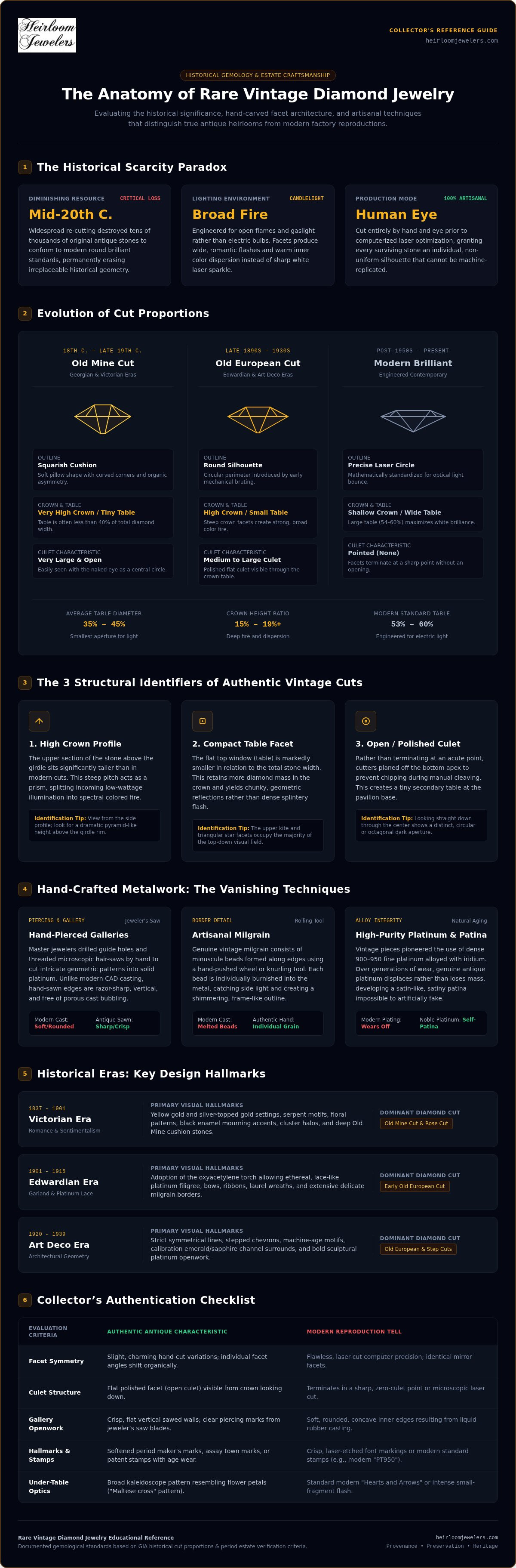
Rarity in the world of high-end estate pieces is defined by a specific intersection of history and technique. True rare vintage diamond jewelry isn't merely an old item found in a box; it's a survivor of a time when every facet and setting was a result of human decision. Unlike modern "vintage-style" pieces that rely on computer-aided design and mass casting, authentic period jewelry was hand-fabricated. This distinction is critical for collectors. A mass-produced reproduction lacks the crisp edges and individual character found in a piece that has endured for a century.
The value of these items often rests on their provenance and their finite nature. Many historic diamonds were lost during the mid-20th century when it was common practice to re-cut them into modern round brilliants. This trend destroyed the original geometry to meet contemporary standards. Today, stones that retain their original hand-cut proportions are increasingly scarce. They represent a closed chapter in gemological history.
The Scarcity of Antique Diamond Cuts
Hand-cut diamonds from the 19th and early 20th centuries possess a character that modern laser-cut stones cannot replicate. These stones were shaped by eye and hand, resulting in the evolution of historic diamond cuts from the deep-bodied Old Mine cut to the more symmetrical Old European cut. Because these diamonds were designed to perform under candlelight and gaslight, they exhibit a broad, warm "inner fire." Modern stones prioritize white light return under electric bulbs, losing the romantic, chunky sparkle of their predecessors. Every surviving Old European cut represents a finite resource that grows rarer as fewer examples remain in their original state.
The Craftsmanship of Lost Artistry
The settings of these pieces are as significant as the gemstones. Authentic vintage jewelry often features hand-fabricated platinum or 18K white gold. Master jewelers used hand-drawn wire and tiny saws to create intricate filigree and milgrain work that modern machines cannot mimic with the same precision.
- Hand-Pierced Galleries: Modern casting often leaves soft, rounded edges. Hand-sawing creates sharp, architectural details within the metal.
- Milgrain Beading: Original milgrain was applied with a tiny rolling tool, creating a crisp, beaded edge that defines the era's aesthetic.
- Material Integrity: Many heritage pieces used high-purity metals that have developed a soft, natural patina over decades.
Historical tools created a romantic aesthetic that feels organic rather than clinical. The result is a piece of jewelry that functions as a wearable work of art. It carries the steady weight of history and the unmistakable touch of a human hand. This level of craftsmanship ensures that rare vintage diamond jewelry remains a prioritized choice for those who value heritage over trends.
The Mastery of Old European and Old Mine Diamond Cuts
Understanding the geometry of historic diamonds is essential for any collector. Unlike modern stones engineered for maximum light return under electric bulbs, rare vintage diamond jewelry features stones cut to excel in low-light environments. These diamonds possess a distinct personality characterized by broader facet patterns and a soft, rhythmic dispersion of light. They don't just sparkle; they glow with a deep, inner fire that modern precision cutting often sacrifices for brilliance.
Three primary identifying features define these antique stones. First, they feature a high crown, which is the top portion of the diamond above the girdle. Second, they have a small table, the flat top facet. Finally, they exhibit a large culet, the bottom facet of the stone. When looking through the table of an antique diamond, you'll often see a small dark circle, which is the open culet. This GIA guide to old mine cuts provides a detailed look at how these proportions differ from modern standards.
Old Mine Cut: The Georgian and Victorian Favorite
The Old Mine cut was the predominant choice during the Georgian and Victorian eras. These diamonds have a soft, cushion-like perimeter rather than a perfect circle. Because they were hand-cut by candlelight, the facets are often slightly asymmetrical. This organic nature is exactly what modern enthusiasts seek. It creates a "checkerboard" pattern of light that feels far more personal than the clinical precision of a modern round brilliant. These stones are survivors from a time when the cutter's eye was the ultimate authority.
Old European Cut: The Standard of Elegance
As technology advanced in the late 19th century, the Old European cut emerged. This cut retained the high crown and large culet of the Old Mine stone but introduced a truly circular girdle. It represents a transition toward the symmetry we recognize today while maintaining the depth and warmth of hand-cut artistry. You can see this evolution in many antique diamond earrings, where the circular shape provides a balanced, timeless aesthetic. Well-preserved examples in platinum settings are particularly prized for their durability and refined appearance.
Between the Old European cut and the modern round brilliant sits the Transitional cut. Popularized in the 1920s and 30s, these stones feature a lower crown and a smaller culet. They serve as a rare bridge for collectors who appreciate vintage character but prefer a slightly more modern light performance. If you're beginning your search for a meaningful piece, reviewing our selection of authenticated estate jewelry can help you identify the specific cut that resonates with your personal style.
Iconic Eras of Design: From Victorian Romance to Art Deco Geometry
Identifying rare vintage diamond jewelry requires an understanding of the specific design movements that dictated the use of metals and motifs. Each era represents a shift in both technology and social values. The Victorian era (1837 to 1901) was characterized by romanticism and sentimental symbolism. Jewelers favored yellow gold and nature-inspired designs, such as floral sprays and serpents, often incorporating rose cut diamonds or Old Mine cuts. This era's focus on emotion and heritage is well-documented in the V&A history of jewellery design eras, which provides a curatorial perspective on these stylistic shifts.
Later, the Retro era of the 1940s introduced a dramatic change. This period featured bold, sculptural gold work and the use of larger, colorful gemstones like citrine and aquamarine alongside accent diamonds. These pieces reflected the "Hollywood Glamour" of the time, moving away from the delicate work of previous decades in favor of substantial, eye-catching silhouettes. Understanding these distinct shifts allows collectors to appreciate the historical context and rarity of each surviving piece.
The Architectural Brilliance of Art Deco Jewelry
The 1920s and 1930s brought a sharp departure from romanticism toward geometric precision. Art Deco jewelry is defined by bold symmetry and the rise of the baguette cut. Designers increasingly utilized platinum and white gold to emphasize the whiteness of diamonds, creating a monochromatic brilliance that felt modern and architectural. A hallmark of this period is the "target ring," which features a central diamond surrounded by a halo of calibré-cut sapphires, emeralds, or onyx. These bold contrasts and clean lines are a core focus of our Art Deco jewelry guide, which details the movement's lasting influence on luxury design.
Edwardian Elegance and Platinum Work
The Edwardian era (1890 to 1915) is often considered the pinnacle of rare vintage diamond jewelry for bridal wear. This period was defined by the "garland style," which utilized the newfound strength of platinum to create delicate, lace-like filigree. Before the widespread use of the oxyacetylene torch, jewelers relied on silver-topped gold, which was too soft for such fine detail. Platinum allowed for gossamer-thin settings and intricate milgrain edges that made diamonds appear to float on the skin. These pieces remain highly sought after for their ethereal beauty and artisanal sophistication. Our vintage engagement rings guide explores why these lace-like designs continue to be the standard for heirloom bridal jewelry today.
Authentication and Care: Ensuring the Longevity of Your Heirloom
Stewardship of rare vintage diamond jewelry begins with a thorough understanding of its physical markers. Unlike modern pieces with standardized laser-engraved stamps, estate items often feature a variety of historical hallmarks that indicate origin, maker, and purity. These marks are the primary evidence of a piece's history. They distinguish a genuine period item from a later reproduction that may lack the correct metallurgical signatures.
Authentication also extends to the gemstones themselves. For high-value items featuring colored stones alongside diamonds, such as a Lugano Emerald & Diamond Necklace, third-party laboratory reports are essential. These documents verify the origin and treatment of the stones, ensuring that the rarity of the piece is matched by the quality of its components. Evaluating the integrity of antique prongs and settings is equally vital. Over decades of wear, the delicate metal holding a diamond can thin, requiring a specialist's eye to determine if the setting remains secure.
Identifying Authentic Platinum and Gold Hallmarks
In the vintage market, understanding the difference between 18K white gold and platinum is critical. Platinum is denser and more durable, making it the preferred choice for the intricate filigree seen in Edwardian designs. You'll often find "PLAT" or "950" stamps on these pieces. Early Victorian jewelry frequently utilized a thin layer of platinum or silver over yellow gold. This technique prevented the yellow metal from tinting the diamonds before solid platinum casting was common. We value an unpolished, original patina on these metals. It serves as proof that the piece hasn't been overly refurbished, which can soften the sharp details of the original engraving.
Caring for High-Value Estate Pieces
Protecting these investments requires a gentle approach that respects the age of the materials. While modern diamonds are resilient, antique settings can be fragile. It's best to avoid ultrasonic cleaners. The high-frequency vibrations that these machines use can loosen stones in aged prongs or damage gemstones with internal inclusions. Safe cleaning involves lukewarm water, a soft-bristle brush, and mild soap. This method effectively removes oils without stressing the metal. We recommend annual professional inspections for all rare estate rings to ensure that prongs haven't been compromised by daily contact. This steady maintenance preserves the structural integrity of the piece for the next generation.
If you're looking to add a verified piece to your collection, we invite you to view our curated selection of authenticated vintage jewelry to find an heirloom that has been professionally vetted for quality and condition.
Acquiring Rare Pieces: The Heirloom Jewelers Curation Process
Our curation process is defined by a commitment to authenticity and historical integrity. We don't settle for mass-produced inventory. Instead, we select pieces that offer a unique narrative and exceptional craftsmanship. The acquisition of rare vintage diamond jewelry requires a disciplined eye for both provenance and condition. We prioritize items like Vintage White Gold Old European Cut Diamond Stud Earrings and Vintage Platinum 0.5 Carat Diamond Engagement Rings because they represent a finite era of artisanal skill that modern manufacturing cannot replicate.
Every piece in our collection is chosen for its ability to bridge the gap between historical significance and modern wearability. We understand that a collector isn't just buying an object; they're acquiring a legacy. This philosophy drives our focus on authenticated designer pieces and high-purity metals. By maintaining a steady, professional atmosphere, we provide a reliable environment for those navigating the complexities of the secondary market. Our goal is to ensure that your purchase remains a source of pride and value for decades to come.
Designer Spotlight: Lugano and High-End Estate Necklaces
Finding authenticated designer pieces in the secondary market is a significant challenge for many collectors. We place a particular emphasis on sourcing rare items like the Lugano Emerald & Diamond Necklace in 18K White Gold. These pieces are highly sought after for their investment appeal and the striking contrast of deep green emeralds against bright diamonds. You can explore the specific details of these masterful creations in our Lugano emerald necklace pillar. The combination of designer provenance and high-quality 18K white gold makes these necklaces a centerpiece for any serious collection.
Curating a Legacy Collection
Building a collection of rare vintage diamond jewelry often begins with foundational pieces. We suggest starting with versatile items such as Old European cut diamond stud earrings. These classics provide a gateway into the world of antique faceting while remaining perfect for daily wear. As you expand your collection, our heritage jewelry guide offers deeper insights into the categories that define high-value estate fine jewelry. Working with a dedicated estate jeweler provides a professional advantage, as it ensures every acquisition has been vetted for structural integrity and historical accuracy. We take pride in acting as a trusted curator for your journey through the history of fine jewelry.
Building Your Legacy Collection
Investing in historic estate pieces is a meaningful way to connect with artisanal history while building a personal legacy. True rarity is defined by the intersection of hand-cut craftsmanship and documented provenance. Whether you're drawn to the geometric precision of the Art Deco era or the romantic, warm fire of an Old European cut, the value remains in those unique details that modern machines cannot replicate. Consistent care and annual professional inspections will ensure these treasures maintain their structural integrity for many decades to come.
Heirloom Jewelers brings over 40 years of expertise to the secondary fine jewelry market, serving as national leaders in curated estate jewelry excellence. We specialize in authenticated Lugano designer items and sought-after Old European cut pieces, providing a steady guide through the complexities of high-value markets. We invite you to Explore our curated collection of authenticated rare vintage diamond jewelry to find a piece that resonates with your personal style. Your pursuit of timeless artistry is a rewarding journey that we're honored to support with professional transparency and passion.
Frequently Asked Questions
How can I tell if a diamond is an Old European Cut?
You can identify an Old European cut by its circular girdle, high crown, and small table facet. These stones were hand-cut to maximize fire in low light rather than modern brilliance. A distinct feature is the large, flat culet visible through the top of the stone. This creates a small dark circle at the center of the diamond's base. These proportions are characteristic of 19th and early 20th-century craftsmanship.
Is rare vintage diamond jewelry a good investment?
Authenticated rare vintage diamond jewelry often retains or increases in value because it represents a finite resource. These pieces aren't mass-produced; their artisanal cuts can't be replicated by modern machines. Demand for historic provenance and unique hand-cut stones remains steady among serious collectors. As original antique diamonds are lost to re-cutting, surviving examples in original settings become increasingly scarce and desirable in the secondary market.
What is the difference between antique and vintage jewelry?
The primary difference is age. Jewelry is legally classified as "antique" once it reaches the 100-year threshold. In 2026, this applies to items crafted in or before 1926, which includes many early Art Deco designs. "Vintage" refers to pieces that are between 20 and 99 years old. Items produced within the last 20 years are generally categorized as "estate." These distinctions help collectors evaluate the historical significance of their acquisitions.
Can rare vintage rings be resized without losing value?
Most vintage rings can be resized without compromising their value if the hallmark and structural integrity remain intact. It's essential to work with a specialist who understands historic metal compositions. Significant changes in size may distort intricate filigree or milgrain work. We recommend minimal adjustments to preserve the original proportions. Always ensure the resizing process doesn't obscure original maker marks or purity stamps located inside the band.
Why is platinum preferred for vintage engagement rings?
Platinum is prized for its extreme durability and natural white color. This strength allowed Edwardian and Art Deco jewelers to create gossamer-thin, lace-like settings and delicate milgrain edges. Platinum securely holds diamonds while maintaining a sharp, architectural profile over decades of wear. It provides a neutral backdrop that emphasizes the fire of rare vintage diamond jewelry without the yellow tint of gold, ensuring the gemstones remain the center of attention.
Do rare vintage diamonds come with GIA certifications?
Many high-value vintage diamonds are accompanied by GIA reports, though the grading criteria differ from modern standards. GIA provides specialized shape classifications for Old European and Old Mine cuts rather than standard cut grades. These reports verify the stone's natural origin and identify its specific historical cut proportions. Obtaining a third-party certification is a standard practice for authenticating significant estate diamonds and ensuring transparency during the curation process.
How do I verify the authenticity of designer estate jewelry like Lugano?
Verification relies on a combination of registered maker's marks, metallurgical hallmarks, and independent laboratory reports. Authenticated pieces, such as a Lugano Emerald & Diamond Necklace, will feature specific stamps that correspond to the designer's history. We utilize high-resolution magnification to inspect the crispness of these marks. Professional curators also cross-reference the piece's construction techniques with era-specific manufacturing standards to ensure the item isn't a modern cast reproduction.
Is it safe to wear rare antique rings every day?
It's generally safe to wear antique rings daily if the setting is professionally inspected and maintained. However, certain eras like the Victorian or Edwardian periods used delicate filigree that requires more care than modern heavy bands. We suggest removing these rings during strenuous activities or when using harsh chemicals. Annual inspections are vital to check for thinning prongs. This steady maintenance ensures your heirloom remains secure and beautiful for a lifetime.