
An authentic vintage wedding band is a finite historical artifact that no modern manufacturing process can truly replicate. While the market is increasingly filled with vintage-inspired designs, there is a distinct weight and character to a piece that has already witnessed decades of history. You likely want a ring that tells a story, but you might also feel a sense of hesitation. It's natural to worry about the long-term durability of delicate antique milgrain or the challenge of matching a century-old platinum tone to your current engagement ring.
Finding the right vintage wedding band sets doesn't have to be a gamble. This guide provides the expertise you need to select an authenticated, historical piece that perfectly complements your personal style and existing jewelry. We will cover the essential markers of craftsmanship from the Art Deco and Edwardian eras, explain how to verify the structural integrity of antique filigree, and show you how to find a unique piece of history that fits your budget. You will learn how to bridge the gap between historical artistry and modern marriage with confidence, ensuring your selection is as ethically sourced as it is beautiful.
Key Takeaways
- Learn the professional distinctions between vintage, antique, and estate labels to ensure your investment is a verified historical artifact.
- Identify the iconic design elements of Art Deco and Edwardian vintage wedding band sets, including geometric platinum work and intricate filigree.
- Evaluate the structural benefits of platinum versus the bright aesthetic of white gold to determine which metal best suits your lifestyle.
- Master practical styling techniques for pairing rings, such as matching head heights and creating sophisticated mixed-metal stacks.
- Discover the environmental and historical value of choosing authenticated estate jewelry over mass-produced modern replicas.
What Defines an Authentic Vintage Wedding Band Set?
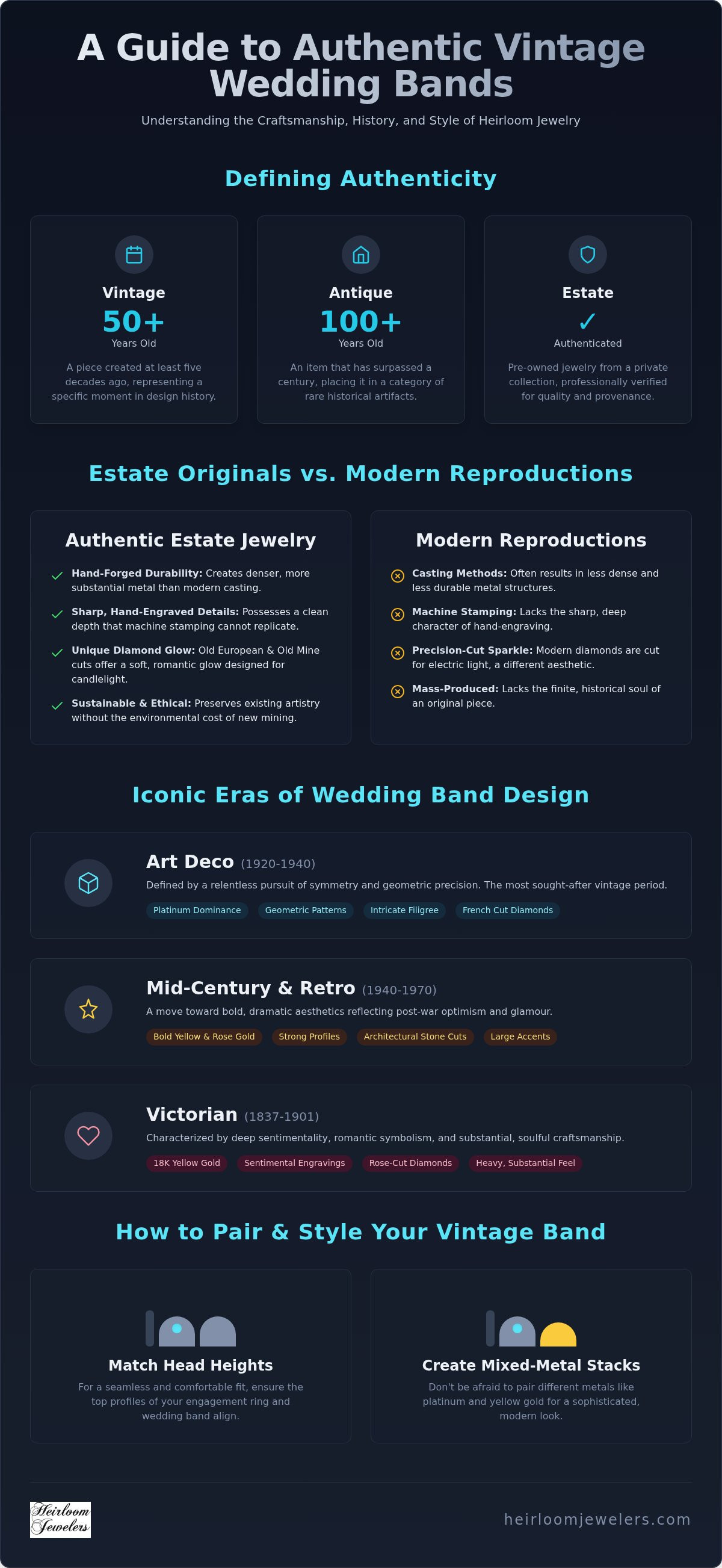
An authentic vintage piece must have been created at least 50 years ago. Items over 100 years old fall into the antique category. These age markers are standard in the high-end secondary market. Understanding the history of the wedding ring helps collectors appreciate how these standards evolved over centuries. Many modern retailers use the word vintage to describe a specific aesthetic, but true vintage wedding band sets are finite historical artifacts. They represent a specific moment in design history that cannot be recreated with modern tools.
The term estate jewelry is often preferred by specialists. It signals that a piece has been professionally authenticated and curated from a private collection. This label implies a level of quality and provenance that mass-market items lack. Choosing pre-owned luxury is also a sustainable choice. It allows you to own a masterpiece without the environmental cost of new mining operations. You're preserving a piece of artistry that already exists rather than commissioning a new mass-produced item.
The Value of Authenticated Estate Jewelry
Authentication is the cornerstone of any high-value jewelry acquisition. When you invest in platinum or 18K gold, you need certainty that the materials are period-correct. A professional curator acts as a bridge between the past and the present. They verify hallmarks and examine wear patterns to ensure every piece maintains its historical integrity. This process removes the uncertainty often found in unvetted markets. Estate jewelry is a curated asset with enduring market value.
Estate vs. Modern Reproductions
Modern reproductions often lack the density and soul of original pieces. Early 20th-century bands were typically hand-forged. This labor-intensive process creates a denser, more durable metal than the casting methods used today. You can see the difference in the fine details. Hand-engraving has a sharp, clean depth that machine-stamping fails to replicate. Authentic vintage wedding band sets often feel more substantial on the finger because of these traditional techniques.
The diamonds in these sets also offer a unique visual experience. Old European and Old Mine cuts possess a distinct warmth. Their hand-cut facets were designed to perform under candlelight. They offer a softer, more romantic glow than the precision-cut diamonds found in modern showrooms. These subtle differences in light and texture define the character of a true heirloom. When you choose a genuine piece, you're investing in craftsmanship that has already stood the test of time.
Navigating the Most Iconic Eras of Wedding Band Design
Selecting from the various vintage wedding band sets available requires an understanding of the cultural shifts that shaped them. The iconic eras of jewelry design each offer a distinct visual language, from the symbolic motifs of the Victorian age to the bold architectural statements of the mid-20th century. These pieces aren't merely accessories; they're historical records of artistry and available technology from their respective times.
The Victorian era (1837-1901) was a period of deep sentimentality and romantic symbolism. You'll frequently find bands crafted in 18K yellow gold, often featuring meaningful engravings or small rose-cut diamonds. These rings possess a heavy, substantial feel that reflects the traditional craftsmanship of the 19th century. They're ideal for those who appreciate jewelry with a storied, soulful presence.
Mid-Century and Retro designs (1940-1970) moved away from delicate patterns toward a more dramatic aesthetic. This era favored bold yellow and rose gold settings that could hold larger accents. It also saw the introduction of architectural stone shapes like marquise and baguette cuts. These sets offer a sense of post-war optimism and glamour, making them perfect for someone who wants a band that stands out with a strong profile.
Art Deco Precision and Geometry
Art Deco (1920-1940) is perhaps the most sought-after period for vintage wedding band sets. It's defined by a relentless pursuit of symmetry and geometric precision. Platinum became the metal of choice during this time because its natural strength allowed jewelers to create intricate, airy designs that remained structurally sound. French cut diamonds were a staple of this era, especially in eternity bands, where their square shapes created a seamless ribbon of light. For a deeper look at this period, our Art Deco Jewelry Guide provides extensive context on Jazz Age elegance.
Edwardian Elegance and Filigree
The Edwardian period (1901-1915) focused on a graceful, lace-like aesthetic. Jewelers used milgrain, a technique of creating tiny beads of metal along the edges, to add texture and depth. They also perfected openwork metal to create a delicate effect that mimics fine lace. This was the era when white metals, particularly platinum and early white gold, began to replace yellow gold as the standard for bridal jewelry. These intricate bands are excellent choices for pairing with understated or delicate engagement ring settings.
Exploring our curated collection of wedding bands allows you to see these historical details in person and find a piece that matches your own history.
Selecting the Right Metal: Platinum vs. Gold in Estate Jewelry
The choice of metal is as significant as the design itself when evaluating vintage wedding band sets. While modern retail relies on standardized alloys, estate pieces feature unique metal compositions that have aged over decades. Platinum and gold remain the pillars of historic bridal jewelry, but their performance and appearance vary based on the era of production. Understanding these nuances helps you select a piece that matches both your aesthetic and your lifestyle.
Platinum emerged as the definitive metal for luxury during the Art Deco period. Its natural strength allowed for the creation of incredibly fine, architectural settings that could still secure heavy gemstones. During the transition from the Edwardian era to the Deco years, two-tone settings were common. These pieces often featured a yellow gold band with a platinum top to enhance the whiteness of the diamonds. This combination provided both the structural integrity of platinum and the traditional warmth of gold.
The Enduring Strength of Vintage Platinum
Vintage platinum is prized for its high density and resistance to wear. Unlike white gold, which is often plated with rhodium to maintain a bright finish, platinum is naturally white. Over time, it develops a soft, matte finish known as a patina. Many collectors crave this look. It highlights the ring's age and history. Preserving the intricate engravings on these bands requires gentle care. Avoid abrasive cleaners that might dull the hand-carved details. For a deeper comparison of how these materials interact with gemstones, you can consult our Guide to White Gold Diamond Bands.
Gold Karats and Historical Color
Gold alloys in vintage wedding band sets offer a spectrum of colors and durability levels. 18K gold is softer and features a richer, more saturated yellow tone. This made it a hallmark of Victorian luxury. 14K gold became the standard for mid-century elegance because its higher alloy content provided the brightness and durability needed for daily wear. Rose gold, created by increasing the copper content in the alloy, was particularly favored during the Victorian and Retro eras for its romantic, pinkish hue.
When examining gold pieces, always look for hallmarks and maker’s marks. These stamps are usually found on the inside of the band. They provide essential information about the metal’s purity. They often help identify the specific jeweler or region of origin. Identifying these marks is a critical step in verifying the authenticity and value of any estate find. It ensures you're investing in a piece with genuine historical pedigree.
Standout Pieces: Standout Vintage Bands from Our Collection
The process of curating vintage wedding band sets requires a focused appreciation for both structural integrity and historical relevance. Our collection features authenticated pieces that serve as a bridge between past artistry and your future. Unlike modern moissanite alternatives that lack historical value, these rings carry the weight of genuine diamond history. Every piece is a unique find, selected for its ability to stand the test of time while offering a luxury experience that fits a thoughtful budget.
The Vintage Engraved Platinum Diamond Band, dating from the Art Deco period (1920-1940), is a prime example of Jazz Age craftsmanship, priced at USD 1800.0. It features the crisp, hand-carved details that define the era. For those seeking a more understated profile, the Vintage Belais Engraved Band in 18K White Gold (USD 950.0) offers the refined elegance typical of early American white gold production. Belais was a pioneer in the industry, and their pieces are highly collectible for their crisp milgrain and lace-like engravings.
Diamond Bands with Historic Cuts
Historic cuts offer a visual depth that modern brilliant cuts cannot replicate. The Vintage 1 Carat Old Mine Cut Diamond Eternity Band in Platinum (USD 2850.0) showcases the broader facets characteristic of the 19th and early 20th centuries. These stones possess a "blocky" sparkle that feels grounded and substantial. Similarly, the Vintage 1 Carat Old European Cut Diamond Band (USD 2400.0) provides a softer fire. It performs exceptionally well under natural light or candlelight, reflecting the environment in which it was originally worn.
These artisanal cuts were hand-shaped to maximize beauty before the advent of computer-aided design. They don't just sparkle; they glow. For a detailed comparison of how these historic stones differ from modern standards, our Vintage Engagement Rings Guide explores cut authenticity in depth. Understanding these differences is essential for any collector looking to match a band to an existing antique engagement ring.
Gemstone-Accented Eternity Bands
Color was often used to create striking contrasts in vintage wedding band sets. The Triple Row Sapphire Band in 18K White Gold (USD 2850.0) makes a bold architectural statement. For a more traditional pairing, the Vintage Diamond & Sapphire Band (USD 950.0) utilizes the quintessential Art Deco contrast of deep blue and bright white. The Platinum Ruby & Diamond Flower Eternity Band (USD 2400.0) offers a more romantic aesthetic, utilizing a repeating floral motif that was popular in early 20th-century bridal design.
Practical considerations remain vital when selecting these intricate designs. Eternity bands, such as the Rose Gold Ruby (USD 850.0), feature stones that wrap entirely around the finger. Because of this continuous setting, they cannot be resized. We recommend confirming your exact finger size before acquiring one of these finite historical artifacts. Finding a piece that fits perfectly is part of the journey of owning a unique segment of jewelry history.
Explore our full curated collection of wedding bands to find the piece that fits your story.
How to Pair and Style Your Vintage Wedding Band
Styling vintage wedding band sets involves a delicate balance between historical reverence and personal expression. Modern bridal trends have moved away from the rigid requirement of perfectly matched sets. Instead, many collectors prefer a "mixed-era" stack that tells a broader story of design. This approach allows you to combine the geometric precision of the early 20th century with the romantic motifs of earlier periods, creating a look that is entirely unique to your hand.
Creating a "Mixed Metal" stack is an effective way to add visual depth to your jewelry. You might pair a warm rose gold band with a cool platinum engagement ring to highlight the distinct textures of both pieces. This contrast was common during the transition between the Edwardian and Art Deco eras. It remains a sophisticated choice for those who value versatility in their daily wear.
When selecting a band, pay close attention to the "Head Height" listed in the product description. This measurement is critical for both comfort and the longevity of your rings. A significant discrepancy in height can cause the rings to rub against each other, leading to unnecessary wear on delicate metalwork or engravings. Ensuring the bands sit at a similar level on the finger creates a cohesive, intentional appearance.
Sometimes, a band is best worn as a solo statement. The Matte Finished 14K Yellow Gold Diamond Eternity Band (USD 1800.0) is an excellent example of this. Its substantial profile and textured finish provide enough visual interest to serve as a standalone piece. This is an ideal option for those who prefer a minimalist aesthetic or want to give their engagement ring a rest during travel or active daily tasks.
Matching Eras vs. Complementary Styles
Can you pair an Art Deco band with an Edwardian ring? In most cases, the answer is yes. The sharp, geometric lines of an Art Deco band often provide a grounding effect for the airy, lace-like filigree of Edwardian settings. If your engagement ring features a complex or busy design, a plain engraved band can act as a visual anchor. For a deeper understanding of how these periods differ, our guide on The Allure of Antique Rings offers extensive education on historical artistry.
Maintaining Your Vintage Set
Authenticated heritage pieces require methodical care to preserve their value. We recommend professional prong inspections every six months for all high-value vintage wedding band sets. This routine check ensures that old-cut diamonds and delicate gemstone accents remain secure in their settings. For home care, use gentle cleaning methods. Sapphire and ruby accents should be cleaned with mild soap and a soft brush rather than harsh ultrasonic cleaners.
Finally, always maintain a professional appraisal for insurance purposes. Because estate pieces are unique historical artifacts, their replacement value can fluctuate based on the rarity of the materials and the era of production. An updated appraisal ensures your authenticated heritage piece is fully protected. This commitment to maintenance reflects the respect these historical treasures deserve as they move from the past into your future.
Securing Your Piece of Jewelry History
Selecting an authentic wedding band is a commitment to preserving artistry that has already stood the test of time. By focusing on authenticated estate pieces, you avoid the compromises of modern mass production. You now understand how to distinguish between historical eras and how to match metal heights for a comfortable, lifelong fit. Whether you prefer the geometric precision of Art Deco or the romantic filigree of the Edwardian age, your choice represents a unique intersection of history and personal style.
Our specialists focus on rare platinum and 18K white gold estate jewelry. We ensure every piece in our inventory is authenticated for its historical era and material quality. Finding the right vintage wedding band sets is about more than just aesthetics; it's about owning a one-of-a-kind heritage piece that carries a legacy. We offer national shipping to help you secure these finite artifacts with confidence.
We invite you to explore our curated collection of authenticated Vintage Wedding Bands to find the perfect complement to your story. Your journey toward owning a masterpiece begins with a single, thoughtful discovery.
Frequently Asked Questions
How can I tell if a vintage wedding band is authentic or a reproduction?
Authenticity is verified through metal hallmarks, maker’s marks, and the presence of hand-forged details rather than modern casting lines. Reproductions often lack the density of early 20th-century pieces and may show perfectly symmetrical, machine-stamped patterns. Look for slight wear patterns consistent with age, such as a softening of the milgrain edges, which indicates the piece has a genuine history of wear.
Is platinum more durable than white gold for an antique wedding band?
Platinum is significantly more durable than white gold because it's a denser metal that doesn't wear away over time. While gold alloys lose microscopic amounts of metal with every scratch, platinum simply shifts, eventually creating a soft matte patina. This structural integrity makes platinum the superior choice for securing diamonds in the intricate, airy settings common in Art Deco designs.
Can I resize a vintage diamond eternity band?
You generally cannot resize a diamond eternity band because the gemstones are set continuously around the entire circumference of the ring. Cutting the band to add or remove metal would disrupt the structural alignment and likely cause the stones to fall out. It’s essential to have an accurate finger measurement before acquiring these specific vintage wedding band sets to ensure a permanent fit.
What is the difference between Old European and Old Mine cut diamonds?
Old Mine cuts feature a squarish, "cushion" shape with a high crown and a large culet, while Old European cuts are rounder with more symmetrical facets. Both were hand-cut to maximize fire under candlelight rather than electric light. Old Mine cuts are typical of the Victorian era, whereas Old European cuts became the standard during the Edwardian and Art Deco periods.
Why do some vintage bands have engravings on the inside or side?
Engravings often serve as historical records, including original wedding dates, initials, or manufacturer marks like the "Belais" hallmark. Side engravings, such as orange blossoms or wheat motifs, were popular in the early 1900s to symbolize fertility and prosperity. These artisanal details provide a tangible connection to the piece's original owners and its specific era of origin, adding to its collectible value.
How do I care for a vintage ring with filigree or delicate engraving?
Clean delicate filigree using a soft-bristled toothbrush and mild dish soap in warm water to remove daily debris. You should avoid ultrasonic cleaners, as the intense vibrations can loosen small accent stones or damage fragile metalwork over time. Regular professional inspections are necessary to ensure the fine wires of the filigree haven't become brittle or bent during your daily activities.
Is it okay to mix a vintage band with a modern engagement ring?
Mixing a vintage band with a modern engagement ring is an excellent way to create a personalized bridal stack with visual depth. The contrast between contemporary clean lines and historical artisanal details adds immediate character to your jewelry. To maintain a cohesive look, try to match the metal type or choose a band with a similar head height so the rings sit comfortably together.
What should I look for in an estate jewelry appraisal?
A professional estate appraisal should include a detailed description of the metal purity, gemstone characteristics, and the verified historical era of the piece. It must also document any specific hallmarks or maker's marks present on the band. This documentation is vital for insurance purposes, as it establishes the replacement value for vintage wedding band sets that are no longer in production and cannot be easily replaced.