
A vintage brooch is far more than a decorative pin; it's a structural masterpiece that anchors an entire ensemble's history. While many collectors search for vintage brooches for sale, the market is often crowded with modern reproductions that lack the soul and integrity of true estate pieces. You've likely felt the frustration of squinting at a faint hallmark or wondering if a Victorian design is actually a mass-produced imitation from the last decade. It's a common challenge for those who value genuine heritage over temporary trends.
We believe that acquiring a piece of history should be a transparent and rewarding experience. This guide will teach you how to evaluate metal purity, verify provenance, and identify the specific characteristics of different historical eras. You'll gain the expertise needed to select a one-of-a-kind piece that reflects your personal style. We'll examine the technical details of authentication and show you how to wear these timeless treasures in a contemporary context with ease. By the end, you'll feel prepared to build a collection that stands the test of time.
Key Takeaways
- Learn how to style vintage brooches for modern contexts, including creative applications for lapels, scarves, and hair.
- Identify specific design markers from the Victorian and Art Deco eras to accurately categorize your collection.
- Evaluate the quality of materials by understanding the role of platinum and Old European Cut diamonds in authentic estate pieces.
- Use a professional checklist to inspect hallmarks and hidden mechanisms before purchasing vintage brooches for sale.
- Discover the benefits of curation over mass-market consumption, focusing on historical significance and sustainable value.
The Resurgence of the Vintage Brooch: Why Collectors Seek Authenticity
Brooches are returning to the forefront of fine jewelry. They serve as a versatile centerpiece in any estate collection. While many collectors look for vintage brooches for sale to add to their wardrobes, the styling has shifted. Today, collectors pin them to blazer lapels, weave them into silk scarves, or even secure them in hair for a dramatic accent. This flexibility makes them a practical addition to a contemporary wardrobe. The History of the Brooch shows how these ornaments have transitioned from functional fasteners to symbols of status and artistry over centuries.
Finding authentic vintage brooches for sale is increasingly difficult. The market is saturated with "vintage-style" reproductions that lack the weight and craftsmanship of the originals. A genuine piece offers a sense of quiet confidence. It carries a narrative from a previous era, something mass-produced items can't replicate. When you wear an authentic brooch, you're wearing a story of historical craftsmanship. This emotional connection is rooted in appreciation for the jeweler's hand rather than aggressive salesmanship.
Investment Value vs. Aesthetic Appeal
Fine materials are the foundation of value. Estate brooches often feature platinum or 18K gold, metals that maintain their worth in the secondary market. Unlike mass-market jewelry that depreciates quickly, one-of-a-kind estate pieces are often insulated from market fluctuations. These items are often considered heritage jewelry because they represent a long-term investment in quality and artistry. The scarcity of hand-crafted designs ensures that your piece remains unique. A brooch set with rare gemstones or intricate metalwork offers both visual beauty and tangible asset value.
The Role of the Expert Curator
Purchasing through a specialist dealer provides a level of security that peer-to-peer marketplaces lack. Authentication is a rigorous process. It involves identifying period-correct gemstones, such as Old European Cut diamonds, and verifying that the construction methods match the claimed era. We don't just look at the front of a piece; we inspect the mechanism and wear patterns that confirm a piece's age. At Heirloom Jewelers, we select pieces based on their historical integrity and structural condition. We act as a bridge between the past and present, ensuring that every brooch in our collection is a legitimate artifact of its time. This curated approach protects you from the risks of the secondary market and ensures you acquire a piece with documented provenance.
Identifying Key Eras: From Victorian Sentiment to Art Deco Geometry
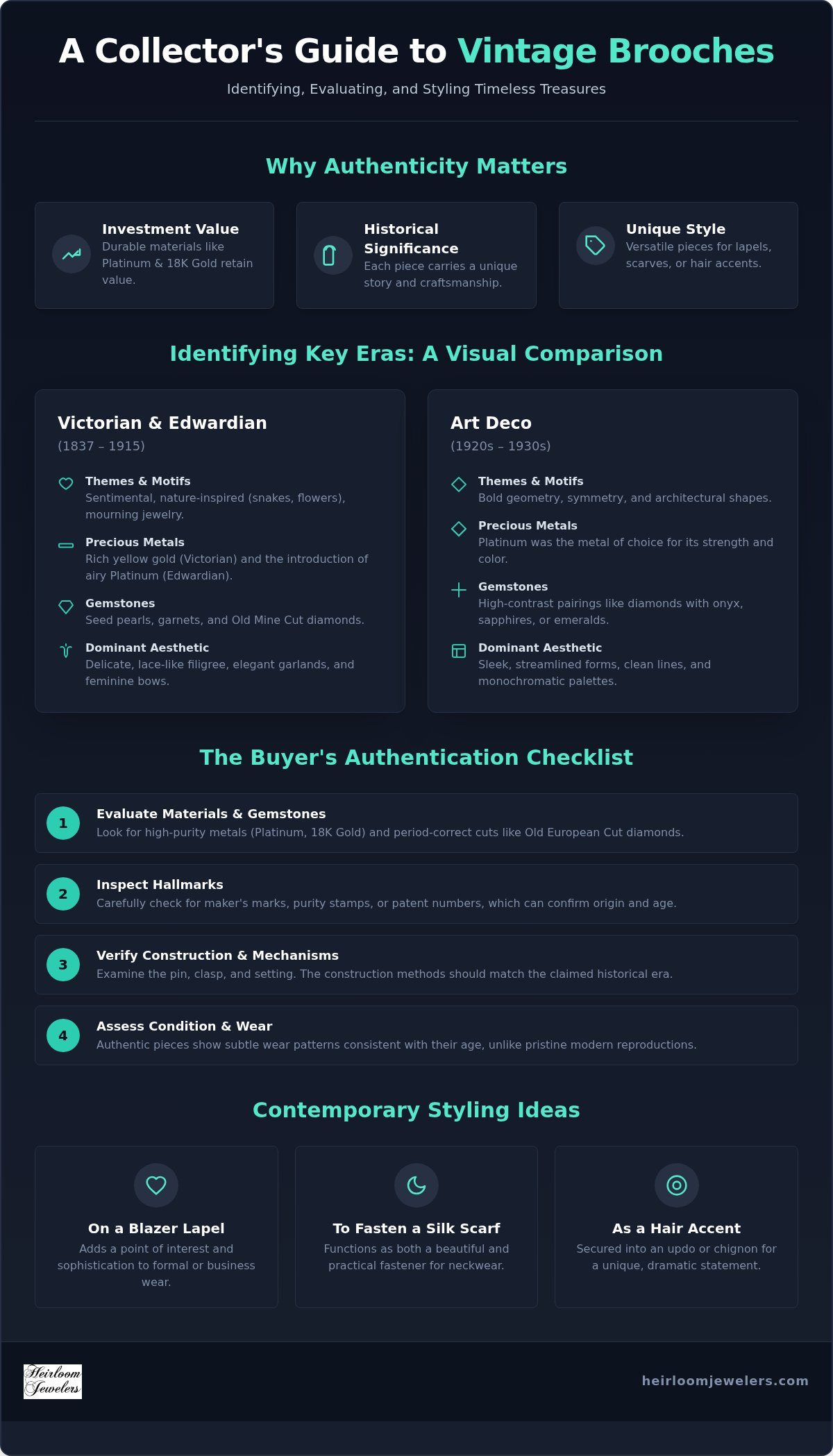
Categorizing a piece by its era is the first step toward true appreciation. Each period offers distinct visual markers that reflect the cultural values of the time. The shift from the warm, heavy gold of the mid-19th century to the icy precision of 20th-century platinum wasn't just a matter of taste. It was driven by advancements in metallurgy and the discovery of new resource deposits. For instance, the late 19th-century diamond rush provided the raw materials that allowed jewelers to move away from metal-heavy designs toward stone-centric displays. To understand how these styles fit into the broader timeline of art, the V&A's History of Jewellery provides an excellent academic foundation.
Victorian and Edwardian Splendor
Victorian brooches (1837–1901) are deeply symbolic. Early pieces often featured nature motifs like snakes, flowers, or birds, usually rendered in rich yellow gold. As the era progressed, mourning jewelry and sentimental pieces became popular. You'll frequently find seed pearls, colorful garnets, and old mine cut diamonds in these settings. The Edwardian era (1901–1915) introduced a lighter aesthetic. This period saw the first widespread use of platinum. Jewelers created lace-like filigree work that felt airy and feminine. These pieces often showcased delicate garlands and bows, reflecting the elegance of the pre-war aristocracy.
Art Deco and Mid-Century Modernism
The transition to Art Deco (1920s–1930s) brought a radical change. Sentimentality was replaced by bold geometry and high-contrast gemstone pairings. Platinum remained the metal of choice, but the focus shifted to symmetry and clean lines. If you're drawn to architectural shapes and monochromatic palettes, you'll find our Art Deco jewelry guide particularly helpful. By the 1940s and 50s, Mid-Century or "Retro" styles emerged. Due to wartime restrictions on platinum, rose gold and yellow gold made a comeback. These brooches are typically larger, featuring whimsical animal motifs or oversized ribbons. When browsing our collection of vintage brooches for sale, identifying these era-specific traits helps you find a piece that resonates with your personal aesthetic.
Evaluating Quality: Precious Metals, Gemstones, and Craftsmanship
Authentic vintage brooches for sale often feature materials that distinguish them from modern commercial pieces. Heritage designs frequently utilize vibrant gemstones like peridot, quartz, and emeralds. These stones were chosen for their natural character and color saturation. The craftsmanship of an estate piece is evident in how these stones are secured. A well-made brooch feels substantial and balanced, reflecting the time and skill invested by the original jeweler. Understanding these material nuances allows you to appreciate the inherent value of a piece beyond its surface beauty.
Understanding Metal Purity and Weight
Metal choice significantly impacts both the appearance and the longevity of a piece. 18K gold contains a higher percentage of pure gold than 14K, resulting in a deeper, richer yellow hue. While 14K is slightly more durable for daily wear, 18K is the traditional hallmark of high-end estate jewelry. Platinum was the gold standard for luxury during the Edwardian and Art Deco periods. Its exceptional strength allowed for incredibly fine, secure settings. This is why platinum was the preferred choice for both intricate brooches and vintage engagement rings. When you evaluate a potential acquisition, pay attention to its weight. A quality brooch should have a noticeable heft in the hand. This weight indicates that the metal hasn't been hollowed out to save on material costs, ensuring the pin mechanism remains stable over decades of use.
Gemstone Integrity in Vintage Settings
Authenticating the gemstones is crucial when browsing vintage brooches for sale. Original stones often show a specific type of artisanal cutting that modern machines don't replicate. The Old European Cut is a prime example. These diamonds feature a smaller table, a higher crown, and a larger culet than modern round brilliant cuts. They were designed to sparkle under candlelight, giving them a soft, romantic glow. You should also look for gemstone pairings that were popular in specific eras. For example, the combination of emerald and diamond in white gold or platinum often signals a sophisticated Art Deco influence. Conversely, peridot paired with yellow gold frequently points to Victorian or early 20th-century origins. Inspect the prongs and bezels closely. Original settings show consistent wear and a seamless fit with the stone. If a stone looks too new or doesn't sit perfectly in its cradle, it may be a later replacement that affects the piece's historical integrity.
A Buyer’s Checklist: Authenticity, Hallmarks, and Condition
When you're searching for vintage brooches for sale, it's easy to be captivated by the gemstones alone. However, the true story of a piece is often hidden on the reverse side. The back of a brooch reveals the jeweler's technique, the history of repairs, and the authenticity of the materials. A careful inspection follows a steady, logical path that prioritizes structural integrity. This process helps you distinguish between a well-maintained heirloom and a fragile reproduction. By focusing on the "unseen" parts of the jewelry, you can acquire a piece with the quiet confidence that it's both authentic and wearable.
Inspecting the Pin Mechanism and Safety
A brooch's clasp is a primary indicator of its era. Victorian pieces often feature a simple "C-clasp," which is a hooked wire without a locking mechanism. Later Edwardian and Art Deco designs introduced safety catches, such as the revolving clasp, which offers more security for daily wear. You should always test the pin stem for tension. It should be straight and spring back slightly when released; a limp or bent pin may struggle to hold the weight of the brooch on a lapel. Look closely for "solder" marks, which appear as small pools of metal around the joints. While some professional soldering is expected in century-old pieces, excessive repair work might suggest the piece was once broken or significantly altered. A secure mechanism is vital for ensuring your investment stays safely attached to your garment.
Deciphering Hallmarks and Maker’s Marks
Hallmarks act as a historical passport for fine jewelry. These stamps are typically found on the pin stem or tucked into the edge of the frame. They provide definitive proof of metal purity. For example, "750" denotes 18K gold, while "900 Plat" or "950" indicates high-grade platinum content. Identifying a maker's mark or designer signature can drastically change the valuation of a piece. These marks link the brooch to specific workshops or famous artisans, providing a documented lineage that collectors value. If a mark is faint or "rubbed," it often indicates years of wear, but it also requires a specialist's eye to verify. When you're looking at vintage brooches for sale, always ask the dealer to point out these marks and explain their significance. This transparency is the hallmark of a trusted authority and ensures you're getting a genuine piece of history.
If you're ready to find a piece with a verified history and structural integrity, explore our collection of authenticated estate jewelry to find your next heirloom.
Acquiring Your Next Heirloom: Why Curation Matters
Choosing a vintage brooch is a deliberate act of curation. It differs significantly from selecting mass-produced jewelry found in modern retail. A curated collection prioritizes structural integrity and historical relevance over sheer volume. By choosing estate pieces, you participate in a sustainable cycle of luxury. You're preserving a tangible piece of history rather than contributing to the environmental impact of new manufacturing. This approach allows you to build a collection that feels personal and meaningful. It transforms a simple purchase into a stewardship of artistry. When you view our vintage brooches for sale, you aren't just looking at accessories; you're looking at artifacts that have stood the test of time.
The Heirloom Jewelers Standard
At Heirloom Jewelers, our focus on authenticated estate jewelry provides peace of mind in a complex secondary market. We act as a steady guide for collectors who value transparency and historical integrity. Every piece in our inventory is selected for its unique character and material quality. While we specialize in brooches, our commitment to excellence extends to other categories, such as historic diamond earrings featuring artisanal cuts. We combine national expertise with the personalized, warm touch of a boutique merchant. This ensures that you receive professional care whether you're a seasoned collector or acquiring your first piece of estate jewelry. We prioritize long-term relationships and integrity over the high-pressure urgency found elsewhere.
Caring for Your Vintage Brooch
Proper maintenance ensures your brooch remains a future heirloom for the next generation. Store your pieces in individual fabric-lined compartments or soft pouches. This prevents harder gemstones like diamonds from scratching softer metals, pearls, or delicate enamel work. For routine cleaning, use a soft, dry microfiber cloth to remove oils and dust. If a deeper clean is necessary for stable metals like gold or platinum, use a gentle solution of warm water and mild soap with a soft-bristled brush. You should avoid submerging pieces with foil-backed stones or porous gems like opals, as they're sensitive to moisture. Regular inspections of the pin mechanism will help catch any tension issues before they become a security risk. By treating these pieces with respect, you ensure their story continues well into the future.
Building a Collection with Historical Integrity
A vintage brooch is a bridge between past craftsmanship and modern style. Throughout this guide, we've explored how to identify key design markers and evaluate the structural integrity of a piece. You now have the tools to look beyond the surface, focusing on the hallmarks and mechanisms that define true estate jewelry. Whether you're drawn to the geometric precision of Art Deco or the romantic symbolism of the Victorian era, your choice reflects a commitment to quality and heritage.
When browsing vintage brooches for sale, remember that professional curation is your best protection against mass-market imitations. At Heirloom Jewelers, we specialize in rare historical eras and provide expertly authenticated estate jewelry. We offer national shipping on all fine jewelry to ensure these unique treasures reach collectors everywhere. Every acquisition is an opportunity to preserve a story that would otherwise be lost to time.
Acquire Your Next Rare Find: Shop Authenticated Vintage Brooches
We invite you to find a piece that resonates with your personal history and brings a sense of quiet confidence to your wardrobe.
Frequently Asked Questions
How do I know if a vintage brooch is real gold or just plated?
Identifying real gold requires inspecting the piece for specific hallmarks such as "14K," "18K," or "750." These stamps indicate the exact percentage of pure gold within the alloy. Plated jewelry often lacks these marks or features stamps like "GP" for gold plated. You should also look for "brassing," which occurs when the gold layer wears away to reveal a different metal underneath. Because gold is a dense material, a solid piece will feel noticeably heavier than a plated imitation.
What is the difference between an antique brooch and a vintage one?
The primary distinction lies in the age of the piece. An antique brooch is officially defined as being at least 100 years old, encompassing eras like the Georgian and Victorian periods. In contrast, vintage pieces are typically between 20 and 99 years old. When you browse vintage brooches for sale, you'll often encounter Mid-Century or Retro designs from the 1940s and 50s. Understanding this timeline helps you categorize the historical significance and rarity of your collection accurately.
Are brooches still in style for 2026 fashion?
Brooches remain a prominent accessory in 2026 due to their incredible versatility and the trend toward personalized styling. Modern fashion emphasizes using these pieces in creative ways beyond the traditional lapel. You can secure a brooch to a silk scarf, use it as a dramatic hair ornament, or pin it to the waistline of a gown. This ability to transform a look makes them a staple for those who value unique, heritage-driven fashion and quiet elegance.
What should I look for in a vintage diamond brooch's clarity?
Clarity in a vintage diamond brooch should be evaluated based on the stone's "eye-clean" quality. Many estate pieces feature Old European or Old Mine cuts, which were hand-faceted to sparkle under soft light. While modern diamonds prioritize high clarity grades, antique stones often have small natural inclusions that don't diminish their romantic glow. You should ensure there are no surface-reaching fractures that could compromise the stone's structural integrity or long-term durability over years of wear.
Can a vintage brooch be worn as a necklace pendant?
Many vintage brooches can be easily adapted to wear as a necklace pendant. You can use a specialized "brooch-to-pendant" converter that slides onto the pin stem without altering the original piece. Alternatively, some collectors thread a fine chain directly behind the pin mechanism if the design allows it to hang straight. This flexibility increases the utility of your investment, allowing you to enjoy your estate jewelry in multiple formats depending on the ensemble or the occasion.
How do I identify the maker of my estate brooch?
Identifying the maker involves searching for a designer signature or a unique symbol, known as a maker's mark, near the metal hallmark. These stamps are often found on the pin stem or the interior frame of the brooch. Using a jeweler's loupe helps you see these faint marks clearly. Once found, you can cross-reference the mark with historical registries to confirm the workshop's origin. This documentation significantly enhances the piece's provenance and overall collector value.
What is the safest way to clean a vintage brooch with emeralds?
Cleaning a brooch set with emeralds requires extreme care because these stones are often naturally fragile. You should never use ultrasonic cleaners or harsh chemicals, as they can cause the stone to crack or lose its luster. Instead, use a soft, damp cloth with a tiny amount of mild, pH-neutral soap. Gently wipe the surface and dry it immediately with a lint-free cloth. This methodical approach preserves the emerald's deep green color while protecting the surrounding metal.
Why are Art Deco brooches more expensive than Mid-Century ones?
Art Deco brooches often command higher prices due to their intricate craftsmanship and premium materials. These pieces frequently utilize platinum settings and high-grade diamonds, whereas Mid-Century designs often moved toward yellow gold and larger, less rare gemstones. The geometric complexity of the 1920s and 30s required significant precision and manual labor. When searching for vintage brooches for sale, you'll find that the rarity and labor-intensive nature of Art Deco designs typically translate to a higher market value.