
A vintage cocktail ring is more than a piece of jewelry; it is a personal manifesto of independence. Born in the era of Prohibition as a defiant symbol of social freedom, these rings continue to serve as the ultimate conversation piece for the modern woman. You likely appreciate the bold, oversized aesthetic that defined these historic social scenes, yet finding an authentic piece feels increasingly complex in today's market. Searching for the perfect vintage cocktail rings for her often leads to a maze of modern reproductions and confusing era-specific terminology.
We understand that securing a one-of-a-kind investment requires more than just an eye for beauty. It demands a deep appreciation for craftsmanship and a clear understanding of gemstone durability. This guide provides the essential knowledge you need to navigate the secondary market with confidence. You'll discover the rich history behind these artistic designs, learn the critical differences between antique and estate classifications, and understand why professional authentication is vital in 2026. We will preview the specific artistry of different eras to help you find a ring that reflects your unique personal style and historical preference.
Key Takeaways
- Discover the historical origins of the cocktail ring as a bold symbol of female independence and social defiance during the Prohibition era.
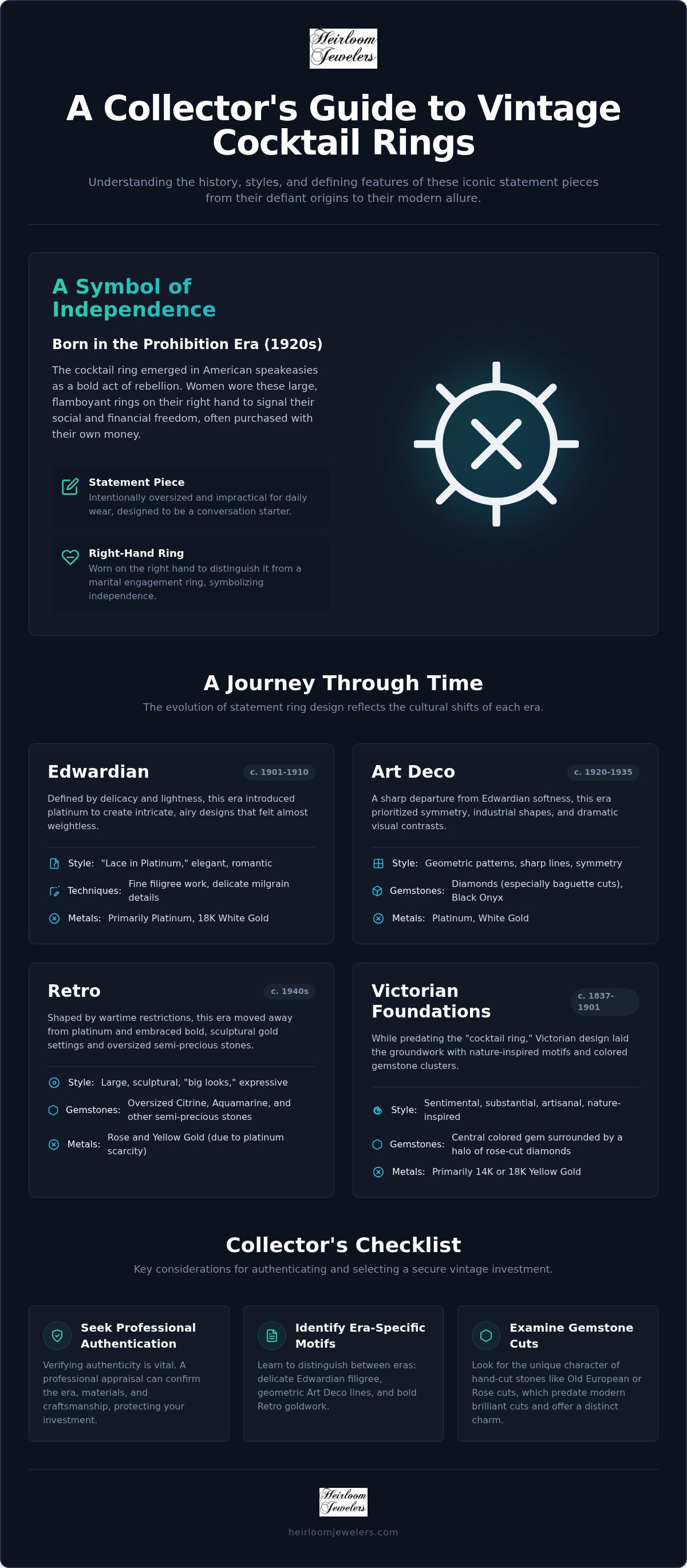
- Learn to distinguish between era-specific designs by contrasting the delicate filigree of the Edwardian period with the geometric lines of Art Deco.
- Explore the unique allure of hand-cut stones, focusing on the distinct character of Old European cut diamonds and vibrant estate gemstones.
- Gain a practical framework for authenticating your purchase and selecting authentic vintage cocktail rings for her that serve as secure investments.
- Understand the best practices for preserving the integrity of heritage settings while styling these one-of-a-kind pieces with a contemporary 2026 wardrobe.
The Origins of the Cocktail Ring: A Symbol of Independence
A cocktail ring is defined by its scale and its specific placement. Unlike traditional bands, it is an oversized statement piece designed to be worn on the right hand. While modern jewelry often prioritizes minimalism, the historical Cocktail Ring Definition centers on a deliberate lack of practicality. These pieces weren't intended for daily chores or subtle accents; they were created to be seen in the dim light of underground lounges. For many collectors seeking vintage cocktail rings for her, the appeal lies in this inherent boldness. It's a distinct category that differs from "dinner rings," which were often more delicate, or "engagement rings," which carry the weight of marital commitment. The cocktail ring carries only the weight of the wearer's own personality.
The Prohibition Era and the Right-Hand Ring
The story begins in 1920s America. During Prohibition, the illicit nature of alcohol consumption gave rise to a vibrant speakeasy culture. Women who frequented these underground gatherings used fashion as a form of social protest. By wearing a large, flamboyant ring on the right hand, a woman signaled her financial and social independence. It was a clear message that she wasn't wearing a wedding band and had likely purchased the piece with her own earnings. The early 1920s aesthetic was intentionally loud. These rings featured vibrant gemstones and intricate settings that sparkled as the wearer raised a glass, turning a simple gesture into a defiant act of rebellion.
Evolution from the 1920s to the Retro 1940s
As the decades progressed, the design language of vintage cocktail rings for her shifted to reflect the global landscape. The 1920s and 1930s were dominated by Art Deco geometry, characterized by platinum settings and symmetrical diamond patterns. However, the 1940s Retro era introduced a dramatic change. Scarcity of platinum during World War II forced jewelers to pivot toward large, sculptural gold settings. The Great Depression had already fostered a desire for "big" looks that maximized perceived value, leading to the use of oversized semi-precious stones like citrine and aquamarine. The "Cocktail Era" represents the historical pinnacle of statement jewelry design, bridging the gap between the structured elegance of the past and the expressive freedom of the present.
Identifying Era-Specific Styles in Vintage Rings
The evolution of jewelry design mirrors the cultural shifts of each passing century. Metalwork and motifs transformed from the sentimental clusters of the 19th century to the streamlined, industrial shapes of the early 20th century. For those collecting vintage cocktail rings for her, recognizing these shifts is essential for verifying authenticity. Platinum and 18K white gold emerged as the preferred settings during this transition. These metals offered the strength required to support larger statement stones while providing a neutral, bright backdrop that enhanced diamond brilliance. They replaced the silver-topped gold settings common in earlier eras, allowing for more secure and intricate designs that define the vintage aesthetic.
Victorian and Edwardian Foundations
Early statement jewelry drew heavily from nature and romanticism. Victorian cluster rings often featured a central colored gemstone surrounded by a halo of rose cut diamonds. These pieces felt substantial yet artisanal, often using 14K or 18K yellow gold. As the century turned, Edwardian elegance introduced a lighter touch. Jewelers began using platinum to create "lace in platinum" effects. This era is defined by delicate milgrain details, which are tiny beads of metal along the edges of a setting, and fine filigree work that feels almost weightless. Understanding these early techniques is fundamental when exploring antique rings. It's a period where craftsmanship reached a level of intricacy that modern mass production cannot match.
Art Deco and Retro Statement Pieces
The 1920s brought a sharp departure from Edwardian softness. Art Deco design prioritized symmetry, geometric patterns, and bold color contrasts. This era popularized the use of baguette cuts and the striking combination of black onyx with white diamonds. You can find more detail on these specific motifs in our guide to Art Deco jewelry. By the 1940s, the Retro period shifted the focus again. Due to wartime metal restrictions, rose and yellow gold became the standard. These rings were sculptural and large, often featuring citrine or aquamarine, making them popular choices when searching for vintage cocktail rings for her today. This transition marked the rise of Hollywood Glamour, where the scale of the piece was as important as the quality of the stone. During this time, the use of high-quality synthetic rubies and sapphires also became common in authentic period settings, reflecting the era's innovative spirit. If you're beginning your collection, consider starting with authenticated estate jewelry that captures these distinct historical signatures.
Gemstones and Antique Cuts: The Heart of the Ring
While the setting provides the structure, the gemstone is the soul of any statement piece. Vintage cocktail rings for her often feature stones with a character that modern, mass-produced jewelry simply cannot replicate. The primary difference lies in the transition from hand-cutting techniques to modern laser precision. Modern diamonds are cut for maximum brilliance under fluorescent laboratory lights. In contrast, antique stones were designed to perform in the soft glow of evening light. This focus on individual beauty over standardized metrics makes every estate stone a unique artifact of its time.
Old European and Old Mine Cut Diamonds
The Old European cut is a hallmark of early 20th-century jewelry. It's defined by a high crown, a small table, and a large, flat culet at the base. These stones were the precursors to the modern round brilliant, but they possess a different visual rhythm. Jewelers of the era prioritized the "candlelit flash" over modern fire. This specific quality refers to how the stone disperses light in low-intensity environments, creating broad, colorful flashes rather than tiny pinpoints of sparkle. These hand-cut facets represent a human touch that feels more romantic and personal than the clinical perfection of modern stones. Old Mine cuts, with their squarish cushions and deeper proportions, offer an even more rustic and substantial presence on the hand.
Precious Gemstones in Estate Jewelry
Colored gemstones serve as the vibrant focal points for many iconic designs. In the secondary market, the value of a piece often rests on the presence of untreated natural stones. Emeralds, sapphires, and rubies were frequently chosen for their deep saturations and historical prestige. For example, the Lugano Emerald & Diamond Necklace illustrates how a high-quality emerald paired with 18K white gold creates a classic, sophisticated estate look that remains timeless.
Beyond the traditional "big three" gemstones, vintage cocktail rings for her often showcase creative and rare pairings. Estate peridot and quartz combinations are excellent examples of this artistic freedom. These stones were often set in yellow gold to enhance their warm, earthy tones. Such combinations reflect an era where designers weren't afraid to experiment with color and texture to create a one-of-a-kind conversation piece. Whether it's a deep green emerald or a unique quartz pairing, these gemstones provide the emotional and visual weight that defines the cocktail ring's legacy.
How to Choose and Authenticate a Vintage Ring
Authentication is the most critical word in the secondary market. When you invest in vintage cocktail rings for her, you're buying a physical record of the past. A reproduction might mimic the aesthetic of the 1920s, but it lacks the weight, soul, and structural history of an original. Verification begins with the metal. Authentic statement rings from the early to mid-20th century almost exclusively used high-purity metals like platinum or 18K white gold. In the United States, 18K gold contains 75% pure gold, often marked as "750" in international markets. These marks should show a level of wear consistent with the rest of the piece. If the hallmark looks brand new on a ring that claims to be 100 years old, it's a red flag.
Many of the same authentication standards apply when evaluating vintage engagement rings, particularly regarding the integrity of the setting. A secure setting is the foundation of any high-value investment.
Reading Hallmarks and Maker’s Marks
Hallmarks serve as a ring's passport. They reveal the country of origin, the metal purity, and often the specific year of manufacture. In vintage pieces, these marks were typically hand-engraved or struck with a physical die. You should look for slight irregularities under a jeweler's loupe. Modern reproductions often use laser-stamped marks that appear too perfect and lack the depth of traditional striking. Signed pieces from historic design houses carry a significant premium. A maker's mark from a recognized artisan isn't just a signature. It's a guarantee of a certain standard of craftsmanship that has been verified over decades.
Assessing Condition and Wear
A well-loved ring will show signs of its journey. This is called patina. On platinum and gold, patina is a soft, lustrous finish that develops from tiny, microscopic scratches over time. It shouldn't be confused with damage. Damage includes deep pitting, cracks in the shank, or "dead" stones that have lost their brilliance due to internal fractures. When assessing vintage cocktail rings for her, pay close attention to the prongs. In an authentic vintage piece, the prongs may have been "tipped" or rebuilt to ensure the stone remains secure. This is a sign of responsible ownership, not a flaw. Because these pieces are high-value investments, a professional appraisal is a non-negotiable step in the process.
If you're ready to find a piece with a verified history, we invite you to browse our collection of authenticated estate jewelry.
Caring for and Styling Your Heritage Ring
Owning a piece of history requires a commitment to stewardship. These rings have survived decades of social shifts and personal milestones, and their continued longevity depends on mindful preservation. When you acquire heritage jewelry, you become part of its story. This responsibility involves both physical maintenance and an understanding of how to integrate these bold designs into a contemporary wardrobe. In 2026, the trend for vintage cocktail rings for her has shifted away from occasional wear toward daily expression, making proper care more vital than ever.
Cleaning and Maintenance for Antique Settings
Professional maintenance is the foundation of estate jewelry care. You should avoid using ultrasonic cleaners at home. The intense vibrations used in these machines can loosen aged prongs or damage porous stones like emeralds and pearls. Instead, the safest way to clean 18K white gold and platinum is with warm water, a drop of mild, fragrance-free dish soap, and a very soft brush. Gently clean the underside of the stone where dust and oils often accumulate. We recommend scheduling a professional check-up every six months. A specialist can verify that the hand-cut facets of your Old European diamonds remain secure within their settings, preventing the loss of irreplaceable stones.
Styling the Statement Ring Today
Choosing a vintage cocktail ring is an act of preserving history while defining your personal aesthetic. These pieces represent more than just social status; they are artifacts of female independence and artisanal mastery. By focusing on authenticated materials like platinum and 18K white gold, you ensure your investment remains secure for years to come. Whether you're drawn to the candlelit flash of an Old European cut or the geometric precision of Art Deco, the right ring serves as a bridge between the craftsmanship of the past and your modern life.
Finding authentic vintage cocktail rings for her requires a guide who values heritage as much as quality. We are specialists in Old European cuts and authenticated estate jewelry, ensuring every piece in our inventory meets rigorous standards of historical significance. To assist collectors everywhere, we provide nationwide shipping on all rare finds, allowing you to secure a one-of-a-kind treasure with confidence. Our commitment to integrity ensures that your selection is both a beautiful accessory and a lasting investment.
Explore our curated collection of authenticated vintage cocktail rings to find a piece that resonates with your own story. We look forward to helping you discover your next heirloom.
Frequently Asked Questions
What is the difference between an antique and a vintage cocktail ring?
An antique ring is defined as any piece that is at least 100 years old. In contrast, vintage refers to jewelry that is between 20 and 99 years old. While all antique rings are technically estate pieces, not all estate items qualify as antique. This distinction is vital for collectors of vintage cocktail rings for her, as it influences both the market value and the specific tax or duty regulations applied to international acquisitions.
Are vintage cocktail rings suitable for everyday wear?
These rings are designed for durability, but their suitability for daily wear depends on the gemstone and setting. Diamonds, sapphires, and rubies rank high on the Mohs scale, making them resilient enough for frequent use. However, delicate filigree or softer stones like opal require more careful handling. We recommend removing statement rings during manual tasks to preserve the integrity of the vintage metalwork and ensure the stones remain securely seated in their original prongs.
Can I resize a vintage platinum cocktail ring?
Most vintage platinum rings can be resized by a skilled bench jeweler who specializes in heritage pieces. Platinum has a high melting point and requires specific tools to avoid leaving visible seams or sizing lines. If the ring features an intricate continuous pattern or engraving around the entire shank, resizing may be more complex. It's always best to have a specialist evaluate the piece to ensure that the process won't compromise the structural stability of the gemstone settings.
Why are old European cut diamonds more expensive than modern ones?
Old European cuts command a premium because of their rarity and the artisanal labor involved in their creation. Unlike modern round brilliants that are laser-cut for standardized precision, these stones were hand-faceted to maximize beauty under low-light conditions. Since they are no longer produced in volume, the supply of high-quality Old European diamonds is finite. Their value is further enhanced by their unique light performance, which many collectors find more evocative than the clinical sparkle of modern stones.
How do I know if a vintage ring is a reproduction?
Distinguishing an authentic piece from a reproduction requires a close inspection of construction and wear. Modern replicas often feature laser-etched hallmarks that lack the depth and slight irregularities of hand-struck marks. Additionally, authentic vintage cocktail rings for her will show natural patina and microscopic wear patterns consistent with their age. Reproductions often use cast settings that feel lighter or show pitting under magnification, whereas genuine vintage pieces were often hand-fabricated from rolled or pulled metal stock.
What gemstones were most popular in Retro-era cocktail rings?
The Retro era of the 1940s prioritized large, vibrant semi-precious gemstones. Citrine, aquamarine, and amethyst were highly favored for their ability to be cut into substantial, eye-catching sizes. These stones were often paired with smaller rubies or sapphires, which were frequently synthetic but period-correct for the time. The overarching trend was bold and sculptural, using these colorful focal points to complement the heavy rose and yellow gold settings that defined the Hollywood Glamour aesthetic of the decade.
Is estate jewelry more sustainable than buying new?
Choosing estate jewelry is an inherently sustainable choice. By purchasing a pre-owned piece, you are bypassing the environmental and ethical costs associated with modern mining and manufacturing. This practice effectively recycles precious metals and gemstones that have already been extracted, giving them a second life. It reduces the demand for new resource consumption and supports a circular economy within the luxury market, making it a responsible option for those who value both history and environmental stewardship.
Should I get a GIA certificate for a vintage gemstone ring?
A GIA certificate is highly recommended for any high-value vintage ring, particularly those featuring diamonds or major colored gemstones. In 2026, natural diamonds with GIA certification often resell for 15% to 25% more than uncertified stones of the same grade. A report provides an unbiased assessment of the stone's characteristics and confirms whether it is natural or treated. This documentation is essential for insurance purposes and serves as a critical component of the ring's provenance and future resale value.