
Could the vibrant blue stone in a modern shop window actually be a product of a laboratory rather than the earth? Most contemporary topaz undergoes heavy irradiation to achieve its color, leaving many collectors searching for something more authentic. You likely appreciate the character and history found only in vintage topaz rings, yet the overwhelming presence of mass-produced "vintage-style" jewelry makes finding a genuine estate piece feel like a daunting task.
It's frustrating to encounter synthetic stones masquerading as heritage items. We understand that you want a ring with natural color depth and a setting that tells a story of craftsmanship. This guide provides the clarity you need to distinguish between common treated varieties and rare treasures like Imperial or Sherry topaz. You'll learn to identify era-specific settings with confidence and understand the evaluation criteria used by experts in the secondary market. We will explore the historical significance of these gems and the structural hallmarks of various design periods. By the end of this article, you'll have the knowledge to secure a one-of-a-kind piece that serves as both a beautiful accessory and a lasting investment.
Key Takeaways
- Understand why vintage topaz rings provide greater structural integrity and artistic value than modern, mass-produced alternatives.
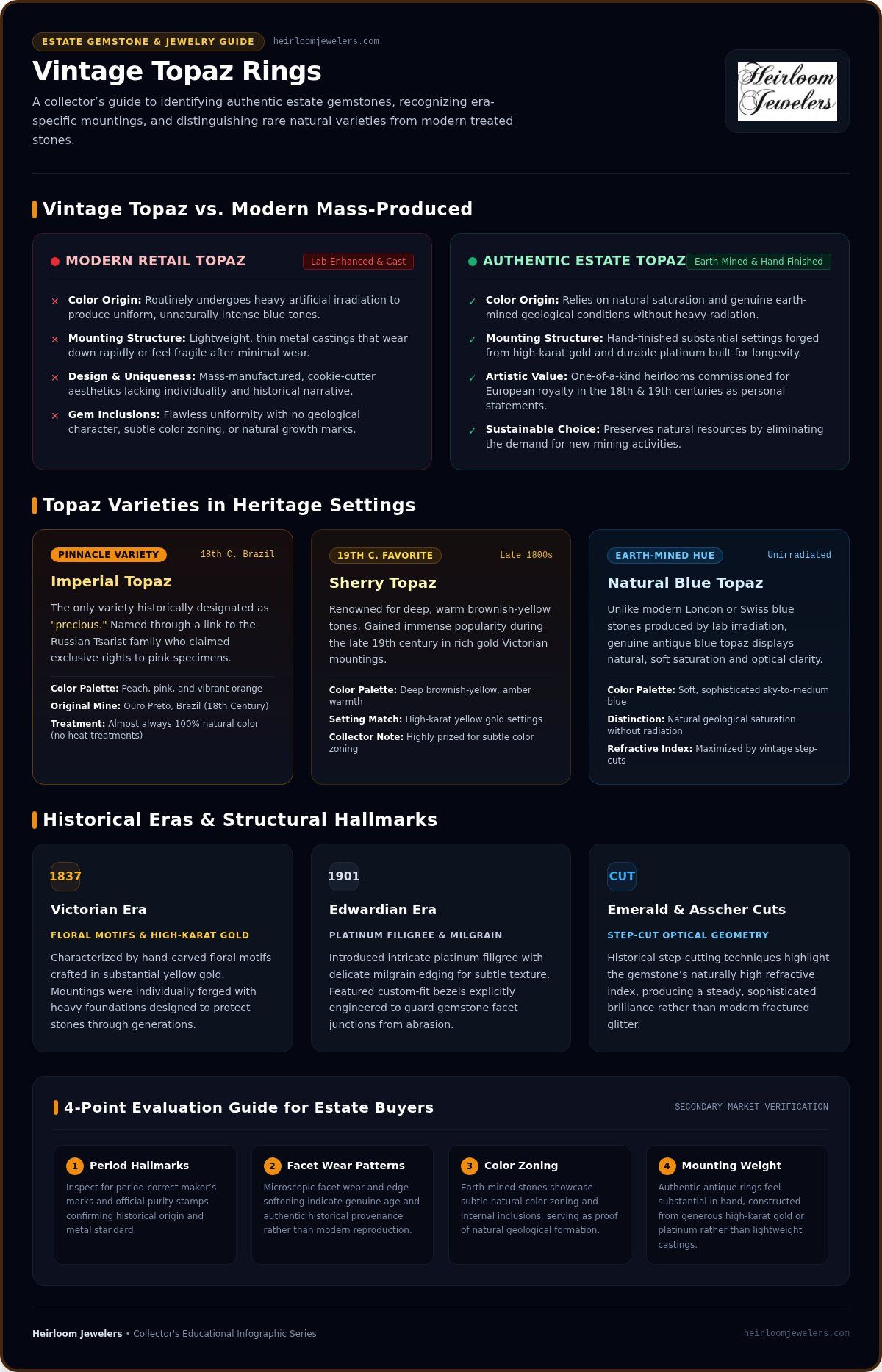
- Identify rare color varieties such as peach-toned Imperial topaz and the warm, brownish-yellow Sherry topaz favored in the 19th century.
- Learn to verify the age and origin of estate jewelry by examining period-correct hallmarks and maker's marks.
- Recognize the specific wear patterns on gemstone facets that indicate a stone has a genuine historical provenance.
- Explore the distinct design characteristics of different eras, including Victorian floral motifs and Edwardian platinum filigree.
Why Vintage Topaz Rings Offer Unrivaled Value and Character
Topaz has held a place of distinction in jewelry boxes for centuries. During the 18th and 19th centuries, European royalty frequently commissioned pieces featuring this gemstone to signal status and luxury. Unlike the mass-produced items found in modern retail, vintage topaz rings represent a time when jewelry was an individual statement rather than a commodity. These pieces often showcase a depth of character that stems from their unique history and the specific era of their creation.
Beyond their historical allure, estate pieces offer significant sustainability benefits. By selecting a pre-owned ring, you reduce the demand for new mining activities. It's a choice that preserves natural resources while allowing you to own a stone with a more complex visual profile. Many older gems exhibit subtle color zoning or natural inclusions that modern, heavily treated stones lack. These characteristics provide a window into the stone's geological origin, making each piece truly one of a kind.
The Distinction of Natural Topaz in Estate Jewelry
The marketplace today is saturated with lab-enhanced gemstones, but estate jewelry often features natural, earth-mined varieties. Understanding the different topaz gemstone varieties is essential for any collector. While modern blue topaz is typically the result of intense irradiation, vintage stones often rely on their natural saturation. Older step-cuts, such as emerald or Asscher cuts, highlight the stone’s high refractive index. This creates a steady, sophisticated brilliance. You can use our guide on antique rings as a framework to better understand how these cutting techniques evolved to maximize the natural beauty of the gem.
Why Pre-Owned Topaz Retains Superior Craftsmanship
Durability is a defining hallmark of heritage jewelry. Many modern rings utilize lightweight, thin castings that can feel fragile or wear down over just a few years of use. In contrast, Victorian and Edwardian mountings were frequently hand-finished with a deliberate focus on longevity. These eras favored substantial amounts of high-karat gold and platinum. These metals provide a secure and heavy foundation for the gemstone, ensuring it stays protected through decades of wear.
Collectors often prefer vintage topaz rings because they avoid the repetitive, cookie-cutter appearance of contemporary designs. You will often find intricate details that are difficult to replicate today:
- Hand-carved floral motifs in rich yellow gold.
- Delicate milgrain edging that adds texture and definition to the setting.
- Custom-fit bezels designed to protect the stone's junctions from abrasion.
These structural elements ensure that the ring remains a durable heirloom rather than a temporary fashion accessory. The focus on craftsmanship rather than speed of production results in a piece that feels substantial on the hand and maintains its integrity over time.
Deciphering Topaz Varieties: From Imperial to London Blue
Topaz exists in a spectrum of colors that often surprises new collectors. While many people associate the stone with modern blue hues, vintage topaz rings frequently showcase rare, natural shades that are no longer common in today's retail market. Understanding these varieties is the first step toward building a significant collection. Each color tells a different story of geological origin and historical preference.
The Rarity of Imperial Topaz in Heritage Settings
Imperial topaz stands as the pinnacle of this gemstone family. It features a sophisticated palette of peach, pink, and vibrant orange. These stones were originally discovered in the Ouro Preto mines of Brazil during the 18th century. They gained their name through a connection to the Russian Tsarist family, who claimed exclusive rights to the finest pink specimens. Imperial Topaz is the only variety historically considered "precious."
Collectors prize these rings for their rarity and natural brilliance. Unlike other varieties, the color in Imperial topaz is almost always natural. It doesn't require the heat treatments common in modern jewelry. This makes them a high-value investment for those seeking authenticity. If you find a Victorian-era ring featuring a deep peachy-pink stone, you're likely looking at a rare piece of history. These gems are scarce. They represent the height of luxury in the secondary market.
Sherry topaz was particularly popular during the late 19th century. Its deep brownish-yellow tones perfectly complemented the warm yellow gold settings of the era. You may also encounter white topaz in older estate pieces. Jewelers often used it as a brilliant diamond alternative. It offers a similar sparkle but with a distinct, silvery clarity that collectors still admire today. It's a subtle choice for those who prefer understated elegance.
Understanding Color Depth in Vintage Blue Topaz
Blue topaz is a staple of the jewelry world, but its history in estate contexts is nuanced. Most blue topaz found in vintage rings from the mid-20th century onwards has undergone some form of treatment. The Gemological Institute of America provides essential details on topaz quality and grading standards to help buyers identify these differences. Knowing the source of the color is vital for proper valuation.
In mid-century estate pieces, you're most likely to find "Sky Blue" topaz. This variety mimics the soft color of a clear afternoon sky. It feels lighter and more delicate than the saturated "Swiss Blue" or the dark, moody "London Blue" varieties that became popular later. When evaluating larger cocktail rings, look for consistent saturation and high clarity. Natural blue topaz does exist, but it's exceptionally rare. Most vintage blue stones owe their beauty to early irradiation techniques that have since been refined. If you're ready to explore these varieties in person, you can view our current collection of authenticated estate jewelry to find a piece that resonates with your personal style.
Evaluating Quality: How to Buy Authentic Estate Topaz Rings
Selecting vintage topaz rings requires a methodical approach to quality and authentication. You should begin by examining the inner band for hallmarks and maker's marks. These stamps often indicate the metal purity, such as 18K gold or platinum, and can help verify the specific era of production. A clear mark from a known historical jeweler significantly enhances the piece's provenance and collectible value. Beyond the metal, the structural integrity of the gallery and prongs is paramount. In pre-owned pieces, prongs may have thinned over decades. We recommend ensuring the stone is secure before finalizing a purchase.
One unique physical indicator of age in topaz is "wear at the junctions." While topaz is a hard gemstone, it's susceptible to minor abrasions along the edges where facets meet. In genuine estate pieces, you may see slight softening or tiny nicks at these junctions under a jeweler's loupe. This subtle wear often confirms the stone has been set and worn for many years, distinguishing it from modern, freshly cut replacements. While you want a stone that appears "eye-clean" to the naked eye, these microscopic signs of history are often welcomed by serious collectors.
Assessing Clarity and Cut in Antique Gemstones
The way a gemstone is shaped tells us much about its history. You'll often find "Old Mine" or "Old European" style cuts in heritage pieces. These cuts were designed to maximize brilliance under candlelight rather than modern electric bulbs. When inspecting the stone, look for pleochroism. This is an optical phenomenon where the gem shows different colors when viewed from different angles. It's a hallmark of natural topaz that many lab-grown stones fail to replicate perfectly. Referencing the Gemological Institute of America's topaz quality guide can help you understand how natural inclusions differ from synthetic bubbles. These internal characteristics are often proof of a stone's natural, earth-mined origin.
The Importance of Authentication in Estate Sales
High-value gemstone rings require a high level of transparency. Third-party verification is essential to confirm that a stone hasn't been subject to modern, aggressive treatments that weren't available in the era the setting suggests. The status of heritage jewelry adds a layer of prestige that can positively impact resale value and long-term appreciation. When speaking with an estate jeweler, ask about the stone's origin and any known history of the piece. A reputable curator will provide detailed information about the ring's condition and the authentication steps taken. This professional dialogue ensures you're investing in a genuine piece of history rather than a modern imitation.
Matching Eras and Metals: Finding Your Perfect Vintage Topaz Band
The synergy between a gemstone and its mounting defines the aesthetic of a historical period. Vintage topaz rings showcase this evolution through shifting metal preferences and decorative techniques. Choosing the right metal is vital. It doesn't just hold the stone; it enhances the gem's natural color and reflects the artistic values of the time it was created.
Topaz in Victorian and Edwardian Gold Settings
Victorian jewelers favored 14K and 18K yellow gold. These warm metals beautifully complement the golden and amber hues of Sherry and Imperial topaz. During the 19th century, topaz was often featured in "sentimental" jewelry. It symbolized fidelity and lasting affection. You'll frequently find these stones surrounded by intricate floral motifs or hand-carved gold work that feels substantial and romantic.
The Edwardian period marked the introduction of platinum into mainstream jewelry. This allowed for more delicate, lace-like filigree work. You will often see blue or white topaz set in these airy, feminine mountings. These pieces require a careful eye for condition. If you're considering these styles for daily wear, our vintage engagement rings guide offers deeper insights into the durability of various historical settings. The transition from the heavy gold of the Victorian era to the light, white metals of the Edwardian era represents a major shift in jewelry history.
Art Deco Topaz Rings: Geometric Precision
The 1920s brought a shift toward bold lines and architectural forms. Art Deco designs often pair vibrant topaz with diamond halos or sapphire accents. White gold and platinum became the standard during this time. This created a stark, high-contrast look that emphasized the stone's brilliance. Jewelers transitioned away from rounded shapes toward step-cuts like emerald and baguette shapes. These cuts emphasize the internal clarity of the stone.
Many art deco jewelry aesthetics continue to influence modern designs. However, original pieces from this era possess a weight and precision that modern reproductions rarely achieve. The use of geometric symmetry and contrasting gemstone colors makes these rings exceptionally striking on the hand.
By the 1940s and 50s, the Retro and Mid-Century periods introduced the "cocktail" ring. These pieces feature oversized topaz stones, often exceeding ten carats. They are typically set in rose or yellow gold with bold, sculptural shoulders. It was an era of glamour and visibility. These large-scale rings are perfect for those who want a statement piece with significant presence. You can browse our curated collection of vintage rings to find a piece that aligns with your favorite historical era.
Discovering Your Next Heirloom: The Curation at Heirloom Jewelers
Heirloom Jewelers operates as a bridge between historical artistry and the modern collector. We don't manufacture new items or offer custom services. Instead, we focus on the deliberate curation of authenticated, pre-owned estate pieces. Finding genuine vintage topaz rings requires a commitment to quality that mass-market retailers often overlook. We strictly avoid modern "vintage-style" reproductions. These mass-produced items lack the weight, material integrity, and historical soul found in a true heritage piece. Every item in our collection is a unique find with its own provenance.
Our role is that of a knowledgeable curator and a passionate enthusiast. We understand that collectors often search for specific eras or particular stone varieties. Whether you're looking for a Victorian peachy-pink stone or a mid-century cocktail ring, we provide a steady and professional atmosphere for your search. We prioritize integrity over high-pressure sales tactics. This ensures that your experience is rooted in an appreciation for craftsmanship rather than a simple transaction.
Our Approach to Authenticating Vintage Gemstone Rings
Our approach to authenticating vintage topaz rings is methodical and transparent. We verify the identity of every gemstone to ensure it meets our standards for natural origin and historical accuracy. This includes testing for treatment history to distinguish between stable, era-appropriate enhancements and modern, aggressive processes that can compromise value. Metal purity is another priority. We focus on 18K white gold and platinum settings. We confirm these materials possess the structural strength required for a lifetime of wear. Preserving the original patina is central to our philosophy. We believe the subtle signs of age add value. They tell a story that shouldn't be polished away by aggressive restoration techniques.
Selecting a Piece That Stands the Test of Time
Choosing a rare gemstone like topaz allows you to stand out in a market heavily saturated with standard diamonds. These stones offer a spectrum of natural color that feels personal and intentional. To ensure your ring remains a future heirloom, we recommend a gentle care routine. Topaz is a durable stone, but it's sensitive to hard knocks along its cleavage planes. Avoid harsh chemicals or ultrasonic cleaners. These can be too abrasive for older, delicate settings. A soft cloth and mild soap are usually sufficient to maintain brilliance.
We invite you to explore our current collection of authenticated estate jewelry. Each piece has been selected for its historical significance and material quality. We're here to act as your trusted guide as you explore the high-value secondary market and find a piece that resonates with your personal history.
Securing Your Piece of Jewelry History
Selecting an estate gemstone piece is more than a simple purchase. It's an investment in a specific era of design and a commitment to preserving natural beauty. You now understand how to distinguish rare Imperial and Sherry varieties from modern treated stones. Knowledge of hallmarks and wear patterns also ensures authenticity. These details separate a true heritage piece from a mass-produced imitation.
At Heirloom Jewelers, we specialize in high-value authenticated estate jewelry. Our curated selection features rare Victorian, Art Deco, and Retro pieces that have been rigorously inspected for material quality and historical accuracy. We prioritize the preservation of original craftsmanship over modern manufacturing. Whether you're a seasoned collector or a first-time buyer, we provide a reliable path to owning a unique treasure. We offer nationwide shipping for heritage collectors to ensure these exceptional finds reach their new homes safely.
Browse our curated collection of authenticated vintage topaz rings to find a piece that reflects your personal style and appreciation for history. We look forward to helping you discover your next heirloom.
Frequently Asked Questions
Is topaz a good stone for an engagement ring?
Topaz is a suitable choice for an engagement ring due to its hardness of 8 on the Mohs scale. It resists scratches well, making it practical for daily wear. However, collectors should be aware of its perfect cleavage, which means the stone can split if it receives a sharp blow. Choosing a protective bezel or a heavy prong setting helps ensure the gem's longevity. It offers a distinctive, colorful alternative for those who find traditional diamonds too common.
What is the difference between antique and vintage topaz rings?
The distinction lies in the age of the piece. An antique ring is at least 100 years old, while vintage typically refers to items between 20 and 100 years old. Our collection of vintage topaz rings often features pieces from the Art Deco or Mid-Century periods. These eras offer a wide variety of styles, from geometric platinum settings to bold gold cocktail designs. Understanding these definitions helps you navigate the secondary market with greater confidence.
How can I tell if my vintage topaz is natural or treated?
Determining the treatment history of a gemstone requires professional equipment. Most blue topaz found today has undergone irradiation to achieve its color. Natural stones often show subtle color zoning or specific inclusions under magnification. We recommend seeking third-party authentication to verify the stone's origin. High-value estate pieces should always come with a detailed description of their condition and any known treatments to ensure you're making an informed investment.
Is Imperial Topaz more expensive than blue topaz?
Imperial Topaz is significantly more valuable than blue topaz. This rarity stems from its limited geographical origin and its status as the only variety historically considered precious. While blue topaz is widely available due to modern treatment processes, the natural peach and pink hues of Imperial specimens are exceptionally scarce. Collectors prize these stones for their natural saturation and historical prestige, which justifies their higher price point in the authenticated estate market.
Can vintage topaz rings be resized safely?
Resizing is possible but requires a specialist's touch. Topaz is sensitive to sudden temperature changes, and the high heat from a traditional jeweler's torch can cause the stone to crack. Many estate jewelers now use laser welding technology to resize rings without heating the entire setting. It's also important to inspect the integrity of the prongs during this process. This ensures the stone remains secure in its original mounting after the band is adjusted.
What is the best way to clean an estate topaz ring?
The safest method is using warm, soapy water and a soft-bristled brush. You should avoid ultrasonic or steam cleaners, as the vibrations and heat can damage the gemstone or loosen delicate vintage settings. Gently pat the ring dry with a lint-free cloth. This simple routine protects the stone's surface and preserves the natural patina of the gold or platinum. Proper care ensures your estate piece remains in excellent condition for the next generation.
Why do some vintage topaz rings have "foil" backing?
Foil backing was a common technique in Georgian and early Victorian jewelry. A thin layer of metallic foil was placed behind the gemstone to enhance its brilliance and deepen its color under candlelight. If you own a foiled piece, you must keep it away from water. Moisture can seep behind the stone and tarnish the foil, which permanently dulls the appearance of the gem. These rings are rare examples of early jewelry craftsmanship.
Does topaz lose its color if exposed to sunlight?
Certain varieties of topaz can experience color fading if they're left in direct sunlight for extended periods. This is particularly true for brown or Sherry topaz specimens. To protect the natural depth of the stone, we suggest storing your jewelry in a closed box when it's not in use. While occasional wear outdoors is perfectly safe, avoiding prolonged UV exposure helps maintain the vibrant saturation that makes heritage gemstone pieces so desirable.