
What if your engagement ring isn't just a piece of jewelry, but a century-old artifact that requires a completely different set of rules than its modern counterparts? You likely feel a profound sense of responsibility toward your antique piece. It's natural to worry that a standard ultrasonic cleaner or a simple hand-washing routine might loosen a rare old European cut diamond or degrade a delicate platinum setting. Learning how to care for vintage engagement rings is essential for anyone who views their jewelry as a bridge between the past and the present.
We understand that owning a piece of history brings both joy and a unique set of anxieties. You want to wear your ring with confidence, knowing it's secure and well-maintained. This guide provides the specialized techniques and daily habits you need to protect the structural integrity and historical beauty of your heirloom. We'll explore safe home-cleaning methods, identify the subtle warning signs of structural wear, and establish a routine that ensures your ring remains a lasting legacy for generations to come.
Key Takeaways
- Discover how to care for vintage engagement rings by shifting from simple cleaning to a holistic preservation strategy that respects original craftsmanship.
- Implement the "Last On, First Off" rule to protect delicate hand-forged metals from modern chemical hazards like perfumes and lotions.
- Learn to use the Mohs Scale of Hardness to determine safe cleaning methods, ensuring fragile stones like emeralds or opals remain undamaged.
- Secure your heirloom by scheduling professional "Check and Tighten" inspections every six months to identify early signs of structural fatigue.
- Understand how meticulous maintenance and specialized insurance preserve both the historical significance and the financial value of your estate piece.
Understanding Why Vintage Rings Require Specialized Care
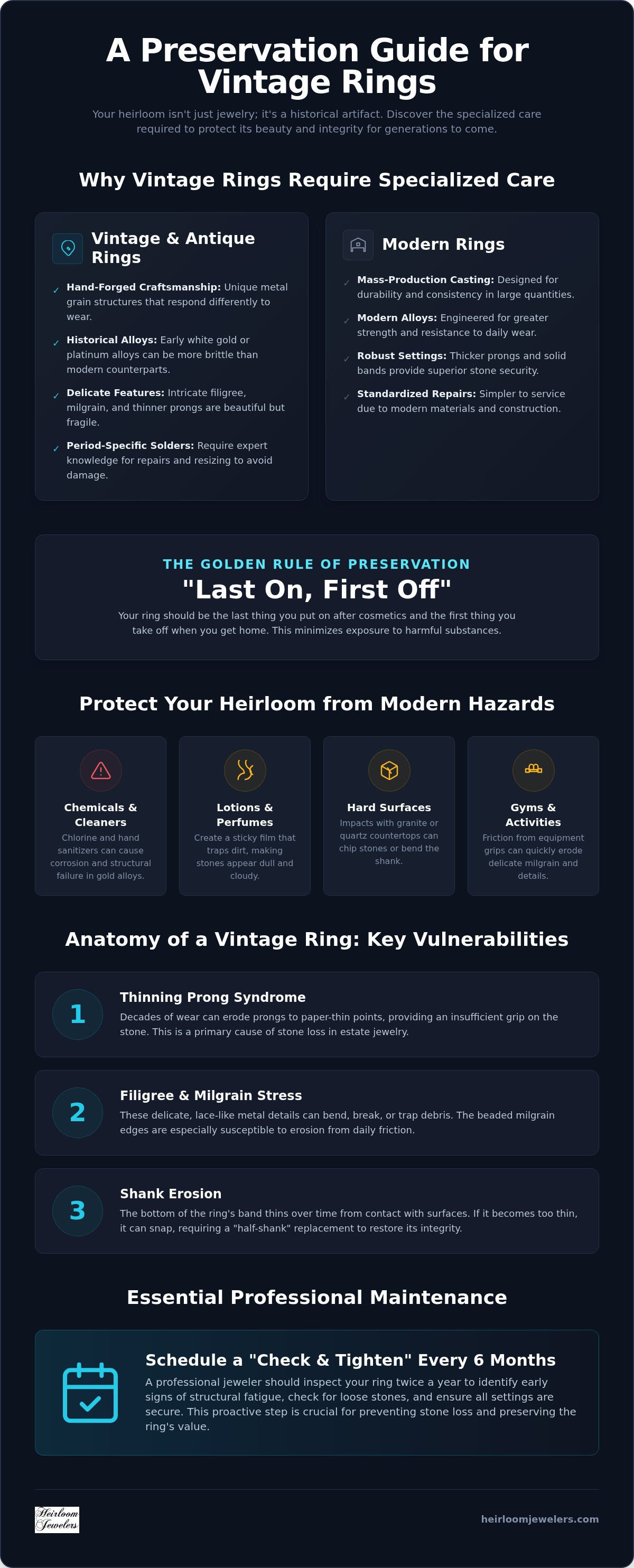
Preservation is the cornerstone of vintage ownership. While modern jewelry is often designed for durability through mass-production casting, antique pieces were typically hand-forged. This artisanal process creates a unique grain structure in the metal that responds differently to wear than modern alloys. Understanding how to care for vintage engagement rings requires a shift in perspective. You aren't simply cleaning an accessory; you're protecting a historical artifact from the cumulative effects of time and friction.
Metal fatigue is a primary concern for rings that have been worn for several generations. Over decades, the structural integrity of the shank and prongs can diminish, leading to a higher risk of stone loss. Standard jewellery cleaning methods used for contemporary pieces often involve high-frequency vibrations or harsh chemicals that can exacerbate these structural weaknesses. A preservation mindset prioritizes stability over temporary shine.
The Vulnerability of Antique Metal Alloys
Early 20th-century jewelry utilized metal mixtures that differ significantly from modern standards. Early white gold often contained different ratios of nickel or palladium, while antique platinum was frequently alloyed with iridium. These historical mixtures can be more brittle than their modern counterparts. Historical soldering techniques also present challenges. Older solder often has a different melting point than modern equivalents, which makes resizing or repairs a delicate operation that requires expert knowledge of period-specific metallurgy.
Metal fatigue is the structural weakening of the ring's components caused by decades of repeated wear and environmental stress.
Setting Styles: Milgrain, Filigree, and Thin Prongs
The very features that make vintage rings desirable are often the most fragile. When considering how to care for vintage engagement rings, special attention must be paid to the decorative elements that define the piece's era. Milgrain, the decorative "beading" found on many antique borders, is particularly susceptible to erosion. Daily friction against clothing or skin slowly rounds off these sharp details, eventually smoothing the metal entirely. Extra vigilance is required for Art Deco jewelry, which often features intricate openwork and filigree. These thin threads of metal provide less structural support than solid bands and can bend or snap under modern pressure.
- Thinning Prong Syndrome: Estate solitaire rings often suffer from prongs that have worn down to paper-thin points, providing insufficient grip on the diamond.
- Filigree Stress: The delicate lace-like patterns in vintage settings can trap debris, which creates internal pressure on the fine metal wires.
- Shank Erosion: The bottom of the ring, or the shank, naturally thins over decades of contact with hard surfaces, eventually requiring a "half-shank" replacement to prevent snapping.
The Daily Preservation Routine: Protecting Your Ring from Modern Hazards
Maintaining a historical piece requires more than occasional maintenance. It requires a daily preservation routine. The most effective habit to adopt is the "Last On, First Off" rule. Your ring should be the final item you put on after applying makeup or styling hair, and the first item removed upon entering your home. This simple practice significantly reduces exposure to modern hazards and is a fundamental step in learning how to care for vintage engagement rings.
Invisible enemies like lotions, perfumes, and hairsprays are primary culprits for dullness. These substances create a film that traps dirt, making a diamond appear cloudy and lifeless. Physical environments also pose risks. Modern granite or quartz countertops are significantly harder than antique gold alloys. A sharp impact against these surfaces can chip an old European cut diamond or bend a thin shank. Similarly, gym equipment with textured metal grips can quickly erode delicate milgrain through repetitive friction. Many owners also underestimate the damage caused by sleeping with their jewelry. Linens can snag fine prongs, creating tension that eventually leads to stone loss.
Modern Chemicals and Antique Metals
Modern life introduces chemicals that didn't exist when your ring was forged. Chlorine in swimming pools and household cleaners is particularly dangerous. It can cause stress corrosion cracking in gold alloys, leading to sudden structural failure. Hand sanitizers are another modern concern. While the alcohol content generally won't damage the metal, the additives leave a thick residue on the underside of gemstones. When you remove your ring for these activities, keep a dedicated, soft-lined dish in a consistent location to avoid misplacement. Maintaining a relationship with a trusted vintage specialist ensures your piece receives the specialized attention it deserves as modern environments change.
Safe Handling and Storage Practices
Proper handling preserves the setting's security over the long term. Always pick up your ring by the band rather than the center stone. Touching the gemstone transfers oils from your skin, which attracts dust and obscures the light. When you aren't wearing your piece, use a fabric-lined jewelry box to prevent surface abrasions. It's vital to keep antique rings separate from modern jewelry. Modern brilliant-cut diamonds often have sharper girdle edges that can scratch the softer metal or older stones of a vintage piece. Ensuring your collection is stored individually maintains the pristine condition of each historical investment. This disciplined approach is the most effective way to understand how to care for vintage engagement rings while enjoying them daily.
Gemstone-Specific Cleaning: From Diamonds to Emeralds
Effective cleaning begins with an understanding of the Mohs Scale of Mineral Hardness. This scale ranks gemstones from 1 to 10 based on their scratch resistance. Diamonds sit at the top with a rating of 10. They can withstand more vigorous cleaning than fragile stones like emeralds, which rank between 7.5 and 8, or opals, which sit as low as 5. When you learn how to care for vintage engagement rings, you must tailor your intensity to the specific vulnerabilities of your center stone.
A universal safe cleaning solution consists of a simple mixture of warm water and a few drops of mild, fragrance-free dish soap. This gentle approach removes surface oils without reacting with the metal or the stone's internal structure. Avoid home remedy myths like toothpaste or boiling water. Toothpaste contains abrasives that can microscopically scratch antique metals. Boiling water creates thermal shock that may shatter stones with internal inclusions or existing fractures.
Caring for Old European and Mine Cut Diamonds
Antique diamond cuts feature deeper pavilions and larger facets than modern brilliant cuts. These deep proportions often act as reservoirs for hand cream and dust, making buildup more visible. Follow this three-step process for a safe clean:
- Soak: Place the ring in the mild soap solution for 15 minutes to loosen debris.
- Brush: Use a soft-bristled baby toothbrush to gently reach behind the setting and under the stone.
- Rinse and Dry: Rinse in a bowl of clean water and pat dry with a lint-free cloth.
While antique diamond earrings follow similar rules, their closures and hinges require extra care to avoid snagging or bending during the drying process. Always ensure the stone is secure in its prongs before you begin brushing.
Special Precautions for Emeralds and Foil-Backed Stones
Fragile gemstones require a significantly more cautious approach. High-value pieces like Lugano Emerald & Diamond Necklaces or emerald engagement rings must never enter an ultrasonic cleaner. The vibrations can cause internal fractures to expand, potentially ruining the stone. Emeralds are frequently treated with oils to improve clarity; ultrasonic cleaning or harsh detergents can strip these oils away, leaving the stone looking parched and dull.
Hydrostatic pressure is the force exerted by a fluid at rest, which can push moisture into the microscopic fissures of porous stones or the gaps in foil-backed settings. Georgian-era jewelry often features foil-backed stones where a thin layer of metal is placed behind the gem to enhance its color. Water is the primary enemy here. If moisture enters the setting, the foil will oxidize and turn black. For these items, use only a slightly damp cloth on the surface of the stone and avoid immersion entirely. This specialized knowledge is a critical part of how to care for vintage engagement rings that feature delicate, era-specific craftsmanship.
Professional Maintenance: The Essential Schedule for Estate Jewelry
Professional care is a non-negotiable requirement for historical fine jewelry. A six-month inspection cycle is the industry standard for vintage engagement rings. This regular cadence allows a specialist to identify microscopic issues before they become catastrophic losses. When you understand how to care for vintage engagement rings, you recognize that professional intervention is a form of preventative preservation rather than a simple repair service.
A professional "Check and Tighten" involves a comprehensive structural audit. The jeweler examines the piece under high magnification to look for stone movement, hairline fractures in the metal, and prong thinning. If a stone is loose, they carefully adjust the metal to secure it without compromising the original design or era-specific details. General jewelers often focus on modern cast pieces. They may lack the specialized tools or the deep understanding of historical alloys required for delicate estate repairs.
Certain "Red Flags" require an immediate trip to an estate specialist. If you hear a faint clicking sound when tapping the ring, see a visible gap between the stone and a prong, or notice the band feels "sharp" or unusually thin, stop wearing the piece immediately. These are signs of imminent structural failure. Addressing these issues early prevents the loss of rare old European or mine cut diamonds that are difficult to replace.
The Dangers of Ultrasonic and Steam Cleaning
Many modern jewelry stores use ultrasonic cleaners as a default service. These machines use high-frequency vibrations that can shake loose small stones in delicate antique pavé or milgrain settings. Heat from steam cleaners is equally risky. It can cause internal inclusions in older gemstones to expand, leading to permanent fractures. Before handing your ring to a professional, ask these specific questions:
- Do you clean antique pieces by hand using gentle methods?
- Are you familiar with early 20th-century platinum and white gold alloys?
- Will you inspect the stones under a loupe before and after the cleaning process?
Retipping Prongs and Rebuilding Shanks
Wear and tear are inevitable over a century of use. Retipping involves adding a small amount of metal to the top of an existing prong to reinforce its grip on the stone. This is different from replacing a prong, which is a more intensive process where the entire wire is swapped. If the band has thinned significantly, a professional can "sleeve" the ring. This involves adding a thin layer of metal to the interior of the band to restore its structural integrity. These repairs are essential investments in your heritage jewelry. If you suspect your piece requires an expert evaluation, contact our specialists for a professional consultation.
Selecting and Insuring Your Heirloom Investment
A vintage ring is more than a personal accessory; it is a tangible connection to history. Proper maintenance directly impacts the long-term resale and appraisal value of these estate pieces. When you master how to care for vintage engagement rings, you transition from a simple owner to a temporary custodian. This mindset ensures that the rare craftsmanship of the past survives for future generations. Protecting this investment requires a combination of disciplined daily habits and formal financial safeguards.
Specialized jewelry insurance is a critical component of high-value ownership. While standard homeowners' policies may offer limited coverage, a dedicated jewelry policy typically costs between 1% and 2% of the ring's appraised value annually. This coverage often includes protection against accidental damage or stone loss, which is particularly relevant for older settings with delicate prongs. Maintaining a steady relationship with a specialist ensures that your piece is always protected at its current market value.
Documenting Your Ring’s Condition
Meticulous record-keeping is the hallmark of a serious collector. Establish a "Care Log" to document every professional inspection, cleaning, and repair. This history proves to future appraisers or insurers that the piece has been maintained to the highest standards. High-resolution photography is equally vital. Capture clear images of hallmarks, side-gallery details, and the specific setting style. These visual records serve as a "fingerprint" of your ring in the event of a loss.
Appraisal values for antique jewelry fluctuate based on market demand and the rarity of specific cuts. For a ring to be officially classified as an antique in 2026, it must have been crafted in or before 1926. We recommend updating your professional appraisal every three to five years. This frequency ensures your insurance coverage reflects the growing global market for vintage items, which is projected to reach over $4.5 billion by 2033.
The Heirloom Jewelers Standard
Heirloom Jewelers acts as a bridge between the past and the present. Every piece in our curated collection, such as our Vintage Platinum 0.5 Carat Diamond Engagement Ring, undergoes a rigorous authentication process. We examine the structural integrity of the metal and the security of the stones before any ring is presented to a new custodian. This commitment to quality ensures that your journey in learning how to care for vintage engagement rings starts with a piece that is structurally sound.
Building a jewelry collection is an exercise in quality over quantity. Choosing a single, well-maintained estate piece provides more lasting value than multiple mass-produced modern items. We invite you to browse our selection of authenticated platinum and gold estate rings, each prepared for its next lifetime of wear. Trust specialists who respect the secondary market and understand the unique needs of historical jewelry. Your role as a custodian is a noble one; let us provide the expertise to help you succeed.
Preserving Your Legacy for the Next Generation
Owning a vintage ring is a commitment to history. It requires moving beyond modern cleaning habits toward a dedicated preservation mindset. By adopting the "Last On, First Off" rule and respecting the Mohs Scale of Hardness, you protect the delicate milgrain and filigree that make your piece unique. Regular professional inspections every six months ensure that thinning prongs or metal fatigue are addressed before they lead to stone loss. Mastering how to care for vintage engagement rings allows you to wear these artifacts with the quiet confidence they deserve.
As a national authority on heritage fine jewelry, Heirloom Jewelers is dedicated to the longevity of every historical piece. We specialize in authenticated estate jewelry, offering deep expertise in rare Old European cuts and vintage platinum settings. Whether you are maintaining a family heirloom or starting a new tradition, we invite you to browse our curated collection of authenticated vintage engagement rings. Each piece is a testament to timeless craftsmanship, waiting for its next dedicated custodian. Your ring has already endured for decades; with the right care, it will continue to shine for many more.
Frequently Asked Questions
Can I use an ultrasonic cleaner for my vintage diamond ring?
You should avoid using ultrasonic cleaners for any antique or estate piece. The high-frequency vibrations can easily shake loose small diamonds in delicate pavé or milgrain settings. Even if your center stone is a hardy diamond, the century-old metal may have developed microscopic brittleness over time. Hand-cleaning with a soft brush and mild, fragrance-free soap is the only recommended method to ensure the setting remains secure.
How often should I have my vintage engagement ring professionally inspected?
We recommend a professional inspection every six months to maintain the ring's structural integrity. This regular cadence allows a specialist to identify thinning prongs or hairline fractures in the metal before they lead to stone loss. A professional "Check and Tighten" is a vital part of learning how to care for vintage engagement rings. These appointments ensure your heirloom remains in gallery-ready condition while protecting its long-term appraisal value.
Is it safe to wear my antique ring every day?
Yes, it's safe to wear your ring daily if you follow a preservation-focused routine. Antique jewelry was crafted for wear, but it doesn't possess the same resilience as modern, mass-produced pieces. You should remove your ring during high-impact activities like gym sessions, gardening, or heavy housework. Adopting the "Last On, First Off" rule will protect the delicate hand-forged metal from modern chemical hazards and unnecessary physical friction.
What should I do if a stone feels loose in an Art Deco setting?
Stop wearing the ring immediately and place it in a soft, secure container. Do not attempt to tighten the prongs yourself with household pliers, as you risk crushing the gemstone or snapping the delicate filigree. Take the piece to an estate jewelry specialist who understands the specific metallurgical properties of early 20th-century alloys. They'll use specialized tools to safely move the metal and restore the security of the setting.
How do I clean an emerald ring without damaging the stone?
Clean an emerald ring by gently wiping the surface with a soft, lint-free cloth. Emeralds are porous and often treated with oils to improve their clarity; immersion in soapy water or exposure to steam can strip these oils away. Never use an ultrasonic cleaner, as the vibrations can expand internal fractures. Because emeralds rank lower on the Mohs scale than diamonds, they require a significantly more cautious approach to avoid permanent damage.
Can I resize a vintage platinum engagement ring?
Resizing is possible but requires a jeweler experienced with historical platinum alloys. Antique platinum often contains iridium, which has a different melting point than the ruthenium-platinum mixtures used in modern jewelry. A specialist will use period-correct solder and hand-finishing techniques to ensure the join is invisible. It's important to avoid general repair shops that might use laser welders without understanding the unique requirements of a 100-year-old shank.
What are the signs that my antique ring needs immediate repair?
Common red flags include a faint clicking sound when you tap the stone, prongs that catch on your clothing, or a shank that feels sharp and thin. If you notice any visible gaps between the metal and the gemstone, the setting's security is compromised. These symptoms indicate metal fatigue or erosion. Addressing these issues immediately with a specialist prevents the loss of rare diamonds that are often impossible to replace with modern equivalents.
Why is my white gold vintage ring turning slightly yellow?
This subtle color shift occurs as the rhodium plating naturally wears away over time. Early 20th-century white gold was alloyed with different metals than modern versions, often resulting in a warmer, yellowish undertone. When discovering how to care for vintage engagement rings, many owners choose to embrace this "straw" patina as a mark of authenticity. You can have the ring professionally re-plated, though many collectors prefer the original historical appearance of the metal.