
In a world of mass-produced jewelry, the most enduring pieces are often made of almost nothing at all. True artistry lies in the delicate balance of negative space and fine metal wire. You've likely admired the ethereal beauty of filigree rings, yet perhaps you hesitate to invest. It's common to worry that such intricate metalwork is too fragile for daily life, or to feel overwhelmed by the subtle differences between a genuine Edwardian antique and a modern reproduction.
We understand that choosing a vintage piece requires more than just an eye for beauty. It requires a deep respect for historical craftsmanship. You deserve to know that your jewelry is as durable as it is detailed. This guide will help you discover the history and meticulous techniques behind these lace-like treasures. We'll examine the structural differences between Edwardian and Art Deco styles and provide the knowledge you need to identify hand-wrought quality. By the end, you'll feel confident selecting an authenticated heirloom that truly stands the test of time.
Key Takeaways
- Learn to identify true filigree by understanding the structural difference between soldered wire work and simple pierced metal.
- Explore how filigree rings evolved from the nature-inspired motifs of the Victorian era to the refined platinum lace of the Edwardian period.
- Understand the value of hand-wrought metalwork and why these labor-intensive techniques are superior to industrial die-striking.
- Discover how to incorporate intricate vintage designs into a modern wardrobe or choose them as a unique alternative to standard engagement bands.
- Gain confidence in navigating the vintage market by learning how to verify the authenticity and provenance of a genuine heirloom piece.
What is a Filigree Ring? Defining the Lace-Like Aesthetic
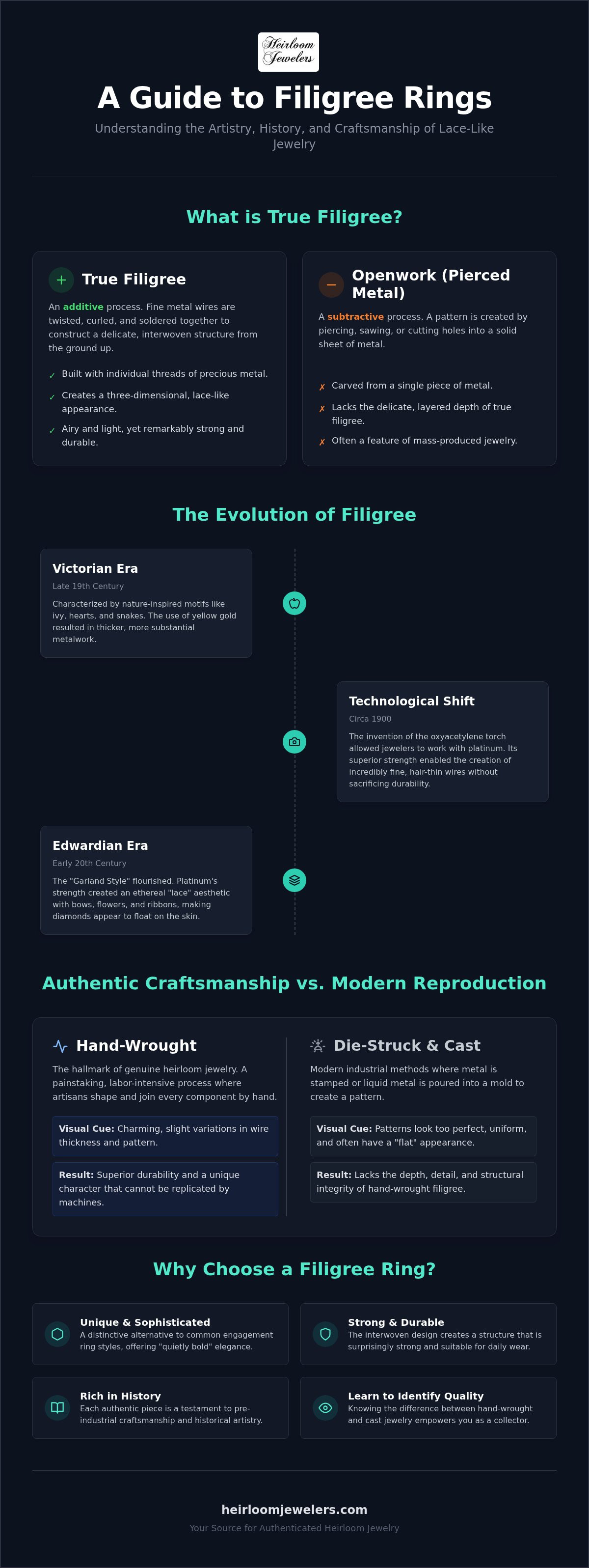
A filigree ring is more than a piece of jewelry; it's a structural marvel. At its most basic, Filigree is a specialized technique where fine threads of precious metal are twisted and soldered to create a delicate, lace-like pattern. While modern jewelry often relies on heavy casting, true filigree is built from the ground up using gold or platinum wires. This creates a piece that feels airy and light, yet remains remarkably strong due to its interwoven design.
Many people mistake "openwork" for true filigree. The difference is technical but significant. Openwork is created by piercing or sawing holes into a solid piece of metal to create a pattern. In contrast, filigree rings are constructed by adding individual wires together. This additive process represents the height of pre-industrial craftsmanship. It required a level of patience and steady-handedness that machine-led manufacturing simply cannot replicate. For the modern collector, these pieces offer a "quietly bold" presence. They stand out through intricate detail rather than sheer mass, providing a sophisticated alternative to minimalist trends.
The Anatomy of a Filigree Ring
To appreciate these pieces, one must look closer at the "threads" and "grains" that form the design. Jewelers often use a technique called milgrain, which involves adding tiny beads of metal along the edges of the filigree. This provides a textured frame that catches the light and highlights the central gemstones. Negative space is the most critical component. By leaving specific areas open, the jeweler creates a visual depth that makes the metalwork appear to float. This balance of metal and air ensures the ring is comfortable for daily wear while maintaining its structural integrity.
Filigree vs. Engraving: Spotting the Difference
Identifying an authentic antique requires distinguishing between surface decoration and three-dimensional construction. Engraving is a subtractive process where patterns are carved directly into the surface of the metal. While beautiful, it lacks the depth of filigree. During the early 20th century, skilled artisans often combined both techniques. They might use filigree for the main body of the ring and add fine engraving on the shanks to create a layered, luxurious effect.
When you're examining a potential heirloom, look for visual cues of hand-wrought work. Authentic filigree rings often show slight, charming variations in the wire thickness. These imperfections are the hallmarks of a human hand. If a pattern looks too perfect or "flat," it might be a modern cast reproduction rather than a true vintage piece. Understanding these details helps you appreciate the value of the labor involved in every twist of the wire.
The Evolution of Filigree: From Victorian Roots to Art Deco Heights
Filigree didn't emerge in a vacuum. It evolved alongside changing tastes and metallurgical breakthroughs. During the Victorian era, craftsmen primarily used yellow gold to create nature-inspired motifs. These early filigree rings often featured symbolic imagery like coiled snakes, delicate ivy, or hearts. The metalwork was beautiful, but the softness of gold meant the wires remained relatively thick compared to the ethereal designs that would follow. These pieces were often substantial, reflecting the romantic and sometimes heavy aesthetic of the late 19th century.
The turn of the century brought a significant shift in both material and mindset. As we moved into the 1900s, the introduction of the oxyacetylene torch allowed jewelers to work with platinum for the first time. This metal's incredible strength meant artisans could draw it into hair-thin wires without sacrificing durability. This era marked the beginning of a golden age for intricate metalwork, where the jewelry began to resemble fine lace rather than solid metal. If you appreciate this blend of history and art, you may enjoy exploring our current selection of authenticated estate jewelry.
The Edwardian "Lace" Aesthetic
The Edwardian era is defined by the "Garland Style." Jewelers drew inspiration from 18th-century French court life, incorporating bows, flowers, and flowing ribbons into their work. Platinum allowed for a level of detail that was previously impossible. Wires became so fine they were almost invisible, creating the illusion that diamonds were floating on the skin. You can learn more about how these designs influenced the broader market in our Definitive Guide to Vintage Engagement Rings. This period represents the peak of feminine, airy filigree.
Art Deco Geometry and Filigree
By the 1920s, the soft curves of the previous decade gave way to the bold geometry of the Art Deco movement. This era focused on symmetry and architectural influence. Filigree became a structural tool used to frame the sleek lines of baguette-cut gemstones. Straight lines and repeating patterns replaced the organic ribbons of the Edwardian era. During the 1930s, white gold emerged as a more accessible alternative to platinum, allowing more people to own these intricate styles. Filigree rings from this period are highly sought after in 2026 because they align perfectly with the "Quiet Luxury" trend. They offer a sophisticated, understated elegance that highlights the wearer's appreciation for Art Deco jewelry hallmarks and sustainable, pre-owned craftsmanship.
Hand-Wrought vs. Die-Struck: Understanding Authentic Craftsmanship
The value of filigree rings often hinges on how they were made. While a piece might look delicate, the method of its creation determines both its historical worth and its longevity. Hand-wrought filigree is the most labor-intensive form. In this process, a jeweler manually twists and solders individual wires to build a three-dimensional structure. It's a slow, additive art that requires immense precision. Each wire is placed with intention, creating a piece that is truly one of a kind.
As the industrial revolution progressed, die-striking became a popular alternative. This method uses massive pressure to strike a pattern into a piece of metal using a steel mold, or "die." Unlike modern casting, die-striking compresses the metal, making it incredibly dense and crisp. Most mass-produced "filigree style" rings sold today are made through lost-wax casting. This process often results in "muddy" or rounded edges because the molten metal cannot always fill the tiny crevices of a complex mold. If you want to understand the depth of these differences, exploring the timeless artistry of antique rings can help clarify why original methods remain superior.
Working with a specialist estate jeweler is essential when searching for true vintage work. A curator can verify if a ring was made using these traditional methods or if it's a modern reproduction designed to mimic the look. Authenticated pieces carry a weight of history and a level of detail that machines simply cannot replicate.
How to Identify Handmade Filigree
Hand-wrought pieces aren't perfect, and that's their strength. When you examine a handmade ring under a jeweler's loupe, look for slight variations in the wire thickness or tiny solder joins. These are signs of a human hand at work. Authentic antique pieces also carry specific hallmarks that indicate age and metal purity. Look for stamps like "18K" for gold or "PLAT" for platinum. These markings, combined with a crispness that casting cannot replicate, signal a high-quality heirloom.
The Durability Myth: Is Filigree Too Fragile?
There's a common misconception that fine metalwork is inherently fragile. In reality, the geometry of filigree rings provides significant structural strength. Die-struck pieces benefit from work-hardening, a process where the pressure of the strike aligns the metal's grain for added toughness. Antique platinum filigree is often more durable than modern cast gold because of its density and the superior strength of the platinum alloys used a century ago. These rings were designed to be worn daily, and they continue to withstand the rigors of modern life with grace.
Choosing and Styling Filigree Rings in a Modern Wardrobe
Incorporating filigree rings into a contemporary wardrobe allows for a unique expression of personal style. These pieces serve as a bridge between historical artistry and modern aesthetics. Many couples now choose these intricate designs for engagement bands because they offer a one-of-a-kind character that mass-produced jewelry cannot match. A vintage platinum setting provides a romantic, lace-like frame for a central stone, ensuring the ring remains a conversation piece for decades. Beyond bridal wear, the resurgence of the cocktail ring has brought filigree back to the forefront. These settings are ideal for showcasing vibrant gemstones like emeralds or peridots, where the metalwork adds a layer of sophistication without overwhelming the stone's color.
Styling such detailed jewelry requires a mindful approach to balance. Pairing an ornate ring with minimalist, clean-lined fashion creates a compelling contrast. The ring becomes a focal point, acting as a quietly bold statement against a simple silk blouse or a tailored blazer. Choosing estate jewelry also offers a clear ethical advantage. By selecting a pre-owned piece, you're participating in a sustainable cycle that preserves historical craftsmanship while reducing the demand for new mining. If you're ready to find a piece that aligns with your values and style, we invite you to browse our curated collection of vintage rings.
Selecting the Right Gemstone for Filigree
The choice of gemstone can significantly influence the overall feel of the ring. A classic and highly sought-after pairing involves Old European cut diamonds. These stones, much like antique diamond earrings from the same era, were cut by hand to sparkle under candlelight. Their soft, romantic glow complements the delicate wirework perfectly. For those who prefer color, filigree settings enhance the deep hues of sapphires and emeralds by allowing light to enter from multiple angles through the negative space. Many Art Deco designs feature a low-profile setting, which sits closer to the finger. This makes them practical for active lifestyles while maintaining an elegant, architectural silhouette.
Care and Maintenance for Fine Metalwork
Preserving the beauty of intricate metalwork requires consistent, gentle care. While these rings are structurally sound, the fine wires can occasionally snag on delicate fabrics like lace or loose knits. It's best to put your jewelry on last when dressing. For cleaning, avoid using home ultrasonic machines. The vibrations can sometimes loosen small accent stones in older settings. Instead, use a soft toothbrush and mild soapy water to gently remove dust. We recommend a professional prong inspection every six months. This ensures that the delicate metal holding your gemstones remains secure, protecting your investment for the next generation.
Find Your Unique Piece at Heirloom Jewelers
Heirloom Jewelers acts as a dedicated bridge between the exceptional craftsmanship of the past and the modern collector. We've built our reputation on a foundation of integrity and long-term relationships. Every piece in our inventory is hand-selected for its historical significance and material quality. We don't sell mass-produced items. Instead, we focus on curated estate finds that offer a level of character and detail that modern retail simply cannot provide. This approach honors the sustainability of pre-owned fine jewelry, allowing these treasures to be enjoyed by a new generation. When you invest in one of our filigree rings, you're acquiring a piece of wearable history that has been thoroughly authenticated by specialists who understand the nuances of the vintage market.
A Curated Selection of History
Our collection highlights the pinnacle of pre-industrial artistry. We specialize in authenticated platinum settings and old European cut diamonds, materials that defined the elegance of the Edwardian and Art Deco eras. These pieces are more than just accessories; they are artifacts of a bygone age. Because we prioritize quality over quantity, our selection features designs that are virtually impossible to replicate through modern manufacturing methods. Our authentication process involves a deep dive into hallmarks, wear patterns, and gemstone specifications. This focus ensures that our heritage jewelry remains a sound investment for the discerning collector. You'll find a sense of quiet confidence in every piece, knowing it has been vetted for metal purity and structural integrity.
Consulting with a Vintage Specialist
Choosing a high-value vintage piece requires a trusted authority. We pride ourselves on being a knowledgeable curator and a passionate enthusiast for every era we represent. Our philosophy is rooted in respectful expertise rather than aggressive salesmanship. We provide the functional and transparent information you need to make an informed decision. Whether you are beginning your search for your first pair of antique diamond earrings or searching for specific filigree rings to mark a milestone, we are here to assist. We invite you to explore our current collection and experience the steady, welcoming atmosphere of Heirloom Jewelers. Our goal is to help you find a unique treasure that reflects your appreciation for history and enduring elegance.
Preserving the Legacy of Fine Metalwork
Choosing a piece of jewelry is often about finding a connection to a specific moment in history. Throughout this guide, we've explored how the intricate metalwork of filigree rings represents a peak of artisanal skill that modern machines cannot duplicate. You've learned the technical differences between hand-wrought wires and cast reproductions, along with the unique characteristics of the Edwardian and Art Deco eras. This knowledge allows you to select an heirloom with the confidence that it's both authentic and structurally sound.
Heirloom Jewelers serves as a reliable guide for those navigating the complexities of the secondary market. We specialize in authenticated platinum and old European cut diamonds, providing a curated selection of unique, one-of-a-kind heritage pieces. Our focus on quality and historical significance ensures that every item in our collection is a worthy addition to your personal narrative. Please explore our curated collection of authenticated vintage filigree rings to find a design that resonates with your aesthetic. We look forward to helping you secure a treasure that you'll cherish for a lifetime.
Frequently Asked Questions
Are filigree rings durable enough for everyday wear?
Yes, filigree rings are remarkably durable when constructed correctly. The interlaced wires create a structural web that distributes pressure across the setting. While platinum offers the most resilience, gold versions are also suitable for daily wear if you avoid high-impact activities. Regular inspections of the fine solder points will ensure the piece remains secure for decades of use.
What is the difference between antique filigree and modern filigree-style rings?
The primary difference lies in the manufacturing method. Antique pieces feature hand-soldered wires or die-struck patterns that maintain sharp, crisp edges. Modern reproductions are typically cast in a mold, which often results in muddy details and rounded surfaces. You can often spot a modern piece by its lack of visual depth and the absence of traditional historical hallmarks.
How do I clean a vintage filigree ring without damaging the metal?
Use a solution of warm water and a few drops of mild dish soap. Gently scrub the intricate patterns with a soft-bristled toothbrush to remove accumulated oils and dust. It's best to avoid ultrasonic cleaners or harsh chemicals. These can loosen small pavé stones or react poorly with the specific metal alloys used in early 20th-century jewelry settings.
Can a filigree ring be resized easily?
Resizing is possible but requires the expertise of a vintage specialist. If the pattern extends around the entire shank, the jeweler must carefully integrate the new metal to match the existing design. Simple bands are easier to adjust, but complex patterns require a more delicate approach to preserve the ring's symmetry, structural integrity, and its inherent historical value.
Which era of jewelry is most famous for filigree work?
The Edwardian era is the most celebrated period for this aesthetic. Between 1901 and 1915, jewelers used newly available platinum to create the famous Garland Style. These pieces featured delicate ribbons, bows, and lace-like motifs. While the Art Deco period also utilized filigree, it shifted toward the geometric and architectural lines that became popular during the 1920s and 1930s.
Why is platinum so common in high-end antique filigree rings?
Platinum is favored because of its exceptional tensile strength. This property allowed artisans to draw the metal into incredibly fine threads that remained rigid over time. Gold is softer and often requires thicker wires to maintain its shape. Platinum's durability enabled the creation of the most intricate, airy designs while securely holding precious gemstones in place without the need for bulk.
Is filigree work always handmade?
Not all filigree is handmade, especially in the modern market. Historically, the finest filigree rings were hand-wrought by twisting and soldering individual wires. By the late 19th century, die-striking allowed for more consistent production. Today, most commercial pieces are cast from molds, which lacks the structural integrity and refined detail found in original hand-soldered or die-struck methods.
What gemstones look best in a filigree setting?
Old European cut diamonds are the classic choice for these settings. Their unique facet patterns produce a romantic, warm sparkle that matches the vintage aesthetic perfectly. Vibrant colored stones like sapphires or emeralds also look exceptional. The openwork nature of the setting allows light to enter the gemstone from various angles, enhancing its natural brilliance and visual depth.