
The most delicate lace you'll ever wear isn't made of silk, but of hand-forged platinum. Known as the Belle Époque, or Beautiful Era, the early 20th century produced jewelry that feels impossibly light yet remains remarkably durable. If you feel overwhelmed by the subtle differences between vintage eras or worry about the longevity of a century-old piece, you aren't alone. Finding authentic edwardian engagement rings requires a keen eye for detail and an appreciation for the master jewelers who first perfected the use of platinum in fine design.
We understand that selecting a piece of history is a deeply personal journey. This guide provides the clarity you need to shop with confidence, moving beyond the confusion of era-specific hallmarks to focus on true quality. You'll discover the signature elements of Edwardian craftsmanship, including intricate filigree and the soft glow of Old European cut diamonds. By the end of this collector's guide, you'll have a clear framework for identifying a genuine antique that fits your personal style and will last for generations.
Key Takeaways
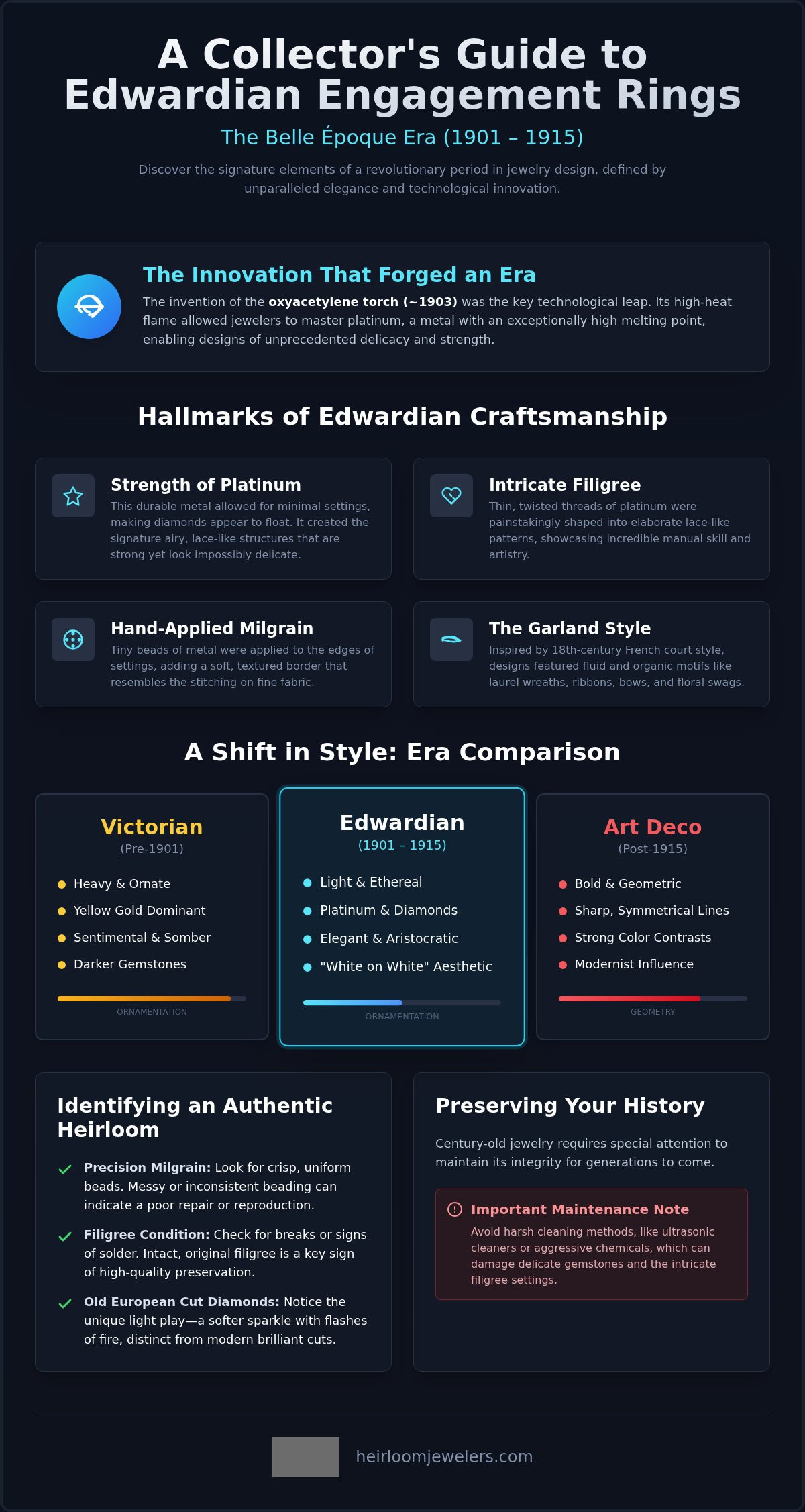
- Understand how the invention of the oxyacetylene torch allowed for the delicate, lace-like platinum settings that define this era.
- Learn to distinguish the airy, monochromatic aesthetic of the Belle Époque from heavier Victorian styles and the later geometric Art Deco period.
- Identify authentic edwardian engagement rings by examining the precision of hand-applied milgrain and the unique light play of Old European cut diamonds.
- Recognize the signs of high-quality preservation in antique filigree to ensure you are investing in a genuine piece of heritage.
- Master the specific maintenance requirements for century-old jewelry, including why certain cleaning methods should be avoided for delicate gemstones.
The Dawn of the Edwardian Era: Why These Rings Define Elegance (1901–1915)
The Edwardian era, spanning from 1901 to 1915, represents a unique pinnacle in jewelry history. While the Victorian years were defined by heavy gold and dark, sentimental mourning pieces, the new century brought a desire for lightness and social grace. This period is famously known as the Belle Époque, or Beautiful Age. It was a time of unprecedented luxury for the elite. Jewelry design moved away from the somber tones of the past. Designers began to experiment with platinum, a metal that allowed for a level of detail never seen before. These early edwardian engagement rings were crafted to look as delicate as the silk and lace fabrics favored by high society. The transition was sharp and intentional. It reflected a world that was moving toward modernism while still clinging to the opulence of the aristocracy.
The 'White on White' Aesthetic
One of the most striking features of this era is the intentional "white on white" look. Jewelers achieved this by pairing colorless diamonds and creamy pearls with platinum or white gold settings. This monochromatic palette was a strategic choice. It was designed to complement the soft pastel evening gowns popular among the upper class. A bright yellow gold ring would've appeared too bold against a delicate lavender or mint green silk dress. The goal was total harmony between the jewelry and the wearer's attire.
A classic Vintage Platinum 0.5 Carat Diamond Engagement Ring illustrates this philosophy perfectly. By using platinum's inherent strength, jewelers created thin, wire-like settings that held stones securely while remaining almost invisible. This technique, often paired with milgrain, added tiny beads of metal along the edges to give the piece a textured, fabric-like appearance. It made diamonds appear as if they were suspended in air, maximizing their natural brilliance and fire.
Social Influence of the British Monarchy
The aesthetic of the period was dictated by the tastes of King Edward VII and Queen Alexandra. The King’s deep appreciation for French culture and 18th-century court style influenced the top jewelry houses in London and New York. This led to the rise of the Garland Style. This design language incorporated royal motifs such as laurel wreaths, ribbons, and floral swags. It was a departure from the rigid symmetry of earlier periods, favoring a more fluid and organic grace.
During the Edwardian Era, jewelry transitioned from being purely sentimental to serving as a marker of refined taste. It wasn't just about the stone's size, but the complexity of the metalwork. Authentic edwardian engagement rings from this time capture a specific moment of aristocratic opulence. They reflect a world that prioritized elegance and fine craftsmanship above all else. These pieces were not mass-produced; they were individual works of art designed to signify status and a sophisticated eye for beauty.
Hallmarks of Edwardian Design: Platinum, Filigree, and the Garland Style
The mastery of metalwork during the Belle Époque wasn't just a matter of taste; it was a result of significant technological progress. Before the turn of the century, platinum was rarely used for entire settings because of its exceptionally high melting point. The introduction of the oxyacetylene torch around 1903 changed the industry forever. Jewelers could finally manipulate this incredibly strong metal with unprecedented precision. This shift is what truly defines the most iconic edwardian engagement rings. It allowed for a level of detail that was previously impossible to achieve in softer metals like gold or silver.
Platinum's inherent strength meant that far less metal was required to hold a diamond securely. This allowed craftsmen to create rings that appeared delicate and ethereal, almost like frozen lace. Every authentic piece from this era tells a story of manual precision and artisanal patience. These rings aren't just jewelry; they're the direct precursors to the geometric focus we see in later Art Deco designs. However, they maintain a softness and femininity that the later movement would eventually trade for sharp angles and bold contrasts.
The Art of Filigree and Milgrain
Two specific techniques define the texture of this period: filigree and milgrain. Filigree involves the delicate use of thin metal wires to create intricate, lace-like patterns within the setting. It's a hallmark of manual skill that modern casting often fails to replicate. Milgrain refers to the tiny "beading" applied along the edges of the metal. This adds a sophisticated texture and creates a subtle play of light that softens the look of the platinum. For those interested in the technical mastery behind these pieces, we recommend exploring The Art of the Filigree Ring for a deeper dive into these methods.
The Garland Style: Nature in Metal
The Edwardian style is most famous for the Garland motif. This design language draws heavily from nature, incorporating bows, tassels, wreaths, and floral swags. In the hands of a master Edwardian jeweler, these motifs were rendered in platinum to look completely weightless. Unlike the rigid and geometric shapes of the 1920s, the Garland style is fluid and organic. It captures a sense of movement that feels both romantic and sophisticated. Authenticating these details requires a deep understanding of early 20th-century bench techniques. If you're looking for a piece that embodies this level of craftsmanship, you can view our curated selection of estate jewelry to find a ring with genuine historical character.
Edwardian vs. Victorian and Art Deco: Identifying the Era’s Unique Aesthetic
Collectors often find themselves at a crossroads when distinguishing between the late 19th and early 20th centuries. While the dates provide a timeline, the true story lies in the evolution of design philosophy. Victorian jewelry was characterized by its weight and sentimental symbolism. In contrast, edwardian engagement rings represent a deliberate move toward airy, monochromatic elegance. Recognizing these shifts is essential for identifying "transitional" pieces that may carry traits from two different decades. It's the difference between a ring that feels substantial and grounded versus one that feels light and ethereal.
The Shift from Victorian Romance
The transition from the Victorian era (1837–1901) to the Edwardian period was marked by a dramatic change in metal preference. Victorian rings often featured heavy bands of 18k yellow or rose gold. These pieces were designed with bold, romantic motifs like hearts or serpents. You can explore the warmth of these earlier styles in our guide to Victorian Rose Gold Engagement Rings. As the new century began, these substantial gold settings were replaced by slender platinum bands.
While the Old European cut diamond remained the stone of choice, the way it was set changed completely. Victorian jewelers used heavy prongs or bezel settings that emphasized the metal. Edwardian craftsmen used platinum's strength to minimize the setting's profile. This era's obsession with the "Garland" style is perfectly captured by museum-grade examples like The Manchester Tiara. This piece showcases the shift from the solid, earthbound Victorian look to a style that mimics the fluidity of fine textiles.
The Prelude to Art Deco
As the Edwardian period neared its end, the soft curves of the Garland style began to straighten. Late edwardian engagement rings often show the first signs of the symmetry that would define the Art Deco movement (1915–1935). You might see the introduction of calibre-cut sapphires or emeralds used as small, precise accents within the white filigree. These pops of color were a precursor to the high-contrast palettes of the 1920s.
Where Edwardian design is soft and feminine, Art Deco is bold and geometric. The transition was gradual. Many rings from 1914 or 1915 possess the delicate filigree of the Belle Époque but the structured layout of the Jazz Age. Understanding this progression allows you to appreciate how jewelry history moves in cycles. For those who prefer the bold lines that followed this era, our resource on Art Deco Jewelry offers a comprehensive look at the next chapter in design.
Collecting Authentic Edwardian Engagement Rings: What to Look For
Identifying genuine edwardian engagement rings requires a focus on the physical evidence of early 20th-century benchwork. Authentic pieces often show signs of careful wear, yet the most important details should remain distinct. Start by examining the milgrain. In a true antique, these tiny metal beads are crisp and deliberate. Modern reproductions often have milgrain that looks "mushy" or rounded because it was created through casting rather than being hand-rolled with a specialized tool. High-quality Edwardian jewelry was typically die-struck. This process used immense pressure to create a dense, durable metal structure that modern casting simply cannot replicate. Under a jeweler's loupe, cast pieces often reveal tiny "pitting" or surface bubbles that are never present in a die-struck original.
Hallmarks can be a source of confusion for new collectors. While we expect modern jewelry to have clear purity stamps, early platinum pieces often lack them. Hallmarking laws for platinum weren't standardized in many regions until well after the era began. A lack of a "950" or "Plat" stamp doesn't necessarily indicate a reproduction. It often points to a piece made before these regulations were strictly enforced. Instead of relying solely on stamps, look for the density of the metal and the precision of the hand-carved filigree. These details are the true fingerprints of a master craftsman.
Understanding Old European Cut Diamonds
The diamonds found in authentic edwardian engagement rings are almost always Old European or Old Mine cuts. These stones were cut by hand, resulting in a unique character that modern "ideal cut" diamonds lack. You'll notice a smaller table, a higher crown, and a visible culet at the bottom of the stone. These diamonds don't produce the splintered sparkle of modern brilliant cuts. Instead, they offer a deep "inner fire" with broad flashes of light. They were specifically designed to perform beautifully in the low-light environments of the early 1900s. You can see the specific light play of these historic stones in our Vintage White Gold Old European Cut Diamond Stud Earrings, which showcase the same artisanal cutting techniques.
The Importance of Metal Integrity
Platinum was the era's greatest gift to jewelry durability, but a century of wear still requires inspection. Check the thin filigree wires for breaks or signs of poor restoration. A clumsy solder job can diminish both the beauty and the value of an antique piece. Authentic restoration should be invisible to the naked eye. Selecting a curated piece from a trusted source ensures that the ring's structural integrity has been professionally verified. For a deeper look at how we evaluate these historic treasures, visit our guide at Heirloom Jewelers. If you're ready to invest in a verified piece of history, you can browse our collection of authenticated platinum engagement rings to find a setting that has stood the test of time.
Preserving History: Caring for Your Heirloom Edwardian Ring
Platinum is famous for its endurance. This inherent strength is the reason so many edwardian engagement rings remain in excellent condition today. Despite this durability, the lace-like filigree and milgrain that define the era require careful handling. Mindful wear is essential to protect the intricate metal wires that give these rings their ethereal character. While the metal is strong, it can still bend or compress under heavy pressure. Treat your ring with the respect its age deserves.
Home care for most platinum and diamond pieces is simple. A solution of mild dish soap and warm water works well. Use a soft-bristled baby toothbrush to gently clean behind the stones where oils can collect. Never use ultrasonic cleaners for these pieces. The high-frequency vibrations can loosen century-old prongs or dislodge delicate seed pearls. A gentle hand is always the best approach for antique jewelry.
Daily Wear and Cleaning Tips
Rings with sapphire or emerald accents need extra attention. These stones are more sensitive to chemicals and physical impact than diamonds. We recommend removing your ring before gardening, heavy cleaning, or visiting the gym. Proper storage is also necessary to prevent damage. Keep your ring in its own fabric-lined box or a separate compartment. This prevents the delicate "lace" of the setting from snagging on other items. A professional inspection every six months is vital to ensure the security of the prongs and the stability of the stones.
The Legacy of a Heritage Ring
Selecting a vintage ring is a sustainable and ethical choice. It avoids the environmental costs associated with modern mining. It also offers an emotional connection that mass-produced jewelry lacks. You are wearing a piece that has survived a century of global history. It represents a level of hand-craftsmanship that is increasingly rare in the modern market. Each ring carries the quiet confidence of a time when elegance was the highest priority.
By choosing one of these edwardian engagement rings, you become the next steward of heritage jewelry. This stewardship is a commitment to preservation. You are ensuring that a masterpiece of the Belle Époque will last for another hundred years. It is a beautiful way to honor the past while you begin your own story. These rings aren't just accessories; they are enduring symbols of a refined and graceful history.
Select a Legacy That Endures
Choosing an engagement ring from the Belle Époque means investing in a level of artistry that modern manufacturing cannot duplicate. You've learned how the strength of platinum and the precision of the oxyacetylene torch created the iconic "white on white" aesthetic. These designs captured the elegance of a refined age through delicate filigree and the deep fire of hand-cut diamonds. Finding authentic edwardian engagement rings requires a focus on these historical hallmarks; from the texture of hand-applied milgrain to the unique performance of an Old European cut stone.
At Heirloom Jewelers, we act as trusted curators for those who value both history and integrity. We specialize in rare platinum filigree craftsmanship and expertly authenticated estate pieces. Our focus remains on quality over mass production, ensuring each ring in our collection is a genuine piece of heritage. Whether you're drawn to the organic flow of the Garland style or the airy symmetry of late-era designs, we're here to guide your search. Explore Our Curated Collection of Authentic Edwardian Engagement Rings to find a symbol of your commitment that has already stood the test of time. You're not just buying jewelry; you're becoming the next steward of a beautiful history.
Frequently Asked Questions
Are Edwardian engagement rings durable enough for everyday wear?
Authentic edwardian engagement rings are remarkably durable because they are primarily crafted from platinum. This metal doesn't wear away over time like gold, which helps preserve the intricate details. However, the thin filigree wires require mindful wear. You should remove your ring during high-impact activities like gardening or heavy cleaning. Regular professional inspections ensure that the century-old structure remains secure for another lifetime of use.
What is the difference between Edwardian and Art Deco rings?
The primary difference lies in the design language and geometry. Edwardian rings feature soft, feminine curves and lace-like filigree inspired by the "Garland" style. Art Deco rings, which followed after 1915, shifted toward bold geometric shapes and high-contrast color palettes. While Edwardian pieces focus on a monochromatic "white on white" look, Art Deco designs often incorporate striking caliber-cut gemstones and sharp, linear patterns.
Why are Edwardian rings almost always made of platinum?
Platinum became the dominant metal for high-end jewelry between 1900 and 1903. This shift occurred because of the invention of the oxyacetylene torch, which could finally reach platinum's high melting point. Jewelers favored it for its immense strength. It allowed them to use less metal to hold diamonds securely. This resulted in the ethereal, "weightless" look that defines the Belle Époque aesthetic.
What is an Old European cut diamond and why was it used in Edwardian jewelry?
An Old European cut is a hand-faceted diamond that served as the predecessor to the modern round brilliant. These stones feature a smaller table, a higher crown, and a visible culet at the base. They were designed to maximize fire and "inner glow" in low-light settings. In an era before modern electric lighting, these diamonds provided a romantic, broad-flash sparkle that modern machine-cut stones cannot replicate.
How can I tell if an Edwardian ring is an authentic antique or a reproduction?
Authenticating edwardian engagement rings requires a close look at the manufacturing techniques. Genuine antiques were often die-struck or hand-fabricated, resulting in dense metal and crisp, sharp milgrain. Modern reproductions are typically cast, which leaves the metal looking "mushy" or porous under a loupe. You should also check for the unique wear patterns and hand-carved details that only a century of history and artisanal patience can produce.
Do Edwardian engagement rings hold their value over time?
Authentic Edwardian pieces generally hold their value well because of their rarity and historical significance. Unlike mass-produced modern jewelry, these rings are finite resources. Their value is driven by the quality of the Old European cut diamonds and the specialized skill required to create platinum filigree. As consumer interest in sustainable, heritage jewelry grows, these authenticated antique pieces remain highly sought after by collectors and couples alike.
What are the most common motifs found in Edwardian jewelry?
The most common motifs are drawn from the "Garland" style, which mimics fine textiles and nature. You'll frequently see bows, ribbons, laurel wreaths, and floral swags integrated into the platinum settings. Tassels and lace-like patterns are also hallmarks of the era. These elements were rendered with such precision that they appear light and fluid, reflecting the social grace and luxury of the British monarchy during this period.
Can an Edwardian filigree ring be resized?
Most Edwardian rings can be resized, but the process requires a specialist familiar with antique platinum. Because the filigree often extends around the band, a jeweler must use a laser welder or a high-heat torch to ensure the pattern isn't disrupted. It's a delicate operation. We recommend resizing no more than two sizes up or down to maintain the structural integrity of the intricate 100-year-old metalwork.